
 100% FREE ACCESS
12th Standard Syllabus & Materials
12th Standard
TN 12th Computer Applications மின்னணு தரவு பரிமாற்றம் Sample Question Papers Study Material - QB365 Set A
NEW12th Standard
TN 12th Computer Applications மின் - வணிக பாதுகாப்பு அமைப்புகள் Sample Question Papers Study Material - QB365 Set A
NEW12th Standard
TN 12th Computer Applications மின்னணு செலுத்தல் முறைகள் Sample Question Papers Study Material - QB365 Set A
NEW12th Standard
TN 12th Computer Applications மின் - வணிகம் Sample Question Papers Study Material - QB365 Set A
NEW12th Standard
TN 12th Computer Applications திறந்த மூல கருத்துருக்கள் Sample Question Papers Study Material - QB365 Set A
NEW12th Standard
TN 12th Computer Applications வலையமைப்பு வடமிடல் Sample Question Papers Study Material - QB365 Set A

Published on: 29/01/2021
12th Standard Bio-Botany English Medium principles and processes of Bio-technology Reduced Syllabus Important Questions With Answer Key 2021
Download Tamil Nadu 12th Standard Biology question papers, model tests, one-mark questions, important questions, and public exam papers in PDF format. Free study materials and answer keys for TN State Board students.
Questions + Answers key
Take MCQ Biology Test1.
Tetracycline is obtained from_________
S.nodosus
S.aureofacins
S.grises
P. chryosogenum
2.
Assertion (A): DMH -11 is a transgenic mustard.
Reason (R): It is developed by using barnase/ barstar technology.
Both A and R are wrong.
A is right R is wrong.
R explains A.
A and R are right, R does not explain A.
3.
Statement 1: Liposomes are the artificial lipoprotein vesicles.
Statement 2: Liposomes are highly used in gene transfer.
Statement 1 is correct and Statement 2 is also correct.
Statement 1 is correct and Statement 2 is incorrect.
Both the statements are incorrect.
Statement 1 is incorrect and Statement 2 is correct
4.
Statement 1: YAC plasmid behaves like a yeast chromosome.
Statement 2: Circular YAC multiplies in bacteria.
Statement 1 is correct and Statement 2 is also correct.
Statement 1 is correct and Statement 2 is incorrect
Both the statements are incorrect.
Statement 1 is incorrect and Statement 2 is correct.
5.
Observe the diagram and name A and B.
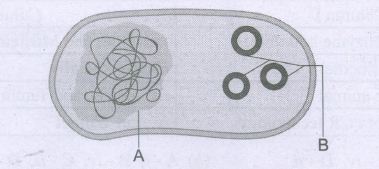
A - Plasmid B - Vector
A - Nucleoid - B - Plasmid
A - Bacterial chromosome B - Vector
A - Nucleoid - B - x phage DNA
6.
Identify the non-fungal species used in SCP production.
(i) Candida
(ii) Chlorella
(iii) Chlamydomonas
(iv) Cellulomonas
i and ii
ii and iii
ii, iii and iv
All the above
7.
Pick out the mismatched pair(s):
(i) Amphotericin-B - Streptomyces notatum
(ii) Penicillin - Penicillium nodosus
(iii) Streptomycin - Streptomyces griseus
(iv) Tetracycline - Streptomyces aureofaciens
i and ii
ii and iii
iii and iv
i only
8.
Zymology deals with __________
Study of yeast fungus and its practical applications.
Study of fermentation and its uses.
Study of Bioreactors and their construction methodology.
Study of zymase producing microbes and its benefits.
9.
Some of the characteristics of Bt cotton are ______.
Long fibre and resistant to aphids
Medium yield, long fibre and resistant to beetle pests
high yield and production of toxic protein crystals which kill dipteran pests.
High yield and resistant to ball worms
10.
Assertion (A): Agrobacterium tumefaciens is popular in genetic engineering because this bacterium is associated with the root nodules of all cereals and pulse crops
Reason(R): A gene incorporated in the bacterial chromosomal genome gets automatically transferred to the cross with which bacterium is associated.
Both assertion and reason are true. But reason is correct explanation of assertion.
Both assertion and reason are true. But reason is not correct explanation of assertion.
Assertion is true, but reason is false.
Assertion is false, but reason is true
Both assertion and reason are false.
11.
Which of the following one is used as a Biosensors?
Electrophoresis
Bioreactors
Vectors
Electroporation
12.
13.
The process of recombinant DNA technology has the following steps
I. amplication of the gene
II. Insertion of recombinant DNA into the host cells
III. Cutting of DNA at specific location using restriction enzyme .
IV. Isolation of genetic material (DNA) Pick out the correct sequence of step for recombinant DNA technology.
II, III, IV, I
IV, II, III, I
I, II, III, IV
IV, III, I, II
14.
Consider the following statements:
I. Recombinant DNA technology is popularly known as genetic engineering is a stream of biotechnology which deals with the manipulation of genetic materials by man invitro
II. pBR322 is the first artificial cloning vector developed in 1977 by Boliver and Rodriguez from E.coli plasmid
III. Restriction enzymes belongs to a class of enzymes called nucleases.
Choose the correct option regarding above statements
I & II
I & III
II & III
I,II & III
15.
Plasmids are ______.
circular protein molecules
required by bacteria
tiny bacteria
confer resistance to antibiotics
16.
Explain the procedure of Southern Blotting Technique. Southern Blotting Techniques - DNA
17.
Explain Agarose Gel electrophoresis technique.
18.
Write a note on Replica plating technique.
19.
Explain in detail about various types of direct gene transfer method.
20.
List out the application of single-cell protein.
21.
22.
23.
Mention the application of Biotechnology.
24.
How do you use the biotechnology in modern practice?
25.
Write a brief note on Biolistics.
26.
How does shuttle vectors differ from other types of vectors?
27.
Draw and label Ti plasmid.
28.
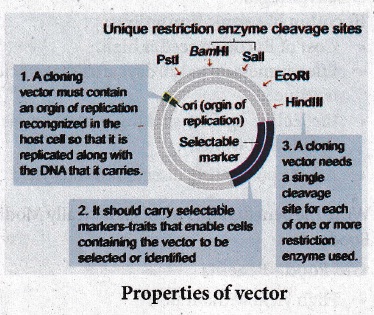
Explain the features of a vector.
29.
Give a short note on Alkaline phosphate.
30.
Mention any three algal species used for SCP production.
31.
Mention any three historical events which took place in the 21st century for the development of biotechnology.
32.
33.
What are restriction enzyme. Mention their type with role in Biotechnology.
34.
You are working in a biotechnology lab with a bacterium namely E.coli. How will you cut the nucleotide sequence? explain it.
35.
Golden rice is a bio-fortified rice developed by rDNA technology. It differs from its parental strain by possessing 'psy' gene, 'crt-l' gene and 'lyc' gene which are responsible for beta - carotene synthesis.
(a) Name the sources of the above mentioned genes.
(b) Which disease can be controlled / prevented if a person's diet bas golden rice?
36.
Give the technical terminologies for the following statements.
(a) Autonomous, self-replicating, circular DNA
(b) Molecular scissors
(c) Symmetrical repeated sequence in DNA strands
(d) Mobile genetic elements
37.
What are polylinkers?
38.
Point out any two disadvantages of Bt cotton?
39.
What is the role of DNA ligase in genetic engineering?
40.
What is Restriction Endonuclease?
41.
What are primary metabolites? Give example.
42.
1.
(b)
S.aureofacins
2.
(c)
R explains A.
3.
(d)
Statement 1 is incorrect and Statement 2 is correct
4.
(a)
Statement 1 is correct and Statement 2 is also correct.
5.
(b)
A - Nucleoid - B - Plasmid
6.
(c)
ii, iii and iv
7.
(a)
i and ii
8.
(b)
Study of fermentation and its uses.
9.
(d)
High yield and resistant to ball worms
10.
(a)
Both assertion and reason are true. But reason is correct explanation of assertion.
11.
(a)
Electrophoresis
12.
(c)
13.
(b)
IV, II, III, I
14.
(d)
I,II & III
15.
(d)
confer resistance to antibiotics
16.
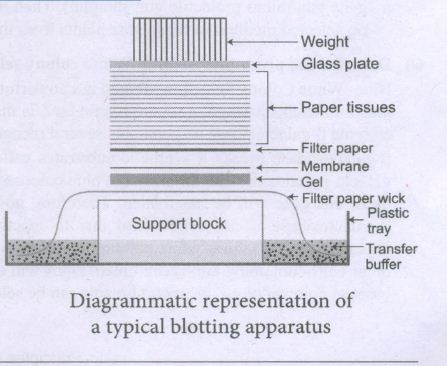
The transfer of denatured DNA from Agarose gel to Nitrocellulose Blotting or Filter Paper technique was introduced by Southern in 1975 and this technique is called Southern Blotting Technique.
steps
The transfer of DNA from agarose gel to nitrocellulose filter paper is achieved by Capillary Action. A buffer Sodium Saline Citrate (SSC) is used, in which DNA is highly soluble, it can be drawn up through the gel into the Nitrocellulose membrane By this process ss-DNA becomes 'Trapped' in the membrane matrix. This DNA is hybridized with a nucleic acid and can be detected by autoradiography. Autoradiography - A technique that captures the image formed in a photographic emulsion due to emission of light or radioactivity from a labelled component placed together with unexposed film.
17.
Agarose Gel Electrophoresis is used mainly for the purification of specific DNA fragments. Agarose is convenient for separating DNA fragments ranging in size from a few hundred to about 20000 base pairs. Polyacrylamide is preferred for the purification of smaller DNA fragments. The gel is complex network of polymeric molecules. DNA molecule is negatively charged molecule - under an electric field DNA molecule migrates through the gel. The electrophoresis is frequently performed with marker DNA fragments of known size which allow accurate size determination of an unknown DNA molecule by interpolation. The advantages of agarose gel electrophoresis are that the DNA bands can be readily detected at high sensitivity. The bands of DNA in the gel are stained with the dye Ethidium Bromide and DNA can be detected as visible fluorescence illuminated in UV light will give orange fluorescence, which can be photographed.
18.
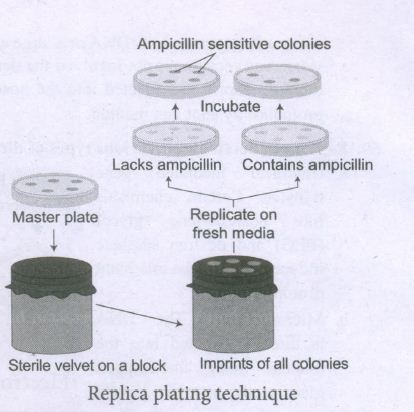
A technique in which the pattern of colonies growing on a culture plate is copied. A sterile filter plate is pressed against the culture plate and then lifted. Then the filter is pressed against a second sterile culture plate. This results in the new plate being infected with cell in the same relative positions as the colonies in the original plate. Usually, the medium used in the second plate will differ from that used in the first. It may include an antibiotic or without a growth factor. In this way, transformed cells can be selected
19.
a. Chemical mediated gene transfer: Certain chemicals like polyethylene glycol (PEG) and dextran sulphate induce DNA uptake into plant + protoplasts.
b. Microinjection: The DNA ""+ is directly injected into the nucleus using fine tipped glass needle or micro pipette to transform plant cells. The protoplasts are immobilised on a solid support (agarose on a microscopic slide) or held with a holding pipette under suction.
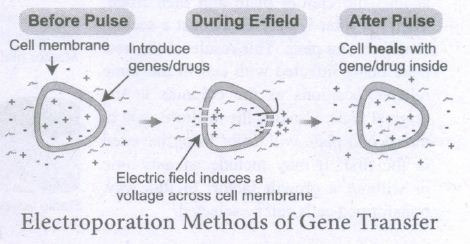
c. Electroporation Methods of Gene Transfer: A pulse of high voltage is applied to protoplasts, cells or tissues which makes transient pores in the plasma membrane through which uptake of foreign DNA occurs.
d. Liposome mediated method of Gene Transfer: Liposomes the artificial phospholipid vesicles are useful in gene transfer. The gene or DNA is transferred from liposome into vacuole of plant cells. It is carried out by encapsulated DNA into the vacuole. This technique is advantageous because the liposome protects the introduced DNA from being damaged by the acidic pH and protease enzymes present in the vacuole. Liposome and tonoplast of vacuole fusion resulted in gene transfer. This process is called lipofection.
e. Biolistics: The foreign DNA is coated onto the surface of minute gold or tungsten particles (I-311m) and bombarded onto the target tissue or cells using a particle gun (also called as gene gun/micro projectile gun/shotgun). Then the bombarded cells or tissues are cultured on selected medium to regenerate plants from the transformed cells.
20.
Applications of Single-Cell Protein:
1. It is used as protein supplement.
2. It is used in cosmetics, products for healthy hair and skin.
3. It is used in poultry as the excellent source of proteins and other nutrients, it is widely used for feeding cattle, birds and fishes, etc.
4. It is used in food industry as aroma carriers, vitamin carrier, emulsifying agents to improve the nutritive value of baked products, in soups, in ready-to-serve-meals, in diet recipes.
5. It is used in industries like paper processing and leather processing as foam stabilizers.
21.
22.
23.
Applications of Biotechnology
1. Biotechnology is one of the most important applied interdisciplinary sciences of the 21st century. It is the trusted area that enables us to find the beneficial way of life.
2. Biotechnology has wide applications in various sectors like agriculture, medicine, environment and commercial industries.
3. This science has an invaluable outcome like transgenic varieties of plants e.g. transgenic cotton (Bt-cotton), rice, tomato, tobacco, cauliflower, potato and banana.
4. The development of transgenics as pesticide resistant, stress resistant and disease resistant varieties of agricultural crops is the immense outcome of biotechnology.
5. The synthesis of human insulin and blood protein in E.coli and utilized for insulin deficiency disorder in human is a breakthrough in biotech industries in medicine.
6. The synthesis of vaccines, enzymes, antibiotics, dairy products and beverages are the products of biotech industries.
7. Biochip based biological computer is one of the successes of biotechnology.
8. Genetic engineering involves genetic manipulation, tissue culture involves aseptic cultivation of totipotent plant cell into plant clones under controlled atmospheric conditions.
9. Single cell protein from Spirulina is utilized in food industries.
10. Production of secondary metabolites, biofertilizers, biopesticides and enzymes.
11. Biomass energy, biofuel, bioremediation and phytoremediation for environmental biotechnology.
24.
Modern biotechnology
(i) There are two main features of this technology, that differentiated it from the conventional technology are its
i) ability to change the genetic material for getting new products with specific requirements through recombinant DNA technology
ii) ownership of the newly developed technology and its social impact.
(ii) Modern biotechnology embraces all methods of genetic modification by recombinant DNA and cell fusion technology.
The major focus of biotechnology are
(i) Fermentation for production of acids, enzymes, alcohols, antibiotics, fine chemicals, vitamins and toxins
(ii) Biomass for bulk production of single cell protein , alcohol, and biofuel
(iii) Enzymes as biosensors, in processing industry
(iv) Biofuels for production of hydrogen, alcohol, methane
(v) Microbial inoculants as biofertilizer, and nitrogen fixers
(vi) Plant and animal cell culture for production of secondary metabolites, monoclonal antibodies
(vii) Recombinant DNA technology for production of fine chemicals, enzymes, vaccines, growth hormones, antibiotics, and interferon.
(viii) Process engineering - tools of biotechnology is used for effluent treatment , water recycling.
25.
The foreign DNA is coated onto the surface. of minute gold or tungsten particles (1-3 urn) and bombarded onto the target tissue or cells using a particle gun (also called as gene gun/micro projectile gun/shotgun). Then the bombarded cells or tissues are cultured on selected medium to regenerate plants from the transformed cells.
26.
The shuttle vectors are plasmids designed to replicate in cells of two different species. These vectors are created by recombinant techniques. The shuttle vectors can propagate in one host and then move into another host without any extra manipulation. Most of the Eukaryotic vectors are Shuttle Vectors
27.
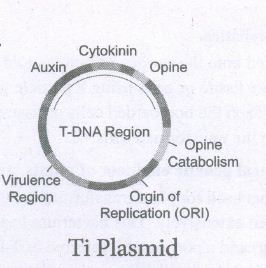
28.
The following are the features that are required to facilitate cloning into a vector.
1. Origin of replication (ori): This is a sequence from where replication starts and piece of DNA when linked to this sequence can be made to replicate within the host cells.
2. Selectable marker: In addition to ori the vector requires a selectable marker, which helps in identifying and eliminating non-transformants and selectively permitting the growth of the transformants.
3. Cloning sites: In order to link the alien DNA, the vector needs to have very few, preferably single, recognition sites for the commonly used restriction enzymes.
29.
Alkaline phosphate is a DNA modifying enzymes and adds or removes specific phosphate group at 5' terminus of double stranded DNA (dsDNA) or single stranded DNA (ssDNA) or RNA. Thus it prevents self ligation. This enzyme is purified from bacteria and calf intestine.
30.
Spirulina, Chlorella and Chlamydomonas.
31.
2002 - First crop plant genome sequenced in Oryza sativa.
2003 - Human genome project is completed, providing information on the locations and sequence of human genes on all 46 chromosomes.
2016 - Stem cells injected into stroke patients re-enable patient to walk - Stem cell therapy.
32.
33.
A restriction enzyme or restriction endonuclease is an enzyme that cleaves DNA into fragments at or near specific recognition sites within the molecule known as restriction sites.
Types
(i) Exonucleases - which remove nucleotides one at a time from the end of a DNA molecule. e.g. Bal 31, Exonuclease III.
(ii) Endonucleases - which break the internal phosphodiester bonds within a DNA molecule. e.g. Hind II, EcoRI, PvulI, BamHI, TaqI.
(iii) The restriction enzymes are called as molecular scissors
(iv) They are used in recombinant DNA technology as they recognize & cut DNA within a specific sequence.
34.
(i) ECORI is from Escherichia ( E ) coli (co), strain RY 13 (R) & first endonuclease (I) to be discovered.
(ii) It contains 2 different antibiotics resistance genes & recognition site for several restriction enzymes.
(iii) This sequence is referred to as a restriction site & is generally -palindromic which means that the sequence in both DNA strands at this site read same in 5' - 3' direction & in-the 3'-5' direction.
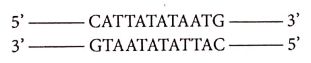
(iv) The exact kind of cleavage produced by a restriction enzyme is important in the design of a gene cloning experiment.
(v) Some cleave both strands of DNA through the centre resulting in blunt or flush end.
(vi) These are known as symmetric cuts.
(vii) Some enzymes cut in a way producing protruding & recessed ends known as sticky or cohesive end.
(viii) These are known as staggered or asymmetric cuts.
35.
(a) 'psy' gene is obtained from Daffodil plant (Narcissus pseudonarcissus).
(i) 'crt-l ' gene is from Erwinia uredovora bacterium.
(ii) 'lyc' gene is from wild-type rice endosperm.
(b) Golden rice can control Xerophthalmia.
36.
(a) Plasmid
(b) Restriction Enzymes
(c) Palindrome sequence
(d) Transposons
37.
Mostly cloning vectors have more than one restriction sites. These are called as Multiple Cloning Site (MCS) or polylinkers. Presence of MCS facilitates the use of restriction enzyme of choice.
38.
Bt cotton has some limitations:
(i) Cost of Bt cotton seed is high.
(ii) Effectiveness up to 120 days after that efficiency is reduced.
39.
DNA ligase enzyme joins the sugar and phosphate molecules of double stranded DNA (dsDNA) with 5'-PO 4 and a 3'-OR in an Adenosine Triphosphate (ATP) dependent reaction. This is isolated from T4 phage.
40.
A restriction enzyme or restriction endonuclease is an enzyme that cleaves DNA into fragments at or near specific recognition sites within the molecule known as restriction sites.
41.
Metabolites produced for the maintenance of life process of microbes are known as primary metabolites. E.g. Ethanol, citric acid, lactic acid and acetic acid.
42.

12th Standard Syllabus & Materials
12th Standard
TN 12th Computer Applications களப்பெயர் முறைமை (DNS) Sample Question Papers Study Material - QB365 Set A
NEW12th Standard
TN 12th Computer Applications வலையமைப்பு எடுத்துக்காட்டுகள் மற்றும் நெறிமுறைகள் Sample Question Papers Study Material - QB365 Set A
NEW12th Standard
TN 12th Computer Applications கணினி வலையமைப்பு ஓர் அறிமுகம் Sample Question Papers Study Material - QB365 Set A
NEW12th Standard
TN 12th Computer Applications PHP-உடன் MySQL-ஐ இணைத்தல் Sample Question Papers Study Material - QB365 Set A



Tamilnadu Stateboard 12th Standard Subjects

Maths

Chemistry

Physics
Biology

Computer Science

Business Maths and Statistics

Economics

Commerce

Accountancy

History

Computer Applications
Biology
Computer Technology
Computer Applications
Computer Science
Business Maths and Statistics
Commerce
Economics
Maths
Chemistry
Physics
Computer Technology
History
Accountancy

Tamil

English

French
Tamilnadu Stateboard Standards

