
 100% FREE ACCESS
12th Standard Syllabus & Materials
12th Standard
TN 12th Maths Applications of Matrices and Determinants Sample Question Papers Study Material - QB365 Set A
NEW12th Standard
TN 12th Computer Applications மின்னணு தரவு பரிமாற்றம் Sample Question Papers Study Material - QB365 Set A
NEW12th Standard
TN 12th Computer Applications மின் - வணிக பாதுகாப்பு அமைப்புகள் Sample Question Papers Study Material - QB365 Set A
NEW12th Standard
TN 12th Computer Applications மின்னணு செலுத்தல் முறைகள் Sample Question Papers Study Material - QB365 Set A
NEW12th Standard
TN 12th Computer Applications மின் - வணிகம் Sample Question Papers Study Material - QB365 Set A
NEW12th Standard
TN 12th Computer Applications திறந்த மூல கருத்துருக்கள் Sample Question Papers Study Material - QB365 Set A

Published on: 29/01/2021
12th Standard Biology English Medium Reduced Syllabus Important Questions - 2021 Part - 1
Download Tamil Nadu 12th Standard Biology question papers, model tests, one-mark questions, important questions, and public exam papers in PDF format. Free study materials and answer keys for TN State Board students.
Questions + Answers key
Take MCQ Biology Test1.
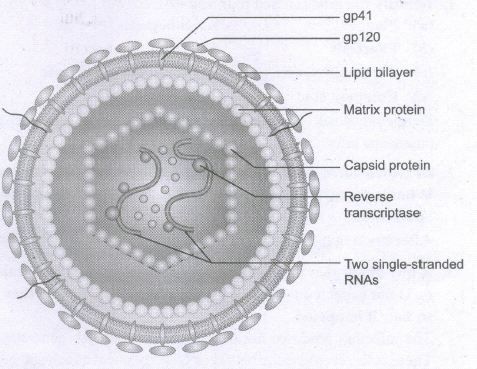
Describe the structure of HIV with a diagram
2.
What is the significance of slope of regression in a species area relationship?
3.
List out the uses of Transgenesis
4.
Explain Urey & Miller's experiment.
5.
Write a note on cervial cancer. (or) Write the risk factors for cervical cancer.
6.
Explain the properties of genetic material.
7.
8.
Enumerate the anatomical adaptations of xerophytes.
9.
10.
Explain how “Rosie” is different from a normal cow
11.
Write the advantages of herbicide tolerant crops
12.
What is gene mapping? Write its uses
13.
When two different genes came from same parent they tend to remain together.
i) What is the name of this phenomenon?
ii) Draw the cross with suitable example.
iii) Write the observed phenotypic ratio.
14.
Give a concise account on steps involved in fertilization of an angiosperm plant.
15.
16.
Expand CCS. (or) What is CCS?
17.
Pyramid of energy is always upright. Give reasons
18.
The organic horizon is generally absent from agricultural soils because tilling, e.g., plowing, buries organic matter. Why is an organic horizon generally absent in desert soils ?
19.
Discuss the causes and effects of global warming. What measures need to be taken to control global warming?
20.
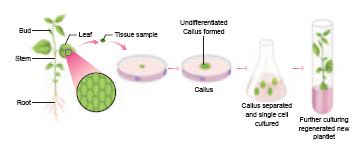
What is the name of the process given below? Write its 4 types.
21.
22.
Name the phenomenon where the female gamete directly develops into a new organism with an avian example.
23.
What is meant by true breeding or pure breeding lines / strain?
24.
Match column I with column II and select the correct option from the codes given below.
| Column I | Column II |
| A. Copper releasing IUD | (i) LNG-20 |
| B. Hormone releasing | (ii) Lippes loop IUD |
| C. Non medicated IUD | (iii) Saheli |
| D. Mini pills | (iv) Multiload-375 |
| A | B | C | D |
| (iv) | (ii) | (i) | (iii) |
| A | B | C | D |
| (iv) | (i) | (iii) | (ii) |
| A | B | C | D |
| (i) | (iv) | (ii) | (iii) |
| A | B | C | D |
| (iv) | (i) | (ii) | (iii) |
25.
The approach which does not give the defined action of contraceptive is
Hormonal contraceptive-Prevents entry of sperms, prevent ovulation and fertilization
Vasectomy-Prevents spermatogenesis
Barrier method-Prevents fertilization
Intra uterine device-Increases phagocytosis of sperms, suppresses sperm motility and fertilizing capacity of sperms
26.
A contraceptive pill prevents ovulation by ______.
blocking fallopian tube
inhibiting release of FSH and LH
stimulating release of FSH and LH
causing immediate degeneration of released ovum.
27.
E. coli cell grown on 15N medium are transferred to 14N medium and allowed to grow for two generations. DNA extracted from these cells is ultracentrifuged in a cesium chloride density gradient. What density distribution of DNA would you expect in this experiment?
One high and one low density band
One intermediate density band.
One high and one intermediate density band.
One low and one intermediate density band
28.
The process which the sperm undergoes before penetrating the ovum is _____.
Spermiation
Cortical reaction
Spermiogenesis
Capacitation
29.
The glandular accessory organ which produces the largest proportion of semen is ______.
Seminal vesicle
Bulbourethral gland
Prostate gland
Mucous gland
30.
The mature sperms are stored in the ____.
Seminiferous tubules
Vas deferens
Epididymis
Seminal vesicle
31.
Which of the following is incorrect regarding ZW-ZZ type of sex determination?
It occurs in birds and some reptiles
Females are homogametic and males are heterogametic
Male produce one type of gamete
It occurs in gypsy moth
32.
Improvement of human race by encouraging the healthy persons to marry early and produce large number of children is called
Positive eugenics
Negative eugenics
Positive euthenics
Positive euphenics
33.
Who is the founder of Modern Eugenics movement?
Mendel
Darwin
Francis Galton
Karl pearson
34.
Father of a child is colourblind and mother is carrier for colourblindness, the probability of the child being colourblind is _____.
25%
50%
100%
75%
35.
Animals giving birth to young ones:
Oviparous
Oviviviparous
Viviparous
Both a and b
36.
Which of the following phenotypes in the progeny are possible from the parental combination AxB?
A and B only
A,B and AB only
AB only
A, B, AB and O
37.
Assertion(A): In human male, testes are extra abdominal and lie in scrotal sacs.
Reason(R): Scrotum acts as thermoregulator and keeps temperature lower by 2oC for normal sperm production.
Codes:
(a) A and R are true, R is the correct explanation of A
(b) A and R are true, R is not the correct explanation of A
(c) A is true, R is false
(d) Both A and R are false
A and R are true, R is the correct explanation of A
A and R are true, R is not the correct explanation of A
A is true, R is false
Both A and R are false
38.
Assertion and reasoning questions:
In each of the following questions there are two statements. One is assertion (A) and other is reasoning (R). Mark the correct answer as
Assertion: Viviparous animals give better protection to their off springs.
Reason: They lay their eggs in the safe places of the environment.
Codes:
A. If both A and R are true and R is correct explanation for A
B. If both A and R are true but R is not the correct explanation for A
C. If A is true but R is false
D. If both A and R are false.
If both A and R are true and R is correct explanation for A
If both A and R are true but R is not the correct explanation for A
If A is true but R is false
If both A and R are false
39.
Name the temporary endocrine organ for during pregnancy. Write its uses.
40.
What are the components of initiation complex of prokaryotic translation?
41.
How Erythroblastosis foetalis can be prevented?
42.
Luteal phase of menstrual cycle is also called as secretory phase. Why?
43.
Give a brief account on Leydig cells
44.
Complete the table by filling the gaps.
| Disease | Causative agent | Symptoms |
| Gonnorrhea | A | Affects urethra & cervix, painful urination |
| B | Human Immuno Virus | Enlarged lymph node, night sweat, weight reduction |
| Hepatitis | Hepatitis-B- Virus | C |
45.
'A' and 'B' are the male & female sex cells respectively which look alike and performs similar functions. 'A' and 'B' fuse to form a new individual 'D'. Which type of gametic fusion does this represent? Give an example
46.
What is embryo transfer technique?
47.
Name the different types of twins formed.
48.
What is corpus luteum?
49.
Define termination in protein synthesis.
50.
What is a genetic code?
51.
What is Sex-switch gene?
52.
What is the role of the gene responsible for colour blindness in a normal human beings?
53.
What is SRY?
54.
Describe Population Age Distribution
55.
56.
What are some solutions to toxic dumping in our oceans?
57.
Correct the following statements
a) Transfer of an ovum collected from donor into the fallopian tube is called ZIFT.
b) Transfering of an embryo with more than 8 blastomeres into uterus is called GIFT.
c) Multiload 375 is a hormone releasing IUD.
58.
Differentiate - Leading stand and lagging strand
59.
Name and explain the type of barriers which involve macrophages.
60.
Which type of reproduction is effective -Asexual or sexual and why?
1.
The human immunodeficiency virus belongs to the genus Lentivirus. When observed under the electron microscope, HIV is seen as a spherical virus, 100-120 nm in diameter, containing a dense core surrounded by a lipoprotein envelope. The envelope has .glycoprotein (GP) spikes termed GP 41 and GP 120. At the core, there are two large single-stranded RNA. Attached to the RNA are molecules of reverse transcripte. It also contains enzymes like protease and ribonuclease. The core is covered by a capsid made of proteins. This is followed by another layer of matrix proteins as shown above.
2.
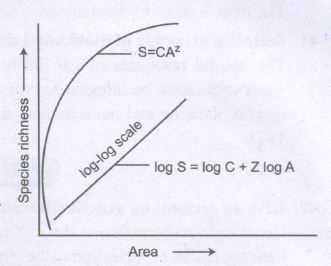
German Naturalist and Geographer Alexander von Humboldt explored the wilderness of south American jungles and found that within a region the species richness increased with increasing area but upto a certain limit. The relationship between species richness and area for a wide variety of taxa (angiosperm plants, birds, bats and freshwater fishes) turned out to be the rectangular hyperbola. On a logarithmic scale, the relationship is a straight line described by the equation.
where
log S = log C + Z log A
S = Species richness
A = Area
Z = Slope of the line
(regression coefficient)
C = Y-intercept
Regression coefficient Z generally has a value of 0.1-0.2 regardless of taxonomic group or region. However, in case of the species - area relationship in very large areas like entire continents; the slope of the line appears to be much steeper (Z-value in the range of 0.6-1.2). For example, in case of the fruit eating (frugivorous) birds and mammals in the tropical forests of different continents, the slope is found to be a steeper line.
3.
1. Transgenesis is a powerful tool to study gene expression and developmental processes in higher organisms.
2. Transgenesis helps in the improvement of genetic characters in animals. Transgenic animals serve as good models for understanding human diseases which help in the investigation of new treatments for diseases. Transgenic models exist for many human diseases such as cancer, Alzheimer's, cystic fibrosis, rheumatoid arthritis and sickle cell anemia.
3. Transgenic animals are used to produce proteins which are important for medical and pharmaceutical applications.
4. Transgenic mice are used for testing the safety of vaccines.
5. Transgenic animals are used for testing toxicity in animals that carry genes which make them sensitive to toxic substances than non-transgenic animals exposed to toxic substances and their effects are studied.
6. Transgenesis is important for improving the quality and quantity of milk, meat, eggs and wool production in addition to testing drug resistance.
4.
(i) Urey and Miller (1953), paved way for understanding the possible synthesis of organic compounds that led to the appearance of living organisms.
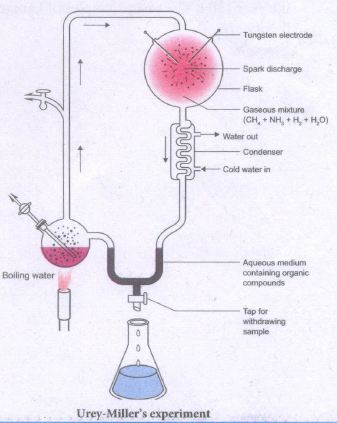
(ii) In their experiment, a mixture of gases was allowed to circulate over electric discharge from a tungsten electrode.
(iii) A small flask was kept boiling and the steam emanating from it was made to mix with the mixture of gases (ammonia, methane, and hydrogen) in the large chamber that was connected to the boiling water. The steam condensed to form water which ran down the 'U' tube.
(iv) The experiment was conducted continuously for a week and the liquid was analyzed. Glycine, alanine, beta-alanine, and aspartic A acid were identified. Thus Miller's experiments highlighted the possibility of abiogenetic synthesis of a large amount of variety of organic compounds in nature from a mixture of sample gases in which the only source of carbon was methane. Later in similar experiments, formation of all types of amino acids, and nitrogen bases were noticed.
5.
cervial cancer: Cervical cancer is caused by a sexually transmitted virus called Human Papilloma virus (HPV). HPV may cause abnormal growth of cervical cells or cervical dysplasia.
The most common symptoms and signs of cervical cancer are pelvic pain, increased vaginal discharge and abnormal vaginal bleeding. The risk factors for cervical cancer include
(i) Having multiple sexual partners
(ii) Prolonged use of contraceptive pills
Cervical cancer can be diagnosed by a Papanicolaou smear (PAP smear) combined With an HPV test. X-Ray, CT scan, MRI and a PET scan may also be used to determine the stage of cancer. The treatment options for cervical. cancer include radiation therapy, surgery and chemotherapy.
Modern screening techniques can detect precancerous changes in the cervix. Therefore screening is recommended for women above 30 years once in a year. Cervical cancer can be prevented with vaccination. Primary prevention begins with HPV vaccination of girls aged 9 - 13 years, before they become sexually active. Modification in lifestyle can also help in preventing cervical cancer. Healthy diet, avoiding tobacco usage, preventing early marriages, practicing monogamy and regular exercise minimize the risk of cervical cancer.
6.
(i) DNA acts as a genetic material. However, in some viruses like Tobacco mosaic virus (TMV), bacteriophage θB, RNA acts as the genetic material. A molecule that can act as a genetic material should have the following properties:
(ii) Self Replication: It should be able to replicate. According to the rule of base pairing and complementarity, both nucleic acids (DNA and RNA) have the ability to direct duplications. Proteins fail to fulfill this criteria.
(iii) It should be stable structurally and chemically. The genetic material should be stable enough not to change with different stages of life cycle, age or with change in physiology of the organism.
(iv) Griffith's transforming principle, Heat which killed the bacteria did not destroy some of the properties of genetic material. In DNA the two strands being complementary, if separated (denatured) by heating can come together (renaturation) when appropriate condition is provided.
(v) Further 2' OH group present at every nucleotide in RNA is a reactive group that makes RNA liable and easily degradable. RNA is also known to be catalytic and reactive.
(vi) Hence DNA is chemically more stable and chemically less reactive when compared to RNA.
(vii) Presence of thymine instead of uracil in DNA confers additional stability to DNA.
(viii) It should be able to express itself in the form of Mendelian characters ', RNA can directly code for protein synthesis DNA, however depends on RNA for synthesis of proteins.
(ix) Both DNA and RNA can act as a genetic material, but DNA- being more stable stores the genetic information and RNA transfers the genetic information
(x) Variation through mutation: It should be able to mutate. Both DNA and RNA are able to mutate. RNA being unstable, mutates at a faster rate.
7.
8.
The plants which are living in dry or xeric condition are known as Xerophytes.
Xerophytic habitat can be of two different types They are:
(a) physical dryness: In these habitats, soil has a little amount of water due to the inability of the soil to hold water because of low rainfall.
(b) physiological dryness: In these habitats, water is sufficiently present but plants are unable to absorb it because of the absence of capillary spaces. Example: Plants in salty and acidic soil.
Based on adaptive characters xerophytes are classified into three categories. They are Ephemerals, Succulents and Non - succulent plants.
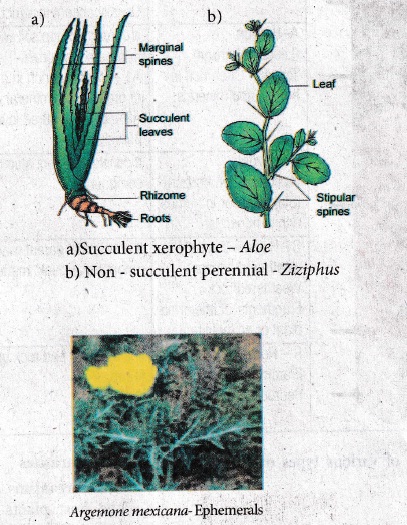
(i) Ephemerals: These are also called drought escapers or drought evaders. These plants complete their life cycle within a short period (single season). These are not true xerophytes. Examples: Argemone, Mollugo, Tribulus and Tephrosia.
(ii) Succulents: These are also called drought enduring plants. These plants store water in their plant parts during the dry period. These plants develop certain adaptive characters to resist extreme ,drought conditions. Examples: Opuntia, Aloe, Bryophyllum and Begonia.
(iii) Non succulents: These are also called drought resistant plants ( true xerophytes). They face both external and internal dryness. They have many adaptations to resist dry conditions. Examples: Casuarina, Nerium, Zizyphus and Acacia.
9.
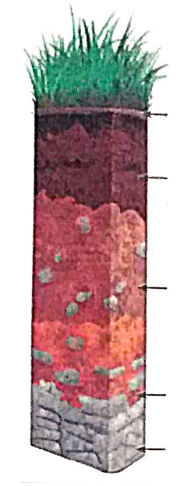 Horizon Description O-Horizon (Organic horizon) Humus It consists of fresh or partially decomposed organic matter.
10.
1. In 1997, Rosie, the first transgenic cow produced human protein enriched milk, which contained the human alpha lactalbumin.
2. Alpha lactalbumin is a protein composed of 123 amino acidic and 4 disulphide bridges, with a molecular weight of 14178 Da.
3. In human milk, & lactalbumin is the most abundant protein comprising 25% of total protein found in human milk.
4. It is synthesized by the mammary glands & lactalbumin binds calcium and zinc ions and possesses bactericidal antitumor activities.
11.
Advantages of Herbicide Tolerant Crops:
1. Weed control improves higher crop yields;
2. Reduces spray of herbicide;
3. Reduces competition between crop plant and weed;
4. Use of low toxicity compounds which do not remain active in the soil; and
5. The ability to conserve soil structure and microbes.
12.
The diagrammatic representation of position of genes and related distances between the adjacent genes is called gene mapping.
Uses
(i) Used to determine gene order.
(i) Identify the locus of a gene.
(i) Calculate the distance between genes.
(i) Useful in predicting results of dihybrid and trihybrid crosses.
(i) Allows the geneticists to understand the overall genetic complexity of particular organism.
13.
(i) Complete Linkage
(ii)
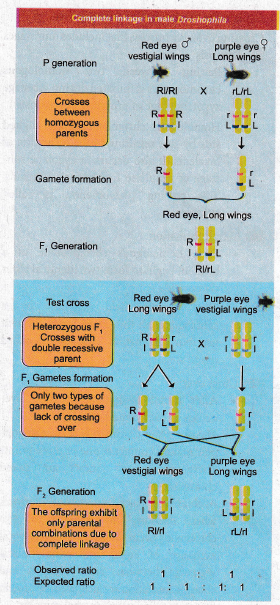
(iii) Observed ratio 1:1
14.
The fusion of male and female gamete is called fertilization. Fertilization in angiosperms is double fertilization type.
Pollen germinates on the stigma. Pollen tube produced grows through the style towards the micropyle of the ovule pollen tubes enter into one of the synergids of the embryo sac.
Discharge of male gametes occur syngamy - one gamete and an egg cell fuses to form diploid zygote Triple fusion - The other male gamete fuses with the two haploid female polar nuclei. A triploid primary endosperm nucleus results.
15.
16.
CSS - Carbon Capture and Storage.
17.
There is a gradual decrease in energy transfer at successive tropic levels from producers to higher levels, hence the pyramid of energy is always upright.
18.
A desert has little or no plant life without plants, there is no organic horizon in the soil leading to a low level of water retention that is unsuitable for plant growth.
19.
Green House Effect and Global warming:
Natural environment and climate are dynamic and keep changing over course of time. Reasons for climate change
a) Human population growth
b) Industrialization
c) Associated anthropological activities the changes.
Impact on Global Warming:
(i) Large-scale changes of global environment can lead to hazards, which may include climate change, stratospheric ozone depletion, changes in ecosystems due to loss of biodiversity, changes in hydrological systems and the supplies of freshwater, land degradation, urbanization, and stress on food-producing systems.
(ii) Greenhouse gases (GHG) water vapour, carbon dioxide, methane, nitrous oxide, ozone and some artificial chemicals such as chlorofluorocarbons (CFCs) causes greenhouse effect. The absorbed energy warms the atmosphere and the surface of the Earth
(iii) Global warming will have a significant impact on people and nature. As global average temperatures rise, precipitation patterns could be affected. Extreme wet and dry conditions can be expected (flooding and desertification). Coastal areas shall become more vulnerable to storm surges as sea level rises. Plant and animal species will migrate or disappear in response to climate change.
(iv) Global warming can directly affect the flora and fauna. This could also result in shortage of food and even lead to a food crisis and affect the health of the people and organisms.
Control Measures:
The UNO has several measures to control or reduce pollution. Through various conventions organized by UNO, the countries assured to take steps to control or reduce emissions by factories and automobiles.
20.
Name of the process-Plant tissue culture Types:
(a) Organ culture
(b) Meristem culture
(c) Protoplast culture
(d) Cell culture
21.
22.
Parthenogenesis is the phenomenon in which female gamete directly develops into a new organism. (e,g:) Honeybee (male or drone).
23.
A true breeding lines means it has undergone continuous self pollination having stable trait inheritance from parent to off spring.
24.
(d)
| A | B | C | D |
| (iv) | (i) | (ii) | (iii) |
25.
(b)
Vasectomy-Prevents spermatogenesis
26.
(b)
inhibiting release of FSH and LH
27.
(d)
One low and one intermediate density band
28.
(d)
Capacitation
29.
(a)
Seminal vesicle
30.
(c)
Epididymis
31.
(b)
Females are homogametic and males are heterogametic
32.
(a)
Positive eugenics
33.
(c)
Francis Galton
34.
(b)
50%
35.
(c)
Viviparous
36.
(d)
A, B, AB and O
37.
(a) A and R are true, R is the correct explanation of A
38.
D. If both A and R are false.
39.
(i) Placenta is a temporary endocrine formed during pregnancy
(ii) It connects the foetus to the uterine through the umbilical cord.
(ii) It is the organ by which the nutri respiratory and excretory functions fulfilled.
40.
Initiation of translation in E. coli begins with the formation of an initiation complex, consisting of the 30S subunits of the ribosome, a messenger RNA and the charged N-formyl methionine tRNA (fmet - t RNA fmet), three proteinaceous initiation factors (IF 1, IF2, IF3), GTP (Guanine Tri Phosphate) and Mg2+.
41.
If the mother is Rh negative and foetus is Rh positive, anti D antibodies should be administered to the mother at 28th and 34th week of gestation as a prophylactic measure. If the Rh negative mother delivers Rh positive child then anti D antibodies should be administered to the mother soon after delivery. This develops passive immunity and prevents the formation of anti D antibodies in the mother's blood by destroying the Rh foetal RBC before the mother's immune system is sensitized. This has to be done whenever the woman attains pregnancy.
42.
After ovulation, the Graafian follicle turns into corpus luteum (a transitory endocrine gland) which secrets progesterone. Progesterone maintains endometrium for implantation of a fertilized ovum. the endometrium of uterus also secretes nutritious fluid for the foetus. Hence this phase is also referred to as secretory phase
43.
(i) Interstitial cells of Leydig are seen embedded in the soft connective tissue surrounding the seminiferous tubules.
(ii) These cells are endocrine natured and produce testosterone (androgen).
(iii) These cells are characteristic to mammalian testes.
44.
A - Neisseria Gonorrhoea
B - AIDS
C - Jaundice
45.
Isogamy. Eg: Monocystis
46.
The transfer of an embryo with more than 8 blastomeres stage into uterus is called embryo transfer technique.
47.
(i) Monozygotic twins - single fertilized egg splits into two embryos. The individuals are of the same sex, look alike and share the same genes.
(ii) Dizygotic twins - Two eggs are fertilized by two sperms. The two individuals may or may not be of same sex and are nonidentical.
(iii) Siamese twins - conjoined twins joined during birth.
48.
(i) It is a temporary endocrine gland formed from the ruptured Graafian follicle.
(ii) It secretes a large amount of progesterone which is essential for maintenance of the endometrium of the uterus. If fertilization does not occur it degenerates.
49.
Termination is the third phase of translation Termination of protein synthesis occurs when one of the three stop codons appears in the 'A' site of the ribosome. (UAA, UAG, UGA)
50.
A sequence of there mRNA bases represents a triplet codon. It is the sequence relationship between nucleotide in genes (mRNA) and the amino acids in the proteins they encode. There are 64 possible triplets.
51.
(i) A gene, sex-lethal (SxL) located on the X chromosome, in Drosophila directs female development.
(ii) This gene has two states of activity. When it is 'on' it directs female development and when it is 'off maleness ensures.
(iii) Other genes located on the X chromosome and autosomes regulates sex switch gene.
(Iv) However, the Ychromosome of Drosophila is required for male fertility.
52.
(i) A dominant X - linked gene is necessary for the formation of colour sensitive cells, the cones. which helps to distinguish colours.
(ii) A recessive form of the gene is incapable of producing the cones. Hence the affected person is unable to distinguish red and green colour.
53.
(i) SRY stands for sex determining region Y.
(ii) It is a gene found in the euchromatin regions of the Non-combining region of Y chromosome.
(iii) It codes for testes determining factor (TDF) present in testes of Males. This gene does not occur in X chromosome.
54.
(i) The proportion of the age groups in a population is its age distribution attribute.
(ii) This determines the reproductive status of the population at the given time and is an indicator of the future population size.
(iii) Usually a rapidly growing population will have larger proportion of young individuals.
(iv) A stable population will have an even distribution of various age classes.
(v) A declining population tends to have a larger proportion of older individuals
55.
56.
1. Farmers need to be made aware about organic farming which does not require any kind of fertilizers and pesticides usage.
2. Crop rotation can be practiced by farmers which reduces the need for fertilizers and improves the fertility of the soil.
3. Ships and tankers that carry oil can be supervised earlier and ensured that they are not damaged in any way and through this oil will not be split in the ocean water.
57.
(a) Transfer of an ovum collected from donor into the fallopian tube is called GIFT (Gamete Intra-fallopian transfer)
(b) Transferring of an embryo with more than 8 blastomeres into uterus is called IUT (Intra uterine transfer)
(c) Multi load 375 is a copper releasing IUD
58.
During DNA replication, One acts as the leading strand and the other is the lagging strand.
| Leading Strand | Lagging Strand |
|---|---|
| lt is continuously formed as replicated strand of DNA without any gap |
It is replicated strand of DNA which is formed by the joining of short segments called okazaki segment |
| The growth of leading strand is in 5' → 3'direction | Each okazaki segment grows in 5' → 3'direction but the growth of the lagging strand is in 5' → 3'direction. |
| lt does not require DNA ligase for its growth and used in PCR | DNA ligase is required for the formation of lagging strand from okazaki segments |
59.
(i) The types of barriers which involve macrophages are phagocytic barriers
(ii) It is also known as cellular barriers.
(iii) Certain types of leucocytes (WBCs), such as polymerase nuclear leukocytes (PMNL) : neutrophils, monocytes and natural killer cells (a type of lymphocytes) in the blood as well as macrophages in tissues can phagocytose and destroy microbes.
60.
1. Sexual reproduction is considered to be a better mode of reproduction because it creates a hybrid that has more vigor than the parents.
2. It also creates the variation in off springs making its survival better.
3. The fact that most of the eukaryotes reproduce sexually in evidence of its evolutionary success.
4. In many animals, it is actually the only mode of reproduction.

12th Standard Syllabus & Materials
12th Standard
TN 12th Computer Applications வலையமைப்பு வடமிடல் Sample Question Papers Study Material - QB365 Set A
NEW12th Standard
TN 12th Computer Applications களப்பெயர் முறைமை (DNS) Sample Question Papers Study Material - QB365 Set A
NEW12th Standard
TN 12th Computer Applications வலையமைப்பு எடுத்துக்காட்டுகள் மற்றும் நெறிமுறைகள் Sample Question Papers Study Material - QB365 Set A
NEW12th Standard
TN 12th Computer Applications கணினி வலையமைப்பு ஓர் அறிமுகம் Sample Question Papers Study Material - QB365 Set A



Tamilnadu Stateboard 12th Standard Subjects

Maths

Chemistry

Physics
Biology

Computer Science

Business Maths and Statistics

Economics

Commerce

Accountancy

History

Computer Applications
Biology
Computer Technology
Computer Applications
Computer Science
Business Maths and Statistics
Commerce
Economics
Maths
Chemistry
Physics
Computer Technology
History
Accountancy

Tamil

English

French
Tamilnadu Stateboard Standards

