
 100% FREE ACCESS
12th Standard Syllabus & Materials
12th Standard
TN 12th Computer Applications மின்னணு தரவு பரிமாற்றம் Sample Question Papers Study Material - QB365 Set A
NEW12th Standard
TN 12th Computer Applications மின் - வணிக பாதுகாப்பு அமைப்புகள் Sample Question Papers Study Material - QB365 Set A
NEW12th Standard
TN 12th Computer Applications மின்னணு செலுத்தல் முறைகள் Sample Question Papers Study Material - QB365 Set A
NEW12th Standard
TN 12th Computer Applications மின் - வணிகம் Sample Question Papers Study Material - QB365 Set A
NEW12th Standard
TN 12th Computer Applications திறந்த மூல கருத்துருக்கள் Sample Question Papers Study Material - QB365 Set A
NEW12th Standard
TN 12th Computer Applications வலையமைப்பு வடமிடல் Sample Question Papers Study Material - QB365 Set A

Published on: 29/01/2021
12th Standard Biology English Medium Reduced Syllabus Important Questions - 2021 Part - 2
Download Tamil Nadu 12th Standard Biology question papers, model tests, one-mark questions, important questions, and public exam papers in PDF format. Free study materials and answer keys for TN State Board students.
Questions + Answers key
Take MCQ Biology Test1.
Define Vivipary.
2.
What is the function of seminal fluid?
3.
Give definitions for organic farming?
4.
Soil formation can be initiated by biological organisms. Explain how?
5.
‘Green algae are not likely to be found in the deepest strata of the ocean’. Give at least one reason.
6.
7.
What is biological oxygen demand?
8.
How does Neanderthal man differ from the modern man in appearance?
9.
10.
Name the anticodon required to recognize the following codons: AAU, CGA, UAU, and GCA.
11.
12.
What are interferons? Mention their role.
13.
“The endosperm of angiosperm is different from gymnosperm”. Do you agree. Justify your answer.
14.
List out two sub-aerial stem modifications with example.
15.
Give an account on uterine wall layers.
16.
'A' and 'B' are the male & female sex cells respectively which look alike and performs similar functions. 'A' and 'B' fuse to form a new individual 'D'. Which type of gametic fusion does this represent? Give an example
17.
What are Braxter-Hick's contractions?
18.
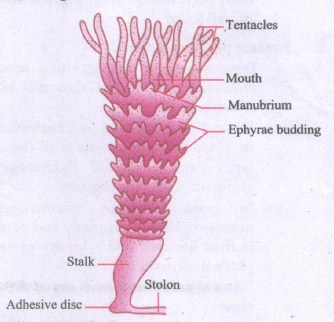
(i) Identify the animal
(ii) What is significant about the animal.
19.
What is strobilation?
20.
Discuss which wood is better for making furniture.
21.
How do sacred groves help in the conservation of biodiversity?
22.
Shape of pyramid in a particular ecosystem is always different in shape. Explain with example.
23.
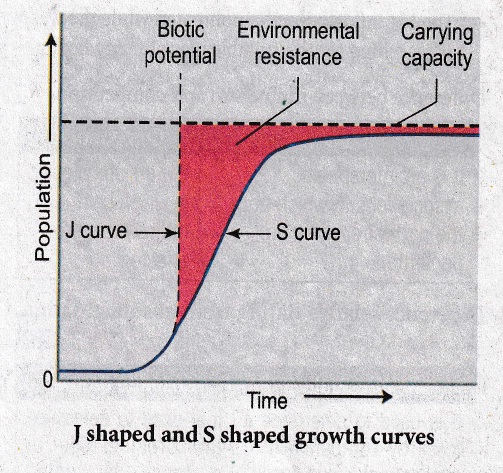
Differentiate J and S shaped curve
24.
Write notes on the following:
a. Eutrophication
b. Algal Bloom
25.
26.
In north eastern states, the jhum culture is a major threat to biodiversity – substantiate.
27.
Compare and Contrast the insitu and exsitu conservation. (or) What are the differences between in-situ and ex-situ conservation ?
28.
Justify the role of microbes as a bio-fertilizer
29.
How will you identify a vector ?
30.
You are working in a biotechnology lab with a bacterium namely E.coli. How will you cut the nucleotide sequence? explain it.
31.
State any three goals of the human genome project.
32.
What is colostrum? Write its significance.
33.
“Endothecium is associated with dehiscence of anther” Justify the statement
34.
What are IUD's? Explain its way of functioning. Also describe their types.
35.
Given an account on following terms.
(a) Hologamy
(b) Isogamy
(c) Anisogamy
(d) Merogamy
(e) Paedogamy
36.
Explain about the objections to Darwinism.
37.
Explain about breast self Examination and Early diagnosis of Cancer.
38.
List the salient features of genetic code.
39.
What are psychoactive drugs? Add a note Marijuana and Opium
40.
List out the new breeding techniques involved in developing new traits in plant breeding.
41.
42.
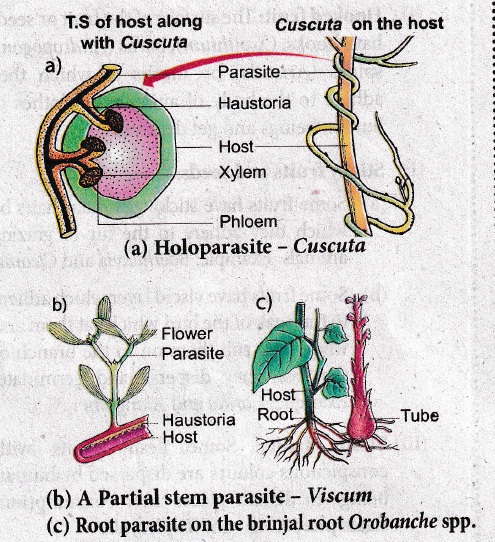
Give an account of various types of parasitism with examples.
43.
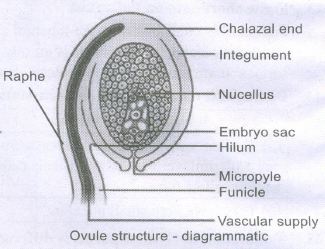
With a suitable diagram explain the structure of an ovule.
44.
45.
Expansion of the RCH is _____
Reproduction and Children Health Programme
Reproductive arid Child's Health Committee
Reproduction and Critical Health Care
Reproductive and Child Health Care
46.
In the year ______ india is expected to become the largest country in population size ______
2021
2025
2022
2030
47.
Each testis is covered by a fibrous layer _____
tubulus rectus
corona radiata
vitelline membrane
tunica albuginea
48.
The whole process of spermatogenesis takes about ______ days.
25
42
64
72
49.
The quickest method of plant breeding is _______.
Introduction
Selection
Hybridization
Mutation breeding
50.
51.
Which of the following is / are not a natural ecosystem?
Forest ecosystem
Rice field
Grassland ecosystem
Desert ecosystem
52.
53.
54.
Cryopreservation means it is a process to preserve plant cells, tissues or organs _____.
at very low temperature by using ether.
at very high temperature by using liquid nitrogen
at very low temperature of -196°C by using liquid nitrogen
at very low temperature by using liquid nitrogen
55.
The time duration for sterilization process by using autoclave is ______ minutes and the temperature is ______.
10 to 30 minutes and 125° C
15 to 30 minutes and 121° C
15 to 20 minutes and 125° C
10 to 20 minutes and 121° C
56.
Some of the characteristics of Bt cotton are ______.
Long fibre and resistant to aphids
Medium yield, long fibre and resistant to beetle pests
high yield and production of toxic protein crystals which kill dipteran pests.
High yield and resistant to ball worms
57.
58.
If haploid number in a cell is 18. The double monosomic and trisomic number will be _____.
35 and 37
34 and 37
37 and 35
17 and 19
59.
Gene which suppresses other genes activity but does not lie on the same locus is called as _____.
Epistatic
Supplement only
Hypostatic
Codominant
1.
Vivipary is a condition in which animals give rise to living young ones after being nourished in the uterus through the placenta. E.g. human
2.
The seminal fluid acts as a transport medium, provides nutrients, contains chemicals that protect and activate the sperms and also facilitate their movement.
3.
Organic farming is an alternative agricultural system in which plants/crops are cultivated in natural ways by using biological inputs to maintain soil fertility and ecological balance thereby minimizing pollution and wastage.
4.
Soil formation is initiated by the weathering process. Biological weathering takes place when organisms like bacteria, fungi, lichens & plants help in the breakdown of rocks through the production of acids & certain chemical substances.
5.
The blue green light have short wavelength & penetrates into the water. Green algae is unable to use that component of light. Blue light can penetrate up to 500 ft depth therefore algae are unlikely to survive below that depth.
6.
7.
BOD stands for Biological Oxygen Demand. BOD refers to the amount of oxygen that would be consumed if all the organic matter in one liter of water were oxidized by bacteria. The greater the BOD of the waste water, the more is its polluting potential.
8.
(i) Neanderthal human was found in Neander Valley, Germany with a brain size of 1400 cc and lived between 34,000 - 1,00,000 years ago.
(ii) They differ from the modern. human in having semierect posture, flat cranium, sloping forehead, thin large orbits, heavy brow ridges, protruding jaws and no chin.
9.
10.
(i) AAU - UUA
(ii) CGA - GCU
(iii) UAU - AUA
(iv) GCA - CGU
11.
12.
Interferons: These are the proteins made and released by host cells in response to the presence of pathogens such as viruses, bacteria, parasites etc
RoIe: They inhibit viral infections and stimulate the entire immune system to fight disease. They also regulate many kinds of cell functions
13.
The endosperm in gymnosperms is haploid because it is formed from the haploid megaspore. In angiosperm the endosperm is triploid, a product or triple fusion.
14.
Sucker - chrysanthemum
Stolon - jasmine
15.
The wall of the uterus has three layers of tissues. The outermost thin membranous serous layer called the perimetrium, the middle thick muscular layer called myometrium and the inner glandular layer called endometrium. The endometrium undergoes cyclic changes during the menstrual cycle while myometrium exhibits strong contractions during parturition.
16.
Isogamy. Eg: Monocystis
17.
(i) Throughout pregnancy the uterus undergoes periodic episodes of weak and strong contractions.
(ii) These contractions called Braxter-Hick's contractions lead to false labour.
18.
(i) Aurelia
(ii) The Significance is that Aurelia reproduces asexually by a special type of transverse fission called strobilation.
19.
(i) In some metazoan animals, a special type of transverse fission called strobilation occurs.
(ii) In the process of strobilation, several transverse fissions occur simultaneously giving rise to a number of individuals which often do not separate immediately from each other. E.g. Aurelia.
20.
1. Tectona grandis is the plant gives wood better for making furniture.
2. It is one of the best timber in the world.
3. The heart wood is yellow to golden brown turner darker.
4. Durability and immune to attack of termites and fungi is well known.
21.
(i) They help for detailed floristic and faunistic studies
(ii) These groves provide a number of ecosystem services to the neighborhood like protecting watershed, fodder, medicinal plants and microclimate control
22.
Pyramid of number
(i) In a forest ecosystem the pyramid of number is different in shape, it is because the base (T 1) of the pyramid occupies large sized trees (producer) which are lesser in number.
(ii) Herbivores (T2) occupying second trophic level, are more in number than the producers (T1).
(iii) In final trophic level (T4) tertiary consumers (lion) are lesser in number than the secondary consumers (T3).
(iv) Therefore, the pyramid of numbers in forest ecosystem looks spindle-shaped.
Pyramid of biomass
(i) In forest ecosystem, there is a gradual decrease in biomass of organisms at successive trophic levels from producers to top carnivores (Tertiary consumer). Therefore, the pyramid of biomass looks upright.
23.
| S. No. | J shaped curve | S shaped curve |
|---|---|---|
| 1. | When a population increases rapidly in an exponential fashion and then stops abruptly due to environmental resistance or due to sudden appearance of a limiting factor, they are said to exhibit J-shaped growth form, |
Some populations, as in a population of small mammals, increase lowly at first then more rapidly & gradually slow down as environmental resistance increases where by equilibrium is reached and maintained |
| 2. | Many insects show explosive increase in number during the rainy season followed by their disappearance at the end of season. | Their growth is represented by s shaped growth curve. |
24.
(a) Eutrophication:
1. Eutrophication is defined as the process of nutrient enrichment of water and consequent loss of species diversity in water bodies.
2. Increased nutrient content of the water body causes algal bloom, excess growth of algae, especially planktonic algae.
3. It covers the water surface, secrete toxins and reduces the dissolved oxygen content of water.
4. These toxins inhibit the growth of other algae and plants and cause death of aquatic animals.
5. O2 deficiency may be a cause for death of animals (BOD).
(b) Algal Bloom:
1. A rapid growth of microscopic algae (or) cyanobacteria in water, often resulting in a coloured scum on the surface.
2. Rapid increase of accumulation in the population of algae in fresh water (or) marine water and is recognized by the discoloration in the water from their pigments.
25.
26.
(i) In shifting cultivation, plots of natural tree vegetation are burnt away and the cleared patches are farmed for 2-3 seasons, after which their fertility reduces to a point where crop production is no longer profitable.
(ii) The farmer then abandons this patch and cuts down a new patch of forest trees elsewhere for crop production. This system is practiced in northeastern regions of India.
(iii) When vast areas are cleared and burnt, it results in loss of forest cover, pollution, and discharge of CO2 which in turn attributes to a loss of habitat and climate change which has an impact on the faunal diversity of that regions.
(iv) Carrot grass (Parthenium) and lantana introduced into our country have become invasive and caused environmental damage; they pose a threat to the native species of plants in our forests.
27.
Insitu and Exsitu are two types of biodiversity conservation strategies.
| S. No | Insitu Conservation | Exsitu Conservation |
|---|---|---|
| i) | It is the on-site conservation or the conservation of genetic resources in natural populations of plant or animal species. | This is a conservation strategy which involves placing of threatened animals and plants in special care locations for their protection. |
| ii) | It is the process of protecting an endangered plant or animal species in its natural habitat, either by protecting or restoring the habitat itself or by defending the species from predators. | It helps in recovering populations or preventing their extinction under simulated conditions that closely resemble their natural habitats. |
| iii) | National Parks, Biosphere Reserve, Wild Life Sanctuaries form insitu conservation strategies. | Zoological parks and Botanical gardens are common exsitu conservation programs. |
28.
(i) Bio-fertilizers are formulation of living microorganisms that enrich the nutrient quality of the soil. They increase physico - chemical properties of soils such as soil structure, texture, water holding capacity, cation exchange capacity and pH by providing several nutrients and sufficient organic matter.
(ii) The main sources of bio-fertilizers are bacteria, fungi and cyanobacteria. Rhizobium is a example for symbiotic nitrogen fixing bacteria. This bacterium infects the root nodules of leguminous plants and fixes atmospheric nitrogen into organic forms. Azospirillum and Azotobacter are free living bacteria that fix atmospheric nitrogen and enrich the nitrogen content of soil.
(iii) A symbiotic association between a fungus and the roots of the plants is called mycorrhiza. The fungal symbiont in these associations absorbs the phosphorus from soil and transfers to the plant. Plants having such association show other benefits such as resistance to root-borne pathogens, tolerance to salinity, drought, enhances plant growth and developments. For example, genus Glomus form mycorrhiza.
(iv) Cyanobacteria (or) blue green algae (BGA) are prokaryotic free-living organisms which can fix nitrogen. Oscillatoria, Nostoc, Anabaena, Tolypothrix are well known nitrogen fixing cyanobacteria. In water logged paddy fields Cyanobacteria multiply and fix molecular nitrogen. Cyanobacteria secrete growth promoting substances like indole-3-acetic acid, indole-3-butyric acid, naphthalene acetic acid, amino acids, proteins, vitamins which promotes plant growth and production.
(v) Biofertilizers are commonly used in organic farming methods.
(vi) This process involves the use of biological materials, avoiding synthetic substances to maintain soil fertility and ecological balance thereby minimizing pollution and wastage.
29.
Properties of Vectors:
1. Vectors are able to replicate autonomously to produce multiple copies of them along with their DNA insert in the host cell.
2. It should be small in size and of low molecular weight, less than 10 Kb (kilo base pair) in size so that entry/transfer into host cell is easy.
3. Vector must contain an origin of replication so that it can independently replicate within the host.
4. It should contain a suitable marker such as antibiotic resistance, to permit its detection in transformed host cell.
5. Vector should have unique target sites for integration with DNA insert and should have the ability to integrate with DNA insert it carries into the genome of the host cell. Most of the commonly used cloning vectors have more than one restriction site. These are Multiple Cloning Site (MCS) or polylinker. Presence of MCS facilitates the use of restriction enzyme of choice.
30.
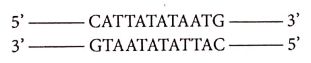
(i) ECORI is from Escherichia ( E ) coli (co), strain RY 13 (R) & first endonuclease (I) to be discovered.
(ii) It contains 2 different antibiotics resistance genes & recognition site for several restriction enzymes.
(iii) This sequence is referred to as a restriction site & is generally -palindromic which means that the sequence in both DNA strands at this site read same in 5' - 3' direction & in-the 3'-5' direction.
(iv) The exact kind of cleavage produced by a restriction enzyme is important in the design of a gene cloning experiment.
(v) Some cleave both strands of DNA through the centre resulting in blunt or flush end.
(vi) These are known as symmetric cuts.
(vii) Some enzymes cut in a way producing protruding & recessed ends known as sticky or cohesive end.
(viii) These are known as staggered or asymmetric cuts.
31.
(i) Identify all the genes (approximately 30000) in human DNA.
(ii) To store this information in databases.
(iii) Improve tools for data analysis.
32.
Colostrum is the yellowish fluid produced from the mother's mammary glands during initial few days of location, after parturition.
Significance:
1. It has less lactose than milk and almost no fat, but it contains more proteins, vitamin A and minerals.
2. Colostrum is also rich in IgA antibodies.
3. This helps to protect the infant's digestive tract against bacterial infection.
4. Breast milk is the ideal food for infants as it contains all the constituents in suitable concentration and is easily digestable.
5. It is fully sufficient till about 6 months of age and all infants must be breast fed by the mother to ensure the growth of a healthy baby.
33.
Endothecium is a single layer of radially elongated cells, The inner tangential wall of this cell develops bands of a cellulose, The cells are hygroscopic. The stomium of anther lobe lack these thickenings. Stomium along with the hygroscopic nature of endothecium helps in the dehiscence of anther
34.
Intrauterine Devices (IUDs) are inserted by medical experts in the uterus through the vagina. These devices are available as copper releasing IUDs, hormone-releasing IUDs and nonmedicated IUDs. IUDs increase phagocytosis of sperm within the uterus. IUDs are the ideal contraceptives for females who want to delay pregnancy. It is one of the popular methods of contraception in India and has a success rate of 95 to 99%.
Copper releasing IUDs differ from each other by the amount of copper. Copper IUDs such as Cu T-380 A, Nova T, Cu 7, Cu T 380 Ag, Multiload 375, etc. release free copper and copper salts into the uterus and suppress sperm motility. They can remain in the uterus for five to ten years.
Hormone-releasing IUDs such as Progestasert and LNG - 20 are often called as intrauterine systems (IUS). They increase the viscosity of the cervical mucus and thereby prevent sperms from entering the cervix.
Non-medicated IUDs are made of plastic or stainless steel. Lippes loop is a double S-shaped plastic device.
35.
(a) Hologamy: In Hologamy, the adult individuals do not produce gametes, but they themselves act as gametes and fuse to form new individuals.
E.g: Trichonympha
(b) Isogamy: Fusion of morphologically & physiologically similar gametes.
E.g: Monocystis
(c) Anisogamy: Fusion of morphologically & physiologically dissimilar gametes.
Eg: Vertebrates.
(d) Merogamy: Fusion of small-sized morphologically different gametes (microgametes)
(e) Paedogamy: Fusion of young individuals produced immediately after the mitotic division of adult parent cell.
36.
Objections to Darwinism: Some objections raised against Darwinism were -
(i) Darwin failed to explain the mechanism of variation.
(ii) Darwinism explains the survival of the fittest but not the arrival of the fittest.
(iii) He focused on small fluctuating variations that are mostly non-heritable.
(iv) He did not distinguish between somatic and germinal variations.
(v) He could not explain the occurrence of vestigial organs, over specialization of some organs like large tusks in extinct mammoths, oversized antlers in the extinct Irish deer, etc.,
37.
Breast self examination and early diagnosis of cancer.
(i) Breast is divided into 4 quadrants and the center (Nipple) which is the 5th quadrant.
(ii) Each quadrant of the breast is felt for lumps using the palm of the opposite hand.
(iii) The examination is done in both lying down and standing positions, monthly once after the 1st week of menstrual cycle. This way if there are lumps or any deviation of the nipple to one side or any blood discharge from the nipple we can identify cancer at an early stage. Mammograms are done for women above the age of 40 years and for young girls and women below 40 years. Ultrasound of the breast aids in early diagnosis.
38.
The salient features of genetic code are as follows:
(i) The genetic codon is a triplet code and 61 codons code for amino acids and 3 codons do not code for any amino acid and function as stop codon (Termination).
(ii) The genetic code is universal. It means that all known living systems use nucleic acids and the same three base codons (triplet codon) direct the synthesis of protein from amino acids. for example, the mRNA (UUU) codon codes for phenylalanine in all cells of all organisms. some exceptions are reported in prokaryotic, mitochondrial and chloroplast genomes. However similarities are more common than differences. Most part of the genetic code is universal in prokaryotes and eukaryotes.
(iii) A non-overlapping codon means that the same letter is not used for two different codons. for instance, the nucleotide sequence GUU GUC represents only two codons.
(iv) It is comma less, which means that the message would be read directly from one end to the other i.e., no punctuation are needed between two codes.
(v) A degenerate code means that more than one triplet codon could code for a specific amino acid. for example, codons GUU, GCU, GUA and GUG code for valine.
(vi) Non-ambiguous code means that one codon will code for one amino acid.
(vii) The code is always read in a fixed direction i.e. from 5'⟶3' direction called polarity.
(viii) AUG has dual functions. It acts as a initiator codon and also codes for the amino acid methionine.
(ix) UAA, UAG (tyrosine) and UGA (tryptophan) codons are designated as termination (stop) codons and also are known as "non-sense" codons.
39.
| psychoactive drugs | ||||
| 1 | Opium Poppy | Papaver somniferun (Family: Papaveraceae) |
Native: South East Europe, Western Asia. Cultivated in MP, Rajasthan, UP (With license) | Morphine strong analgesic during surgery - sleep, relieving Pain. |
| 2 | Cannabis/ Marijuana | Cannabis sativa (Family: Cannabiaceae) | Native: Marijuana to China Cultivated in Gujarat, HP, Uttarkand, UR, MP [with license) |
1. Trans - tetrahydrocannabinol (THC) - cures hypertension, Glucoma, nausea of cancer patients of radio and chemotherapy. 2. Cures bronchial disorder, asthma. |
40.
(i) Hybridization, Mutation breeding, Polyploid breeding, Breeding for developing resistance to diseases, Biofortification, Breeding for resistance to insect pests, New Breeding Techniques (NBT) such as.
(ii) CRISPR/ Cas (Cutting and modifying the genome during the repair process by tool).
(iii) ODM: Oligonucleotide - directed mutagenesis
(iv) Transferring a gene from an identical or closely related species (Cisgenesis).
(v) Organising processes that alter gene activity without altering the DNA itself (Epigenetic methods).
41.
42.
Parasitism:
It is an interaction between two different species in which the smaller partner (parasite) obtains food from the larger partner (host or plant).
So the parasitic species is benefitted while the host species is harmed.
Based on the host-parasite relationship, parasitism is classified into two types they are holoparasite and hemiparasite.
Holoparasites:
The organisms which are dependent upon the host plants for their entire nutrition are called Holoparasites. They are also called total parasites.
Examples:
1. Cuscuta is a total stem parasite of the host plant Acacia, Duranta and many other plants. Cuscuta even gets flower inducing hormone from its host plant.
2. Balanophora, orobanche and Refflesia are the total root parasites found on higher plants.
43.
(i) A mature ovule (megasporangium) consist of a stalk and a body
(ii) Funicle - The stalk of the ovule by which it attaches the ovule to the placenta.
(iii) Integuments - one or two protective covering around the nucellus
(iv) Micropyle - Pore present at the tip of the ovule where the integument is absent
(v) Chalaza - The basal region of the body of the ovule where the nucellus, the integument and funicle meet or merge
(vi) Embryosac- The female gametophyte oval sac like structure in the nucellus, toward the micropylar end.
44.
45.
(c)
Reproduction and Critical Health Care
46.
(c)
2022
47.
(d)
tunica albuginea
48.
(c)
64
49.
(d)
Mutation breeding
50.
(c)
51.
(b)
Rice field
52.
(c)
53.
(a)
54.
(c)
at very low temperature of -196°C by using liquid nitrogen
55.
(b)
15 to 30 minutes and 121° C
56.
(d)
High yield and resistant to ball worms
57.
(c)
58.
(b)
34 and 37
59.
(a)
Epistatic

12th Standard Syllabus & Materials
12th Standard
TN 12th Computer Applications களப்பெயர் முறைமை (DNS) Sample Question Papers Study Material - QB365 Set A
NEW12th Standard
TN 12th Computer Applications வலையமைப்பு எடுத்துக்காட்டுகள் மற்றும் நெறிமுறைகள் Sample Question Papers Study Material - QB365 Set A
NEW12th Standard
TN 12th Computer Applications கணினி வலையமைப்பு ஓர் அறிமுகம் Sample Question Papers Study Material - QB365 Set A
NEW12th Standard
TN 12th Computer Applications PHP-உடன் MySQL-ஐ இணைத்தல் Sample Question Papers Study Material - QB365 Set A



Tamilnadu Stateboard 12th Standard Subjects

Maths

Chemistry

Physics
Biology

Computer Science

Business Maths and Statistics

Economics

Commerce

Accountancy

History

Computer Applications
Biology
Computer Technology
Computer Applications
Computer Science
Business Maths and Statistics
Commerce
Economics
Maths
Chemistry
Physics
Computer Technology
History
Accountancy

Tamil

English

French
Tamilnadu Stateboard Standards

