
 100% FREE ACCESS
12th Standard Syllabus & Materials
12th Standard
TN 12th Computer Applications மின்னணு தரவு பரிமாற்றம் Sample Question Papers Study Material - QB365 Set A
NEW12th Standard
TN 12th Computer Applications மின் - வணிக பாதுகாப்பு அமைப்புகள் Sample Question Papers Study Material - QB365 Set A
NEW12th Standard
TN 12th Computer Applications மின்னணு செலுத்தல் முறைகள் Sample Question Papers Study Material - QB365 Set A
NEW12th Standard
TN 12th Computer Applications மின் - வணிகம் Sample Question Papers Study Material - QB365 Set A
NEW12th Standard
TN 12th Computer Applications திறந்த மூல கருத்துருக்கள் Sample Question Papers Study Material - QB365 Set A
NEW12th Standard
TN 12th Computer Applications வலையமைப்பு வடமிடல் Sample Question Papers Study Material - QB365 Set A

Published on: 29/01/2021
12th Standard Biology English Medium Reduced Syllabus Important Questions with Answer key - 2021 Part - 1
Download Tamil Nadu 12th Standard Biology question papers, model tests, one-mark questions, important questions, and public exam papers in PDF format. Free study materials and answer keys for TN State Board students.
Questions + Answers key
Take MCQ Biology Test1.
The interaction in nature, where one gets benefit on the expense of other is...
Predation
Mutualism
Amensalism
Commensalism
2.
Cry toxins obtained from Bacillus thuringiensis are effective against for______
Mosquitoes
Flies
Nematodes
Bollworms
3.
The organization which published the red list of species is
WWF
IUCN
ZSI
UNEP
4.
Which one of the following is not coming under insitu conservation
Sanctuaries
Natural parks
Zoological park
Biosphere reserve
5.
6.
The process which the sperm undergoes before penetrating the ovum is _____.
Spermiation
Cortical reaction
Spermiogenesis
Capacitation
7.
The glandular accessory organ which produces the largest proportion of semen is ______.
Seminal vesicle
Bulbourethral gland
Prostate gland
Mucous gland
8.
The _______deals with the control of several inherited human diseases especially inborn errors of metabolism
Euphenics
Eugenics
Euthenics
All of these
9.
Animals giving birth to young ones:
Oviparous
Oviviviparous
Viviparous
Both a and b
10.
Which of the following sentences are correct?
1. The offspring exhibit only parental combinations due to incomplete linkage
2. The linked genes exhibit some crossing over in complete linkage
3. The separation of two linked genes are possible in incomplete linkage
4. Crossing over is absent in complete linkage
1 and 2
2 and 3
3 and 4
1 and 4
11.
What can be the blood group of offspring when both parents have AB blood group?
AB only
A, B and AB
A, B, AB and O
A and B only
12.
Three children of a family have blood groups A, AB and B. What could be the genotypes of their parents?
IA IB and IoIo
IA Io and IBIo
IB IB and IA IA
IA IA and IoIo
13.
The scar left by funiculus in the seed is _______.
tegmen
radicle
epicotyl
hilum
14.
Pollen tube was discovered by ______.
J.G. Kolreuter
G.B. Amici
E. Strasburger
E. Hanning
15.
Explain Foetal-ejection reflex
16.
Explain gastrulation.
17.
Name the most effective long-acting reversible contraceptive methods.
18.
Write a short note on phases of life cycle.
19.
Write the uses of nuts you have studied.
20.
Generally human activities are against to the ecosystem, where as a student how will you help to protect ecosystem?
21.
What are DNA vaccines?
22.
If a person thinks he is infected with HIV, due to unprotected sex, and goes for a blood test. Do you think a test such as ELISA will help? If so why? If not, why?
23.
Mention the importance of the position of the testes in humans.
24.
Why does the zygote divides only after the division of Primary endosperm cell.
25.
Explain Oparin - Haldane hypothesis on evolution.
26.
How air pollution can be controlled?
27.
Describe the role of PCR in clinical field.
28.
Write a note on Replica plating technique.
29.
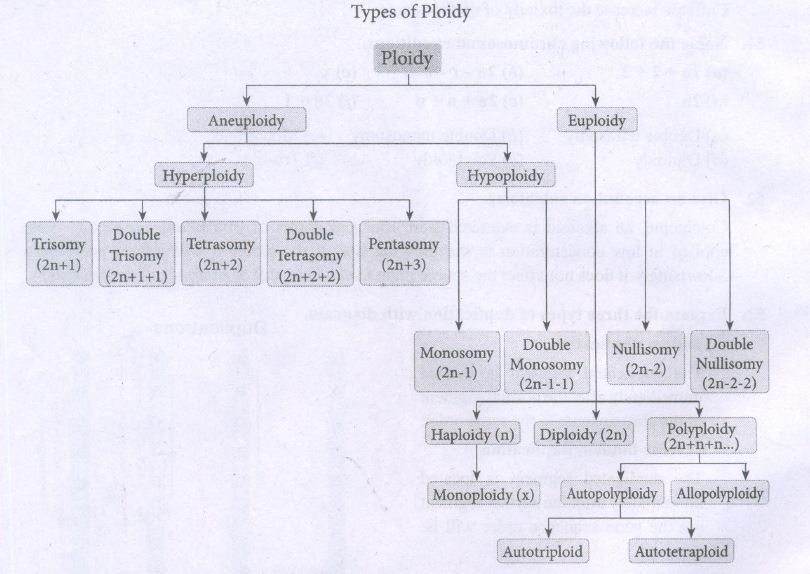
Draw a flow chart depicting the various types of ploidy.
30.
Give the characteristic features of Anemophilous plants.
31.
Write about the different types of ovules.
32.
Write in detail about Autogenic succession and Allogenic succession.
33.
Point out any five morphological adaptations of epiphytes.
34.
Discuss the protocol for micropropagation of banana.
35.
Give a comparative account on Seaweed liquid fertilizer.
36.
What are the objectives of Afforestation programme?
37.
Draw a table mentioning binominals, family name, useful part and their medical uses of any five local medicinal plants
38.
What is radioactive waste how cap it be managed
39.
Explain the process of sewage treatment.
40.
Explain the basic concepts involved in plant tissue culture
41.
Is there any possibilities to transfer a suitable desirable gene to host plant without vector? Justify your answer.
42.
How is sex determined in human beings?
43.
Give reasons for the following:
(a) Some organisms like honey bees are called parthenogenetic animals
(b) A male honey bee has 16 chromosomes where as its female has 32 chromosomes
44.
Atavistic organs - comment.
45.
Name one fossilised connecting link between reptiles and Aves also one living connecting link between Annelida and Arthropoda
46.
What are SNPs? Mention its uses.
47.
Considering the lac operon of E.coli, name the products of the following genes. a) i gene (b) lac Z gene (c) lac Y gene (d) lac a gene
48.
Given below are some events of eukaryotic replication. Name the enzymes involved in the process.
(a) Unwinding of DNA
(b) Joining of Okazaki fragments
(c) Addition of nucleotides to new strand
(d) Correcting the repair
49.
What are Peyer's patches?
50.
Define haematopoiesis.
51.
What is diapedesis?
52.
What is corpus albicans?
53.
Name the four types of fission seen in animals
54.
What is ovulation?
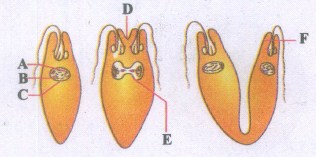
55.
Identify the parts marked as A, B, C, D, E and F for the below diagram.
56.
What is paedogenesis?
57.
What is exogamy?
58.
What is a syndrome?
59.
A person is infected by HIV. How will you diagnose for AIDS?
60.
Assertion(A): Ovulation is the release of ovum from the Graafian follicle.
Reason(R): It occurs during the follicular phase of the menstrual cycle.
Codes:
(a) A and R are true, R is the correct explanation of A
(b) A and R are true, R is not the correct explanation of A
(c) A is true, R is false
(d) Both A and R are false
A and R are true, R is the correct explanation of A
A and R are true, R is not the correct explanation of A
A is true, R is false
Both A and R are false
1.
(d)
Commensalism
2.
(d)
Bollworms
3.
(b)
IUCN
4.
(c)
Zoological park
5.
(d)
6.
(d)
Capacitation
7.
(a)
Seminal vesicle
8.
(a)
Euphenics
9.
(c)
Viviparous
10.
(c)
3 and 4
11.
(b)
A, B and AB
12.
(b)
IA Io and IBIo
13.
(d)
hilum
14.
(b)
G.B. Amici
15.
As the pregnancy progresses, increase in the oestrogen concentration promotes uterine contractions. These uterine contractions facilitate moulding of the foetus and downward movement of the foetus. The descent of the foetus causes dilation of cervix of the uterus and vaginal canal resulting in a neurohumoral reflex called Foetal ejection reflex or Ferguson reflex. This initiates the secretion of oxytocin from the neurohypophysis which in turn brings about the powerful contraction of the uterine muscles and leads to the expulsion of the baby through the birth canal.
16.
The inner cell mass in the blastula is differentiated into epiblast and hypoblast immediately after implantation. The hypoblast is the embryonic endoderm and the epiblast is the ectoderm. The cells remaining in between the epiblast and the endoderm form the mesoderm. Thus the transformation of the blastocyst into a gastrula with the primary germ layers by the movement of the blastomeres is called gastrulation.
17.
Intrauterine devices and contraceptive implants
18.
(a) Juvenile phase - Period of growth between the birth of an individual and reproductive maturity.
(b) Reproductive phase - Period of growth when an organism attain reproductive maturity and produces new offsprings
(c) Senescent plane - Period of growth when the structure and functioning of the body starts degenerating
19.
| S. No | Common name | Botanical name | Uses |
| 1. | Cashew Nut | Anacardium occidentale (Family: Anacardiaceae) |
Garnishing sweets Ground for sauces _ Raw Kernels as snacks. |
20.
(I) Buying and use only ecofriendly products and recycle them.
(II) Growing more trees.
(III) Choosing sustained farm products (vegetables, fruits and greens, etc.)
(IV) Reduce the use of natural resources.
(V) Recycle the waste and reduce the amount of waste you produce.
(VI) Reduce consumption of water and electricity.
(VII) Reduce or eliminate the use of house-hold chemicals and pesticides.
(VIII) Maintain your cars and vehicles properly. (In order to reduce carbon emission).
(IX) Create awareness and educate about ecosystem protection among your friends and family members and ask them to find out solution to minimise this problem.
21.
(i) Genetic immunization by using DNA vaccines is a novel approach that came into being in 1990.
(ii) The immune response of the body is stimulated by a DNA molecule.
(iii) A DNA vaccine consists of a gene encoding an antigen protein, inserted on to a plasmid, and then incorporated into the cells in a target animal.
(iv) DNA instructs the cells to make antigenic molecules which are displayed on its surfaces. This would evoke an antibody response to the free floating antigen secreted by the cells.
(v) The DNA vaccine cannot cause the disease as it contains only copies of a few of its genes.
(vi) DNA vaccines are relatively easy and inexpensive to design and produce.
(vii) Vaccines produced by these new techniques have definite advantages like producing target proteins, long lasting immunity and trigger immune response only against specific pathogens with less toxic effects.
22.
1. Yes the test ELISA helps.
2. ELlSA stands for Enzyme linked lmmuno Sorbent Assay.
3. It is used for the detection of (HIV) AIDS disease.
4. ELISA is based on the principle of antigen antibody interaction, by pathogen can be detected by the presence of antigens (Proteins, glycoproteins etc). or by detecting the antibodies synthesized by the host against the pathogen.
5. Thus it helps to identify the infection of HIV leads to AIDS.
6. The foreign DNA that is introduced is called the transgene and the animals that are produced by DNA manipulations are called transgenic animals or the genetically engineered or genetically modified organisms.
23.
1. Testes are the primary male sex organs.
2. They are a pair of ovoid bodies lying in the scrotum.
3. The scrotum is a sac of skin that hangs outside the abdominal cavity.
4. Since viable sperms cannot be produced at normal body temperature, the scrotum is placed outside the abdominal cavity to provide a temperature 2-3°C lower than the normal internal body temperature.
5. Thus, the scrotum acts as a thermoregulator for spermatogenesis.
24.
The primary endosperm nucleus divides immediately after fertilization. It develops into an endosperm which is a nutritive tissue and a regulatory structure. The zygote divides only after that to form an embryo so that it can get nourishment from the endosperm that has formed earlier.
25.
According to the theory of chemical evolution, primitive organisms in the primordial environment of the Earth evolved spontaneously from inorganic substances and physical forces such as lightning, UV radiations, volcanic activities, etc. Oparin (1924) suggested that the organic compounds could have undergone a series of reactions leading to more complex molecules. He proposed that the molecules formed colloidal aggregates or 'coacervates' in an aqueous environment. The coacervates were able to absorb and assimilate organic compounds from the environment. Haldane (1929) proposed that the primordial sea served as a vast chemical laboratory powered by solar energy. The atmosphere was oxygen free and the combination of CO2, NH3 and UV radiations gave rise to organic compounds. The sea became a 'hot' dilute soup containing large populations of organic monomers and polymers. They envisaged that groups of monomers and polymers acquired lipid membranes and further developed into the first living cell. Haldane coined the term prebiotic soup and this became the powerful symbol of the Oparin-Haldane view on the origin of life (1924-1929). Oparin and Haldane independently suggested that if the primitive atmosphere was reducing and if there was appropriate supply of energy such as lightning or UV light then a wide range of organic compounds can be synthesized.
26.
Certain measures help to remove pollutants, reduce their presence or prevent their entry into the atmosphere.
1. Trees are the best remedy for urban particulate and gaseous pollution.
2. Forests act as carbon sinks and lungs of the planet.
3. Catalytic converters in vehicles help to reduce polluting gases drastically.
4. Diesel exhaust filters in automobiles cuts particulates.
5. Electrostatic precipitators reduce release of industrial pollutants.
6. Cost effective air pollution treatment systems like indoor plants and high performance biofilters can improve indoor air quality.
27.
PCR In Clinical Diagnosis: The specificity and sensitivity of PCR is useful for the diagnosis of inherited disorders (genetic diseases), viral diseases, bacterial diseases, etc., The diagnosis and treatment of a particular disease often requires identifying a particular pathogen. Traditional methods of identification involve culturing these organisms from clinical specimens and performing metabolic and other tests to identify them.
The concept behind PCR based diagnosis of infectious diseases is simple - if the pathogen is present in a clinical specimen its DNA will be present. Its DNA has unique sequences that can be detected by PCR, often using the clinical specimen (for example, blood, stool, spinal fluid, or sputum) in the PCR mixture. PCR is also employed in the prenatal diagnosis of inherited diseases by using chorionic villi samples or cells from amniocentesis. Diseases like sickle cell anemia, p-thalassemia and phenylketonuria can be detected by PCR in these samples. cDNA from PCR is a valuable tool for diagnosis and monitoring retroviral infections - egoTuberculosis by Mycobacterium tuberculosis.
Several virally induced cancers, like cervical cancer caused by Papilloma virus can be detected by peR. Sex of human beings and live stocks, embryos fertilized invitro can be determined by PCR by using primers and DNA probes specific for sex chromosomes. PCR technique is also used to detect sexlinked disorders in fertilized embryos.
28.
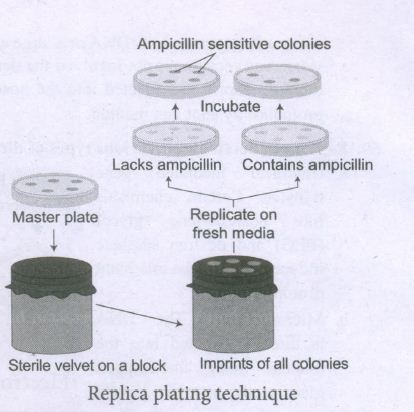
A technique in which the pattern of colonies growing on a culture plate is copied. A sterile filter plate is pressed against the culture plate and then lifted. Then the filter is pressed against a second sterile culture plate. This results in the new plate being infected with cell in the same relative positions as the colonies in the original plate. Usually, the medium used in the second plate will differ from that used in the first. It may include an antibiotic or without a growth factor. In this way, transformed cells can be selected
29.
30.
Anemophilous plants have the following characteristic features:
(i) The flowers are produced in pendulous, catkin-like or spike inflorescence.
(ii) The axis of inflorescence elongates so that the flowers are brought well above the leaves.
(iii) The perianth is absent or highly reduced.
(iv) The flowers are small, inconspicuous, colourless, not scented, do not secrete nectar.
(v) The stamens are numerous, filaments are long, exerted and versatile.
(vi) Anthers produce enormous quantities of pollen grains compared to a number of ovules available for pollination. They are minute, light and dry so that they can be carried to long distances by wind.
(vii) In some plants, anthers burst violently and release the pollen into the air. Example: Urtica.
(viii) Stigmas are comparatively large, protruding, sometimes branched and feathery, adapted to catch the pollen grains. Generally, a single ovule is present.
(ix) The plant produces flowers before the new leaves appear, so the pollen can be carried without hindrance of leaves.
31.
There are 5 types of ovules.
1. Orthotropous:
Micropyle is at the distal end and the micropyle, the funicle and the chalaza lie in one straight vertical line.
2. Anatropous:
The body of the ovule becomes completely inverted so that the micropyle and funiculus come to lie very close to each other.
E.g: Dicots, Monocots (Common)
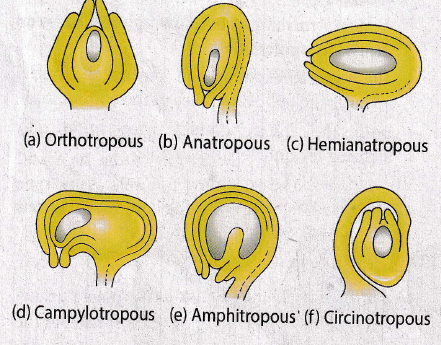
3. Hemianatropous:
The body of the ovule is placed transversely and at right angles to the funicle.
E.g: Primulaceae.
4. Campylotropous:
(i) The body of the ovule at the micropylar end is curved and more or less bean shaped. The embryo sac is slightly curved.
(ii) All the three, hilum, micropyle and chalaza are adjacent to one another, with the micropyle oriented towards the placenta.
E.g: Leguminosae.
5. a) Amphitropous:
The distance between hilum and chalaza is less. The curvature of the ovule leads to horse shoe shaped nucellus.
E.g: Alismataceae.
b) Circinotropous:
Funiculus is very long and surrounds the ovule.
E.g: Cactaceae
32.
Autogenic succession
Autogenic succession occurs as a result of biotic factors. The vegetation reacts with its environment and modifies its own environment causing its own replacement by new communities. This is known as autogenic succession.
Example: In forest ecosystem, the larger trees produce broader leaves providing shade to the forest floor area. It affects the shrubs and herbs which require more light (heliophytes) but supports the shade tolerant species (sciophytes) to grow well.
Allogenic succession
Allogenic succession occurs as a result of abiotic factors. The replacement of existing community is caused by other external factors (soil erosion and leaching, etc.,) and not by existing organisms.
Example: In a forest ecosystem soil erosion and leaching alter the nutrient value of the soil leading to the change of vegetation in that area.
33.
Morphological adaptations:
Root system is extensively developed. These roots may be of two types. They are Clinging roots and Aerial roots.
Clinging roots fix the epiphytes firmly on the surface of the supporting objects.
Aerial roots are green coloured roots which may hang downwardly and absorb moisture from the atmosphere with the help of a spongy tissue called velamen.
1. Stem of some epiphytes are succulent and develop pseudo bulb or tuber.
2. Generally the leaves are lesser in number and may be fleshy and leathery.
3. Myrmecophily is a common occurrence in the epiphytic vegetation to prevent the predators
4. The fruits and seeds are very small and usually dispersed by wind, insects and birds.
34.
Micropropagation protocol for banana
\(\downarrow\)
In vitro micropropagation of banana (Musa sp.)
\(\downarrow\)
Suckers surface sterilized with 1% NaOCl for 30 minutes
\(\downarrow\)
Apical meristems were isolated - cultured on MS basal medium supplemented with Benzylaminopurine (BAP) 10.0 mg/l and Indole Acetic Acid (IAA) 1.0 mg/l
\(\downarrow\)
Induction of shoots within 168 days
\(\downarrow\)
Kinetin 2.0 mg/l and Naphthalene Acetic Acid (NAA) 0.5 mg/l for root induction
\(\downarrow\)
Acclimatization in polyhouse
\(\downarrow\)
Followed by shade-house under 50% light for hardening process
\(\downarrow\)
Tested for genetic Uniformity
\(\downarrow\)
Transferred to field
35.
Seaweed liquid fertilizer (SLF) contains cytokinin, gibberellins, and auxin apart from macro and micro nutrients. Most seaweed-based fertilizers are made from kelp (brown algae) which grows to length of 150 metres. Liquid seaweed fertilizer is not only organic but also eco-friendly. The alginates in the seaweed that reacts with metals in the soil and form long, crosslinked polymers in the soil. These polymers improve the crumbing in the soil, swell up when they get wet and retain moisture for a long time. They are especially useful in organic gardening which provides carbohydrates for plants. Seaweed has more than 70 minerals, vitamins and enzymes. It promotes vigorous growth. Improves resistance of plants to frost and disease. Seeds soaked in seaweed extract germinate much rapidly and develop a better root system.
36.
Afforestation Objectives:
(i) To increase forest cover, planting more trees, increases CO2 production and air quality.
(ii) Rehabilitation of degraded forests to increase carbon fixation and reducing CO2 from atmosphere.
(iii) Raising bamboo plantations.
(iv) Mixed plantations of minor forest produce and medicinal plants.
(v) Regeneration of indigenous herbs/shrubs.
(vi) Awareness creation, monitoring, and evaluation.
(vii) To increase the level and availability of water table or ground water and also to reduce nitrogen leaching in soil and nitrogen contamination of drinking water, thus making it pure not polluted with nitrogen.
(viii) Nature aided artificial regeneration.
37.
| S.No | Common Name | Botanical Name | Family | Plant Part Used | Medicinal Uses |
| 1 | Holy basil | Ocimum Sanctum | Lamiaceae | Leaves and Roots | The leaves are stimulant, antiseptic, antihypertensive and anti-bacterial and expectorant used in bronchitis. Decoction of roots is given as a diaphoretic in malarial fever. |
| 2 | Indian Phyllanthus | Phyllanthus emblica | Phyllanthaceae | Fruit | It is a potent rejuvenator and immune modulator. It has a anti-ageing properties. It helps to promote longevity, enhance digestion, treat constipation and reduce fever and cough. |
| 3 | Indian Acalypha | Acalypha indica | Euphorbiaceae | Leaves | Used to cure skin diseases caused by ringworms. Powdered leaves are used to cure bedsores and infected wounds |
| 4 | Vilvam | Aegle marmelos | Rutaceae | Fruit | The unripe fruit is used to treat problems of stomach indigestion. It kills intestinal parasites. |
| 5 | Veldt grape | Cissus quandran-gularis | Vitaceae | Stem and Root | Paste obtained from the and powdered stem and root root of this plant is used in bone fractures. Whole plant is useful to treat asthma and stomach troubles. |
38.
Radioactive waste management involves the treatment, storage and disposal of liquid, airborne and solid effluents from the nuclear industry. Three ways are employed to manage nuclear wastes
(i) Spent Fuel Pools - The spent fuel discharged from the reactors is temporarily stored in the reactor pool. The Spent fuel rods are used in stored cooling ponds. They protect the surroundings from radiation and absorb the heat generated during radioactive decay.
(ii) Vitrification method - This prevents reaction or degradation of nuclear waste for extended periods of time and encased in dry cement caskets.
(iii) Geological Repositories - A deep geological repository is a nuclear waste repository excavated deep within a stable geologic environment. It is suited to provide a high level of long-term isolation and containment without future maintenance. In India at Tarapur and Kalpakkam, a wet storage facility of Spent Fuel is the main mode of storage.
39.
Sewage treatment is usually performed in the following three stages:
(I) Primary treatment:
(a) Primary treatment involves the physical removal of solid and particulate organic and inorganic materials from the sewage through filtration and sedimentation.
(b) Floating debris is removed by sequential filtration. Then the grit (soil and small pebbles) are removed by sedimentation.
(c) All solids that settle form the primary sludge and the supernatant forms the effluerit and is taken for secondary treatment.
(II) Secondary treatment or biological treatment:
(a) The primary effluent is passed into large aeration tanks where it is constantly agitated mechanically and air is pumped into it.
(b) This allows vigorous growth of useful aerobic microbes into floc (masses of bacteria associated with fungal filaments to form mesh like structures). Which consume the organic matter in the effluent.
(c) This significantly reduces the BOD (Biochemical oxygen demand or Biological oxygen demand). BOD refers to the amount of the oxygen that would be consumed, if all the organic matter in one litre of water were oxidized by bacteria. The sewage water is treated till the BOD is reduced. The greater the BOD of the waste water more is its polluting potential.
(d) Once the BOD of sewage water is reduced Significantly, the effluent is then passed into a settling tank where the bacterial "flocs" are allowed to sediment. Which is called activated sludge. A small part of activated sludge is pumped back into the aeration tank to serve as the inoculum.
(e) The remaining major part of the sludge is pumped into large tanks called anaerobic sludge digesters. Here, the bacteria which grow anaerobically, digest the bacteria and the fungi in the sludge. During digestion, bacteria produce a mixture of gases such as methane, hydrogen sulphide and CO2 Which form biogas and can be used as a source of energy.
(III) Tertiary treatment
(a) Tertiary treatment is the final process that improves the quality of the waste water before it is reused, recycled or released into natural water bodies.
(b) This treatment removes the remaining inorganic compounds and substances, such as nitrogen and phosphorus.
(c) UV is an ideal disinfectant for wastewater since it does not alter the water quality - except for inactivating microorganisms. UV is a chemical-free process that can completely replace the existing chlorination system and also inactivates chlorine-resistant microorganisms like Cryptosporidium and Giardia.
40.
Basic concepts of Tissue Culture
Basic concepts of plant tissue culture are totipotency, differentiation, dedifferentiation and redifferentiation.
Totipotency
The property of live plant cells that they have the genetic potential when cultured in nutrient medium to give rise to a complete individual plant.
Differentiation
The process of biochemical and structural changes by which cells become specialized in form and function.
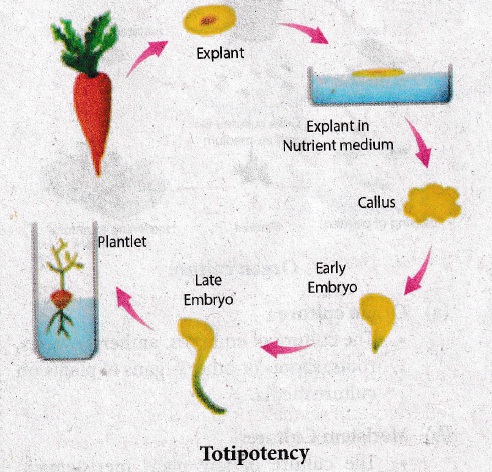
Redifferentiation
The further differentiation of already differentiated cell into another type of cell. For example, when the component cells of callus have the ability to form a whole plant in a nutrient medium, the phenomenon is called redifferentiation.
Dedifferentiation
The phenomenon of the reversion of mature cells to the meristematic state leading to the formation of callus is called dedifferentiation. These two phenomena of redifferentiation and dedifferentiation are the inherent capacities of living plant cells or tissue. This is described as totipotency.
41.
Direct or Vector less Gene Transfer
In the direct gene transfer methods, the foreign gene of interest is delivered into the host plant without the help of a vector, The following are some of the common methods of direct gene transfer in plants.
(i) Chemical mediated gene transfer: Certain chemicals like polyethylene glycol (PEG) and dextran sulphate induce DNA uptake into plant protoplasts.
(ii) Microinjection: The DNA is directly injected into the nucleus using fine tipped glass needle or micro pipette to transform plant cells. The protoplasts are immobilized on a solid support (agarose on a microscopic slide) or held with a holding pipette under section.
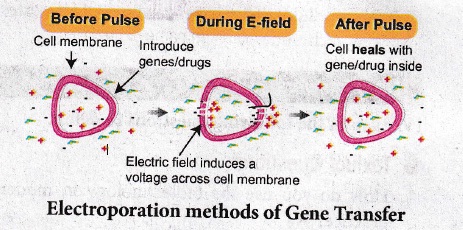
(iii) Electroporation Methods of Gene Transfer: A pulse of high voltage is applied to protoplasts, cells or tissues which makes transient pores in the plasma membrane through which uptake of foreign DNA occurs.
(iv) Liposome mediated method of Gene transfer: Liposomes the artificial phospholipid vesicles are useful in gene transfer. The gene or DNA is transferred from liposome into vacuole of plant cells. It is carried out by encapsulating DNA into the vacuole. This technique is advantageous because the liposome protects the introduced DNA from being damaged by the acidic pH and protease enzymes present in the vacuole. Liposome and tonoplast of vacuole fusion resulted in gene transfer. This process is called lipofection.
.jpg)
(v) Biolistics: The foreign DNA is coated onto the surface of minute gold or tungsten particles (1-3 \(\mu\)m) and bombarded onto the target tissue or cells using a particle gun (also called as gene gun/ micro projectile gun/shotgun) Then the bombarded cells or tissues are cultured on selected medium to regenerate plants from the transformed cells.
42.
1. The sex determining mechanism of humans is XX-XY type.
2. In humans, out of 23 pairs of chromosomes present, 22 pairs are exactly same in both males and females known as autosomes (body).
3. The 23rd chromosome is the sex chromosome. (i.e) Pair of X-chromosome (XX) is present in females and males having one X and one Y chromosome (XY).
4. During, spermatogenesis, in case of males two types of gametes are produced (x and y).
5. The 50% total sperms produced carry X-chromosomes and the rest 50% carry Y - chromosomes besides autosomes. This condition is called male diagamety.
6. The Y containing sperms and X containing sperms are called androsperms and gynosperms respectively.
7. Female produces only one type of ovum with an X-chromosome. If an ovum fertilizes with a sperm carrying X chromosome the zygote develops into a female (XX) and if an ovum is fertilized with sperm carrying Y-chromosome, zygote thus, formed will be male (YY).
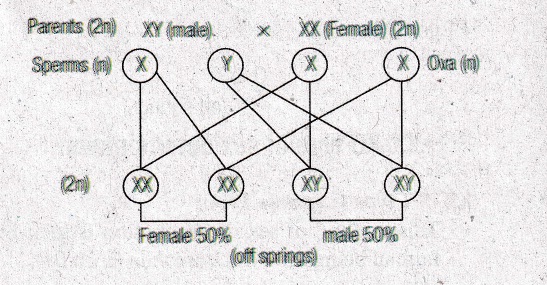
8. Hence, the genetic makeup of sperm, which fertilizes the ovum determines the sex of a child there are 50% chances of having either a male or female in each progeny.
9. Thus, it is by chance phenomenon, so women should not be blamed for giving birth to a girl child
43.
(a) Some organisms like honeybees are called parthenogenetic animals.
1. In case of honeybees both haploid and diploid individuals formed, as a result of incomplete parthenogenesis.
2. Both sexual reproduction and parthenogenesis are inclusive.
3. Fertilized eggs (zygote) give rise to queen and workers (both are females) by the process of sexual reproduction.
4. Unfertilized eggs (ova) of females develop into drones (males) by the process of parthenogenesis.
(b) A male honeybee has 16 chromosomes where as its female has 32 chromosomes
1. It is because of haplodiploidy which is a sex determination system, in which males develop from unfertilized eggs (parthenogenesis) and are haploid (16n) and females develop frorn fertilized eggs and are diploid (32n) (sexual reproduction).
2. As unfertilized egg carries only half number of chromosome as compared to fertilized egg.
Therefore male honeybees have 16 chromosomes where as female has 32 chromosomes.
44.
Sudden appearance of vestigial organs in highly evolved organisms is called atavistic organs. Example, presence of tail in human baby is an atavistic organ
45.
Archaeopteryx - connecting link between Reptiles and Aves.
Peripatus - Connecting link between Annelida and Arthropoda.
46.
SNPs: Single nucleotide polymorphism. It helps to find chromosomal locations for disease associated sequences and tracing human history.
47.
(a) i gene - repressor protein
(b) lac Z gene - p-galactosidase
(c) Lac Y gene - Permease
(d) lac a gene - transacetylase
48.
(a) Helicase
(b) DNA ligase
(c) DNA polymerase
(d) Nuclease
49.
Peyer's patches are oval-shaped areas of thickened tissue that are embedded in the mucus secreting lining of the small intestine of humans and other vertebrate animals. Peyer's patches contain a variety of immune cells, including macrophages, dendritic cells, T cells, and B cells.
50.
The process of production of blood cells in the bone marrow is called haematopoiesis
51.
Tissue damage and infection induce leakage of vascular fluid, containing chemotactic signals like serotonin, histamine, and prostaglandins. They influx the phagocytic cells into the affected area. This phenomenon is called diapedesis,
52.
In the absence of fertilization, the corpus luteum degenerates completely and leaves a scar tissue called corpus albicans. It also initiates the disintegration of the endometrium leading to menstruation, marking the next cycle
53.
Binary fission, Multiple fission, Sporulation and Strobilation
54.
The release of ovum by the rupture of the Graafian follicle is called ovulation. It occurs during ovulatory phase of menstrual cycle.
55.
A - Chromosomes
B - Nucleoli
C - Nucleus
D - Longitudinal furrow
E - Nuclear constriction
F - Daughter Euglena
56.
(i) In paedogenetic parthenogenesis (paedogenesis) the larvae produce a new generation oflarvae by parthenogenesis.
(ii) It occurs in the sporocysts and Redia larvae of liver fluke.
57.
It is a type of fertilization. In exogamy, the male and female gametes are produced by different parents and they fuse to form a zygote. So it is biparental. E.g. Human - dioecious or unisexual animal.
58.
Group of signs and symptoms that occur together and characterize a particular abnormality is called a syndrome.
Eg : Down's syndrome, Turner's syndrome, Klinefelter's syndrome, Patau's syndrome are some of the examples of chromosomal disorders.
59.
(i) A simple blood test is available that can determine whether the person has been infected with HIV.
(ii) The ELISA test (Enzyme Linked Immuno Sorbent Assay) detects the presence of HIV antibodies.
(iii) It is a preliminary test. Western blot test is more reliable and a confirmatory test.
(iv) It detects the viral core proteins. If both tests detect the presence of the antibodies, the person is considered to be HIV positive.
60.
(c) A is true, R is false

12th Standard Syllabus & Materials
12th Standard
TN 12th Computer Applications களப்பெயர் முறைமை (DNS) Sample Question Papers Study Material - QB365 Set A
NEW12th Standard
TN 12th Computer Applications வலையமைப்பு எடுத்துக்காட்டுகள் மற்றும் நெறிமுறைகள் Sample Question Papers Study Material - QB365 Set A
NEW12th Standard
TN 12th Computer Applications கணினி வலையமைப்பு ஓர் அறிமுகம் Sample Question Papers Study Material - QB365 Set A
NEW12th Standard
TN 12th Computer Applications PHP-உடன் MySQL-ஐ இணைத்தல் Sample Question Papers Study Material - QB365 Set A



Tamilnadu Stateboard 12th Standard Subjects

Maths

Chemistry

Physics
Biology

Computer Science

Business Maths and Statistics

Economics

Commerce

Accountancy

History

Computer Applications
Biology
Computer Technology
Computer Applications
Computer Science
Business Maths and Statistics
Commerce
Economics
Maths
Chemistry
Physics
Computer Technology
History
Accountancy

Tamil

English

French
Tamilnadu Stateboard Standards

