
 100% FREE ACCESS
12th Standard Syllabus & Materials
12th Standard
TN 12th Computer Applications மின்னணு தரவு பரிமாற்றம் Sample Question Papers Study Material - QB365 Set A
NEW12th Standard
TN 12th Computer Applications மின் - வணிக பாதுகாப்பு அமைப்புகள் Sample Question Papers Study Material - QB365 Set A
NEW12th Standard
TN 12th Computer Applications மின்னணு செலுத்தல் முறைகள் Sample Question Papers Study Material - QB365 Set A
NEW12th Standard
TN 12th Computer Applications மின் - வணிகம் Sample Question Papers Study Material - QB365 Set A
NEW12th Standard
TN 12th Computer Applications திறந்த மூல கருத்துருக்கள் Sample Question Papers Study Material - QB365 Set A
NEW12th Standard
TN 12th Computer Applications வலையமைப்பு வடமிடல் Sample Question Papers Study Material - QB365 Set A

Published on: 29/01/2021
12th Standard Biology English Medium Reduced Syllabus Important Questions with Answer key - 2021 Part - 2
Download Tamil Nadu 12th Standard Biology question papers, model tests, one-mark questions, important questions, and public exam papers in PDF format. Free study materials and answer keys for TN State Board students.
Questions + Answers key
Take MCQ Biology Test1.
What is Relaxin?
2.
What is apolysis? Write its significance.
3.
Give an account of active principle and medicinal values of any two plants you have studied.
4.
Which one gas is most abundant out of the four commonest greenhouse gases? Discuss the effect of this gas on the growth of plants?
5.
Shape of pyramid in a particular ecosystem is always different in shape. Explain with example.
6.
What are called endangered species?
7.
8.
Who disproved Lamarck’s Theory of acquired characters? How?
9.
Mention the importance of the position of the testes in humans.
10.
Brief about female heterogamety.
11.
What is polyembryony. How it can commercially exploited.
12.
A detached leaf of Bryophyllum produces new plants. How?
13.
How are microbial inoculants used to increase the soil fertility?
14.
Soil formation can be initiated by biological organisms. Explain how?
15.
Differentiate between Eurytherms and Stenotherms.
16.
Name the active chemical found in the medicinal plant Rauwolfia vomitoria. What type of diversity it belongs to?
17.
What is biological oxygen demand?
18.
From their examination of the structure of DNA, What did Watson and Crick infer about the probable mechanism of DNA replication, coding capability and mutation?
19.
Define gametogenesis.
20.
21.
22.
23.
Name the phenomenon where the female gamete directly develops into a new organism with an avian example.
24.
“Tissue culture is the best method for propagating rare and endangered plant species”- Discuss.
25.
Which of the following is correct for r-selected species
Large number of progeny with small size
large number of progeny with large size
small number of progeny with small size
small number of progeny with large size
26.
SMOG is derived from:
Smoke
Fog
Both (a) and (b)
Only A
27.
Which among the following always decreases in a Food chain across tropic levels?
Number
Accumulated chemicals
Energy
Force
28.
Vaccines that use components of a pathogenic organism rather than the whole organism are called
Subunit recombinant vaccines
attenuated recombinant vaccines
DNA vaccines
conventional vaccines
29.
Darwin’s finches are an excellent example of
connecting links
seasonal migration
adaptive radiation
parasitism
30.
Which of the following is correct regarding HIV, hepatitis B, gonorrhoea and trichomoniasis?
Gonorrhoea is a STD whereas others are not.
Trichomoniasis is a viral disease whereas others are bacterial.
HIV is a pathogen whereas others are diseases.
Hepatitis B is eradicated completely whereas others are not.
31.
An operon is a: ______.
Protein that suppresses gene expression
Protein that accelerates gene expression
Cluster of structural genes with related function
Gene that switched other genes on or off
32.
The site of embryo implantation is the _____.
Uterus
Peritoneal cavity
Vagina
Fallopian tube
33.
Which of the following is incorrect regarding ZW-ZZ type of sex determination?
It occurs in birds and some reptiles
Females are homogametic and males are heterogametic
Male produce one type of gamete
It occurs in gypsy moth
34.
Spread of cancerous cells to distant sites is termed as
Metastasis
Oncogenes
Proto-oncogenes
Malignant neoplasm
35.
In which type of parthenogenesis are only males produced?
Arrhenotoky
Thelytoky
Amphitoky
Both a and b
36.
37.
The A and B genes are 10 cm apart on a chromosome. If an AB/ab heterozygote is testcrossed to ab/ab, how many of each progeny class would you expect out of 100 total progeny?
25 AB, 25 ab, 25 Ab, 25 aB
10 AB, 10 ab
45 AB, 45 ab
45 AB, 45 ab, 5 Ab, 5aB
38.
If the childs blood group is ‘O’ and fathers blood group is ‘A’ and mother’s blood group is ‘B’ the genotype of the parents will be ______.
IA IA and IB Io
IA Io and IB Io
IA Io and IoIo
IoIo and IB IB
39.
Test cross involves ____.
Crossing between two genotypes with recessive trait
Crossing between two F1 hybrids
Crossing the F1 hybrid with a double recessive genotype
Crossing between two genotypes with dominant trait
40.
41.
Describe the structure of HIV with a diagram
42.
Write a note on Replica plating technique.
43.
Explain the steps involved in recombinant DNA technology
44.
Given an account on following terms.
(a) Hologamy
(b) Isogamy
(c) Anisogamy
(d) Merogamy
(e) Paedogamy
45.
Describe the structure of dicot seed.
46.
Describe the development process of male gametophyte.(or) Explain the different mode of entry of pollen tube into the ovule.
47.
Write in detail about Autogenic succession and Allogenic succession.
48.
Write a note on the strategies of ecosystem management.
49.
Point out the applications of plant tissue culture.
50.
Explain the stepwise preparation of Bio-pest repellent from the leaves of Azadirachta indica
51.
Give a detailed account on anyone fibre yielding plant.
52.
What is the impact of agrochemicals on the living organisms?
53.
Write a note on gene banks
54.
55.
What are stem cells? Explain its role in the field of medicine
56.
Explain how “Rosie” is different from a normal cow
57.
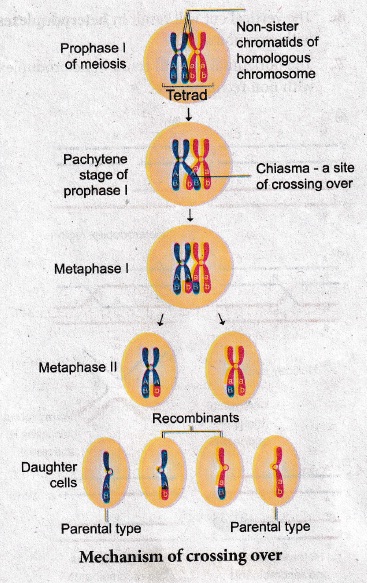
Explain the mechanism of crossing over.
58.
How is sex determined in human beings?
59.
If you cross dominant genotype PV/PV male Drosophila with double recessive female and obtain F1 hybrid. Now you cross F1 male with double recessive female.
i) What type of linkage is seen?
ii) Draw the cross with correct genotype.
iii) What is the possible genotype in F2 generation?
60.
What is vaccine? What are its types?
1.
(i) Relaxin is a hormone secreted by the placenta and also found in the corpus luteum.
(ii) It promotes parturition by relaxing the pelvic joints and by dilatation of the cervix with continued powerful contractions.
2.
(i) In Tape worm the gravid proglottids are regularly cut off either singly or in groups from the posterior end by a process called apolysis.
(ii) This is very significant since it helps in transferring the developed embryos from the primary host (man) to find a secondary host (pig).
3.
1. It is a mixture of glucosides derived from Aloe vera.
2. Gel used as skin tonic. Gives cooling effect.
3. Creams, lotions, shampoos, shaving creams, after shave lotions. Rejuvenation of aging skin. Emollient, antibacterial, antioxidant, antifungal and antiseptic.
4. Capsaicin is an active component has pain relieving properties derived from Capsicum annum.
5. Good source of Vitamin C, A and E.
4.
Most abundant gas - CO2
Effect of CO2 on the growth of plants
(i) Change in flowering seasons and pollinators
(ii) Change in Species distributional ranges
(iii) Species extinction
(iv) Low agricultural productivity in tropics
(v) Frequent heat waves (Weeds, pests, fungi need warmer temperature)
(vi) Increase of vectors and epidemics
(vii) Strong storms and intense flood damage
(viii) Water crisis and decreased irrigation
5.
Pyramid of number
(i) In a forest ecosystem the pyramid of number is different in shape, it is because the base (T 1) of the pyramid occupies large sized trees (producer) which are lesser in number.
(ii) Herbivores (T2) occupying second trophic level, are more in number than the producers (T1).
(iii) In final trophic level (T4) tertiary consumers (lion) are lesser in number than the secondary consumers (T3).
(iv) Therefore, the pyramid of numbers in forest ecosystem looks spindle-shaped.
Pyramid of biomass
(i) In forest ecosystem, there is a gradual decrease in biomass of organisms at successive trophic levels from producers to top carnivores (Tertiary consumer). Therefore, the pyramid of biomass looks upright.
6.
(i) A species that has been categorized as very likely to become extinct is an endangered species. Endangered (EN), as categorized by the International Union for Conservation of Nature (IUCN)
(ii) Red List, is the second most severe conservation status for wild populations in the IUCN's scheme after Critically Endangered (CR).
(iii) Example: In 1998 there were 1102 animal and 1197 plant species in the IUCN Red List
(iv) In 2012, the list features 3079 animal and 2655 plant species as endangered (EN) worldwide.
7.
8.
Lamarcks 'theory of acquired character's was disproved by August Weismann who conducted experiments on mice for twenty generations by cutting their tails and Weismann proved that change in the somatoplasm will not be transferred to the next generation but changes in the germplasm will be inherited.
9.
1. Testes are the primary male sex organs.
2. They are a pair of ovoid bodies lying in the scrotum.
3. The scrotum is a sac of skin that hangs outside the abdominal cavity.
4. Since viable sperms cannot be produced at normal body temperature, the scrotum is placed outside the abdominal cavity to provide a temperature 2-3°C lower than the normal internal body temperature.
5. Thus, the scrotum acts as a thermoregulator for spermatogenesis.
10.
1. In this method of sex determination, the homogametic male possesses two 'X' chromosomes as in certain insects and certain vertebrates like fishes, reptiles and birds producing a single type of gamete.
2. The female sex consists of a single 'Y' chromosome. Thus the females are heterogametic and produce two types of eggs.
3. To avoid confusion with the XX-XO and XX-XY trues of sex determination, the alphabets 'Z' and 'W 'are used here instead of X and Y respectively.
4. Heterogametic females are of two types, ZO-ZZ type and ZW-ZZ type.
11.
Occurrence of more than one embryo in a seed is called polyembryony.
The seedlings formed from the nucellar tissue in citrus are found better clones for orchards. Embryos derived through polyembryony are found virus free.
12.
In Bryophyllum, the leaf is succulent and notched on its margin. Adventitious buds (epiphyllous buds) develop at these notches. They develop into new plants forming a root system. They become independent plants when the leaf gets decayed.
13.
Micro organisms are efficient in fixing nitrogen, solubilizing phosphate and decomposing cellulose. They improve soil fertility, plant growth. They are ecofriendly and cost-effective than chemical fertilizers. Example. Azospirillum.
14.
Soil formation is initiated by the weathering process. Biological weathering takes place when organisms like bacteria, fungi, lichens & plants help in the breakdown of rocks through the production of acids & certain chemical substances.
15.
| Stenohaline Animals | Euryhaline Animals |
|---|---|
| The animals which show tolerance only to a narrow range of salinities. | The animals which, can tolerate a wide range of salinities |
| Their distributional range is limited. |
Their distribution shows a wide range |
16.
(i) The chemical found in the medicinal plant Rauwolfia vomitoria is reserpine.
(ii) It belong to Genetic diversity.
17.
BOD stands for Biological Oxygen Demand. BOD refers to the amount of oxygen that would be consumed if all the organic matter in one liter of water were oxidized by bacteria. The greater the BOD of the waste water, the more is its polluting potential.
18.
They inferred each strand of the double strands helps was used as a template for the formation of a new, daughter strand having a complementary sequence of bases.
19.
Gametogenesis is the process of formation of gametes i.e., Sperms from primary spermatocytes and ova from primary oocyte in testes and ovaries respectively. Meiosis plays the most significant role in the process of gametogenesis.
20.
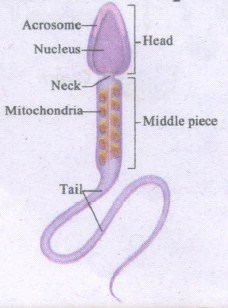
21.
22.
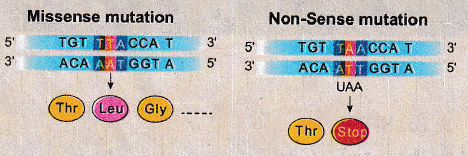
23.
Parthenogenesis is the phenomenon in which female gamete directly develops into a new organism. (e,g:) Honeybee (male or drone).
24.
A single cell from a rare and endangered plant can be grown into a an entire plant. So it is considered as the best method.
25.
(a)
Large number of progeny with small size
26.
(c)
Both (a) and (b)
27.
(c)
Energy
28.
(a)
Subunit recombinant vaccines
29.
(c)
adaptive radiation
30.
(c)
HIV is a pathogen whereas others are diseases.
31.
(c)
Cluster of structural genes with related function
32.
(a)
Uterus
33.
(b)
Females are homogametic and males are heterogametic
34.
(a)
Metastasis
35.
(a)
Arrhenotoky
36.
(c)
37.
(d)
45 AB, 45 ab, 5 Ab, 5aB
38.
(b)
IA Io and IB Io
39.
(c)
Crossing the F1 hybrid with a double recessive genotype
40.
41.
The human immunodeficiency virus belongs to the genus Lentivirus. When observed under the electron microscope, HIV is seen as a spherical virus, 100-120 nm in diameter, containing a dense core surrounded by a lipoprotein envelope. The envelope has .glycoprotein (GP) spikes termed GP 41 and GP 120. At the core, there are two large single-stranded RNA. Attached to the RNA are molecules of reverse transcripte. It also contains enzymes like protease and ribonuclease. The core is covered by a capsid made of proteins. This is followed by another layer of matrix proteins as shown above.
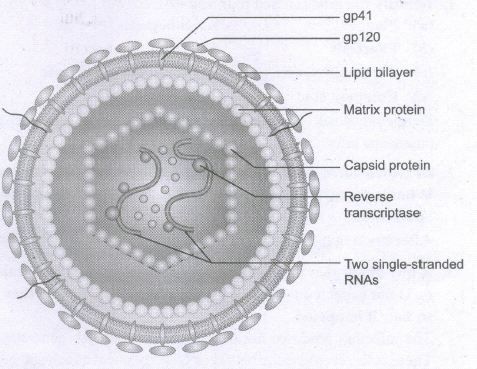
42.
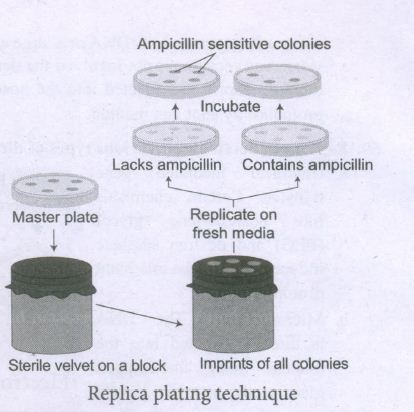
A technique in which the pattern of colonies growing on a culture plate is copied. A sterile filter plate is pressed against the culture plate and then lifted. Then the filter is pressed against a second sterile culture plate. This results in the new plate being infected with cell in the same relative positions as the colonies in the original plate. Usually, the medium used in the second plate will differ from that used in the first. It may include an antibiotic or without a growth factor. In this way, transformed cells can be selected
43.
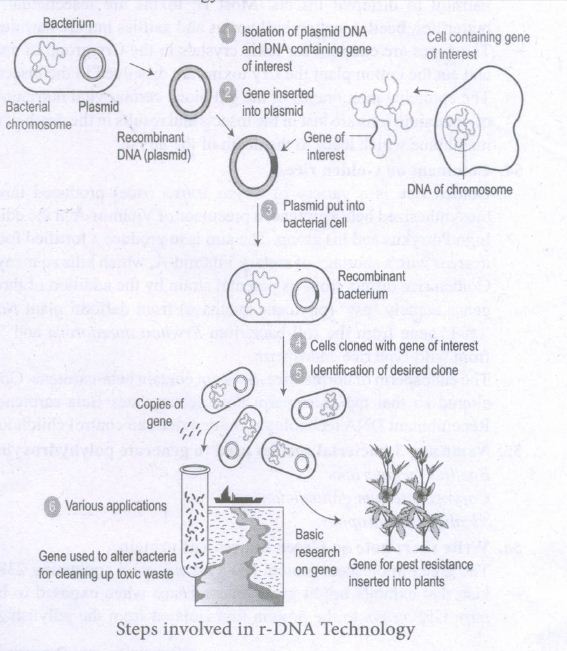
The steps involved in recombinant DNA technology are:
(i) Isolation of a DNA fragment containing a gene of interest that needs to be cloned. This is called an insert.
(ii) Generation of recombinant DNA (rDNA) molecule by insertion of the DNA fragment into a carrier molecule called a vector that can self-replicate within the host cell.
(iii) Selection of the transformed host cells that is carrying the rDNA and allowing them to multiply thereby multiplying the rDNA molecule.
(iv) The entire process thus generates either a large amount of rDNA or a large amount of protein expressed by the insert.
(v) Wherever vectors are not involved the desired gene is multiplied by PCR technique. The multiple copies are injected into the host cell protoplast or it is shot into the host cell protoplast by shot gun method.
44.
(a) Hologamy: In Hologamy, the adult individuals do not produce gametes, but they themselves act as gametes and fuse to form new individuals.
E.g: Trichonympha
(b) Isogamy: Fusion of morphologically & physiologically similar gametes.
E.g: Monocystis
(c) Anisogamy: Fusion of morphologically & physiologically dissimilar gametes.
Eg: Vertebrates.
(d) Merogamy: Fusion of small-sized morphologically different gametes (microgametes)
(e) Paedogamy: Fusion of young individuals produced immediately after the mitotic division of adult parent cell.
45.
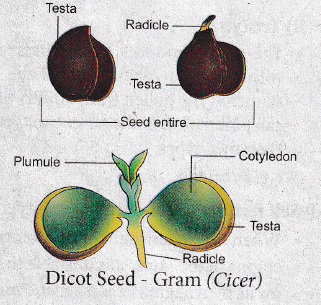
(i) Structure of a Cicer seed as an example for Dicot seed The mature seeds are attached to the fruit wall by a stalk called funiculus.
(ii) The funiculus disappears leaving a scar called hilum. Below the hilum a small pore called micropyle is present.
(iii) It facilitates entry of oxygen and water into the seeds during germination.
(iv) Each seed has a thick outer covering called seed coat.
(v) The seed coat is developed from integuments of the ovule.
(vi) The outer coat is called testa and is hard whereas the inner coat is thin, membranous and is called tegmen.
(vii) In Pea plant the tegmen and testa are fused. Two cotyledons laterally attached to the embryonic axis are present.
(viii) It stores the food materials in pea whereas in other seeds like castor the endosperm contains reserve food and the cotyledons are thin.
(xi) The portion of embryonal axis projecting beyond the cotyledons is called radicle or embryonic root.
(x) The other end of the axis called embryonic shoot is the plumule.
(xi) Embryonal axis above the level of cotyledon is called epicotyl whereas the cylindrical region between the level of cotyledon is called hypocotyl.
(xii) The epicotyl terminates in plumule whereas the hypocotyl ends in radicle.
46.
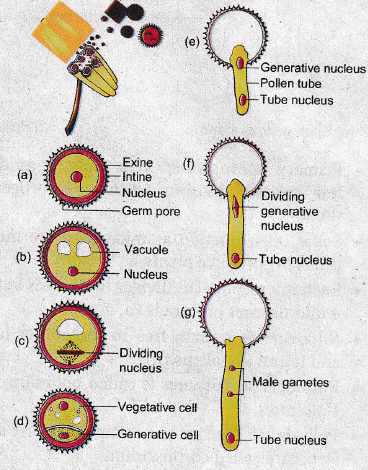
(i) The microspore is the first cell of the male gametophyte and is haploid.
(ii) The development of male gametophyte takes place while they are still in the microsporangium.
(iii) The nucleus of the microspore divides to form a vegetative and a generative nuclei.
(iv) A wall is laid around the generative nucleus resulting in the formation of two unequal cells, a large irregular nucleus bearing with abundant food reserve called vegetative cell and a small generative cell.
(v) At this two celled stage, the pollens are liberated from the anther.
(vi) In some plants, the generative cell again undergoes a division to form two male gametes.
(vii) In these plants, the pollen is liberated at 3 celled stages.
(viii) In 60% of the angiosperms, pollen is liberated in 2 celled stages.
(ix) The growth of the male gametophyte occurs only if the pollen reaches the right stigma.
(x) The pollen on reaching the stigma of absorbs moisture and swells.
(xi) The intine grows as pollen tube through the germ pore.
(xii) In case the pollen is liberated at 2 celled stages the generative cell divides in the pollen into 2 male cells (sperms) after reaching the stigma.
(xiii) The stages in the development of male gametophyte occurs in gynoecium of the plant.
47.
Autogenic succession
Autogenic succession occurs as a result of biotic factors. The vegetation reacts with its environment and modifies its own environment causing its own replacement by new communities. This is known as autogenic succession.
Example: In forest ecosystem, the larger trees produce broader leaves providing shade to the forest floor area. It affects the shrubs and herbs which require more light (heliophytes) but supports the shade tolerant species (sciophytes) to grow well.
Allogenic succession
Allogenic succession occurs as a result of abiotic factors. The replacement of existing community is caused by other external factors (soil erosion and leaching, etc.,) and not by existing organisms.
Example: In a forest ecosystem soil erosion and leaching alter the nutrient value of the soil leading to the change of vegetation in that area.
48.
Strategy of ecosystem management
(I) It is used to maintain biodiversity of ecosystems.
(II) It helps in indicating the damaged ecosystem (Some species indicate the health of the ecosystem: such species are called a flagship species).
(III) It is used to recognize the inevitability of ecosystem change and plan accordingly.
(IV) It is one of the tools used for achieving sustainability of ecosystem through sustainable development programme (or projects).
(V) It is also helpful in identifying ecosystems which are in need of rehabilitation.
(VI) It involves collaborative management with government agencies, local population, communities and NGO's.
(VII) It is used to build the capacity of local institutions and community groups to assume responsibility for long term implementation of ecosystem management activities even after the completion of the project.
49.
Plant tissue culture techniques have several applications such as:
i. Improved hybrids production through somatic hybridization.
ii. Somatic embryoids can be encapsulated into synthetic seeds (synseeds). These encapsulated seeds or synthetic seeds help in conservation of plant biodiversity.
iii. Production of disease resistant plants through meristem and shoot tip culture.
iv. Production of stress resistant plants like herbicide tolerant, heat tolerant plants.
v. Micropropagation technique to obtain large numbers of plantlets of both crop and tree species useful in forestry within a short span of time and all through the year.
vi. Production of secondary metabolites from cell culture utilized in pharmaceutical, cosmetic and food industries.
50.
Botanical pest repellent and insecticide made with the dried leaves of Azadirachta indica Preparation of Bio-pest repellent
(i) Pluck leaves from the neem tree and chop the leaves finely.
(ii) The chopped up leaves were put in a 50-liter container and fill to half with water; put the lid on and leave it for 3 days to brew.
(iii) Using another container, strain the mixture which has brewed for 3 days to remove the leaves, through fine mesh sieve. The filtrate can be sprayed on the plants to repel pests.
(iv) To make sure that the pest repellent sticks to the plants, add 100 ml of cooking oil and the same amount of soap water. (The role of the soap water is to break down the oil, and the role of the oil is to make it stick to the leaves).
(v) The stewed leaves from the mixture can be used in the compost heap or around the base of the plants.
51.
Jute
Botanical name : Corchorus spp.
Family: Malvaceae
Origin and Area of cultivation: Jute is derived from the two cultivated species (1) Core horns capsularis and (2) Colittorius is of African origin whereas C. Capsularis, is believed to Indo Burmaese origin. It is an important cultivated commercial crop in Gangetic plains of India and Bangladesh.
Uses: It is one of the largest exported fibre material of India. The jute industry occupies an important place in the national economy Of India. Jute is used for 'safe' packaging in view of being natural, renewable, bio-degradable and eco-friendly product. It is used in bagging and wrapping textile. About 75% of the jute produced is used for manufacturing sacks and bags. It is also used in manufacture of blankets, rags, curtains etc. It is also being used as a textile fibre in recent years.
52.
Chemicals which are used in agriculture for growth of plants and pest control are called agrochemicals or agrichemicals. Overuse of agrochemicals have been observed to generate residues that cause nutrient imbalance, and
(i) May kill beneficial bacteria and soil organisms.
(ii) Can cause eutrophication in water bodies.
(iii) Affect aquatic animals and their productivity.
(iv) Pesticide containing water, even in trace quantities is unfit for human consumption.
(v) Particles (aerosols) and residues of these chemicals cause air pollution.
(vi) Inhalation of contaminated air can cause respiratory problems.
(vii) Consumption can lead to poisoning, side effects and after effects.
(viii) Chemicals can cause skin rashes and irritation of eyes.
(ix) Many of these chemicals are reported to be carcinogenic.
(x) They can trigger hormonal disorders and neurotoxicity.
(xi) Beneficial insects and animals can be affected.
53.
(i) Gene banks are a type of biorepository which preserve genetic materials. Seeds of different genetic strains of commercially important plants can be stored in long periods in seed banks, gametes of threatened species can be preserved in viable and fertile condition for long periods using cryopreservation techniques.
(ii) However, it is not economically feasible to conserve all biological wealth and all the ecosystems. The number of species required to be saved from extinction far exceeds the conservation efforts.
54.
55.
(i) Stem cells are undifferentiated cells found in most of the multicellular animals.
(ii) These cells maintain their undifferentiated state even after undergoing repeated mitotic divisions.
(iii) Stem cells research has the potential to revolutionize the future of medicine with the ability to regenerate damaged and diseased organs.
(iv) Stem cell research has the potential to revolutionize the future of medicine with the ability to regenerate damaged and diseased organs.
(v) They are capable of self renewal and exhibit 'cellular potency'.
(vi) They can differentiate into all types of cells that are derived from any of the three germ layers ecto, endo and mesoderms.
(vii) In mammals there are two types of stem cells namely embryonic stem cells & adult stem cells (ES).
(viii) ES are pleuripotent and can produce the three primary germ layers ectoderm, Mesoderm and endoderm.
(ix) Embryonic stem cells are multipotent stem cells that can differentiate into a number of type of cells.
(x) ES cells are isolated from the epiblast tissue of the inner cell mass of a blastocyst.
(xi) When stimulated ES can develop into more than 200 cells Qpes of the adult body.
(xii) ES cells are immortal i.. e they can proliferate in a sterile culture medium and maintain their undifferentiated state.
(xiii) Adult stem cells are found in various tissues of children as well as adults.
(xiv) An adult stem cell or somatic stem cell can divide and create another cell similar to it.
(xv) Most of the adult stem cells are multipotent and can act as a repair system of the body and replenishing adult tissues.
(xvi) The red bone marrow is a rich source of adult stem cells.
(xvii) The most important and potential application of human stem cells is the generation of cells and tissues that could be used for cell based therapies.
(xviii) Human stem cells could be used to test new drugs.
56.
1. In 1997, Rosie, the first transgenic cow produced human protein enriched milk, which contained the human alpha lactalbumin.
2. Alpha lactalbumin is a protein composed of 123 amino acidic and 4 disulphide bridges, with a molecular weight of 14178 Da.
3. In human milk, & lactalbumin is the most abundant protein comprising 25% of total protein found in human milk.
4. It is synthesized by the mammary glands & lactalbumin binds calcium and zinc ions and possesses bactericidal antitumor activities.
57.
Crossing over is a process that includes four stages.
1. Synapsis
(i) Pairing between two homologous chromosomes is initiated during sub stage zygotene stage of prophase I of meiosis I
(ii) Homologous chromosomes are aligned side by side resulting in the formation of bivalents. It also occurs in zygotene sub-stage of prophase I of meiosis I tetrads.This pairing phenomenon is called synapsis.
2.Tetrad Formation
(i) Each homologous chromosome of a bivalent begin to form two identical sister chromatids.
(ii) They remain held together by a centromere at this stage each bivalent has four chromatids. This stage is called tetrad stage.
3. Cross Over
After tetrad formation, crossing over occurs in pachytene stage.
The non-sister chromatids of homologous pair make a contact at one or more points. These points of contact are called Chiasmata.
At chiasma, X-shaped structures are formed, where breaking and rejoining of two chromatids occur. This results in reciprocal exchange of equal and corresponding segments between them synapsis and chiasma formation are facilitated by protein filaments called synaptonemal complex.
4. Terminalisation
After crossing over, chiasma starts to move towards the terminal end of chromatids known as terminalisation. As a result, complete separation of homologous chromosomes occurs.
58.
1. The sex determining mechanism of humans is XX-XY type.
2. In humans, out of 23 pairs of chromosomes present, 22 pairs are exactly same in both males and females known as autosomes (body).
3. The 23rd chromosome is the sex chromosome. (i.e) Pair of X-chromosome (XX) is present in females and males having one X and one Y chromosome (XY).
4. During, spermatogenesis, in case of males two types of gametes are produced (x and y).
5. The 50% total sperms produced carry X-chromosomes and the rest 50% carry Y - chromosomes besides autosomes. This condition is called male diagamety.
6. The Y containing sperms and X containing sperms are called androsperms and gynosperms respectively.
7. Female produces only one type of ovum with an X-chromosome. If an ovum fertilizes with a sperm carrying X chromosome the zygote develops into a female (XX) and if an ovum is fertilized with sperm carrying Y-chromosome, zygote thus, formed will be male (YY).
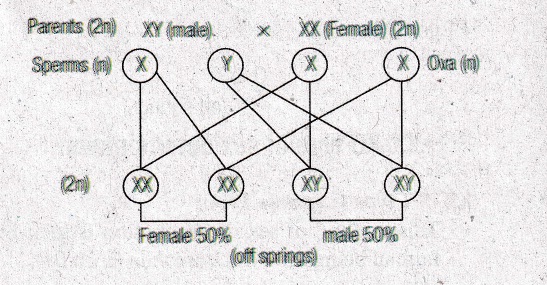
8. Hence, the genetic makeup of sperm, which fertilizes the ovum determines the sex of a child there are 50% chances of having either a male or female in each progeny.
9. Thus, it is by chance phenomenon, so women should not be blamed for giving birth to a girl child
59.
(i) Incomplete linkage
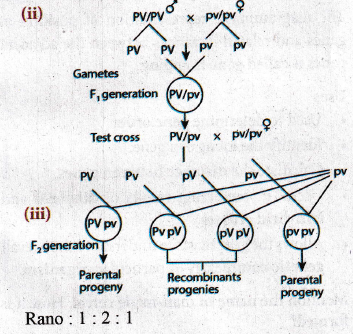
Rano : 1:2:1
60.
(i) A vaccine is a biological preparation that provides active acquired immunity to a particular disease and resembles a disease-causing microorganism and is often made from weakened or attenuated or killed forms of the microbes, their toxins, or one of its surface proteins.
(ii) Vaccines "teach" our body how to defend itself when viruses or bacteria, invade it.
(iii) Vaccine initiates the immunization process. The vaccines are classified as first, second and third generation vaccines.
First generation vaccine:
(i) First generation vaccine is further subdivided into live attenuated vaccine, killed vaccine and toxoids.
(ii) Live attenuated live vaccines use the weakened (attenuated), aged, less virulent form of the virus
(iii) Eg. Measles, Mumps and Rubella (MMR) vaccine and the Varicella (chickenpox) vaccine, killed (inactivated) vaccines are killed or inactivated by heat and other methods. Eg. Salk's polio vaccine.
(iv) Toxoid vaccines contain a toxin or chemical secreted by the bacteria or virus.
(v) They make us immune to the harmful effects of the infection, instead of to the infection itself.
(vi) Eg. DPT vaccine (Diphtheria, pertussis and Tetanus), (Triple antigen).
Second generation vaccine: contains the pure surface antigen of the Pathogen. :
Eg. Hepatitis-B vaccine
Third generation vaccine: contains the purest and the highest potency vaccines which are synthetic in generation. The latest revolution in vaccine is DNA vaccine (or) recombinant vaccine

12th Standard Syllabus & Materials
12th Standard
TN 12th Computer Applications களப்பெயர் முறைமை (DNS) Sample Question Papers Study Material - QB365 Set A
NEW12th Standard
TN 12th Computer Applications வலையமைப்பு எடுத்துக்காட்டுகள் மற்றும் நெறிமுறைகள் Sample Question Papers Study Material - QB365 Set A
NEW12th Standard
TN 12th Computer Applications கணினி வலையமைப்பு ஓர் அறிமுகம் Sample Question Papers Study Material - QB365 Set A
NEW12th Standard
TN 12th Computer Applications PHP-உடன் MySQL-ஐ இணைத்தல் Sample Question Papers Study Material - QB365 Set A



Tamilnadu Stateboard 12th Standard Subjects

Maths

Chemistry

Physics
Biology

Computer Science

Business Maths and Statistics

Economics

Commerce

Accountancy

History

Computer Applications
Biology
Computer Technology
Computer Applications
Computer Science
Business Maths and Statistics
Commerce
Economics
Maths
Chemistry
Physics
Computer Technology
History
Accountancy

Tamil

English

French
Tamilnadu Stateboard Standards

