
 100% FREE ACCESS
12th Standard Syllabus & Materials
12th Standard
TN 12th Computer Applications மின்னணு தரவு பரிமாற்றம் Sample Question Papers Study Material - QB365 Set A
NEW12th Standard
TN 12th Computer Applications மின் - வணிக பாதுகாப்பு அமைப்புகள் Sample Question Papers Study Material - QB365 Set A
NEW12th Standard
TN 12th Computer Applications மின்னணு செலுத்தல் முறைகள் Sample Question Papers Study Material - QB365 Set A
NEW12th Standard
TN 12th Computer Applications மின் - வணிகம் Sample Question Papers Study Material - QB365 Set A
NEW12th Standard
TN 12th Computer Applications திறந்த மூல கருத்துருக்கள் Sample Question Papers Study Material - QB365 Set A
NEW12th Standard
TN 12th Computer Applications வலையமைப்பு வடமிடல் Sample Question Papers Study Material - QB365 Set A

Published on: 29/09/2020
12th Standard Biology English Medium Sample 3 Mark Creative Questions (New Syllabus) 2020
Download Tamil Nadu 12th Standard Biology question papers, model tests, one-mark questions, important questions, and public exam papers in PDF format. Free study materials and answer keys for TN State Board students.
Questions + Answers key
Take MCQ Biology Test1.
What are the four ways through which the living organisms respond to abiotic factor?
2.
Draw a simplified diagram of nucleosome and label it.
3.
Write a note on 'Namami Ganga' programme.
4.
Under which condition does a microbe gains resistance against antibiotic
5.
Differentiate between normal cells and cancer cells
6.
What are exotic species? Explain with example.
7.
Write a short note on stem cell banks.
8.
Explain the genetic basis of Phenylketonuria.
9.
Mention any three algal species used for SCP production.
10.
May 28th is celebrated as annual Menstrual Hygiene Day (MHD). State its importance
11.
What are primary reproductive organs? What role does they play in organisms?
12.
Mention the role of prolactin in lactational amenorrhoea.
13.
State Coupling and Repulsion theory.
14.
Write a short note on phases of life cycle.
15.
How many types of gametes are produced by heterozygous dihybrid plant with a genotype RrYy? Write them.
16.
Point out the function of endosperm.
17.
Draw the diagram of a mature embryo sac and label the parts.
18.
Nutrients are retained in the ecosystem. Discuss how and name the process through which it is achieved?
19.
Being a tropical country, India is the largest producer of delicious mangoes. These mango tree don't grow in temperate countries. Give reason.
20.
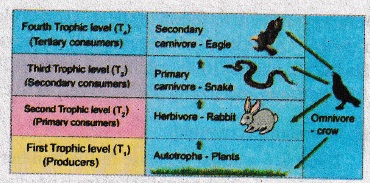
Explain the concept of trophic level in an ecosystem.
21.
What is thermal stratification? Explain its types.
22.
Briefly explain the surface sterilization of explants.
23.
State the objective of using green manuring.
24.
What makes the Trichoderma an effective bio-pesticide?
25.
Suggest few ways to overcome global warming.
26.
Mention the ways in which mangoes are used in Indian culinary.
27.
What is a geological time scale?
28.
How can we determine the age of fossils?
29.
Define water pollution.
30.
What is embryo transfer technique?
31.
What is Red Data Book or Red list?
32.
What is biogasr?
33.
a) What is pedosphere?
b) What is soil profile?
34.
What is LH surge?
35.
What is gene therapy? Mention the types
36.
How are viral diseases classified?
37.
Distinguish replication and transcription.
38.
What is repeated fission?
39.
What is euphenics?
40.
'AB' Blood group individuals are called universal recipients. Justify
41.
Draw a immunoglobulin and label any 4 parts.
42.
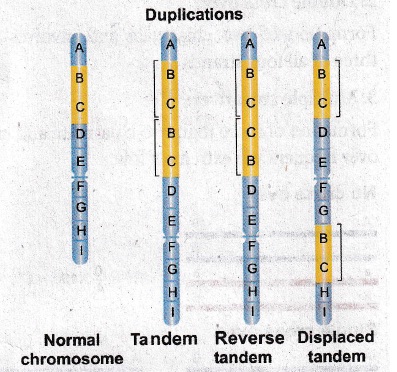
"The process of arrangement if the same order genes more than one in the same chromosome."
1. What is the process known as?
2. Explain its types.
1.
Regulate, Conform, Migrate and Suspend
2.
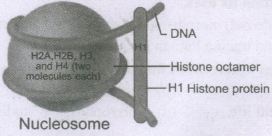
3.
Namami Ganga (National Mission for Clean Ganga) Programme is an Integrated Conservation Mission approved as the 'Flagship Programme' of the Union Government in June 2014 with a budget outlay of 20,000 crores to accomplish the twin objectives of effective abatement of pollution, conservation and rejuvenation of River Ganga.
4.
Antibiotic resistance occurs when bacteria develop the ability to defeat the drug designed to kill or inhibit their growth. It is one of the most acute threats to public health. Antibiotic resistance is accelerated by the misuse and overuse of antibiotics, as well as poor infection prevention control. Antibiotics should be used only when prescribed by a certified health professional. When the bacteria become resistant, antibiotics cannot fight against them and the bacteria multiply. Narrow spectrum antibiotics are preferred over broad-spectrum antibiotics. They effectively and accurately target specific pathogenic organisms and are less likely to cause resistance.
5.
| Normal Cells | Cancer Cells | |
|---|---|---|
| 1. | Small uniformly shaped nuclei Relatively large cytoplasmic volume | Large, variable shaped nuclei Relatively small cytoplasmic volume |
| 2. | Conformity in cell size and shape Cells arranged into discrete tissue | Variation in cell size and shape Disorganised arrangement of cells |
| 3. | May possess differentiated cell structures Normal presentation of cell surface markers | Loss of normal specialised features Eleveted expression of certain cell marks |
| 4. | Lower levels of dividing cells Cell tissues clearly demarcated | Large number of dividing cells Poorly defined tumor boundaries |
6.
Exotic species are organisms often introduced unintentionally or deliberately for commercial purpose, as biological control agents and other uses. They often become invasive and drive away the local species and is considered as the second major cause for extinction of species. Exotic species have proved harmful to both aquatic and terrestrial ecosystems. Tilapia fish (Jilabi kendai) (Oreochromis mosambicus) introduced from east coast of South Africa in 1952 for its high productivity into Kerala’s inland waters, became invasive, due to which the native species such as Puntius dubius and Labeo kontius face local extinction.
7.
Stem cell banking is the extraction, processing and storage of stem cells, so that they may be used for treatment in the future, when required. Amniotic cell bank is a facility that stores stem cells derived from amniotic fluid for future use. Stem cells are stored in banks specifically for use by the individual from whom such cells have been collected and the banking costs are paid. Cord Blood Banking is the extraction of stem cells from the umbilical cord during childbirth. While the umbilical cord and cord blood are the most popular sources of stem cells, the placenta, amniotic sac and amniotic fluid are also rich sources in terms of both quantity and quality.
8.
Phenylketonuria is an inborn error of Phenylalanine metabolism caused due to a pair of autosomal recessive genes. It is caused due to mutation in the gene PAH (phenylalanine hydroxylase gene) located on chromosome 12 for the hepatic enzyme "phenylalanine hydroxylase".
This enzyme is essential for the conversion of phenylalanine to tyrosine. Affected individual lacks this enzyme, so phenylalanine accumulates and gets converted to phenylpyruvic acid and other derivatives. It is characterized by severe mental retardation, light pigmentation of skin and hair. Phenylpyruvic acid is excreted in the urine.
Phenylalanine \(\underrightarrow { phenylalanine \ hydroxylase } \) Tyrosine
9.
Spirulina, Chlorella and Chlamydomonas.
10.
MHD aims to create awareness of importance for women and girls to hygienically manage their menstruation. Menstrual hygiene is vital for good health, well-being, dignity, empowerment and productivity of women
11.
The primary reproductive organs namely the ovary and testis are responsible for producing the ova and sperms respectively. Hormones secreted by the pituitary gland and the gonads help in the development of the secondary sexual characteristics, maturation of the reproductive system and regulation of normal functioning of the reproductive system.
12.
Suckling by the baby during breast-feeding stimulates the pituitary to secrete increased prolactin hormone in order to increase milk production. This high prolactin concentration in the mother's blood may prevent menstrual cycle by suppressing the release of GnRH (Gonadotropin Releasing Hormone) from hypothalamus and gonadotropin secretion from the pituitary
13.
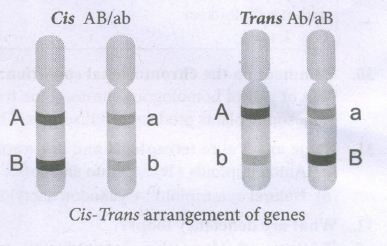
The two dominant alleles or recessive alleles occur in the same homologous chromosomes, tend to inherit together into same gamete are called coupling or cis configuration. If dominant or recessive alleles are present on two different, but homologous chromosomes they inherit apart into different gamete are called repulsion or trans configuration.
14.
(a) Juvenile phase - Period of growth between the birth of an individual and reproductive maturity.
(b) Reproductive phase - Period of growth when an organism attain reproductive maturity and produces new offsprings
(c) Senescent plane - Period of growth when the structure and functioning of the body starts degenerating
15.
Four gametes - RY, Ry, rY, ry
16.
Functions of endosperm:
(i) It is the nutritive tissue for the developing embryo.
(ii) In the majority of angiosperms, the zygote divides only after the development of endosperm.
(iii) Endosperm regulates the precise mode of embryo development.
17.
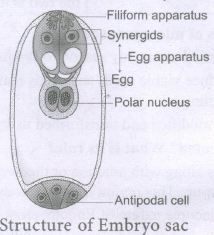
18.
Nutrients will retain in the ecosystem through biogeochemical cycles. Various nutrients present in soil and atmosphere enter the organism at various trophic levels through food and other process and are cycled back to their origin. Thus the nutrients are not lost but retained in the ecosystem.
19.
Mango tree show very narrow range of thermal tolerance. Hence they cannot grow in temperate countries.
20.
A trophic level refers to the position of an organism in the food chain.
The number of trophic level is equal to the number of steps in the food chain.
The green plants (producers) occupying the first trophic level (T1) are called producers
Green plants
The energy produced by the producers is utilized by the plant eaters (herbivores) they are called primary consumers and occupies the second trophic level (T2).
Rabbit
Diagrammatic representation of trophic levels
(i) Herbivores are eaten by carnivores, which occupy the third trophic level (T3).
(ii) snake
(iii) They are also called secondary consumers or primary carnivores.
(iv) Carnivores are eaten by the other carnivores, which occupy the fourth trophic level (T4). They are called the tertiary consumers or secondary carnivores.
(v) Eagle
(vi) Some organisms which eat both plants and animals are called as omnivores (Crow).
(vii) Such organisms may occupy more than one trophic level in the food chain.
21.
Thermal stratification is usually found in aquatic habitat. The change in the temperature profile with increasing depth in a water body is called thermal stratification. There are three kinds of thermal stratifications.
1. Epilimnion - The upper layer of warmer water.
2. Metalimnion - The middle layer with a zone of gradual decrease in temperature.
3. Hypolimnion - The bottom layer of colder water.
22.
The plant materials to be used for tissue culture should be surface sterilized by first exposing the material in running tap water and then treating it in surface sterilization agents like 0.1% mercuric chloride, 70% ethanol under aseptic condition inside the Laminar Air Flow Chamber.
23.
Green manuring helps to increase the content of nitrogen soil and also improves the structure and physical property of soil
24.
Trichoderma species are free-living fungi that are common in soil and root ecosystem. They have been recognized as bio-control agent for
(1) the control of plant disease
(2) ability to enhance root growth development
(3) crop productivity
(4) resistance to abiotic stress and
(5) uptake and use of nutrients.
25.
(i) Increasing the vegetation cover, grow more trees
(ii) Reducing the use of fossil fuels and greenhouse gases
(iii) Developing alternate renewable sources of energy
(iv) Minimizing uses of nitrogenous fertilizers, and aerosols.
26.
Mango is the major table fruit of India, which is rich in beta carotenes. It is utilized in many ways, as dessert, canned, dried and preserves in Indian cuisine. Sour, unripe mangoes are used in chutneys, pickles, side dishes, or may be eaten raw with salt and chili. Mango pulp is made into jelly. Aerated and non-aerated fruit juice is a popular soft drink.
27.
Duration of the earth's history is divided into eras which are further divided into periods. Tile periods are spilled into Epochs. This is called Geological time scale.
28.
The age of fossils can be determined using two methods namely, relative dating and absolute dating. (a) Relative dating is used to determine a fossil by comparing it to similar rocks and fossils of known age. (b) Absolute dating is used to determine the precise age of a fossil by using radiometric dating to measure the decay of isotopes.
29.
Water pollution occurs when there is a change in the chemical, physical or biological quality of water that has harmful effect(s) on living organisms that consume it or live in it.
30.
The transfer of an embryo with more than 8 blastomeres stage into uterus is called embryo transfer technique.
31.
It is a catalogue of taxa facing risk of extinction. IUCN maintains the Red Data Book. It has eight categories of species.
32.
(i) Biogas is a mixture of different gases produced by the breakdown of organic matter in the absence of oxygen. Biogas can be produced from raw materials such as agricultural wastes, manure, municipal wastes, plant material, sewage, food waste, etc.,
(ii) Biogas primarily consists of methane (63 %), along with CO2 and hydrogen.
33.
(i) Pedosphere: The soil zone is known as pedosphere.
(ii) Soil profile: Soil is formed of many horizontal layers called soil profile.
34.
During the ovulatory phase of the menstrual cycle, maximum secretion of leutinising hormone occurs during the mid cycle (about 14th day) which is called LH surge and induces ovulation.
35.
It is a connective therapy to cure hereditary diseases and involves the transfer of a normal gene into a person's cells that carries one ormore mutant alleles. It is of two types
(i) Somatic cell gene therapy.
(ii) Germ line gene therapy
36.
Viral diseases are generally classified into four types on the basis of the symptoms produced in the body organs.
(i) Pneumotropic diseases (Eg: respiratory tract infected by influenza)
(ii) Dermotropic diseases (Eg.skin and subcutaneous tissues affected by chicken pox and measles)
(iii) Viscerotropic diseases (Eg: blood and visceral organs affected by yellow fever and dengue fever)
(iv) Neurotropic diseases (Eg: central nervous system affected by rabies and polio)
37.
| Replication | Transcription |
| 1) Replication is a process by which a DNA molecule makes as a copy of itself. | 1) The process of copying genetic information from one strand of DNA into RNA is called transcription. |
| 2) It takes place during phase of cell cycle. | 2) It takes place during protein synthesis. |
| 3) It requires DNA and enzymes like DNA polymerases and Ligases. | 3) It requires DNA and enzymes like RNA Polymerases |
38.
If multiple fission produces four or many daughter individuals by equal cell division and the young ones do not separate until the process is complete, then this division is called repeated fission. E.g. Vorticella.
39.
(i) The symptomatic treatment of genetic disease of man is called Euphenics or Medical engineering.
(ii) In 1960, Joshua Lederberg coined the term euphenics. It means normal appearing.
(iii) It deals with the control of several inherited human diseases especially the inborn errors of metabolism.
Eg. Phenylketonuria (PKU)
40.
People with AB blood group have both 'A' antigen and B antigen in their RBCs. Therefore they can receive blood from 'A' group, 'B' group or 'O' group individuals their blood will not produce antibodies against any of them. Therefore people with 'AB' blood group are called as universal recipients.
41.
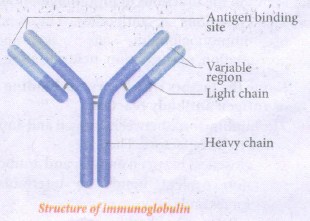
42.
The process is known as duplication, a type of structural chromosomal aberration.
Due to duplication some genes are present in more than two copies. It is three types.
i. Tandem duplication
The duplicated segment is located immediately after the normal segment of the chromosome in the same order.
ii Reverse tandem duplication
The duplicated segment is located immediately after the normal segment but the gene sequence order will be reversed.
iii Displaced duplication
The duplicated segment is located in the same chromosome, but away from the normal segment.

12th Standard Syllabus & Materials
12th Standard
TN 12th Computer Applications களப்பெயர் முறைமை (DNS) Sample Question Papers Study Material - QB365 Set A
NEW12th Standard
TN 12th Computer Applications வலையமைப்பு எடுத்துக்காட்டுகள் மற்றும் நெறிமுறைகள் Sample Question Papers Study Material - QB365 Set A
NEW12th Standard
TN 12th Computer Applications கணினி வலையமைப்பு ஓர் அறிமுகம் Sample Question Papers Study Material - QB365 Set A
NEW12th Standard
TN 12th Computer Applications PHP-உடன் MySQL-ஐ இணைத்தல் Sample Question Papers Study Material - QB365 Set A



Tamilnadu Stateboard 12th Standard Subjects

Maths

Chemistry

Physics
Biology

Computer Science

Business Maths and Statistics

Economics

Commerce

Accountancy

History

Computer Applications
Biology
Computer Technology
Computer Applications
Computer Science
Business Maths and Statistics
Commerce
Economics
Maths
Chemistry
Physics
Computer Technology
History
Accountancy

Tamil

English

French
Tamilnadu Stateboard Standards

