
 100% FREE ACCESS
12th Standard Syllabus & Materials
12th Standard
TN 12th Maths Applications of Matrices and Determinants Sample Question Papers Study Material - QB365 Set A
NEW12th Standard
TN 12th Computer Applications மின்னணு தரவு பரிமாற்றம் Sample Question Papers Study Material - QB365 Set A
NEW12th Standard
TN 12th Computer Applications மின் - வணிக பாதுகாப்பு அமைப்புகள் Sample Question Papers Study Material - QB365 Set A
NEW12th Standard
TN 12th Computer Applications மின்னணு செலுத்தல் முறைகள் Sample Question Papers Study Material - QB365 Set A
NEW12th Standard
TN 12th Computer Applications மின் - வணிகம் Sample Question Papers Study Material - QB365 Set A
NEW12th Standard
TN 12th Computer Applications திறந்த மூல கருத்துருக்கள் Sample Question Papers Study Material - QB365 Set A

Published on: 27/08/2022
QB365 provides a detailed and simple solution for every Possible Creative Questions in Class 12 Biology Subject - Zoology - Environmental Issues, English Medium. It will help Students to get more practice questions, Students can Practice these question papers in addition to score best marks.
Download Tamil Nadu 12th Standard Biology question papers, model tests, one-mark questions, important questions, and public exam papers in PDF format. Free study materials and answer keys for TN State Board students.
Questions + Answers key
Take MCQ Biology Test1.
How ozone hole is developed?
2.
Name the secondary pollutant in photochemical smog. Mention its adverse effect
3.
What are particulate matters? Give examples.
4.
Classify air pollutants.
5.
What is air pollution?
6.
Define pollution.
7.
How are sources of water pollution classified?
8.
What is Ozone?
9.
Name two major International environmental conventions.
10.
What is 4 'R'?
11.
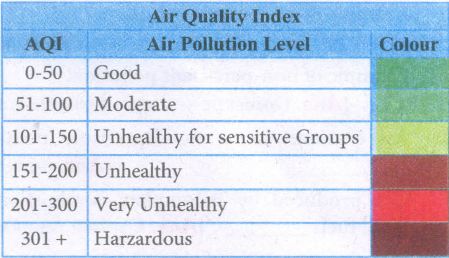
What is AQI?
12.
Define air pollution.
13.
How are pollutants classified?
14.
What would Earth be like without the greenhouse effect?
15.
Discuss the causes and effects of global warming. What measures need to be taken to control global warming?
1.
Ozone depletion: Thinning of the stratospheric ozone layer is known as ozone depletion. Such depletion causes the 'ozone hole', resulting in poor screening of the harmful UV rays and increase in incidences of skin cancer. Some of the common agents that deplete ozone are CFCs.
2.
Peroxyacetyl nitrate (PAN) is a secondary pollutant present in photochemical smog. It is thermally unstable and decomposes into peroxyethanol radicals and nitrogen dioxide gas causing eye irritation
3.
Particulate matters are tiny particles of solid matter suspended in a gas or liquid. Combustion of fossil fuels, fly ash produced in thermal power plants, forest fires, asbestos mining units and cement factories are the main sources of particulate matter pollution.
4.
Air pollutants can be
(i) discharge of dusts or particulate matter (PM: 2.5 and 10)
(ii) discharge of gases (SOx, NOx, CO and CO2)
5.
The alterations or changes in the composition of the Earth's atmosphere by natural or human activities (anthropogenic factors) are referred as Air Pollution.
6.
Pollution is any undesirable change in the physical, chemical and biological characteristics of the environment due to natural causes and human activities.
7.
Sources of water pollution can also be classified in three ways. They are municipal wastes, industrial wastes and agricultural wastes.
8.
Ozone is found in the layer of the atmosphere called stratosphere. It acts as a protective covering that absorbs ultraviolet radiation from the sun. It is found about 15 and 50 kilometers from the ground level.
9.
(i) 1992: Earth summit, Rio de Janeiro. Agenda 21, otherwise called Rio conference, Brazil
(ii) 1997: Kyoto Protocol, Japan.
10.
4 'R' refers to refuse, reduce, reuse and recycle. It is the best available remedy for plastic waste pollution.
11.
Air Quality Index (AQI) is a number used by government agencies to communicate to the public how polluted the air is at a given time.
12.
The alteration or changes in the composition of the earth's atmosphere by natural or human activities (anthropogenic factors) are referred as air pollution.
13.
Pollutants are classified into:
Non degradable and degradable pollutants. Degradable pollutants are further classified as rapidly degradable and slowly degradable.
14.
The naturally occurring greenhouse gases in the air, mainly carbon dioxide, methane and water vapour trap radiation from the sun and act like a thermal blanket around our planet earth. Without the greenhouse gases, the earth would have an average temperature of -180 c and be covered in ice. The greenhouse effect keeps the earth warm enough to sustain life.
15.
Green House Effect and Global warming:
Natural environment and climate are dynamic and keep changing over course of time. Reasons for climate change
a) Human population growth
b) Industrialization
c) Associated anthropological activities the changes.
Impact on Global Warming:
(i) Large-scale changes of global environment can lead to hazards, which may include climate change, stratospheric ozone depletion, changes in ecosystems due to loss of biodiversity, changes in hydrological systems and the supplies of freshwater, land degradation, urbanization, and stress on food-producing systems.
(ii) Greenhouse gases (GHG) water vapour, carbon dioxide, methane, nitrous oxide, ozone and some artificial chemicals such as chlorofluorocarbons (CFCs) causes greenhouse effect. The absorbed energy warms the atmosphere and the surface of the Earth
(iii) Global warming will have a significant impact on people and nature. As global average temperatures rise, precipitation patterns could be affected. Extreme wet and dry conditions can be expected (flooding and desertification). Coastal areas shall become more vulnerable to storm surges as sea level rises. Plant and animal species will migrate or disappear in response to climate change.
(iv) Global warming can directly affect the flora and fauna. This could also result in shortage of food and even lead to a food crisis and affect the health of the people and organisms.
Control Measures:
The UNO has several measures to control or reduce pollution. Through various conventions organized by UNO, the countries assured to take steps to control or reduce emissions by factories and automobiles.

12th Standard Syllabus & Materials
12th Standard
TN 12th Computer Applications வலையமைப்பு வடமிடல் Sample Question Papers Study Material - QB365 Set A
NEW12th Standard
TN 12th Computer Applications களப்பெயர் முறைமை (DNS) Sample Question Papers Study Material - QB365 Set A
NEW12th Standard
TN 12th Computer Applications வலையமைப்பு எடுத்துக்காட்டுகள் மற்றும் நெறிமுறைகள் Sample Question Papers Study Material - QB365 Set A
NEW12th Standard
TN 12th Computer Applications கணினி வலையமைப்பு ஓர் அறிமுகம் Sample Question Papers Study Material - QB365 Set A



Tamilnadu Stateboard 12th Standard Subjects

Maths

Chemistry

Physics
Biology

Computer Science

Business Maths and Statistics

Economics

Commerce

Accountancy

History

Computer Applications
Biology
Computer Technology
Computer Applications
Computer Science
Business Maths and Statistics
Commerce
Economics
Maths
Chemistry
Physics
Computer Technology
History
Accountancy

Tamil

English

French
Tamilnadu Stateboard Standards

