
 100% FREE ACCESS
12th Standard Syllabus & Materials
12th Standard
TN 12th Computer Applications மின்னணு தரவு பரிமாற்றம் Sample Question Papers Study Material - QB365 Set A
NEW12th Standard
TN 12th Computer Applications மின் - வணிக பாதுகாப்பு அமைப்புகள் Sample Question Papers Study Material - QB365 Set A
NEW12th Standard
TN 12th Computer Applications மின்னணு செலுத்தல் முறைகள் Sample Question Papers Study Material - QB365 Set A
NEW12th Standard
TN 12th Computer Applications மின் - வணிகம் Sample Question Papers Study Material - QB365 Set A
NEW12th Standard
TN 12th Computer Applications திறந்த மூல கருத்துருக்கள் Sample Question Papers Study Material - QB365 Set A
NEW12th Standard
TN 12th Computer Applications வலையமைப்பு வடமிடல் Sample Question Papers Study Material - QB365 Set A

Published on: 28/09/2019
Botany - Principles of Ecology
Download Tamil Nadu 12th Standard Biology question papers, model tests, one-mark questions, important questions, and public exam papers in PDF format. Free study materials and answer keys for TN State Board students.
Questions + Answers key
Take MCQ Biology Test1.
Point out any two morphological adaptations noticed in the roots of hydrophytes.
2.
Define Amensalism.
3.
What is the principle of commensalism?
4.
Define mutualism with an example
5.
What are edaphic factors?
6.
Pyronema confluens is the indicator of fire - comment.
7.
Based on temperature prevalence, Raunkiaer classified world's vegetation into four types. Name them.
8.
Heliophytes differ from Sciophytes. How?
9.
What is ecological hierarchy?
10.
How Earnest Haeckel defined ecology?
11.
The organic horizon is generally absent from agricultural soils because tilling, e.g., plowing, buries organic matter. Why is an organic horizon generally absent in desert soils ?
12.
‘Green algae are not likely to be found in the deepest strata of the ocean’. Give at least one reason.
13.
What are ecological equivalents? Give one example
14.
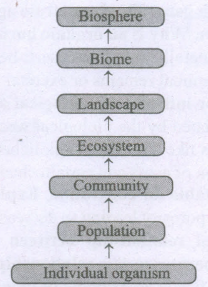
What is ecological hierarchy? Name the levels of ecological hierarchy.
15.
1.
1. Roots are totally absent in Wolffia and Salvinia or poorly developed in Hydrilla or well developed in Ranunculus.
2. The root caps are replaced by root pockets. Example: Eichhornia
2.
Amensalism is an interspecific interaction in which one species is inhibited while the other species is neither benefitted nor harmed. The inhibition is achieved by the secretion of certain chemicals called allelopathic substances. Amensalism is also called antibiosis.
3.
Commensalism is an interaction between two organisms in which one is benefitted and the other is neither benefitted nor harmed. The species that derives benefit is called the commensal, while the other species is called the host.
4.
Mutualism is an interaction between two species of organisms in which both are benefitted from the obligate association. E.g: Lichens (alga with fungus).
5.
Edaphic factors are the abiotic factors related to soil, include the physical and chemical composition of the soil formed in a particular area.
6.
Pyronema confluens is a fungus which grow on the soil of burnt or fire disturbed areas. Hence it is called as indicator of fire.
7.
Raunkiaer classified the world's vegetation into the following four types. They are megatherms, mesotherms, microtherms and hekistotherms.
8.
Heliophytes - Light loving plants. Example: Angiosperms.
Sciophytes - Shade loving plants. Example: Bryophytes and Pteridophytes
9.
The interaction of organisms with their environment results in the establishment of grouping of organisms which is called ecological hierarchy.
10.
Earnest Haeckel defined "Ecology is the study of the reciprocal relationship between living organisms and their environment."
11.
A desert has little or no plant life without plants, there is no organic horizon in the soil leading to a low level of water retention that is unsuitable for plant growth.
12.
The blue green light have short wavelength & penetrates into the water. Green algae is unable to use that component of light. Blue light can penetrate up to 500 ft depth therefore algae are unlikely to survive below that depth.
13.
Taxonomically different species occupying similar habitats (Niches) in different geographical regions are called Ecological equivalents.
E.g: Certain species of epiphytic orchids of Western Ghats of India differ from the epiphytic orchids of South America. But they are epiphytes.
14.
The interaction of organisms with their environment results in the establishment of grouping of organisms
Levels of ecological hierarchy
15.

12th Standard Syllabus & Materials
12th Standard
TN 12th Computer Applications களப்பெயர் முறைமை (DNS) Sample Question Papers Study Material - QB365 Set A
NEW12th Standard
TN 12th Computer Applications வலையமைப்பு எடுத்துக்காட்டுகள் மற்றும் நெறிமுறைகள் Sample Question Papers Study Material - QB365 Set A
NEW12th Standard
TN 12th Computer Applications கணினி வலையமைப்பு ஓர் அறிமுகம் Sample Question Papers Study Material - QB365 Set A
NEW12th Standard
TN 12th Computer Applications PHP-உடன் MySQL-ஐ இணைத்தல் Sample Question Papers Study Material - QB365 Set A



Tamilnadu Stateboard 12th Standard Subjects

Maths

Chemistry

Physics
Biology

Computer Science

Business Maths and Statistics

Economics

Commerce

Accountancy

History

Computer Applications
Biology
Computer Technology
Computer Applications
Computer Science
Business Maths and Statistics
Commerce
Economics
Maths
Chemistry
Physics
Computer Technology
History
Accountancy

Tamil

English

French
Tamilnadu Stateboard Standards

