
 100% FREE ACCESS
12th Standard Syllabus & Materials
12th Standard
TN 12th Computer Applications மின்னணு தரவு பரிமாற்றம் Sample Question Papers Study Material - QB365 Set A
NEW12th Standard
TN 12th Computer Applications மின் - வணிக பாதுகாப்பு அமைப்புகள் Sample Question Papers Study Material - QB365 Set A
NEW12th Standard
TN 12th Computer Applications மின்னணு செலுத்தல் முறைகள் Sample Question Papers Study Material - QB365 Set A
NEW12th Standard
TN 12th Computer Applications மின் - வணிகம் Sample Question Papers Study Material - QB365 Set A
NEW12th Standard
TN 12th Computer Applications திறந்த மூல கருத்துருக்கள் Sample Question Papers Study Material - QB365 Set A
NEW12th Standard
TN 12th Computer Applications வலையமைப்பு வடமிடல் Sample Question Papers Study Material - QB365 Set A

Published on: 09/10/2019
Numerical Methods
Download Tamil Nadu 12th Standard Business Maths and Statistics question papers, model tests, one-mark questions, important questions, and public exam papers in PDF format. Free study materials and answer keys for TN State Board students.
Questions + Answers key
Take MCQ Business Maths and Statistics Test
1.
If f(x) = x2 + 3x then show that Δf(x) = 2x + 4
2.
Evaluate ∆(log ax).
3.
Given U0 = 1, U1 = 11, U2 = 21, U3 = 28 and U4 = 29 find Δ4U0
4.
Prove that f(4) = f(3) + Δf(2) + Δ2 f(1) + Δ3 f(1) taking ‘1’ as the interval of differencing.
5.
Construct a forward difference table for y = f(x) = x3+2x+1 for x = 1,2,3,4,5
6.
If u0 = 560, u1 = 556, u2 = 520, u4 = 385, show that u3 = 465
7.
Find f(0.5) if f(−1) = 202, f (0)= 175, f(1) = 82 and f(2) = 55
8.
Use Lagrange’s formula and estimate from the following data the number of workers getting income not exceeding Rs. 26 per month
| Income not exceeding (Rs) | 15 | 25 | 30 | 35 |
| No. of workers | 36 | 40 | 45 | 48 |
9.
Using Newton’s forward interpolation formula find the cubic polynomial.
| x | 0 | 1 | 2 | 3 |
| f(x) | 1 | 2 | 1 | 10 |
10.
Using Lagrange’s interpolation formula find y(10) from the following table:
| x | 5 | 6 | 9 | 11 |
| y | 12 | 13 | 14 | 16 |
11.
Find the missing entries from the following
| x | 0 | 1 | 2 | 3 | 4 | 5 |
| y = f(x) | 0 | - | 8 | 15 | - | 35 |
12.
Estimate the production for 1964 and 1966 from the following data
| Year | 1961 | 1962 | 1963 | 1964 | 1965 | 1966 | 1967 |
| Production | 200 | 220 | 260 | - | 350 | - | 430 |
13.
From the following table find the number of students who obtained marks less than 45.
| Marks | 30-40 | 40-50 | 50-60 | 60-70 | 70-80 |
| No. of Students | 31 | 42 | 51 | 35 | 31 |
14.
If f (x)=x2 + 2x + 2 and the interval of differencing is unity then Δf (x) _______.
2x −3
2x +3
x + 3
x − 3
15.
Lagrange’s interpolation formula can be used for _______.
equal intervals only
unequal intervals only
both equal and unequal intervals
none of these.
16.
∇ f(a) = _______.
f (a) + f(a−h)
f (a) − f(a + h)
f (a) − f(a − h)
f (a)
17.
E f (x)= _______.
f(x− h)
f (x)
f(x+ h)
f(x+ 2h)
18.
If m and n are positive integers then ΔmΔnf(x) = _______.
Δm+nf (x)
Δmf(x)
Δnf (x)
Δm-nf (x)
19.
Δf(x) = _______.
f(x+ h)
f(x) − f(x+h)
f(x + h) − f(x)
f (x) − f(x−h)
20.
Δ2y0 = _______.
y2 −2y1 + y0
y2 + 2y1 − y0
y2 + 2y1 + y0
y2 + y1 + 2y0
21.
When 3 values are given, the polynomial which fits the data is of
22.
E (Δf(x))
23.
EΔ
24.
E
25.
∆
26.
∆4y3=
(a) (E - 1)3y3
(b) (E4 - 4E3 + 6E2 - 4E + 1)y3
(c) y7 - 4y6 + 6y5 4y4 +y3
(d) (E - 1)4y3
27.
In the set of values f(x) = y, x is called
(a) independent variable
(b) dependent variable
(c) argument
(d) x - variable
28.
E2f(x) =
(a) E (E (f(x))
(b) E (f(x + h)
(c) f(x + 2h)
(d) F(x + h)
29.
The missing term in the following data will be
| x | 1 | 2 | 3 |
| f(X) | 2 | - | 7 |
(a) f(2)
(b) 3
(c) 5
(d) 22 + 1
30.
Using interpolation the polynomial which passes through the points (0,7), (5. 0), (3, 6) and (2, 5) is
(a) cubic polynomial
(b) a polynomial of degree 3
(c) linear polynomial
(d) y = ax3 + bx2 + cx + d, a ≠ 0
31.
(c) ∆f(x) = f(x + h) - f(x)
(b) Enf(x) = f(x)
(c) ∇f(x) = f(x) - f(x - h)
(d) E.f(x) = f(x + h)
1.
Given f(x) = x2+ 3h
LHS = Δ f(x)
= f(x + h) - f(x)
= [(x + h)2 + 3 (x + h)] - [x2 + 3x]

= h2 + 2xh + 3h
when h = 1,
LHS = 12 + 2x(1) + 3(1)
= 1+2x+3
= 2x+4= RHS
Hence proved.
2.
Δ(log ax) = log (ax + h) -log (ax)
= log\(\left( \frac { ax+h }{ ax } \right) \)
=log \(\left( \frac { ax }{ ax } +\frac { h }{ ax } \right) \)
= log \(\left( 1+\frac { h }{ ax } \right) \)
∴ ∆ (log ax) = log \(\left( 1+\frac { h }{ ax } \right) \)
3.
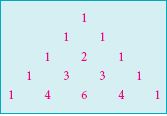
Δ2U0 = (E-1)4U0
= (E4 − 4E3+ 6E2− 4E+1)U0
= E4U0 - 4E3U0 + 6E2U0− 4EU0+ U0
= U4 − 4U3 + 6U2 − 4U1 + U0
= 29 − 4(28) + 6(21) − 4(11) + 1.
= 156 – 156 = 0
4.
We know that f(4) − f(3) = Δf(3)
f(4) − f(3) = Δf(3)
= Δ[f(2) + Δf(2)] ∵[f(3) - f(2) = Δf(2)]
= Δf(2) +Δ2f(2)
= Δf(2) + Δ2 [f(1) + Δf(1)]
∴ f(4) = f(4) + Δf(2) + Δ2 f(1) + Δ3f(1)
5.
y = f(x) = x3+2x+1 for x = 1,2,3,4,5
| x | y | Δy | Δ2y | Δ3y | Δ4y |
|---|---|---|---|---|---|
| 1 | 4 | ||||
| 9 | |||||
| 2 | 13 | 12 | |||
| 21 | 6 | ||||
| 3 | 34 | 18 | 0 | ||
| 39 | 6 | ||||
| 4 | 73 | 24 | |||
| 63 | |||||
| 5 | 136 | ||||
6.
Since only four values are given,
(E -1)4 u0 = 0
⇒ (E4 - 4E3 + 6E2 - 4E + 1) u0
= u4 - 4 u3 + 6 u2 - 4 u1 + u0
⇒ 385 - 4(u3) + 6(520) - 4 (556) + 560 =0
⇒ 385 - 4u3 + 3120 - 2224 + 560 = 0
⇒ 1841 - 4u3 = 0
⇒ 1841 = 4u3
⇒ u3 = \(\frac{1841}{4}\) = 460.25
∴ u3 = 460.25
7.
Given
| x | -1 | 0 | 1 | 2 |
| y | 202 | 175 | 82 | 55 |
Since we have to find f(0.5) which is at the beginning of the table, use Newton's forward interpolation formula.
xn + nh = 0.5 ⇒ -1 + n(1) = 0.5
⇒ n = 0.5 + 1 = 1.5
∴ y(0.5) = \(\frac { n }{ 1! } { \triangle y }_{ 0 }+\frac { n(n+1) }{ 2! } { \triangle }^{ 2 }{ y }_{ 0 }+\frac { n(n+1)(n+2) }{ 3! } { \triangle }^{ 3 }{ y }_{ 0 }\)
The difference table is
| x | y | Δy | Δ2y | Δ3y |
|---|---|---|---|---|
| -1 | 202 | |||
| 0 | 175 | |||
| 1 | 82 | -93 | -66 | |
| 2 | 55 | -27 | 66 | 132 |
∴ y(0.5) = 202+\(\frac { 1.5 }{ 1! } (-27)+\frac { (1.5)(1.5-1) }{ 2! } (-66)+\frac { (1.5)(1.5-1)(1.5-2) }{ 3! } (132)\)
= 202 - 40.5 + (1.5) (.5) (-33) + \(\frac { (1.5)(.5)(-0.5) }{ 6(132) } \) (132)
= 202 - 40.5 - 24.75 - 8.25
= 202 -73.5
= 128.5
Hence f(0.5) = 128.5
8.
Here the intervals are unequal
∴ By Lagrange'sinterpolation formula, we have
x0 = 15, x1 = 25, x2 = 30, x3 = 35
y0= 36, y1 = 40, y2 = 45, y3 = 38, and x = 26
∴ y = f(x) = \(\frac { (x-{ x }_{ 1 })(x-{ x }_{ 2 })(x-{ x }_{ 3 }) }{ ({ x }_{ 0 }-{ x }_{ 1 })({ x }_{ 0 }-{ x }_{ 2 })({ x }_{ 0 }-{ x }_{ 3 }) } \times { y }_{ 0 }+\frac { (x-{ x }_{ 0 })(x-{ x }_{ 2 })(x-{ x }_{ 3 }) }{ ({ x }_{ 1 }-{ x }_{ 0 })({ x }_{ 1 }-{ x }_{ 2 })(x_{ 1 }-{ x }_{ 3 }) } \times { y }_{ 1 }+\frac { (x-{ x }_{ 0 })(x-{ x }_{ 1 })(x-{ x }_{ 3 }) }{ ({ x }_{ 2 }-{ x }_{ 0 })({ x }_{ 2 }-{ x }_{ 1 })({ x }_{ 2 }-{ x }_{ 3 }) } \times { y }_{ 2 }+\frac { (x-{ x }_{ 0 })(x-{ x }_{ 1 })(x-{ x }_{ 2 }) }{ ({ x }_{ 3 }-{ x }_{ 0 })({ x }_{ 3 }-{ x }_{ 1 })({ x }_{ 3 }-{ x }_{ 2 }) } \times { y }_{ 3 }\)
= \(\frac { (26-25)(26-30)(26-35) }{ (15-25)(15-30)(15-35) } (36)+\frac { (26-15)(26-1530)(26-35) }{ (25-15)(5-30)(25-35) } (40)+\frac { 26-15)(26-25)(26-35) }{ (30-15)(30-30)(30-35) } (40)+\frac { (26-15)(26-25)(26-30) }{ (35-15)(35-25)(35-30) } (38)\)
= \(\frac { (1)(-4)(-9) }{ (-10)(-15)(-20) } (36)+\frac { (n)(-4)(-9) }{ (10)(-5)(-10) } (40)+\frac { (11)(1)(-9) }{ (15)(5)(-5) } (45)+\frac { (9)(1)(-4) }{ (-20)(10)(5) } (38)\)
= \(-\frac { (36)(36) }{ (150)(20) } +\frac { (44)(9)(40) }{ 500 } +\frac { 99(45) }{ (15)(25) } -\frac { (36)(38) }{ (200)(15) } \)
= \(\frac { 1296 }{ 3000 } +\frac { 15840 }{ 500 } +\frac { 4455 }{ 375 } -\frac { 1368 }{ 1000 } \)
= -0.432 + 31.68 + 11.88 - 1.368
= 41.76.
Hence the number of workers getting income not exceeding Rs. 26 per month is 42.
9.
The forward interpolation formula is
\({ y }_{ ({ x=x }_{ 0 }+nh) }={ y }_{ 0 }+\frac { n }{ 1! } =\triangle { y }_{ 0 }+\frac { n(n-1) }{ 2! } { \triangle }^{ 2 }{ y }_{ 0 }+\frac { n(n-1)(n-2) }{ 3! } { \triangle }^{ 3 }{ y }_{ 0 }+...\)
Here x0 + nh = x ⇒ x0 = 0, h = 1
∴ 0 + n = x ⇒ n = x.
The difference table is
| x | y = f(x) | Δy | Δ2y | Δ3y |
|---|---|---|---|---|
| 0 | 1 | |||
| 1 | ||||
| 1 | 2 | -2 | ||
| -1 | 12 | |||
| 2 | 1 | 10 | ||
| 9 | ||||
| 3 | 10 |
\({ y }_{ (n=x) }={ y }_{ 0 }+\frac { n }{ 1! } =\triangle { y }_{ 0 }+\frac { n(n-1) }{ 2! } { \triangle }^{ 2 }{ y }_{ 0 }+\frac { n(n-1)(n-2) }{ 3! } { \triangle }^{ 3 }{ y }_{ 0 }+...\)
\(y=1+\frac { n }{ 1! } (1)+\frac { n(n-1) }{ 2! } (-2)+\frac { n(n-1)(n-2) }{ 6 } (12)\)
⇒ y = 1 + x + (x2 - x)(-1) + x(x2 - 3x + 2) (2)
⇒ y = 1 + x - x2 + x + 2x3 - 6x2 + 4x
⇒ y = 1+ 6x - 7x2 + 2x3
Hence, the cubic polynomial is 2x3 - 7x2+ 6x + 1.
10.
Here the intervals are unequal. By Lagrange’s interpolation formula we have
x0 = 5, x1 = 6, x2 = 9, x3 = 11
y0 = 12, y1 = 13, y2 = 14, y3 = 16
\(y=f(x)=\frac { \left( x-{ x }_{ 1 } \right) \left( x-{ x }_{ 2 } \right) \left( x-{ x }_{ 3 } \right) }{ \left( { x }_{ 0 }-{ x }_{ 1 } \right) \left( x_{ 0 }-{ x }_{ 2 } \right) \left( { x }_{ 0 }-{ x }_{ 3 } \right) } \times { y }_{ 0 }+\frac { \left( x-{ x }_{ 0 } \right) \left( x-{ x }_{ 2 } \right) \left( x-{ x }_{ 3 } \right) }{ \left( { x }_{ 1 }-{ x }_{ 0 } \right) \left( x_{ 1 }-{ x }_{ 2 } \right) \left( { x }_{ 1 }-{ x }_{ 3 } \right) } \times { y }_{ 1 }+\frac { \left( x-{ x }_{ 0 } \right) \left( x-{ x }_{ 2 } \right) \left( x-{ x }_{ 3 } \right) }{ \left( { x }_{ 2 }-{ x }_{ 0 } \right) \left( x_{ 2 }-{ x }_{ 1 } \right) \left( { x }_{ 2 }-{ x }_{ 3 } \right) } \times { y }_{ 2 }+\frac { \left( x-{ x }_{ 0 } \right) \left( x-{ x }_{ 2 } \right) \left( x-{ x }_{ 3 } \right) }{ \left( { x }_{ 3 }-{ x }_{ 0 } \right) \left( x_{ 3 }-{ x }_{ 1 } \right) \left( { x }_{ 3 }-{ x }_{ 2 } \right) } \times { y }_{ 3 }\)
\(=\frac { (x-6)(x-9)(x-11) }{ (5-6)(5-6)(5-11) } (12)+\frac { (x-5)(x-9)(x-11) }{ (6-5)(6-9)(6-9) } (13)+\frac { (x-5)(x-6)(x-11) }{ (9-5)(9-6)(9-11) } (14)+\frac { (x-5)(x-6)(x-9) }{ (11-5)(11-6)(11-9) } (16)\)
Put x = 10
\({ y }_{ (10) }=f\left( 10 \right) =\frac { 4(1)(-1) }{ (-1)(-4)(-6) } (12)+\frac { (5)(1)(-1) }{ (1)(-3)(-5) } (13)+\frac { 5(4)(-1) }{ 4(3)(-2) } (14)+\frac { (5)(4)(1) }{ 6(5)(2) } (16)\)}
= \(\frac { 1 }{ 6 } \left( 12 \right) -\frac { 13 }{ 3 } +\frac { 5\left( 14 \right) }{ 3\times 2 } +\frac { 4\times 16 }{ 12 } \)
= 14.6663
11.
Let the missing entries by y1 and y4
Since only four values of f(x) are given, the polynomial which fits the data is of degree 3.
Hence fourth differences are zero.
∴ Δ4yk = 0 ⇒ (E - 1)4yk = 0
(E4 - 4E3 + 6E2- 4E + 1) yk = 0
Put k = 0 in (1) we get,
(E4 - 4E3 + 6E2 - 4E + 1)y0 = 0
⇒ y4 - 4y3 + 5y2 - 4y1 + y0 = 0
⇒ y4 - 4(15) + 6(8) - 4(y1) + 0 = 0
⇒ y4 - 60 + 48 - 4y1 = 0
⇒ y4 - 4y1 - 12 = 0
⇒ y4 - 4y1 = 12 (2)
put k = 1 in (1) we get
(E4- 4E3 + 6E2 - 4E + 1) y1 = 0
⇒ y5 - 4y4 + 6y3 - 4y2 + y1 = 0
⇒ 35 - 4y4 + 6 (15) - 4 (8) +y1 = 0
⇒ 35 - 4y4 + 90 - 32 +y1 = 0
⇒ 4y4 +y1 = -93 (3)
| (2) x 4 ➝ | 4y4 - 16y1 | = 48 |
| (3) ➝ | -4y4 + y1 | = -93 |
| Adding | -15y1 | = -45 |
⇒ y1 = \(\frac{-45}{-15}\) = 3
⇒ y1 = 3.
Substituting y1 = 3 in (2) we get,
y4 - 4(3) = 12
y4 - 12 = 12
⇒ y4 = 12 + 12
⇒ y4 = 24
Hence the missing entries are 3 and 24.
12.
Since five values are given, the polynomial which fits the data is of degree four.
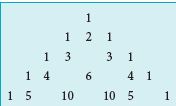
Hence Δ5yk = 0 (i.e) (E−1)5yk = 0
i.e., (E5 - 5E4 + 10E3 - 10E2 + 5E - 1)yk = 0
E5yk - 5E4yk+ 10E3yk- 10E2yk+ 5Eyk - yk = 0 (1)
Put k = 0 in (1)
E5y0 - 5E4y0+ 10E3y0- 10E2y0+ 5Ey0 - y0 = 0
y5 − 5y4 + 10y3 − 10y2 +5 y1 - y0 = 0
y5 − 5(350) +10y3−10(260)+5(220)− 200 = 0
y5 + 10y3 = 3450 (2)
Put k = 1 in (1)
E5y1 - 5E4y1+ 10E3y1- 10E2y1+ 5Ey1- y0 = 0
y6 − 5y5 + 10y4 −1 0y3 − y1 = 0
430 −5y5 +10(350) −10y3 + 5(260)− 220 = 0
5y5+10y3 = 5010 (3)
(3) – (2) ⇒ 4y5 = 1560
y5 = 390
From (1) 390 +10y3 = 3450
10y3 = 3450 – 390
y3 ≅ 306
13.
Let x be the marks and y be the number of students
By converting the given series into cumulative frequency distribution, the difference table is as follows.
| x | y | \(\Delta y\) | \(\Delta ^{ 2 }y\) | \(\Delta ^{ 2 }y\) | \(\Delta ^{ 4 }y\) |
| Less than 40 | 31 | ||||
| 42 | |||||
| 50 | 73 | 9 | |||
| 51 | –25 | ||||
| 60 | 124 | -16 | |||
| 35 | 12 | ||||
| 70 | 159 | -4 | |||
| 31 | |||||
| 80 | 190 |
\({ y }_{ \left( x={ x }_{ 0 }+nh \right) }={ y }_{ 0 }+\frac { n }{ n! } \Delta { y }_{ 0 }+\frac { n(n-1) }{ 2! } { \Delta }^{ 2 }{ y }_{ 0 }+\frac { n(n-)(n-2) }{ 3! } { \Delta }^{ 3 }{ y }_{ 0 }+...\)
To find y at x = 45
\(\therefore\) x0+nh = 45 , x0 = 40, h = 10 \(\Rightarrow n=\frac { 1 }{ 2 } \)
y(x = 45) = \(31+\frac { 1 }{ 2 } \times 42+\frac { \frac { 1 }{ 2 } \left( \frac { -1 }{ 2 } \right) }{ 2 } (9)+\cfrac { \frac { 1 }{ 2 } \left( \frac { -1 }{ 2 } \right) \left( \frac { -3 }{ 2 } \right) }{ 6 } \times \left( -25 \right) +\frac { \frac { 1 }{ 2 } \left( \frac { -1 }{ 2 } \right) \left( \frac { -3 }{ 2 } \right) \left( \frac { -5 }{ 2 } \right) }{ 24 } \times \left( -37 \right) \)
= \(31+21-\frac { 9 }{ 8 } -\frac { 25 }{ 16 } -\frac { 37\times 15 }{ 384 } \)
= 47.867 ≅ 48
14.
(b)
2x +3
15.
(c)
both equal and unequal intervals
16.
(c)
f (a) − f(a − h)
17.
(c)
f(x+ h)
18.
(a)
Δm+nf (x)
19.
(c)
f(x + h) − f(x)
20.
(a)
y2 −2y1 + y0
21.
parabolic
22.
Δ . E. f(x)
23.
∆E
24.
1 + ∆
25.
E - 1
26.
(d) (E - 1)4y3
Hint: (a), (b), (c) are different forms of ∆4y3 but not (d).
27.
(b) dependent variable
Hint: (a), (c), (d) are other names for x - variable but not (b).
28.
(d) F(x + h)
Hint: (a), (b), (c) are values of E2 F(x) but not (d).
29.
(b) 3
Hint: The correct value is 5.
30.
(c) linear polynomial
31.
(b) Enf(x) = f(x)
Hint: Enf(x) = f(x + nh)

12th Standard Syllabus & Materials
12th Standard
TN 12th Computer Applications களப்பெயர் முறைமை (DNS) Sample Question Papers Study Material - QB365 Set A
NEW12th Standard
TN 12th Computer Applications வலையமைப்பு எடுத்துக்காட்டுகள் மற்றும் நெறிமுறைகள் Sample Question Papers Study Material - QB365 Set A
NEW12th Standard
TN 12th Computer Applications கணினி வலையமைப்பு ஓர் அறிமுகம் Sample Question Papers Study Material - QB365 Set A
NEW12th Standard
TN 12th Computer Applications PHP-உடன் MySQL-ஐ இணைத்தல் Sample Question Papers Study Material - QB365 Set A



Tamilnadu Stateboard 12th Standard Subjects

Maths

Chemistry

Physics

Biology

Computer Science
Business Maths and Statistics

Economics

Commerce

Accountancy

History

Computer Applications
Biology
Computer Technology
Computer Applications
Computer Science
Business Maths and Statistics
Commerce
Economics
Maths
Chemistry
Physics
Computer Technology
History
Accountancy

Tamil

English

French
Tamilnadu Stateboard Standards
