
 100% FREE ACCESS
12th Standard Syllabus & Materials
12th Standard
TN 12th Computer Applications மின்னணு தரவு பரிமாற்றம் Sample Question Papers Study Material - QB365 Set A
NEW12th Standard
TN 12th Computer Applications மின் - வணிக பாதுகாப்பு அமைப்புகள் Sample Question Papers Study Material - QB365 Set A
NEW12th Standard
TN 12th Computer Applications மின்னணு செலுத்தல் முறைகள் Sample Question Papers Study Material - QB365 Set A
NEW12th Standard
TN 12th Computer Applications மின் - வணிகம் Sample Question Papers Study Material - QB365 Set A
NEW12th Standard
TN 12th Computer Applications திறந்த மூல கருத்துருக்கள் Sample Question Papers Study Material - QB365 Set A
NEW12th Standard
TN 12th Computer Applications வலையமைப்பு வடமிடல் Sample Question Papers Study Material - QB365 Set A

Published on: 02/09/2022
QB365 provides a detailed and simple solution for every Possible Book Back Questions in Class 12 Chemistry Subject - Biomolecules, English Medium. It will help Students to get more practice questions, Students can Practice these question papers in addition to score best marks.
Download Tamil Nadu 12th Standard Chemistry question papers, model tests, one-mark questions, important questions, and public exam papers in PDF format. Free study materials and answer keys for TN State Board students.
Questions + Answers key
Take MCQ Chemistry Test
1.
What type of linkages hold together monomers of DNA?
2.
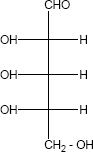
Is the following sugar, D – sugar or L – sugar?
3.
Write a note on formation of α-helix .
4.
Write the structure of α-D (+) glucophyranose
5.
Define enzymes
6.
Write the structure of all possible dipeptides which can be obtained form glycine and alanine
7.
What are harmones? Give examples
8.
How are vitamins classified?
9.
Classify the following into monosaccharides, oligosaccharides and polysaccharides.
i) Starch
ii) fructose
iii) sucrose
iv) lactose
iv) maltose
10.
Why carbohydrates are generally optically active.
11.
Write a note on denaturation of proteins.
12.
Give two difference between Hormones and vitamins.
13.
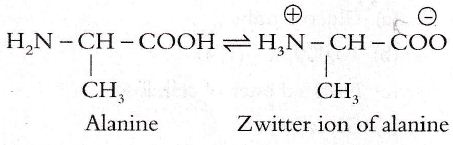
Write the Zwitter ion structure of alanine
14.
Name the Vitamins whose deficiency cause i) rickets ii) scurvy
15.
16.
1.
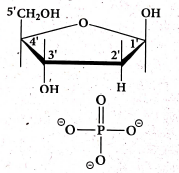
Watson & Crick proposed a 3-dimensional secondary structure of DNA. In this DNA molecule, Monomners of DNA are held together by Phosphodiester linkage. This linkages are occured in 5' & 3' carbon atoms of Pentose sugar.
2.
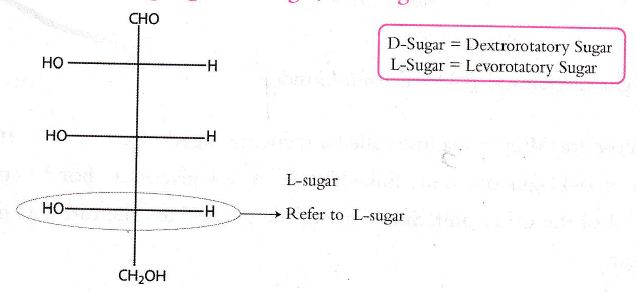
(a) C4 carbon of the given sugar contains H and OH on the same configuration like C4 carbon in L-Glyceraldehyde. Therefore the sugar is L-sugar.
(b) Because the H and OH on C4 carbon are in the same configuration as the Hand OH on C4 carbon in L-Glyceraldehyde
3.
α - Helix:
In the a-helix sub-structure, the amino acids are arranged in a right handed helical (spiral) structure and are stabilised by the hydrogen bond between the carbonyl oxygen one amino acid (nth residue) with amino hydrogen of the fifth residue (n + 4th residue).The side chains of the residues protrude, outside of the helix. Each turn of an a-helix contains about 3.6 residues and is about 5.4 Å long.The amino acid proline produces a kink in the helical structure and often called as a helix breaker due to its rigid cyclic structure.
4.
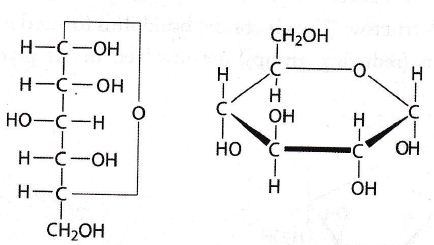
α-D (+) glucophyranose
5.
(i) Enzymes are naturally occurring simple or conjugated proteins which act as biological catalysts in living systems.
(ii) E.g. Carbonic anhydrase, Lactase, Sucrose
6.
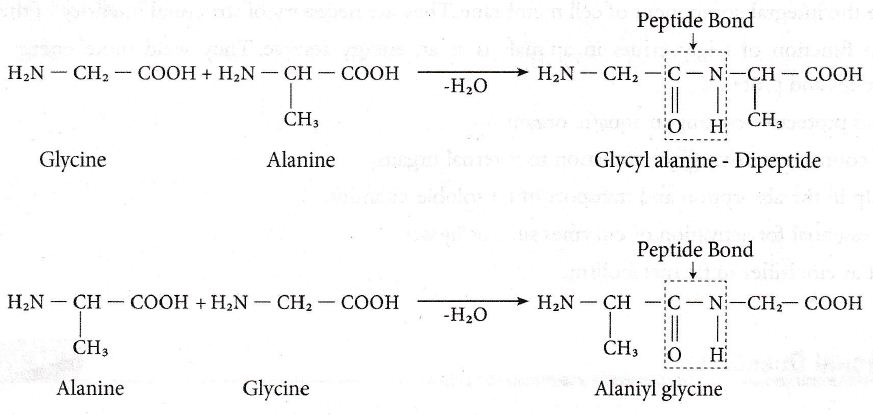
∴ Two dipeptides structures are possible from glycine and alanine. They are glycyl alanine and Alanyl glycine.
7.
(i) Hormone is an organic substance (e.g. a peptide or a steroid) that is secreted by one tissue. It limits the blood stream and induces a physiological response (e.g. growth and metabolism) in other tissues. It is an intercellular signalling molecule.
(ii) e.g. Testosterone, Thyroxine, Estrogen, Insulin, Oxytocin etc.
8.
Vitamins are classified into two groups based on their solubility in water or in fat.
(a) Fat soluble vitamins:
These vitamins absorbed best when taken with fatty food and are stored in fatty tissues and livers. These vitamins do not dissolve in water. Hence they are called fat soluble vitamins. Vitamin A, D, E & K are fatsoluble vitamins.
(b) Water soluble vitamins:
Vitamins B (B1, B2, B3, B5, B6, B7, B9 & B12) and C are readily soluble in water. On the contrary to fat soluble vitamins, these can't be stored. The excess vitamins present will be excreted through urine and are not stored in our body. Hence, these two vitamins should be supplied regularly to our body.
9.
i) Starch - Polysaccharide
ii) fructose - monosaccharide
iii) sucrose - oligosaccharides
iv) lactose - oligosaccharides
iv) maltose - oligosaccharides
10.
(i) Almost all carbohydrates are optically active as they contain one or more chiral carbons.
(ii) The number of optical isomers depends upon the number of chiral carbons (ie) 2n isomers, where n = total number of chiral carbons.
(iii) Glucose has \(4{ }^{\star} \)C; ∴ It has 24 =16 isomers.
11.
(i) Each protein has a unique three-dimensional structure formed by interactions such as disulphide bond, hydrogen bond, hydrophobic and electrostatic interactions. These interactions cain be disturbed when the protein is exposed to a higher temperature, certain chemicals such as urea, alteration of pH, ionic strength etc., It leads to the loss of the three-dimensional structure partially or completely. The process of a losing its higher order structure without losing the primary structure, is called denaturation. When a protein denatures, its biological function is also lost.
(ii) Since the primary structure is intact, this process can be reversed in certain proteins. This can happen spontaneously upon restoring the original conditions or with the help of special enzymes called cheperons (proteins that help proteins to fold correctly).
(iii) Example: coagulation of egg white by action of heat.
12.
| Hormone | Vitamin |
|---|---|
| Synthesized in animal bodies | Synthesised in plants |
| Produced in ductless (endocrine glands) | Have to be supplied in diet except (Vitamin D) |
| These are not stored in body but are continuously produced | These remain stored in the body to keep away diseases |
| Eg: Androgen, Estrogen, thyroxine etc. | Eg: Vitamin A (Retinol) Vitamin C (Ascorbic acid) |
13.
14.
i) Rickets - Vitamin - D (Cholecalciferol - (D3) Ergocalciferol - (D2)
ii) Scurvy (bleeding gums) - vitamin - C (Ascorbic acid)
15.
16.

12th Standard Syllabus & Materials
12th Standard
TN 12th Computer Applications களப்பெயர் முறைமை (DNS) Sample Question Papers Study Material - QB365 Set A
NEW12th Standard
TN 12th Computer Applications வலையமைப்பு எடுத்துக்காட்டுகள் மற்றும் நெறிமுறைகள் Sample Question Papers Study Material - QB365 Set A
NEW12th Standard
TN 12th Computer Applications கணினி வலையமைப்பு ஓர் அறிமுகம் Sample Question Papers Study Material - QB365 Set A
NEW12th Standard
TN 12th Computer Applications PHP-உடன் MySQL-ஐ இணைத்தல் Sample Question Papers Study Material - QB365 Set A



Tamilnadu Stateboard 12th Standard Subjects

Maths
Chemistry

Physics

Biology

Computer Science

Business Maths and Statistics

Economics

Commerce

Accountancy

History

Computer Applications
Biology
Computer Technology
Computer Applications
Computer Science
Business Maths and Statistics
Commerce
Economics
Maths
Chemistry
Physics
Computer Technology
History
Accountancy

Tamil

English

French
Tamilnadu Stateboard Standards
