
 100% FREE ACCESS
12th Standard Syllabus & Materials
12th Standard
TN 12th Maths Applications of Matrices and Determinants Sample Question Papers Study Material - QB365 Set A
NEW12th Standard
TN 12th Computer Applications மின்னணு தரவு பரிமாற்றம் Sample Question Papers Study Material - QB365 Set A
NEW12th Standard
TN 12th Computer Applications மின் - வணிக பாதுகாப்பு அமைப்புகள் Sample Question Papers Study Material - QB365 Set A
NEW12th Standard
TN 12th Computer Applications மின்னணு செலுத்தல் முறைகள் Sample Question Papers Study Material - QB365 Set A
NEW12th Standard
TN 12th Computer Applications மின் - வணிகம் Sample Question Papers Study Material - QB365 Set A
NEW12th Standard
TN 12th Computer Applications திறந்த மூல கருத்துருக்கள் Sample Question Papers Study Material - QB365 Set A

Published on: 02/09/2022
QB365 provides a detailed and simple solution for every Possible Creative Questions in Class 12 Chemistry Subject - Hydroxy Compounds and Ethers, English Medium. It will help Students to get more practice questions, Students can Practice these question papers in addition to score best marks.
Download Tamil Nadu 12th Standard Chemistry question papers, model tests, one-mark questions, important questions, and public exam papers in PDF format. Free study materials and answer keys for TN State Board students.
Questions + Answers key
Take MCQ Chemistry Test
1.
Explain auto-oxidation of ether.
2.
Explain the mechanism involved in the intermolecular dehydration of alcohols to give ethers.
3.
What is major product formed when 3,3-dimethyl-2-butanol is heated in the presence of H2SO4.
4.
An organic compound A (C2H6O2) liberates hydrogen with metallic sodium. Compound A when heated with anhydrous zinc chloride ultimately gives B (C2H4O) whereas) when heated with cone. phosphoric acid gives C (C4H10O3). A on oxidation with acidified K2Cr2O7 gives compound D (CH2O2). Identify A, B, C and D. Explain the reactions involved.
5.
An aromatic hydrocarbon A reacts with propene in the presence of anhydrous AlCl3 to give a compound B with a molecular formula C9H12 Further compound B undergoes oxidation in the, presence of air to give hydrogen peroxide C. Compound C decomposes in HCI acid solution to give compound D and acetone. Identify A, B, C and D. Explain the reactions.
6.
An organic compound A (C2H6O) liberates hydrogen with sodium metal. A when heated with alumina at 620 K gives an alkene B which when passed through Bayer's reagent gives C(C2H6O2). C reacts with PI3 and gives back B. Identify A, B and C. Write the reactions.
7.
An organic compound (A) (C6H6O) gives maximum of two isomers (B) and (C) When an alkaline solution of (A) is refluxed with chloroform. (B) on oxidation gives acid (D). The acid (D) is also obtained by I treating sodium salt of (A) with CO2 under pressure followed by hydrolysis. Identify the compounds (A), (B), (C) and (D) and explain with proper chemical reactions.
8.
Compound (A) of molecular formula C3H8O liberates hydrogen with sodium metal. (A) with P/I2 gives (B). Compound (B) on treatment with silver nitrite gives (C) which gives blue colour with nitrous acid. Identify (A), (B), (C) and explain the reactions.
9.
An organic compound (A) C3H8O answers Lucas test within 5-10 min and on oxidation forms (B) C3H6O. (B) on further oxidation forms (C) C2H4O2 which gives effervescence with NaHCO3 (B) also undergoes iodoform reactions. Identify A, B, C. Explain the reactions involved.
10.
Compound A of molecular formula C7H8 is treated with chlorine and then with NaOH to get compound B of molecular formula C7H8O. B on oxidation by acidified K2Cr2O7 gives compound C of molecular formula C7H6O. Compound C on treatment with 50% caustic soda gives the compound B and also D. Find A, B, C and D. Explain the reactions.
11.
Ail organic compound (A) C3H8O answers Lucas test within 5-10 minutes and on oxidation forms B (C3H6O). This on further oxidation forms C(C2H4O2) which gives effervescence with Na2 CO3 Balso undergoes iodoform reaction. Identify A, B and C. Explain the conversion of A to B and C.
12.
An organic compound A of molecular formula C3H6O on reduction with LiAlH4 gives B. Compound B gives blue colour in Victor Meyer's test and also forms a chloride C with SOCl2. The chloride on treatment with alcoholic KOH gives D. Identify A, B, C and D and explain the reactions.
13.
An organic compound A of molecular f formula C6H6O gives violet colouration with neutral FeCl3. Compound A on treatment with metallic Na gives compound B. Compound B on treatment with CO2 at 400 K under pressure gives C. This product on acidification gives compound D (C7H6O3) which is used in medicine. Identify (A) (B) (C) and D and explain the reactions.
14.
An organic compound (A) C2H6O liberates hydrogen on treatment with metallic sodium. (A) on mild oxidation gives (B) C2H4O which answers iodoform test. (B) when treated with cone. H2SO4 undergoes polymerisation to give (C) a cyclic compound. Identify (A) (B) and (C) and explain the reactions.
15.
An organic compound (A) of molecular formula C3H8O gives turbidity within 5-10 min on reaction with anhydrous ZnCI2/HCI.Compound (A) on treatment with sodium hypochlorite gives a carbonyl compound (B) which on further chlorination gives compound (C) of molecular formula C3H3OCl3. Identify (A), (B) and (C). Explain the reactions.
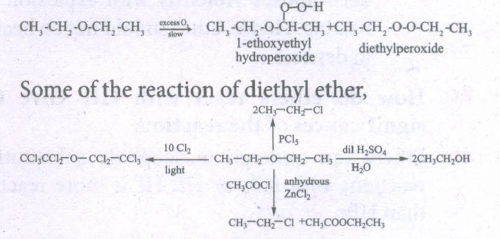
1.
When ethers are stored in the presence of atmospheric oxygen, they slowly oxidise to form hydroperoxides and dialkylperoxides. These are explosive in nature. Such a spontaneous oxidation by atmospheric oxygen is called autooxidation.
2.
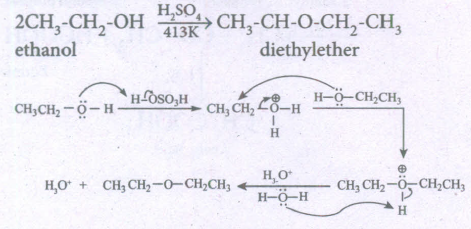
Inter molecular dehydration of alcohol: We have already learnt that when ethanol is treated with con.HSO2 4 at 443K, elimination takes place to form ethene. If the same reaction is carried out at 413K, substitution competes over elimination to form ethers.
3.
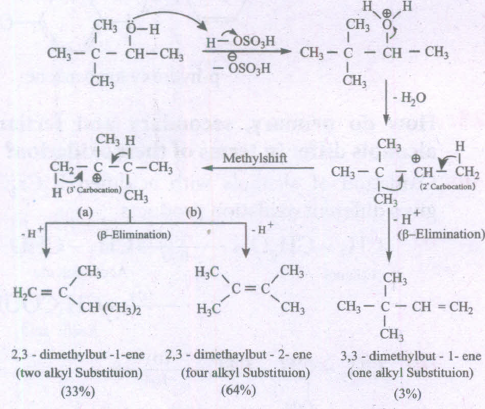
Saytzeff's rule: During intramolecular dehydration, if there is a possibility to form a carbon-carbon double bond at different locations, the preferred location is the one that gives the more (highly) substituted alkene l.e., the stable alkene.
For example, the dehydration of 3,3 - dimethyl - 2- butanol gives a mixture of alkenes. The secondary carbocation formed in this reaction undergoes rearrangement to form a more stable tertiary carbocation.
4.
An organic compound A (C2H6O2) liberates hydrogen with metallic sodium.
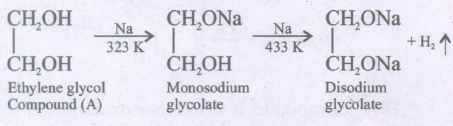
(ii) Compound A when heated with anhydrous zinc chloride ultimately gives B (C2H4O)
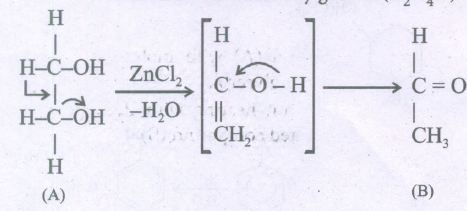
(iii) Compound A when heated with conc. phosphoric acid gives C (C4H10O3).
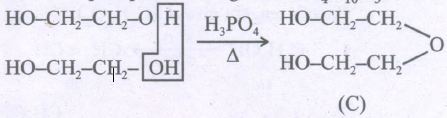
(iv) Compound A on oxidation with acidified K2Cr2O7 gives compound D (CH2O2).
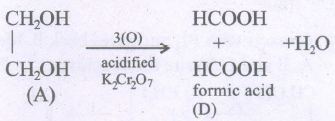
| Compound | Compound Name | Formula |
| A | Ethylene glycol | \(\overset { { CH }_{ 2 }OH }{ \underset { { CH }_{ 2 }OH }{ | } } \) |
| B | Acetaldehyde | CH3-CHO |
| C | Diethylene glycol | \(\overset { HCOOH }{ \underset { HCOOH }{ + } } \) |
| D | Formic acid | 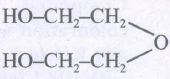 |
5.
(i) An aromatic hydrocarbon A reacts with propene in the presence of anhydrous AICl3 to give a compound B.
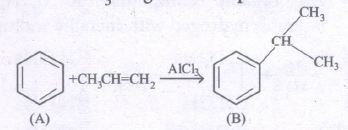
(ii) Compound B undergoes oxidation in the presence of air and hydrogen peroxide to give C.
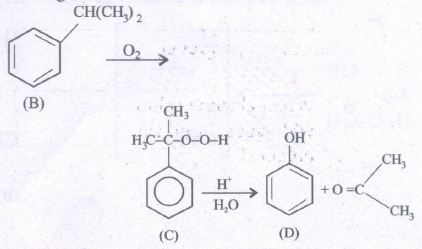
(iii) Compound C decomposes in HCI acid solution to give compound D and acetone. Identify A, B, C and D. Explain the reactions.
| Compound | Compound Name | Formula |
| A | Benzene | C6H6 |
| B | Cumene | 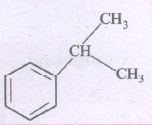 |
| C | Cumene hydroperoxide | 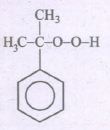 |
| D | Phenol | C6H5OH |
6.
(i) An organic compound A (C2H6O) liberates hydrogen with sodium metal.
\(\underset{(A)}{2 \mathrm{C}_{2} \mathrm{H}_{5} \mathrm{OH}}+2 \mathrm{Na} \longrightarrow 2 \mathrm{C}_{2} \mathrm{H}_{5} \mathrm{ONa}+\mathrm{H}_{2}\)
(ii) A when heated with alumina at 620 K gives III an alkene B which when passed through Bayer'sreagent gives C(C2H6O2)
\(\underset{(A)}{{ C }_{ 2 }{ H }_{ 5 }OH}\overset { { Al }_{ 2 }{ O }_{ 3 } }{ \underset { 620K }{ \longrightarrow } } \underset{(B)}{ { CH }_{ 2 }={ CH }_{ 2 } }\)
\(\underset{(B)}{{ CH }_{ 2 }=CH_{ 2 }+{ H }_{ 2 }O}+\left( O \right) \overset { ColdColddill,\ alkaline \ KMnO_{ 4 } }{ \underset { (Baeyer's \ Reagent) }{ \longrightarrow } } \overset { { CH }_{ 2 }OH }{ \underset { \underset { (C) }{ { CH }_{ 2 }OH } }{ | } } \)
(iii) C reacts with PI3 and gives back B. Identify A, B and C. Write the reactions
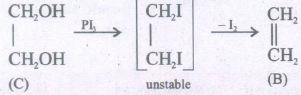
| Compound | Compound Name | Formula |
| A | Ethanol | C2H5OH |
| B | Ethylene | CH2 = CH2 |
| C | Ethylene glycol | 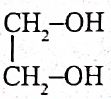 |
7.
(i) When alkaline solution of (A) is refluxed with chloroform.isomers (B) and (C) are obtained
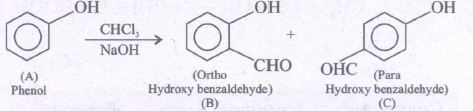
(ii) (B) on oxidation gives acid (D),
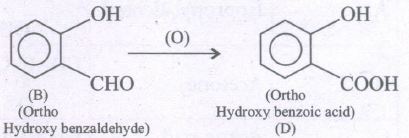
(iii) The acid (D) is also obtained by treating sodium salt of (A) with CO2 under pressure followed by hydrolysis.
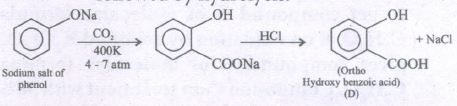
| Compound | Compound Name | Formula |
| A | Phenol | C6H5OH |
| B | Ortho hydroxy benzaldehyde | 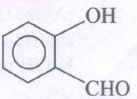 |
| C | Para hydroxy benzaldehyde | 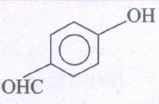 |
| D | Ortha hydroxybenzoic acid | 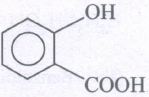 |
8.
(i) Compound (A) molecular formula C3H8O is isopropyl alcoho
\({ CH }_{ 3 }-\underset { \overset { | }{ OH } }{ C } H-{ CH }_{ 3 }\)
(ii) Isopropyl alcohol reacts with P/I2 to give Isopropyl iodide (B).
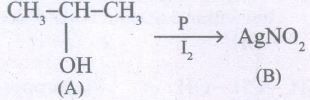
(iii) (B) reacts with AgNO2 to form (C). (C) in turn reacts with nitrous acid to form pseudonitrol (blue colour).
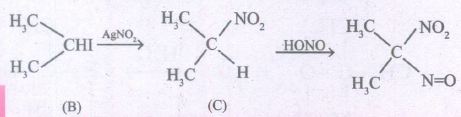
| Compound | Compound Name | Formula |
| A | Isopropyl alcohol | \({ CH }_{ 3 }-\underset { \overset { | }{ OH } }{ CH } -{ CH }_{ 3 }\) |
| B | Isopropyl iodide | \({ CH }_{ 3 }-\underset { \overset { | }{ I } }{ C } H-{ CH }_{ 3 }\) |
| C | 2-nitro propane | \({ CH }_{ 3 }-\underset { \overset { | }{ { NO }_{ 2 } } }{ C } H-{ CH }_{ 3 }\) |
9.
(i) Compound (A) (C3H8O) answers Lucas test within 5-10 min is a 2° alcohol.
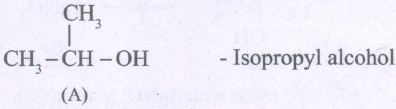
(ii) Compound (A) on oxidation gives (B) C3H6O.
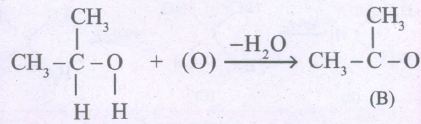
(iii) Compound (B) on further oxidation gives (C) C2H4O2.
\({ H }_{ 3 }C-\overset { \underset { | }{ { CH }_{ 3 } } }{ C } =O\overset { (O) }{ \longrightarrow } \underset { (C) }{ { CH }_{ 3 }COOH } \)
(iv) Compound (B) undergoes iodoform reactions
\({ CH }_{ 3 }-\overset { \underset { | }{ { CH }_{ 3 } } }{ C } H-OH\overset { { I }_{ 2 }/KOH }{ \longrightarrow } { CH }_{ 3 }{ COCH }_{ 3 }\overset { { I }_{ 2 } }{ \longrightarrow } { Cl }_{ 3 }{ COCH }_{ 3 }\overset { KOH }{ \longrightarrow } { CHI }_{ 3 }+{ CH }_{ 3 }COOK\)
| Compound | Compound Name | Formula |
| A | Iso propyl alcohol | CH3-CH(OH) -CH3 |
| B | Acetone | CH3COCH3 |
| C | Acetic acid | CH3COOH |
10.
(i) An organic compound (A) is identified as toluene from its molecular formula.
(ii) (A) on reaction with chlorine gives benzyl chloride which on further reaction with NaOH produces (B).
\({ C }_{ 6 }{ H }_{ 5 }-{ { { CH }_{ 3 } } }\overset { { Cl }_{ 2 } }{ \underset { -HCl }{ \longrightarrow } } { C }_{ 6 }{ H }_{ 5 }{ CH }_{ 2 }Cl\overset { NaOH }{ \underset { -Nacl }{ \longrightarrow } } \underset { (B) }{ { C }_{ 6 }H_{ 5 }{ CH }_{ 2 }OH } \)
(iii) B) on oxidation with acidified K2Cr2O7 gives (C).
\({ C }_{ 6 }{ H }_{ 5 }{ CH }_{ 2 }\overset { { K }_{ 2 }{ Cr }_{ 2 }{ O }_{ 7 }/{ H }^{ + } }{ \underset { (O) }{ \longrightarrow } } \underset { (C) }{ { C }_{ 6 }{ H }_{ 5 }CHO+{ { H }_{ 2 }O } } \)
(iv) Benzaldehyde on treatment with 50% caustic soda gives (D) and (B).
\(\underset { (C) }{ { C }_{ 6 }{ H }_{ 5 }CHO } +{ C }_{ 6 }{ H }_{ 5 }CHO\overset { 50 \% }{ \underset { NaOH }{ \longrightarrow } } \underset { (B) }{ { C }_{ 6 }{ H }_{ 5 }{ CH }_{ 2 }OH } +\underset { (D) }{ { C }_{ 6 }{ H }_{ 5 }COOH } \)
| Compound | Compound Name | Formula |
| A | Toluene | C6H5-CH3 |
| B | Benzyl alcohol | C6H5CH2OH |
| C | Benzaldehyde | C6H5CHO |
| D | Benzoic acid | C6H5COOH |
11.
(i) Isopropyl alcohol (A).
(ii) (B) on oxidation gives (B)
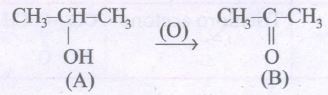
(B) On further oxidation gives (C) which gives brisk efferescencewith Na2CO3.
\({ CH }_{ 3 }-\underset { \overset { || }{ \underset { (B) }{ O } } }{ C } -{ CH }_{ 3 }+{ I }_{ 2 }+KOH\longrightarrow \underset { (C) }{ { CH }I_{ 3 }+{ CH }_{ 3 }COOH } \)
| Compuund | Compound Name | Formula |
| A | Isopropyl alcohol | \({ CH }_{ 3 }-\underset { \overset { | }{ OH } }{ CH } -{ CH }_{ 3 }\) |
| B | Acetone | \({ CH }_{ 3 }-\underset { \overset { || }{ O } }{ C } -{ CH }_{ 3 }\) |
| C | Acetic acid | CH3COOH |
12.
(i) Compound (A) is carbonyl compound, it is acetone
(ii) (A) on reduction with LiAlH4 gives (B) it gives blue colour in Victor Meyer'stest.
\({ CH }_{ 3 }-\underset { \overset { || }{ \underset { (A) }{ O } } }{ C } -{ CH }_{ 3 }\overset { { LiAIH }_{ 4 } }{ \underset { \left[ H \right] }{ \longrightarrow } } { CH }_{ 3 }-{ CH }_{ 3 }-\underset { \overset { | }{ \underset { (B) }{ OH } } }{ CH } -{ CH }_{ 3 }\)
(iii) (B) reacts with SOCl2to give (C).
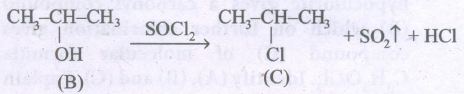
(iv) (C) on treatment with alcoholic KOH, forms (D) by elimination reaction.
\({ CH }_{ 3 }-\underset { \overset { | }{ \underset { (C) }{ Cl } } }{ C } H-{ CH }_{ 3 }\overset { alc.KOH }{ \longrightarrow } \underset { (D) }{ { CH }_{ 3 }CH={ CH }_{ 2 }+HCl } \)
| Compound | Compound Name | Formula |
| A | Acetone | \({ CH }_{ 3 }-\underset { \overset { || }{ O } }{ C } -{ CH }_{ 3 }\) |
| B | Isopropyl alcohol | \({ CH }_{ 3 }-\underset { \overset { | }{ OH } }{ CH } -{ CH }_{ 3 }\) |
| C | Isopropyl chloride | \({ CH }_{ 3 }-\underset { \overset { | }{ Cl } }{ CH } -{ CH }_{ 3 }\) |
| D | Propylene | CH3-CH=CH2 |
13.
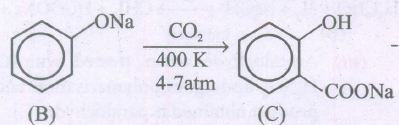
(i) Compound A is phenol. (C6H5OH)
Phenols on reaction with metallic Na compound (B) ie., Sodium Phenoxide
\(\underset { (A) }{ { 3C }_{ 6 }{ H }_{ 5 }OH+2Na } \longrightarrow \underset { (B) }{ { 2C }_{ 6 }{ H }_{ 5 }ONa+{ H }_{ 2 } } \)
(ii) (B) is heated with CO2 at 400K under pressure, to give (C). This is decomposed by dil.HCl, and (D) is formed
| Compound | Compound Name | Formula |
| A | Phenol | C6H5OH |
| B | Sodium Phenoxide | C6H5ONa |
| C | Sodium Salicylate | 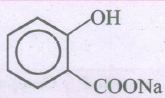 |
| D | Salicylicacid | 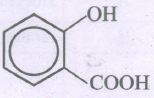 |
14.
(i) \( \underset { (A) }{2 \mathrm{C}_{2} \mathrm{H}_{5}} \mathrm{OH}+2 \mathrm{Na} \longrightarrow 2 \mathrm{C}_{2} \mathrm{H}_{5} \mathrm{ONa}+\mathrm{H}_{2} \uparrow \)
(ii) Ethyl alcohol on mild oxidation gives acetaldehyde (B) It answers idoform test.
\({ CH }_{ 3 }-\underset{(A)}{{ CH }_{ 2 }OH}\overset { Mild\left( O \right) }{ \longrightarrow } \underset { (B) }{ CH_{ 3 }CHO } +{ H }_{ 2 }O\)
\( \underset {(B)}{\mathrm{CH}_{3} \mathrm{CHO}+}3 \mathrm{I}_{2}+\mathrm{NaOH} \overset { B }{ \underset { Iodoform }{ \longrightarrow } } \mathrm{CHI}_{3}+\mathrm{HCOONa}+3 \mathrm{HI}\)
(iii) Acetaldehyde when treated with Cone H2SO4 undergoes polymerisation and the product obtained is paraldehyde (C).
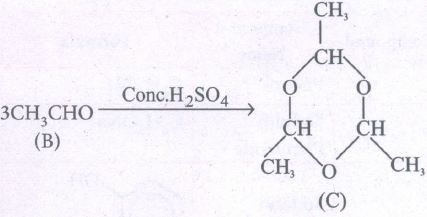
| Compound | Compound Name | Formula |
| A | Ethyl alcohol | CH3CH2OH |
| B | Acetaldehyde | CH3CHO |
| C | Paraldehyde | 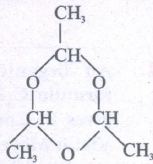 |
15.
(i) (A) that gives turbidity within 5-10 min on reaction with anhydrous ZnCl2/HCl means it must be secondary alcohol.
\({ CH }_{ 3 }\underset { \overset { | }{ OH } }{ CH } -{ CH }_{ 3 }\overset { anhydrous\ ZnCl_{ 2 }/HCl }{ \longrightarrow } { CH }_{ 3 }-\underset { \overset { | }{ CH } }{ CH } -{ CH }_{ 3 }\)
(ii) Iso propyl alcohol on treatment with sodium hypochlorite, undergoes oxidation to give acetone compound (B).
\({ CH }_{ 3 }-\underset { \overset { | }{ \underset { (A) }{ OH } } }{ C } H-{ CH }_{ 3 }\overset { (O) }{ \longrightarrow } { CH }_{ 3 }-\underset { \overset { | }{ \underset { (B) }{ O } } }{ C } -{ CH }_{ 3 }\)
| Compound | Compound Name | Formula |
| A | Isopropyl alcohol | \({ CH }_{ 3 }-\underset { \overset { | }{ OH } }{ C } H-{ CH }_{ 3 }\) |
| B | Acetone | \({ CH }_{ 3 }-\underset { \overset { || }{ O } }{ C } -{ CH }_{ 3 }\) |
| C | Trichloro acetone | \({ CCl }_{ 2 }-\underset { \overset { || }{ O } }{ C } -{ CH }_{ 2 }\) |

12th Standard Syllabus & Materials
12th Standard
TN 12th Computer Applications வலையமைப்பு வடமிடல் Sample Question Papers Study Material - QB365 Set A
NEW12th Standard
TN 12th Computer Applications களப்பெயர் முறைமை (DNS) Sample Question Papers Study Material - QB365 Set A
NEW12th Standard
TN 12th Computer Applications வலையமைப்பு எடுத்துக்காட்டுகள் மற்றும் நெறிமுறைகள் Sample Question Papers Study Material - QB365 Set A
NEW12th Standard
TN 12th Computer Applications கணினி வலையமைப்பு ஓர் அறிமுகம் Sample Question Papers Study Material - QB365 Set A



Tamilnadu Stateboard 12th Standard Subjects

Maths
Chemistry

Physics

Biology

Computer Science

Business Maths and Statistics

Economics

Commerce

Accountancy

History

Computer Applications
Biology
Computer Technology
Computer Applications
Computer Science
Business Maths and Statistics
Commerce
Economics
Maths
Chemistry
Physics
Computer Technology
History
Accountancy

Tamil

English

French
Tamilnadu Stateboard Standards
