
 100% FREE ACCESS
12th Standard Syllabus & Materials
12th Standard
TN 12th Maths Applications of Matrices and Determinants Sample Question Papers Study Material - QB365 Set A
NEW12th Standard
TN 12th Computer Applications மின்னணு தரவு பரிமாற்றம் Sample Question Papers Study Material - QB365 Set A
NEW12th Standard
TN 12th Computer Applications மின் - வணிக பாதுகாப்பு அமைப்புகள் Sample Question Papers Study Material - QB365 Set A
NEW12th Standard
TN 12th Computer Applications மின்னணு செலுத்தல் முறைகள் Sample Question Papers Study Material - QB365 Set A
NEW12th Standard
TN 12th Computer Applications மின் - வணிகம் Sample Question Papers Study Material - QB365 Set A
NEW12th Standard
TN 12th Computer Applications திறந்த மூல கருத்துருக்கள் Sample Question Papers Study Material - QB365 Set A

Published on: 29/01/2021
12th Standard Chemistry English Medium Hydroxy compounds and ethers Reduced Syllabus Important Questions With Answer Key 2021
Download Tamil Nadu 12th Standard Chemistry question papers, model tests, one-mark questions, important questions, and public exam papers in PDF format. Free study materials and answer keys for TN State Board students.
Questions + Answers key
Take MCQ Chemistry Test
1.
What type of human population is represented by the following age pyramid?
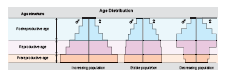
Vanishing population
Stable population
Declining population
Expanding population
2.
Match the following and choose the correct combination from the options given below.
| Column I | Column II |
| A. Mutalism | 1. Lion and deer |
| B. Commensalism | 2. Round worm and man |
| C. Parasitism | 3. Birds compete with squirrels for nuts |
| D. Competition | 4. Sea anemone on hermit crab |
| E. Predation | 5. Barnacles attached to Whales. |
A- 4, B-5, C-2, D –3, E-1
A- 3, B-1, C-4, D – 2, E-5
A- 2, B-3, C-1, D – 5, E-4
A- 5, B-4, C-2, D – 3, E-1
3.
4.
Which one of the following are at high risk extinction due to habitat destruction?
Mammals
Birds
Amphibians
Echinoderms
5.
Darwin’s finches are an excellent example of
connecting links
seasonal migration
adaptive radiation
parasitism
6.
Select the incorrect action of hormonal contraceptive pills from the following
Inhibition of spermatogenesis.
Inhibition of ovulation
Changes in cervical mucus impairing its ability to allow passage and transport of sperms
Alteration in uterine endometrium to make it unsuitable for implantation
7.
E. coli cell grown on 15N medium are transferred to 14N medium and allowed to grow for two generations. DNA extracted from these cells is ultracentrifuged in a cesium chloride density gradient. What density distribution of DNA would you expect in this experiment?
One high and one low density band
One intermediate density band.
One high and one intermediate density band.
One low and one intermediate density band
8.
The milk secreted by the mammary glands soon after child birth is called ______.
Mucous
Colostrum
Lactose
Sucrose
9.
The mature sperms are stored in the ____.
Seminiferous tubules
Vas deferens
Epididymis
Seminal vesicle
10.
Klinefelters syndrome is characterized by a karyotype of ____.
XYY
XO
XXX
XXY
11.
Allergy involves
IgE
IgG
lgA
IgM
12.
13.
In which type of parthenogenesis are only males produced?
Arrhenotoky
Thelytoky
Amphitoky
Both a and b
14.
In Haplopappus gracilis, number of chromosomes in cells of nucellus is 4. What will be the chromosome number in Primary endosperm cell?
8
12
6
2
15.
What are polylinkers?
16.
Name any four vectors that you know?
17.
Write an palindrome sequence of DNA.
18.
Given below are the gene sequences on the chromosome. Compare them with the normal chromosome and identify the type of structural chromosomal aberrations.
Normal Chromosome : A - B - C - D - E- F - G - H - I.
Chromosome 1 : A - B - C - B .C - D - E - F - G - H - I.
Chromosome 2 : A - B - C - D - F - G - H - I
19.
Compare point mutation with chromosomal mutation.
20.
Define mutualism with an example
21.
Mention any four topographic factors that affect vegetation.
22.
Compare Euryhaline organisms with stenohaline organisms.
23.
Heliophytes differ from Sciophytes. How?
24.
What is standing crop?
25.
What does ELSI represents to?
26.
Write the composition of vitamins used in MS medium.
27.
Compare Deforestation and Afforestation
28.
Name the plant species used for making paper pulp.
29.
Write the health benefits of Kodo millet.
30.
Explain the best suited type followed by plant breeders at present?
31.
32.
PCR is a useful tool for early diagnosis of an Infectious disease. Elaborate
33.
34.
Why tRNA is called an adapter molecule?
35.
Define gametogenesis.
36.
37.
How is juvenile phase different from reproductive phase?
38.
List any two strategy adopted by bisexual flowers to prevent self-pollination.
39.
Give an account of the properties of soil.
40.
What are the ways by which organisms respond to abiotic factors?
41.
Mention any three similarities found common in Neanderthal man and Homo sapiens.
42.
Open Book Assessment
‘Healthy reproduction, legally checked birth control measures and proper family planning programmes are essential for the survival of mankind’ Justify
43.
How is the two stage process of protein synthesis advantageous?
44.
Explain the inheritance of sex linked characters in human being.
45.
Explain the mechanism of crossing over.
46.
What is vaccine? What are its types?
47.
Give reasons for the following:
(a) Some organisms like honey bees are called parthenogenetic animals
(b) A male honey bee has 16 chromosomes where as its female has 32 chromosomes
48.
Explain the law of dominance in monohybrid cross.
49.
Explain why cloning of Dolly, the sheep was such a major scientific breakthrough?
50.
One of the applications of biotechnology is ‘gene therapy” to treat a person born with a hereditary disease
i) What does “gene therapy” mean?
ii) Name the hereditary disease for which the first clinical gene therapy was used.
iii) Mention the steps involved in gene therapy to treat this disease.
51.
What are DNA vaccines?
52.
53.
In north eastern states, the jhum culture is a major threat to biodiversity – substantiate.
54.
Why is biodiversity so important and worthy of protection?
55.
Why do we find a decrease in biodiversity distribution, if we move from the tropics towards the poles?
56.
The procedure of GIFT involves the transfer of female gametes into the fallopain tube, can gametes be transferred to the uterus to achieve the same result? Explain.
57.
Explain the mode of sex determination in honeybees.
58.
List the common withdrawal symptoms of drugs and alcohol abuse.
59.
(i) Write the scientific name of the filarial worm that causes filariasis.
(ii) Write the symptoms of filariasis.
(iii) How is this disease transmitted?
60.
1.
(b)
Stable population
2.
(a)
A- 4, B-5, C-2, D –3, E-1
3.
(a)
4.
(a)
Mammals
5.
(c)
adaptive radiation
6.
(a)
Inhibition of spermatogenesis.
7.
(d)
One low and one intermediate density band
8.
(b)
Colostrum
9.
(c)
Epididymis
10.
(d)
XXY
11.
(a)
IgE
12.
(c)
13.
(a)
Arrhenotoky
14.
(c)
6
15.
Mostly cloning vectors have more than one restriction sites. These are called as Multiple Cloning Site (MCS) or polylinkers. Presence of MCS facilitates the use of restriction enzyme of choice.
16.
Cosmid, plasmid, Bacteriophage and Phagemids.
17.
5' CATTATATAATG 3'
3' GTAATATATTAC 5'
18.
Chromosome 1: Tandem duplication.
Chromosome 2: Intercalary deletion.
19.
Mutational events that take place within individual genes are called gene mutations or point mutation, whereas the changes occur in structure and number of chromosomes is called chromosomal mutation.
20.
Mutualism is an interaction between two species of organisms in which both are benefitted from the obligate association. E.g: Lichens (alga with fungus).
21.
(a) Latitude
(b) Altitude
(c) Direction of mountain and
(d) Steepness of mountain.
22.
Euryhaline: Organisms which can live in water with wide range of salinity. Examples: Marine algae and marina angiosperms.
Stenohaline: Organisms which can withstand only small range of salinity. Example: Plants of estuaries.
23.
Heliophytes - Light loving plants. Example: Angiosperms.
Sciophytes - Shade loving plants. Example: Bryophytes and Pteridophytes
24.
The amount of living materials present in a population at any given time is known as standing crop.
25.
ELSI which represents ethical, legal and social implications of biotechnology broadly covers the relationship between biotechnology and society with particular reference to ethical and legal aspects.
26.
Glycine 2.0 mg/l, Nicotinic acid 0.5 mg/l, Pyridoxin HCI 0.5 mg/l and Thiamine HCI 0.1 mg/l.
27.
| Deforestation | Afforestation |
|---|---|
| The conversion of the forested area into a non-forested area is known as deforestation | Afforestation is a planting of trees where there was no previous tree coverage and the conversion of non- forested lands into forests by planting suitable trees to retrieve the vegetation. |
28.
Wood of Melia azadirachta, Neolamarkia chinensis, Casuarina spp and Eucalyptus spp are used for making paper pulp.
29.
Kodo millet is a good diuretic and cures constipation. Helps to reduce obesity, blood sugar and blood pressure.
30.
(i) Vegetative propagation is the best suited measure for maintaining hybrid vigour, since the desired characters are not lost and can persist over a Period of time.
(ii) Many breeders believe that its magnitude of heterosis is directly related to the degree of genetic diversity between the two parents.
31.
32.
(i) PCR is a very sensitive technique which enables the amplification of desired DNA from a limited amount of DNA template.
(ii) A technique can be also used for amplifications of RNA in which case it is referred to as reverse transcription PCR (RT-PCR). In this process the RNA molecules (mRNA) must be converted to complementary DNA by the enzyme reverse transcriptase (reverse transcription).
(iii) The cDNA then serves as the template for PCR.
(iv) The specificity and sensitivity of PCR is useful for the diagnosis of inherited disorders (genetic, viral; bacterial, diseases).
(v) Hence, it can detect the presence of an infectious organism in the infected patient at an early stage of infection (even before the infectious organism has multiplied into large number).
33.
34.
tRNA on one hand binds to specific amino acids and on the other hand reads the codon of the amino acid bound to it through its anticodon, it is called as adapter molecule.
35.
Gametogenesis is the process of formation of gametes i.e., Sperms from primary spermatocytes and ova from primary oocyte in testes and ovaries respectively. Meiosis plays the most significant role in the process of gametogenesis.
36.
37.
| juvenile phase | reproductive phase |
| lt is also known as young and Vegetative Phase | It is also known as Maturity adult Phase |
| lt is the period of growth between the birth of the individual upto reproductive maturitiy. | The organisms reproduce and their offsprings reach maturity period |
38.
Dichogamy stamens and stigmas mature at different times (protandry, Protogyny) Herkogamy - Stamens and stigmas are arranged in such a way, self pollination become impossible.
39.
Properties of soil
(i) Texture of soil - The texture of soil is determined by the size of the soil particles. The types of soil include sand, silt and clay on the basis of their size differences.
(ii) Porosity - The space present between soil particles in a given volume of soil are called pore spaces. The percentage of soil volume occupied by pore space or by the interstitial spaces is called porosity of the soil.
(iii) Permeability of soil - The characteristic of soil that determines the movement of water through pore spaces is known as soil permeability. Soil permeability is directly dependent on the pore size. Water holding capacity of the soil is inversely dependent on soil porosity.
(iv) Soil Temperature - Soil gets its heat energy from solar radiation, decomposing organic matter, and heat from the interior of the earth. Soil temperature affects the germination of seeds, growth of roots and biological activity of soil-inhabiting micro-and macro-organisms.
(v) Soil water - In soil, water is not only important as a solvent and transporting agent, but also maintains soil texture, arrangement, and compactness of soil particles, making soil habitable for plants and animals.
40.
Every living organism responds to its environment. There are various ways by which organisms respond to abiotic conditions. The types of response observed are:
Regulate:
1. Some organisms are able to maintain homeostasis by physiological means which ensures constant body temperature, ionic/ osmotic balance. Birds, mammals and a fewer lower vertebrate and invertebrate species are capable of such regulation.
Conform:
1. Most animals cannot maintain a constant internal environment.
2. Their body temperature changes with the ambient temperature.
3. In aquatic animals like fishes, the osmotic concentration of the body fluids changes with that of the ambient water osmotic concentration. Such animals are called conformers. In case of extreme condition, the inhabitants relocate themselves as in-migration
Migrate:
1. Organisms tend to move away temporarily from a stressful habitat to a new, hospitable area and return when the stressful period is over.
2. Birds migrate from Siberia to Vedanthangal in Tamilnadu to escape from the severe winter periods.
Suspend:
1. In certain conditions, if the organism is unable to migrate, it may avoid the stress by becoming inactive.
2. This is seen commonly in bears going into hibernation during winter.
3. Some snails and fish go into aestivation to avoid summer related problems like heat and desiccation.
4. Some lower animal suspend a certain phase of their life cycle which is to as diapause.
41.
Similarities found in Neanderthal man and Homo sapiens.
(i) They knew to protect their bodies. Neanderthal man used animal hides to protect their bodies.
(ii) They knew the use of fire.
(iii) They buried their dead.
42.
1. Reproductive health refers not only to healthy reproductive functions, but to the total well being of physical mental emotional, behavioural and social aspects of reproduction.
2. People having physically and functionally normal reproductive organs and exhibit normal behavioural and emotional interactions among themselves in all reproduction-related aspects are considered reproductively healthy.
3. 214 million women of reproductive age in developing countries who wants to avoid pregnancy are not using a modern contraceptive method.
4. Some family planning methods, such as condoms help prevent the transmission of HIV and other sexual transmitted infections.
5. Family planning contraception reduces the need for abortion, especially unsafe abortion.
6. Family planning reinforces people's rights to determine the number and spacing of their children.
7. By preventing unintended pregnancy, family planning/contraception prevents deaths of mothers and children.
8. Family planning is the key to slowing unsustainable population growth and the resulting negative impacts on the economy, environment and National and Regional development efforts.
43.
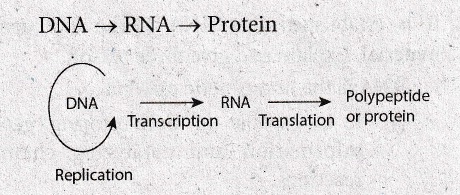
1. The process protein synthesis actually consists of two stages-transcription and translation.
2. In eukaryotic cells, transcription takes place in the nucleus. During transcription, DNA is used as a template to make a molecule of messenger RNA (mRNA). The molecule of mRNA then leaves the nucleus and reaches ribosome in the cytoplasm, where translation occurs.
3. During translation, the genetic code in mRNA is read and used to make a protein.
4. These two processes are summedup by the central dogma of molecular biology
44.
(i) The inheritance of a trait that is determined by a gene located on one of the sex chromosomes is called sex linked inheritance.
(ii) Genes present on the differential region of X or Y chromosomes are called sex linked genes. The genes present in the differential region of "X" chromosome are called X linked genes. The X-linked genes have no corresponding alleles in the Y chromosome.
(iii) The genes present in the differential region of Y chromosome are called Y- linked or holandric genes. The Y linked genes have no corresponding allele in X chromosome.
(iv) The Y linked genes inherit along with Y chromosome and they phenotypically express only in the male sex.
(v) Sex linked inherited traits are more common in males than females because, males are hemizygous and therefore express the trait when they inherit one mutant allele.
(vi) The X - linked and Y - linked genes in the differential region (non-homologus region) do not undergo pairing or crossing over during meiosis. The inheritance of X or Y linked genes is called sex-linked inheritance.
X linked Inheritance - Eg. Colour blindness
Y linked Inheritance - Eg. hypertrichosis
45.
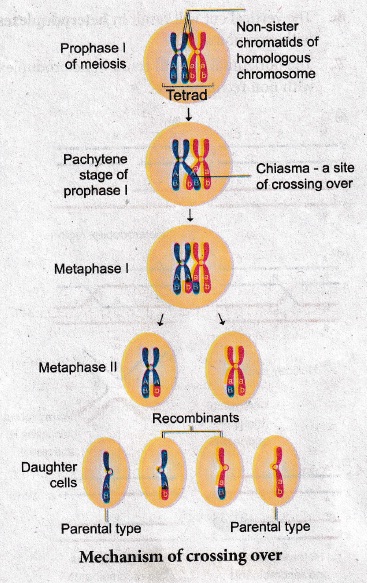
Crossing over is a process that includes four stages.
1. Synapsis
(i) Pairing between two homologous chromosomes is initiated during sub stage zygotene stage of prophase I of meiosis I
(ii) Homologous chromosomes are aligned side by side resulting in the formation of bivalents. It also occurs in zygotene sub-stage of prophase I of meiosis I tetrads.This pairing phenomenon is called synapsis.
2.Tetrad Formation
(i) Each homologous chromosome of a bivalent begin to form two identical sister chromatids.
(ii) They remain held together by a centromere at this stage each bivalent has four chromatids. This stage is called tetrad stage.
3. Cross Over
After tetrad formation, crossing over occurs in pachytene stage.
The non-sister chromatids of homologous pair make a contact at one or more points. These points of contact are called Chiasmata.
At chiasma, X-shaped structures are formed, where breaking and rejoining of two chromatids occur. This results in reciprocal exchange of equal and corresponding segments between them synapsis and chiasma formation are facilitated by protein filaments called synaptonemal complex.
4. Terminalisation
After crossing over, chiasma starts to move towards the terminal end of chromatids known as terminalisation. As a result, complete separation of homologous chromosomes occurs.
46.
(i) A vaccine is a biological preparation that provides active acquired immunity to a particular disease and resembles a disease-causing microorganism and is often made from weakened or attenuated or killed forms of the microbes, their toxins, or one of its surface proteins.
(ii) Vaccines "teach" our body how to defend itself when viruses or bacteria, invade it.
(iii) Vaccine initiates the immunization process. The vaccines are classified as first, second and third generation vaccines.
First generation vaccine:
(i) First generation vaccine is further subdivided into live attenuated vaccine, killed vaccine and toxoids.
(ii) Live attenuated live vaccines use the weakened (attenuated), aged, less virulent form of the virus
(iii) Eg. Measles, Mumps and Rubella (MMR) vaccine and the Varicella (chickenpox) vaccine, killed (inactivated) vaccines are killed or inactivated by heat and other methods. Eg. Salk's polio vaccine.
(iv) Toxoid vaccines contain a toxin or chemical secreted by the bacteria or virus.
(v) They make us immune to the harmful effects of the infection, instead of to the infection itself.
(vi) Eg. DPT vaccine (Diphtheria, pertussis and Tetanus), (Triple antigen).
Second generation vaccine: contains the pure surface antigen of the Pathogen. :
Eg. Hepatitis-B vaccine
Third generation vaccine: contains the purest and the highest potency vaccines which are synthetic in generation. The latest revolution in vaccine is DNA vaccine (or) recombinant vaccine
47.
(a) Some organisms like honeybees are called parthenogenetic animals.
1. In case of honeybees both haploid and diploid individuals formed, as a result of incomplete parthenogenesis.
2. Both sexual reproduction and parthenogenesis are inclusive.
3. Fertilized eggs (zygote) give rise to queen and workers (both are females) by the process of sexual reproduction.
4. Unfertilized eggs (ova) of females develop into drones (males) by the process of parthenogenesis.
(b) A male honeybee has 16 chromosomes where as its female has 32 chromosomes
1. It is because of haplodiploidy which is a sex determination system, in which males develop from unfertilized eggs (parthenogenesis) and are haploid (16n) and females develop frorn fertilized eggs and are diploid (32n) (sexual reproduction).
2. As unfertilized egg carries only half number of chromosome as compared to fertilized egg.
Therefore male honeybees have 16 chromosomes where as female has 32 chromosomes.
48.
Law of Dominance: The characters were controlled by discrete units called factors which occur in pairs. In a dissimilar pair of factors one member of the pair is dominant & the other is recessive.
(i) This law gives an explanation to the monohybrid cross.
(a) the expression of only one of the parental characters in F1 generation.
(b) the expression of both in the F2 generation
(ii) It also explains the proportion of 3:1 obtained at the F2
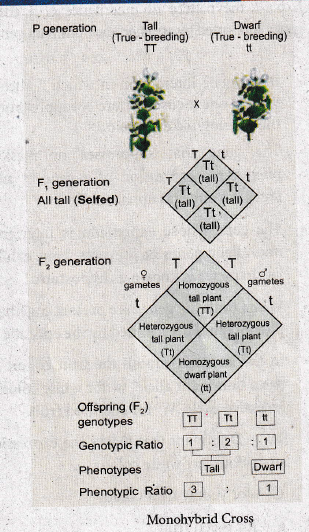
Monohybrid Cross
(i) Monohybrid inheritance is the inheritance of a single character i. e, plant height.
(ii) It involves the inheritance of two alleles of a single gene.
(iii) When the F1 generation was selfed Mendel noticed that 7847 of 1064 F2 plants were tall, while 277of 1064 were dwarf.
(iv) When tall pea plants were pollinated with the pollens from a true breeding dwarf plants, the result was all tall plants.
(v) Dwarf trait appears in the F2 generation.
(vi) When the parental types were reversed, the result was the same - All tall plants.
(vii) Tall (♀) \(\times\) Dwarf (♂) and Tall (♂) \(\times\) Dwarf (♀) mating's are done in both ways.
(viii) It was concluded that the trait is not sex dependent.
(xi) The gene for plant height has two alleles: Tall (T) \(\times\) Dwarf (t). (TT, Tt, Tt: tt)
49.
(i) Dolly was the first mammal (sheep) Clone developed by Ian Wilmot and Campbell in 1997.
(ii) Dolly the transgenic clone was developed by the nuclear transfer technique and the phenomenon of totipotency.
(iii) Totipotency, refers to the potential of a cell to develop different cells, tissues, organs and finally an organism.
(iv) Dolly was the first animal to be cloned from a differentiated somatic cell taken from an adult animal without the process of fertilization.
50.
(i) Gene therapy:
1. Gene therapy is the treatment of heredity disorders by replacing a faulty gene by a normal healthy functional gene.
(ii) The first clinical gene therapy was given in 1990 by French Anderson to a four year old girl with adenosine deaminase (ADA) deficiency.
(iii) The lymphocytes from the blood of the patient are removed and grown in a nutrient culture medium.
1. A healthy and functional human gene, ADA cDNA encoding this enzyme is introduced into the lymphocytes using a retrovirus.
2. The genetically engineered lymphocytes are subsequently returned to the patient.
3. These cells are not immortal, the patient requires a periodic infusion of such genetically engineered lymphocytes.
51.
(i) Genetic immunization by using DNA vaccines is a novel approach that came into being in 1990.
(ii) The immune response of the body is stimulated by a DNA molecule.
(iii) A DNA vaccine consists of a gene encoding an antigen protein, inserted on to a plasmid, and then incorporated into the cells in a target animal.
(iv) DNA instructs the cells to make antigenic molecules which are displayed on its surfaces. This would evoke an antibody response to the free floating antigen secreted by the cells.
(v) The DNA vaccine cannot cause the disease as it contains only copies of a few of its genes.
(vi) DNA vaccines are relatively easy and inexpensive to design and produce.
(vii) Vaccines produced by these new techniques have definite advantages like producing target proteins, long lasting immunity and trigger immune response only against specific pathogens with less toxic effects.
52.
53.
(i) In shifting cultivation, plots of natural tree vegetation are burnt away and the cleared patches are farmed for 2-3 seasons, after which their fertility reduces to a point where crop production is no longer profitable.
(ii) The farmer then abandons this patch and cuts down a new patch of forest trees elsewhere for crop production. This system is practiced in northeastern regions of India.
(iii) When vast areas are cleared and burnt, it results in loss of forest cover, pollution, and discharge of CO2 which in turn attributes to a loss of habitat and climate change which has an impact on the faunal diversity of that regions.
(iv) Carrot grass (Parthenium) and lantana introduced into our country have become invasive and caused environmental damage; they pose a threat to the native species of plants in our forests.
54.
Biodiversity is the variety of life on earth. That is, it is the number of different species of flora and fauna including microorganisms. These organisms can inhabit different ecosystems with, varying conditions like the Rainforests, Coral reefs, Grasslands, Deserts, Tundra, and the Polar icecaps. This variety (Biodiversity) is essential for the wellbeing of our planet and sustenance of life as a whole. The importance of biodiversity can be viewed and measured as:
a)Ecosystem services
b) Biological resources
c) Social benefits of biodiversity
The organization and functioning of ecosystems world over are affected and dependent on biodiversity and its richness. The major functional attributes are:
(i) Continuity of nutrient cycles or biogeochemical cycles (N2, C, a,o, P, S cycles)
(ii) Soil formation, conditioning or maintenance of soil health (fertility) by soil microbial diversity along with the different trophic members
(iii) Increases ecosystem productivity and provide food resources
(iv) Act as water traps, filters, water flow regulators and water purifiers (forest cover and vegetation)
(v) Climate stability (forests are essential for rainfall, temperature regulation, CO2 absorption, which in turn regulate the density and type of vegetation)
(vi) Forest resource management and sustainable development
(vii) Maintaining a balance between biotic components
(viii) Cleaning up of pollutants - microbes are the biggest degraders of molecules including many anthropogenic ones which are present in effluents, sewage, garbage and agro-chemicals
(ix) Ecological stability - the varieties and richness of species contribute to ecological stability and survival of species. Biodiverse regions are reservoirs of biological resources like food resources, gene pool, genetic resource, medicinal resources, bioprospecting
(x) To provide unique aesthetic value and hotspots for Ecotourism. Along with forest resources and wildlife, it has commercial significance
(xi) An indicator of the health of the ecosystem. Endemism is a crucial indicator of richness.
55.
The term biodiversity was introduced by Walter Rosen (1986). Biodiversity is the assemblage of different life forms. Each species is adapted to live in its specific environments.
The changes in climatic conditions are reflected in the distribution and pattern of biodiversity on our planet. The number of species per unit area declines as we move from tropics towards the poles. The Tundra and Taiga of northern Canada, Alaska, northern Europe and Russia possess less than 12 species of trees. The temperate forests of the United states have 20-35 species of trees, while the tropical forests of Panama have over 110 species of trees in a relatively small area.
56.
1. Directly gametes cannot be transferred into the uterus, because the uterine environment is not suited for the survival of the gametes.
2. If the gametes directly transferred into the uterus, gametes will undergo degeneration (or) could be phagocytosed and viable zygotes will not be formed.
3. In this method, the own collected from a donor female is transferred to the fallopian tube of another woman.
4. The ovum has to be fertilized by the sperm of the woman's husband; the fallopian tube is the site for fertilization in a human female.
5. The gamete (ovum) if introduced into the uterus cannot move to the fallopian tube, the site of fertilization.
57.
Sex determination in honeybees
sex determination is as follows
1. Haploid sex determination is seen in honeybees, it is based on the number of sets of chromosome, an individual receives.
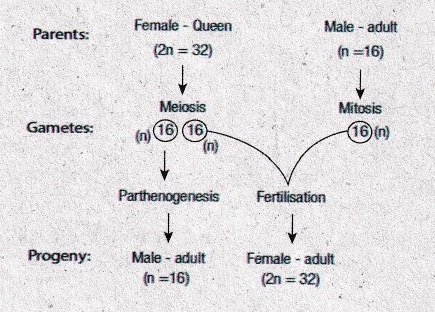
2. When the ovum is fertilized by a male gamete the zygote (2n = 32) develops into a female i.e., a queen or worker.
3. When the haploid ovum develops by parthenogenesis. i.e., without fertilization, a male individual, called drone is formed as adult male.
4. The male honeybees (drone) is haploid (with n = 16) and forms sperms by mitosis.
58.
(i) Mild tremors to convulsions.
(ii) Severe agitation and fits.
(iii) Depressed mood.
(iv) Anxiety.
(v) Nervousness.
(vi) Restlessness.
(vii) Irritability.
(viii) Insomnia.
(ix) Dryness of throat.
59.
(i) "Wuchereria bancrofti".
(ii) Chronic inflammation of the lymph nodes. Obstruction of lymph in the vessels of the lower limb.
(iii) Transmitted through an agent/vector called Female Culex mosquito.
60.
(d)

12th Standard Syllabus & Materials
12th Standard
TN 12th Computer Applications வலையமைப்பு வடமிடல் Sample Question Papers Study Material - QB365 Set A
NEW12th Standard
TN 12th Computer Applications களப்பெயர் முறைமை (DNS) Sample Question Papers Study Material - QB365 Set A
NEW12th Standard
TN 12th Computer Applications வலையமைப்பு எடுத்துக்காட்டுகள் மற்றும் நெறிமுறைகள் Sample Question Papers Study Material - QB365 Set A
NEW12th Standard
TN 12th Computer Applications கணினி வலையமைப்பு ஓர் அறிமுகம் Sample Question Papers Study Material - QB365 Set A



Tamilnadu Stateboard 12th Standard Subjects

Maths
Chemistry

Physics

Biology

Computer Science

Business Maths and Statistics

Economics

Commerce

Accountancy

History

Computer Applications
Biology
Computer Technology
Computer Applications
Computer Science
Business Maths and Statistics
Commerce
Economics
Maths
Chemistry
Physics
Computer Technology
History
Accountancy

Tamil

English

French
Tamilnadu Stateboard Standards
