
 100% FREE ACCESS
12th Standard Syllabus & Materials
12th Standard
TN 12th Computer Applications மின்னணு தரவு பரிமாற்றம் Sample Question Papers Study Material - QB365 Set A
NEW12th Standard
TN 12th Computer Applications மின் - வணிக பாதுகாப்பு அமைப்புகள் Sample Question Papers Study Material - QB365 Set A
NEW12th Standard
TN 12th Computer Applications மின்னணு செலுத்தல் முறைகள் Sample Question Papers Study Material - QB365 Set A
NEW12th Standard
TN 12th Computer Applications மின் - வணிகம் Sample Question Papers Study Material - QB365 Set A
NEW12th Standard
TN 12th Computer Applications திறந்த மூல கருத்துருக்கள் Sample Question Papers Study Material - QB365 Set A
NEW12th Standard
TN 12th Computer Applications வலையமைப்பு வடமிடல் Sample Question Papers Study Material - QB365 Set A

Published on: 31/08/2020
12th Standard Chemistry English Medium Sample 2 Mark Creative Questions (New Syllabus) 2020
Download Tamil Nadu 12th Standard Chemistry question papers, model tests, one-mark questions, important questions, and public exam papers in PDF format. Free study materials and answer keys for TN State Board students.
Questions + Answers key
Take MCQ Chemistry Test
1.
What is 'spirit of nitre'? Give its use.
2.
Write a reaction to show the conversion of acetic acid to benzoic acid.
3.
Can aniline be prepared by Gabriel phthalimide reaction? Justify your answer.
4.
Amides are amphoteric in nature. Justify.
5.
Write a test to distinguish C2H5OH and CH3COOH.
6.
Give any three uses of benzoic acid.
7.
Mention the inductive effect in monochloro acetic acid.
8.
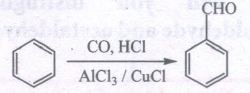
9.
Benzaldehyde reduces Tollen's reagent but not Fehling's solution explain.
10.
What is aldol condensation?
11.
Does formaldehyde undergo aldol condensation? Justify your answer.
12.
An aromatic simplest nitro compound A on reduction using Sn and HCI gives B. B undergoes carbylamine reaction. Identify A and B. Give anyone use of compound A.
13.
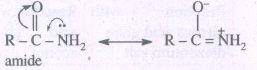
Explain why amines are more basic than amides.
14.
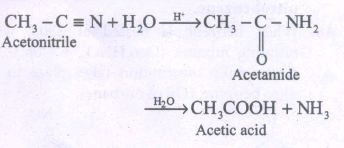
What happens when acetonitrile is hydrolysed?
15.
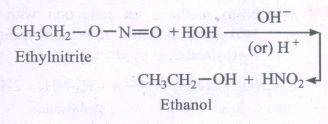
Two isomers having the molecular formula C2H5NO2 on hydrolysis in acidic medium gives (A) and (B). Identify (A) and (B) and explain the reactions involved.
16.
Saccharin is 550 times sweeter than sugar, yet used to prepare sweets for diabetic patient - Give reason.
17.
What is Condensation polymerisation?
18.
How are polymers classified?
19.
What are Local anaesthetics? Give its use.
20.
ExpIain taro tatiIon m gIucose.
21.
Explain the term target drug action used in medicinal chemistry?
22.
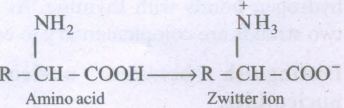
What do you mean by zwitter ion?
23.
Name the two types of nucleic acids.
24.
Define isoelectric point.
25.
What are anomers? Give example.
26.
Explain the formation of delta.
27.
What happens when a colloidal sol of AS2S3 and Fe(OH)3 are mixed?
28.
Define adsorption isotherm.
29.
How are specific and equivalent conductances related?
30.
What is the principle used in secondary batteries to regenerate the original reactants?
31.
Give the uses of mercury button cell.
32.
Express Kohlrausch's law for molar conductance of a uni - univalent electrolyte NaCl
33.
Define resistivity
34.
Give a test to identify whether a given -OH group is alcoholic or phenolic in nature.
35.
Give the IUPAC names of
(i) CH3CH(OH)CH2OH
(ii) HO-CH2-CH2-OH
(iii) \({ { CH } }_{ 3 }-\underset { \overset { | }{ OH } }{ CH } -COOH\)
36.
How will you convert C2H5OH to C2H5OC2H5?
37.
Calculate the ionisation constant for the conjugate base of HF. Ionisation constant of HF at 298 K is 6.8 x 10⁻⁴
38.
Define neutralisation reaction.
39.
How are interstitial compounds formed?
40.
Silver atom has completely filled d-orbitals (4d10) in its ground state. How can you say that it is a transition element?
41.
Mention the factors that affected the rate of a chemical reaction.
42.
How does the value of rate constant vary with reactant constant.
43.
A compound forms hexagonal dosed packed structure. What is the total number of voids in 0.5 mol of it? How many of these are tetrahedral voids?
44.
Why does ozone act as a powerful oxidising agent?
45.
Give two uses of nitrogen.
46.
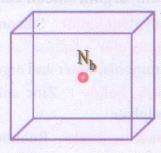
Write a note on the assignment of atoms per unit cell in body centred cubic lattice or CsCl.
47.
Which point effect in crystal doesn't alter the density of the relevant solid?
48.
What are the uses of silicon tetra chloride?
49.
Mention the physical properties of boranes.
50.
What are coinage metals?
51.
Name and discuss the principle involved in obtaining silicon of high purity.
52.
What are enantiomers?
53.
What is Co-ordination polyhedron?
54.
Write the two similarities between calcination and roasting.
55.
What is meant by concentration?
56.
Name a complex used in the treatment of cancer.
57.
What is the coordination number of central metal ion in [Fe(C2O4)3]3-?
1.
4% solution of ethylnitrite in alcohol is known as sweet spirit of nitre and in used as diuretic.
2.
Replacement by carboxylic acid group When diazonium fluoroborate is heated with acetic acid, benzoic acid is obtained. This reaction is used to convert the of aliphatic carboxylic acid into aromatic carboxylic acid.
\(\underset { Benzene \ diazonium\\ fluoroborate }{ C_{ 6 }{ H }_{ 5 }-{ N }_{ 2 }{ BF }_{ 4 } } +{ CH }_{ 3 }-COOH\rightarrow \underset { Benzoic \ acid }{ { C }_{ 6 }H_{ 5 }-COOH } +{ BF }_{ 3 }+{ CH }_{ 3 }F\)
3.
No, aniline cannot be prepared by Gabriel phthalimide reaction. This method involves the treatment of potassium phthalimide with aryl halides. But aryl halides does not undergo nucleophilic substitution under ordinary conditions.
4.
Amides behave both as weak acid as well as weak base and thus show amphoteric character. This can be proved by the following reactions. Acetamide (as base) reacts with hydrochloric I acid to form salt.
\(\underset { Acetamide }{ { CH }_{ 3 }-\overset { \underset { || }{ O } }{ C } -{ NH }_{ 2 } } +HCl\longrightarrow \underset { acetamide\ hdrochloride }{ { CH }_{ 3 }-\overset { \underset { || }{ O } }{ C } -\overset { + }{ N } { CH }_{ 3 }{ Cl }^{ - } } \)
Acetamide (as acid) reacts with sodium to form sodium salt and hydrogen gas is liberated.
\(\underset { Acetamide }{ { 2CH }_{ 3 }-\overset { \underset { || }{ O } }{ C } -{ NH }_{ 2 } } +Na\longrightarrow \underset { sodium\ acetamide }{ { 2CH }_{ 3 }-\overset { \underset { || }{ O } }{ C } -\overset { + }{ N } HNa+{ H }_{ 2 } } \)
5.
The reagent that is used to distinguish a alcohol from an acid is NaHCO3.
\({ CH }_{ 3 }COOH+NaH{ CO }_{ 3 }\longrightarrow \underset{Sodium \ accetate}{{ CH }_{ 3 }COONa}+{ CO }_{ 2 }+{ H }_{ 2 }O\)
Where as alcohols do not answer this test.
C2H5OH + NaHCO3 ⟶ No reaction
6.
(i) Benzoic acid is used as an urinary antiseptic.
(ii) Sodium benzoate is used as food preservative.
(iii) Benzoic acid vapours are used to disinfect bronchial tube.
7.
(i) In monochloro acetic acid, the -I effect of chlorine (electron withdrawing group) increases its strength.
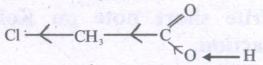
(ii) This effect weakens the -O-H bond. There by facilitating the removal of H from -OH group. This acid (ClCH2COOH) becomes stronger than formic acid.
8.
9.
Benzaldehyde reduces Tollen's reagent, but does not reduce Fehling's solution. Because Ag+ is more easily reduced to Ag than Cu2+ to Cu+
10.
Two molecules of acetaldehyde undergoes condensation reaction in the presence of NaOH to form aldol.
\({ CH }_{ 3 }-\underset { \overset { | }{ \underset { acetadelhyde }{ H } } }{ C } =O+{ CH }_{ 3 }-CHO\overset { NaOH }{ \longrightarrow } { CH }_{ 3 }-\underset { \overset { | }{ \underset { Aldol }{ OH } } }{ CH } -{ CH }_{ 2 }-CHO\)
11.
(i) Formaldehyde does not undergo aldol condensation.
(ii) Aldol condensation reaction is the characteristic of carbonyl compounds having a hydrogen atom. So this reaction does not take place in formaldehyde.
12.
(i) Aromatic simplest nitro compound C6H5NO2 (A)

\( \mathrm{C}_{6} \mathrm{H}_{5} \mathrm{NH}_{2}+\mathrm{CHCl}_{3}+3
\mathrm{KOH} \stackrel{\Delta}{\longrightarrow} \underset { phyenyl \ isocyanide } {\mathrm{C}_{6} \mathrm{H}_{5}
\mathrm{NC}}+3 \mathrm{KCl}+3 \mathrm{H}_{2} \mathrm{O} \)
Therefore, Compound A is C6H5NO2 ⟶ Nitrobenzene
Compound B is C6 H5 NH2 ⟶ Aniline
(ii) It is used to prepare aniline, anthranilic acid and sulphanilic acid.
13.
In simple amines the lone pair of electrons is on nitrogen and hence available for protonation. In amides, on the other hand, the electron pair on nitrogen is delocalized to the carbonyl oxygen through resonance.
14.
When acetonitrile is hydrolysed in the presence of acid medium, acetic acid is formed.
15.
(A) CH3COOH - Acetic acid
(B) CH3CH2OH - Ethanol
CH3CH2 - NO2
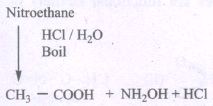
On the other hand, the acid or base hydrolysis of ethyl nitrite gives ethanol.
16.
Though Saccharin is much sweeter than sugar, it is eliminated through urine and also provides lesser calorie.
17.
Condensation polymers are formed by the reaction between functional groups of an adjacent monomers with the elimination of simple molecules like H2O, NH3 etc....
18.
Polymers are classified based on the source of availability, structure, molecular forces and the mode of synthesis.
19.
It causes loss of sensation, in the area in which it is applied without losing consciousness. They block pain perception that is transmitted via peripheral nerve fibres to the brain.
Uses: They are often used during minor surgical procedures.
20.
The specific rotation of pure α and β(D) glucose are 112° & 18.7° respectively. However, when pure form of anyone of these sugars dissolved in water, slow interconversion of α-D glucose and β-D glucose via open chain form until equilibrium is established giving constant specific rotation + 53°. This phenomenon is called mutarotation.
21.
Classification of drugs based on biological system or process, that target the recipient is called target drug action.
22.
Due to the presence of an acidic and a basic group in the same molecule, amino acids exist in an ionic form called a Zwitter ion where the proton of -COOH group is transferred to the -NH2 group
23.
Two types of nucleic acids are deoxyribonucleic acid (DNA) and ribonucleic acid (RNA).
24.
At a specific pH value, the net charge of an amino acid is neutral is called isoelectric point.
25.
Anomers are cyclic monosaccharide differing from each other in the configuration of C1 if they are aldoses or in the configuration of C2 if they are ketoses.
E.g. α and βD - glucose.
26.
(i) River water is colloidal solution of clay. Sea water contains a number of electrolytes.
(ii) When river water meets the sea water, the electrolytes present in sea water coagulate the colloidal solution of clay which get deposited with the formation of delta.
27.
When AS2S3 and Fe(OH)3 sols are mixed coagulation occurs charged and AS2S3 is negatively charged, their charges are neutralised when mixed and precipitation occurs.
28.
A plot between the amount of adsorbate adsorbed and pressure or concentration of adsorbate at constant temperature is called adsorption isotherms.
29.
\({ \lambda }_{ C }=k\times V\)
\({ \lambda }_{ C }=\frac { K\times { { 10 }^{ -3 } } }{ C } \)
30.
Electrochemical reactions which take place in a galvanic cell may be reversed by applying potential slightly greater than the emf generated by the cell. This principle is used in secondary batteries to regenerate the original reactants.
31.
It has higher capacity and longer life. Used in pacemakers, electronic watches, cameras etc.
32.
For a uni - univalent electrolyte such as NaCl, the Kohlrausch's law is expressed as
\({ ({ \Lambda }_{ m }^{ o }) }_{ NaCl }=({ { \lambda }_{ m }^{ o })_{ { Na }^{ + } }+{ ({ \lambda }_{ m }^{ o }) }_{ { Cl }^{ - } } }\)
33.
Resistivity is defined as the resistance of an electrolyte confined between to electrodes having unit cross sectional area and are separated by a unit distance. The ratio \((\frac{l}{A})\) is called the cell constant, Unit of resistivity is ohm metre (Ωm).
34.
Phenolic OR group gives a violet colouration with neutral FeCl3 but alcoholic OR does not.
35.
(i) Propane-1, 2-diol
(ii) Ethane-1,2 - diol
(iii) 2-Hydroxy propanoic acid
36.
When C2H5OH (Ethanol) is treated with cone H2SO4 at 410 K, intermolecular dehydration take place and the product formed will be diethyl ether C2H5-O-C2H5.

37.
The conjugate base of HF is F-
For F-, \({ K }_{ b }=\frac { { K }_{ w } }{ { K }_{ a } } =\frac { { 10 }^{ -14 } }{ { 6.8\times 10 }^{ -14 } } \)
= 1.47 x 10⁻¹¹.
38.
When an acid reacts with a base, a salt and water are formed and the reaction is called neutralization.
39.
(i) An interstitial compound or alloy is a compound that is formed when small atoms like hydrogen, boron, carbon or nitrogen are trapped in the interstitial holes in a metal lattice.
(ii) They are usually non-stoichiometric compounds. Transition metals form a number of interstitial compounds such as TiC, ZrH1.92, Mn4N etc.
40.
(i) Silver in its +1 oxidation state, exhibits 4d105s0configuration.
(ii) But in some compounds, it also shows +2 oxidation state, so the configuration becomes 4d95s0
(iii) Here, d-orbital is not completely filled. Therefore silver is a transition element.
41.
The rate of a reaction is affected by the following factors.
(i) Nature and state of the reactant
(ii) Concentration of the reactant
(iii) Surface area of the reactant
(iv) Temperature of the reaction
(v) Presence of a catalyst
42.
For nth reaction
\(K\alpha \frac { 1 }{ { C }^{ n-1 } } \)
43.
1 Mole of hexagonal packed structure contains 1 mole of octahedral voids and two moles of tetrahedral voids. Therefore, 0.5 moles of hexagonal packed structure contains 0.5 moles of octahedral voids and 1 mole of tetrahedral voids.
No. of tetrahedral voids = 6.022 x 10²³
No. of octahedral voids\(\frac{1}{2}\) x no. of tetrahedral voids
No. of octahedral voids = \(\frac{1}{2}\) x 6.022 x 1023
= 3.011 x 10²³
Total No. of voids = (6.022+3.011) x 1023
= 9.033 x 10²³.
44.
(i) Ozone acts as a powerful oxidizing agent because ozone liberates nascent oxygen very easily on decomposition.
\({ O }_{ 3 }\longrightarrow { O }_{ 2 }+\left[ O \right] \)
(ii) This nascent or atomic oxygen brings about the oxidations it is very reactive.
45.
(i) Nitrogen is used for the manufacture of ammonia, nitric acid and calcium Cyanamide etc.
(ii) Liquid nitrogen is used for producing low temperature required in cryosurgery and so in biological preservation.
46.
The total number. of atoms per unit cell in bcc.
\(=\frac { { N }_{ c } }{ 8 } +\frac { { N }_{ b } }{ 1 } =\frac { 8 }{ 8 } +\frac { 1 }{ 1 } =1+1=2\)
Nb = Number of atoms inside the body; Nc is the number of atoms at the comers.
47.
Frenkel defect
48.
(i) Silicon tetrachloride is used in the production of semiconducting silicon.
(ii) It is used as a starting material in the synthesis of silica gel, silicic esters, a binder for ceramic materials.
49.
(i) Boranes are colourless diamagnetic compounds with low thermal stability.
(ii) Diborane is a gas at room temperature with sweet smell and it is extremely toxic.
(iii) It is also highly reactive At high temperatures it forms higher boranes liberating hydrogen.
50.
Cu, Ag and Au which have been used in making of coins in ancient times are called coinage metals
51.
(i) Silicon of is refined by Zone refining method.
(ii) It is based on the principle that melting point of a substance is lowered by the presence of impurities
(iii) Consequently when an impure molten metal is cooled, crystals of the pure metal are solidified and the impurities remain behind the remaining metal.
52.
The pair of two optically active isomers which are mirror images of each other are called enantiomers.
53.
(i) The three dimensional spatial arrangement of ligand atoms/ions that are directly attached to the central atom is known as the coordination polyhedron (or polygon).
(ii) For example, in K4[Fe(CN)6], the coordination polyhedron is octahedral. The coordination polyhedron of [Ni(CO)4] is tetrahedral.
54.
(i) The end product of both the processes is oxide of metal.
(ii) Volatile impurities are removed from the ore and surface area for the further reaction increases.
55.
The preliminary step in metallurgical process is removal of the impurities. This removal process is known as concentration of ore.
56.
Cis - platin, [pt(NH3)2Cl2]
57.
Six

12th Standard Syllabus & Materials
12th Standard
TN 12th Computer Applications களப்பெயர் முறைமை (DNS) Sample Question Papers Study Material - QB365 Set A
NEW12th Standard
TN 12th Computer Applications வலையமைப்பு எடுத்துக்காட்டுகள் மற்றும் நெறிமுறைகள் Sample Question Papers Study Material - QB365 Set A
NEW12th Standard
TN 12th Computer Applications கணினி வலையமைப்பு ஓர் அறிமுகம் Sample Question Papers Study Material - QB365 Set A
NEW12th Standard
TN 12th Computer Applications PHP-உடன் MySQL-ஐ இணைத்தல் Sample Question Papers Study Material - QB365 Set A



Tamilnadu Stateboard 12th Standard Subjects

Maths
Chemistry

Physics

Biology

Computer Science

Business Maths and Statistics

Economics

Commerce

Accountancy

History

Computer Applications
Biology
Computer Technology
Computer Applications
Computer Science
Business Maths and Statistics
Commerce
Economics
Maths
Chemistry
Physics
Computer Technology
History
Accountancy

Tamil

English

French
Tamilnadu Stateboard Standards
