
 100% FREE ACCESS
12th Standard Syllabus & Materials
12th Standard
TN 12th Computer Applications மின்னணு தரவு பரிமாற்றம் Sample Question Papers Study Material - QB365 Set A
NEW12th Standard
TN 12th Computer Applications மின் - வணிக பாதுகாப்பு அமைப்புகள் Sample Question Papers Study Material - QB365 Set A
NEW12th Standard
TN 12th Computer Applications மின்னணு செலுத்தல் முறைகள் Sample Question Papers Study Material - QB365 Set A
NEW12th Standard
TN 12th Computer Applications மின் - வணிகம் Sample Question Papers Study Material - QB365 Set A
NEW12th Standard
TN 12th Computer Applications திறந்த மூல கருத்துருக்கள் Sample Question Papers Study Material - QB365 Set A
NEW12th Standard
TN 12th Computer Applications வலையமைப்பு வடமிடல் Sample Question Papers Study Material - QB365 Set A

Published on: 21/02/2020
12th Standard Chemistry Public Model Question Paper I 2020
Download Tamil Nadu 12th Standard Chemistry question papers, model tests, one-mark questions, important questions, and public exam papers in PDF format. Free study materials and answer keys for TN State Board students.
Questions + Answers key
Take MCQ Chemistry Test
1.
CH3-CH2-CH2-CH2NO2 and \({ CH }_{ 3 }-\underset { \overset { | }{ { CH }_{ 3 } } }{ CH } -{ CH }_{ 2 }-{ NO }_{ 2 }\) exhibits _________ isomerism
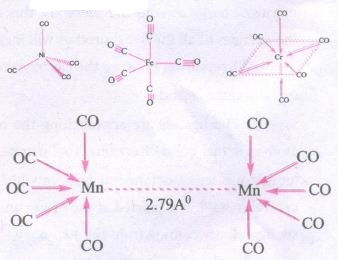
chain
position
functional
optical
2.
Cholesterol is an example of _________.
protein
vitamin
carbohydrat
lipid
3.
Low molar conductivity at high concentration is due to _______.
High attractive force between oppositely charged ions
Viscous drag due to greater solvation
Both High attractive force between oppositely charged ions and Viscous drag due to greater solvation
Neither High attractive force between oppositely charged ions and Viscous drag due to greater solvation
4.
Conjugate acid of hydride ion is ________.
hydronium ion
hydroxide ion
hydrogen
water
5.
The test used to distinguish wish 1o, 2o and 3o alcohol is ________.
Lucas test
Victor Meyer's
dehydrogenation
all the above
6.
 _______.
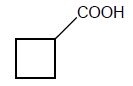
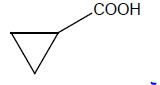
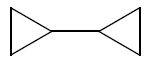
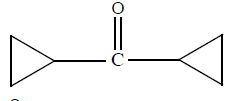
7.
Which one of the following is an example for homogeneous catalysis?
manufacture of ammonia by Haber’s process
manufacture of sulphuric acid by contact process
hydrogenation of oil
Hydrolysis of sucrose in presence of all HCl
8.
If the solubility product of lead iodide is 3.2 × 10⁻⁸, its solubility will be _______.
2 × 10⁻³M
4 × 10⁻⁴M
1.6 × 10⁻⁵M
1.8 × 10⁻⁵M
9.
The incorrect statement among the following is _________.
Reducing character of hydrides of group 15 increases down the group
Basicity of hydrides of group 15 increases down the group
NCl5 does not exist
Phosphorus and arsenic can form P\(\pi \)-d\(\pi \) bond but not nitrogen
10.
In Hall-Heroult process ___________act as an anode.
Carbon blocks
hydrogen
copper rods
Zinc rods
11.
After 2 hours, a radioactive substance becomes \(\left( \frac { 1 }{ 16 } \right) ^{ th }\) of original amount Then the half life (in min) is _______.
60 minutes
120 minutes
30 minutes
15 minutes
12.
Which one of the following pairs represents linkage isomers?
[Cu(NH3)4][PtCl4] and [Pt(NH3)4][CuCl4]
[Co(NH3)5(NO3)]SO4 and [Co(NH3)5(ONO)]
[Co(NH3)4(NCS)2]Cl and [Co(NH3)4(SCN)2]Cl
both (b) and (c)
13.
Which one of the following statements related to lanthanons is incorrect?
Europium shows +2 oxidation state
The basicity decreases as the ionic radius decreases from Pr to Lu.
All the lanthanons are much more reactive than aluminium
Ce4+ solutions are widely used as oxidising agents in volumetric analysis.
14.
The compound that is used in nuclear reactors as protective shields and control rods is _________.
Metal borides
metal oxides
Metal carbonates
metal carbide
15.
Give two tests for aldehydes.
16.
Write any five applications of colloids in day - to day life.
17.
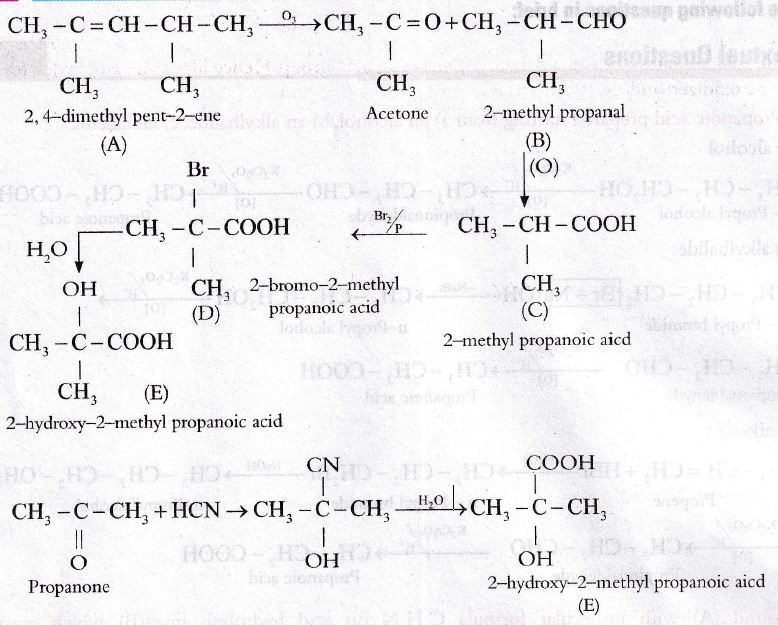
An alkene (A) on ozonolysis gives propanone and aldehyde (B). When (B) is oxidised (C) is obtained. (C) is treated with Br2/P gives (D) which on hydrolysis gives (E). When propanone is treated with HCN followed by hydrolysis gives (E). Identify A, B, C, D and E.
18.
Write a short note on the oxidation states of 3d series elements.
19.
20.
A cubic solid is made of two elements P and Q. Atoms of Q are at the corners of the cube and P at the body - centre. What is the formula of the compound? What is the coordination numbers of P and Q?
21.
How are metal carbonyls classified based on the structure?
22.
Describe briefly allotropism in p- block elements with specific reference to carbon.
23.
Write a note on the basicity of amines.
24.
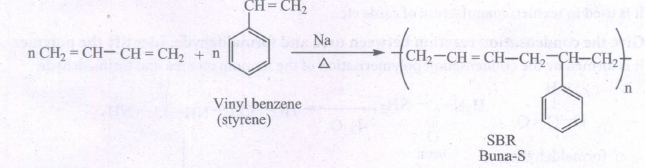
Identify the polymer and write the reaction involved.
(i) Buta-1,3-diene and styrene in the presence of sodium.
(ii) 3 - hydroxy butanoic acid and 3-hydroxy pentanoic acid.
25.
What is starch? What are the ultimate hydrolysis products?
26.
Halo alkane are easily prepared from alcohols while alkyl halides cannot be prepared from phenol. Justify.
27.
What is the oxidation and reduction half cell in a Daniel cell?
28.
Establish a relationship between the solubility product and molar solubility for the following
a) BaSO4
b) Ag2(CrO4)
29.
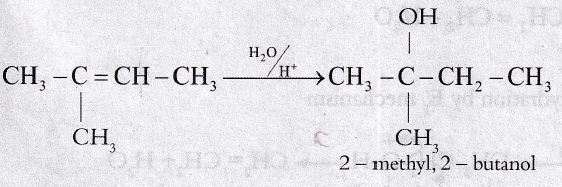
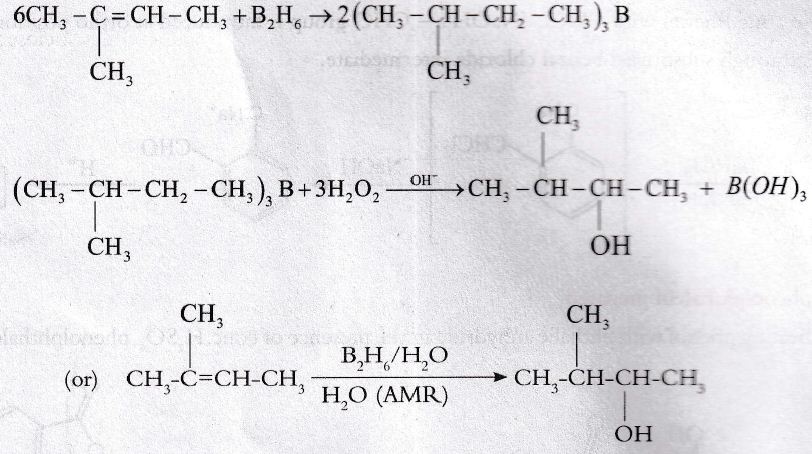
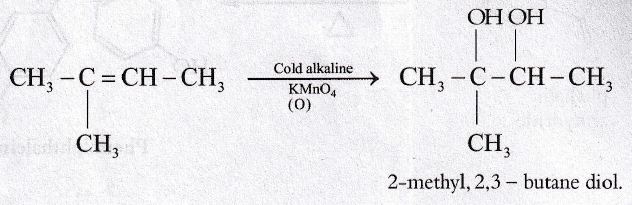
Predict the major product, when 2-methyl but -2-ene is converted into an alcohol in each of the following methods.
(i) Acid catalysed hydration
(ii) Hydroboration
(iii) Hydroxylation using Baeyer's reagent
30.
Calculate the pH of 0.04 M HNO3 Solution.
31.
Write the properties of interstitial compound.
32.
Define the term slag.
33.
How do nature of the reactant influence rate of reaction.
34.
A hydride of 2nd period alkali metal (A) on reaction with compound of Boron (B) to give a reducing agent (C). Identify A, B and C.
35.
What are primary cells?
36.
Complete the following reactions
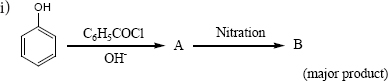
ii) \(C_6H_5-CH_{2}CH(OH)CH(CH_3)_2 \overset{ConH_2SO_4}\longrightarrow\)
37.
What happens when a colloidal sol of Fe(OH)3 and As2S3 are mixed?
38.
The decomposition reaction of ammonia gas on platinum surface has a rate constant R = 2.5 x 10⁻⁴mol L-1. What is the order of the reaction.
39.
Give two uses of nitrogen.
40.
What is hydrate isomerism? Give an example.
41.
Write the two similarities between calcination and roasting.
42.
What are point defects?
1.
(a)
chain
2.
(d)
lipid
3.
(c)
Both High attractive force between oppositely charged ions and Viscous drag due to greater solvation
4.
(c)
hydrogen
5.
(d)
all the above
6.

7.
(d)
Hydrolysis of sucrose in presence of all HCl
8.
PbI2(s) ⇌ Pb2+(aq) + 2I-(aq)
Ksp = (s) (2s)2
3.2 × 10-8 = 4s3
s = (3.2 × 10⁻⁸/4)1/3
= ( 8 x 10⁻⁹)1/3
= 2 x 10⁻³ M
9.
(d)
Phosphorus and arsenic can form P\(\pi \)-d\(\pi \) bond but not nitrogen
10.
(a)
Carbon blocks
11.
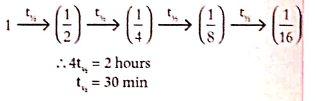
12.
(a) coordination isomers
(b) no isomerism ( different molecular formula)
(c)⬅NCS; ⬅SCN coordinating atom differs : linkage isomers
13.
As we move from La to Lu, their metallic behaviour because almost similar to that of aluminium.
14.
(a)
Metal borides
15.
(i) Tollens Reagent Test: Tollens reagent is an ammoniacal silver nitrate solution. When an aldehyde is warmed with Tollens reagent a bright silver mirror is produced due to the formation of silver metal. This reaction is also called silver mirror test for aldehydes.
\({ CH }_{ 3 }CHO+2\left[ Ag\left( { NH }_{ 3 } \right) _{ 2 } \right] ^{ + }+3{ OH }^{ - }\longrightarrow { CH }_{ 3 }CO{ O }^{ - }+\underset { Silver\ mirror }{ 4{ NH }_{ 3 }+2Ag+2{ H }_{ 2 }O } \)
(ii) Fehlings solution Test:
(a) Fehling's solution is prepared by mixing equal volumes of Fehlings solution A containing aqueous copper sulphate and Fehlings solution 'B' containing alkaline solution of sodium potassium tartarate (Rochelle salt).
(b) When aldehyde is warmed with Fehlings solution deep blue colour solution is changed to red precipitate of cuprous oxide.
\(\\ \\ { CH }_{ 3 }CHO+\underset { blue }{ 2{ Cu }^{ 2 } } +5{ OH }^{ - }\longrightarrow { CH }_{ 3 }{ COO }^{ - }+\underset { red }{ { Cu }_{ 2 }O\downarrow } +3{ H }_{ 2 }O\)
(iii) Schiffs' reagent Test: Dilute solution of aldehydes when added to Schiff's reagent (Rosaniline hydrochloride dissolved in water and its red colour decolourised by passing SO2) yields its red colour. This is known as Schiff's test for aldehydes. Ketones do not give this test. Acetone however gives a positive test but slowly.
16.
Food:
Food stuffs like milk cream, butter, etc are present in colloidal form.
Medicines:
Antibodies such as penicillin and streptomycin are produced in colloidal form for suitable injections. Colloidal gold and colloidal calcium are used as tonics. Milk of magnesia is used for stomach troubles. Silver sol protected by gelatine known as Argyrol is used as eye lotion.
In Industry:
Colloids find many applications in industries
(i) Water purification:
Purification of drinking water is activated by coagulation of suspended impurities in water using alums containing Al3+.
(ii) In washing:
The cleansing action of soap is due to the formation of emulsion of soap molecules with dirt and grease.
(iii) Tanning of leather:
Skin and hides are protein containing positively charged particles which are coagulated by adding tannin to give hardened leather for further application. Chromium salts are used for the purpose. Chrome tanning can produce soft and polishable leather.
(iv) Rubber industry:
Latex is the emulsion of natural rubber with negative particles. By heating rubber with sulphur, vulcanized rubbers are produced for tyres, tubes, etc.
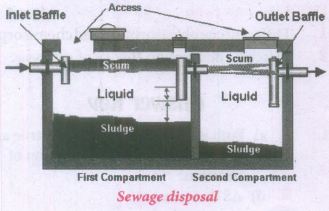
(v) Sewage disposal:
Sewage contains dirt, mud and wastes dispersed in water. The passage of electric current deposits the wastes materials which can be used as a manure.
(vi) Cortrell's precipitator:
Carbon dust in air is solidified by Cottrell's precipitator. In it, a high potential difference of about 50,000V is used. The charge on carbon is neutralized and solidified. Thus the air is free from carbon particles.
(vii) The blue colour of the sky in nature is due to Tyndall effect of air particles.
(viii) Formation of delta:
The electrolyte in sea and river water coagulates the solid particles in river water at their intersection. So, the earth becomes a fertile land.
(ix) Analytical application:
Qualitative and quantitative analysis are based on the various properties of colloids.
17.
18.
(i) The first transition metal Scandium exhibits only +3 oxidation state, but all other transition elements exhibit variable oxidation states by loosing electrons from (n-1)d orbital and ns orbital as the energy difference between them is very small.
(ii) At the beginning of the series, +3 oxidation state is stable but towards the end +2 oxidation state becomes stable.
(iii) The number of oxidation states increases with the number of electrons available, and it decreases as the number of paired electrons increases.
(iv) Hence, the first and last elements show less number of oxidation states and the middle elements with more number of oxidation states.
(v) For example, the first element Sc has only one oxidation state +3; the middle element Mn has six different oxidation states from +2 to +7. The last element Cu shows +1 and +2 oxidation states only.
(vi) The relative stability of different oxidation - states of 3d metals is correlated with the extra stability of half filled and fully filled electronic configurations. Example: Mn2+(3d5) is more stable than Mn4+(3d3).
19.
20.
(i) It is given that the atoms of A are present at the corners of the cube.
(ii) Therefore, number of atoms of Q in one unit cell = 8 x \(\frac{1}{8}\) = 1
(iii) It is also given that the atoms of P are present at the body - centre.
(iv) Therefore, number of atoms of P in one unit cell.
(v) This means that the ratio of the number of P atoms to the number of Q atoms, P: Q = 1:1.
(vi) Hence, the formula of the compound is PQ.
(vii) The coordination number of both P and Q is 8.
21.
The structures of the binuclear metal carbonyls involve either metal-metal bonds or bridging CO groups, or both. The carbonyl ligands that are attached to only one metal atom are referred to as terminal carbonyl groups, whereas those attached to two metal atoms simultaneously are called bridging carbonyls. Depending upon the structures, metal carbonyls are classified as follows.
Non-bridged metal carbonyls:
These metal carbonyls do not contain any bridging carbonyl ligands. They may be of two types.
(i) Non- bridged metal carbonyls which contain only terminal carbonyls. Examples: [Ni (CO)4], [Fe (CO)5] and [Cr (CO)6]
(ii) Non- bridged metal carbonyls which contain terminal carbonyls as well as Metal- Metal bonds. For examples, The structure of Mn2(CO)10 actually involve only a metal-metal bond, so the formula is more correctly represented as (CO)5Mn-Mn(CO)5
Other examples of this type are, Tc2(CO) 10, and Re2(CO)10.
22.
Allotropism:
1. Some elements exist in more than one crystalline or molecular forms in the same physical state
(a) In Greek "allos" means ⇒ Another
(b) "trope" means ⇒ Change
2. The different forms of an element are called allotropes.
Allotropy of carbon:
Carbon exists as diamond, graphite, fullerenes, carbon nanotubes and graphene.
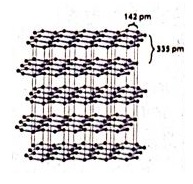
Graphite:
1. Graphite is the most stable allotropic form of carbon at normal temperature and pressure.
2. It is soft and conducts electricity.
3. It is composed of flat two dimensional sheets of carbon atoms.
4. Each sheet is a hexagonal.
5. It is "sp2" hybridised.
6. C-C bond length is 1.41 Å
7. Each C-atom forms three σ bonds with three neighbouring carbon atoms using three of its valence electrons and the fourth electron present in the unhybridised p-orbital form a π-bond.
8. The successive C-sheets are held together by weak Vander Waals forces.
9 The distance successive sheet is 3.40 Å.
10. It is used as a lubricant either on its own or as a graphited oil.
Diamond:
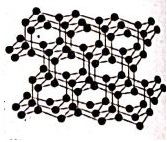
1. It is very hard.
2. It is "sp3" hybridised.
3. C-C bond length is 1.54 Å
4. It is used for sharpening hard tools, cutting glasses, making bores and rock drilling.
Fullerenes:
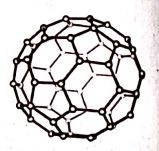
1. These allotropes are discrete molecules such as \(C_{32}, C_{50}, C_{60}, C_{70}, C_{76}\) etc.
2. It has cage like structure
3. The C60 molecules have a "soccer" ball like structure and is called buckminster fullerene or buckyballs.
4. It has a fused ring structure consists of 20 six membered rings and 12 five membered ring.
5. Each carbon atom is "sp2" hybridised.
6. It has three σ bonds and a delocalised π bond giving aromatic character to these molecules.
7. The C-C bond distance is 1.44 Å
8. The C=C bond distance is 1.38 Å.
Carbon nanotubes:
1. Carbon nanotubes, another recently discovered allotropes, have graphite like tubes with fullerene ends.
2. Along the axis, these nanotubes are stronger than steel and conduct electricity.
3. These have many applications in nanoscale electronics, catalysis, polymers and medicine.
Graphene:
It has a single planar sheet of "sp2" hybridised carbon atoms that are densely packed in a "honeycomb crystal" lattice.
23.
(i) The nitrogen in amines possess an unshared pair of electrons (Lone Pair).
(ii) The lone pair of electrons is available for the formation of a new bond with a proton or lewis acid.
(iii) Thus amines are basic in nature and they react with acids to form salts.
(iv) The greater is the number of electron releasing alkyl. groups, the greater the availability of nitrogen's lone pair and stronger the base.
NH3 < CH3 - NH2 < CH3 - NH - CH3
24.
(i) It is a co-polymer It is obtained by the polymerisation of buta-Ls-diene and styrene in the ratio 3:1 in the presence of sodium.
(ii) It is the co - polymer of the monomers 3 - hydroxybutanoic acid and 3-hydroxypentanoic acid. In PHBV, the monomer units are joined by ester linkages.

25.
(i) Starch is a polysaccharide in which a large number of monosaccharide units are linked to each other by oxide bridges and these linkages are called glycosidic linkages. General formula of starch is (C6H10O5)n
(ii) It is a white amorphous substance with no taste or smell.
(iii) Starch get hydrolysed to give monosaccharides.
\(\underset { Starch }{ \left( { C }_{ 6 }{ H }_{ 10 }{ O }_{ 5 } \right) } +n{ H }_{ 2 }O\overset { { H }^{ + } }{ \longrightarrow } \underset { glucose }{ { nC }_{ 6 }{ H }_{ 12 }{ O }_{ 6 } } \)
26.
(i) Alcohols are weakly basic in nature so easily in presence of strong acids.
(ii) Due to the presence of +ve charge on the oxygen atom, C-O in protonated alcohols became weak hence easily cleaved by halide ions to form alkyl halides.
(iii) Where as phenols are much weaker bases due to delocalisation of the lone pair of electrons on the oxygen atom due to resonance and so are not easily protonated.
(iv) The C-O bond in phenols has some double bond character; hence not easily cleaved by halide ions to form respective alkyl halides.
27.
Oxidation half cell : A metallic zinc strip that dips into an aqueous solution of zinc sulphate taken in a beaker.
Reduction half cell : A copper strip that dips into an aqueous solution of copper sulphate taken in a beaker.
28.
a) \(BaSO_{4}(s)\overset{H_{2}O}{\rightleftharpoons }Ba^{2+}(aq)+SO^{2+}_{4}(aq)\)
\(K_{sp}=[Ba^{2+}][SO^{2-}_{4}]\) = (s) (s)
Ksp = s2
b) \(Ag_{2}CrO_{4}(s)\overset{H_{2}O}{\rightleftarrows }2Ag^{+}(aq)+CrO_{4}^{2-}(aq)\)
\(K_{sp}=[Ag^{+}]^{2}[CrO)^{2-}_{4}]\)
= (2s)2 (s)
Ksp = 4S3
29.
(i) Acid catalysed hydration
(ii) Hydroboration
(iii) Hydroxylation using Baeyer's reagent
30.
\(\text { Normality }=\text { Molarity } \times \text { Basicity } \)
\(=0.04 \times 1 \)
\({\left[\mathrm{H}_{3} \mathrm{O}\right]^{+}=0.04=4 \times 10^{-2} } \)
\(\mathrm{pH} =-\log _{10}\left[\mathrm{H}_{3} \mathrm{O}^{+}\right] \)
\(=-\log \left[4 \times 10^{-2}\right] \) log10 10 =1
\(=-\left[\log _{10} 4+\log _{10} 10^{-2}\right] \)
\(=-\left[\log _{10} 4-2 \log _{10} 10\right]=2-\log _{10} 4 \)
= 2 - 0.6021
= 1.3979 \(\simeq\) 1.40
31.
(i) They are hard and show electrical land thermal conductivity.
(ii) They have high melting points higher than those of pure metals.
(iii) Transition metal hydrides are used as powerful reducing agents.
(iv) Metallic carbides are chemically inert
32.
The fusible compound formed by the combination of flux and gangue is called
Flux + Gangue \(\longrightarrow \) Slag
Eg: In the extraction of copper from copper pyrites, the ore is mixed with coke and heated in blast furnace.
Infusible FeO is converted to FeSiO3 (slag) and is removed.
\(\underset { Gangue }{ FeO } +\underset { Flux }{ { SiO }_{ 2 } } \longrightarrow \underset { slag }{ { FeSiO }_{ 3 } } \)
33.
(i) The chemical reaction involves breaking of certain existing bonds of the reactant and forming new bonds which lead to the product.
(ii) The net energy involved in this process is dependent on the nature of the reactant and hence the rates are different for different reactants.
Example:
Let us compare the following two reactions that you carried out in volumetric analysis.
1) Redox reaction between ferrous Ammonium Sulphate (FAS) and KMnO4.
2) Redox reaction between oxalic acid and KMnO4.
(i) The oxidation of oxalate ion by KMnO4 is relatively slow compared to the reaction between KMnO4 and Fe2+. In fact heating is required for the reaction between KMnO4 and Oxalate ion and is carried out at around 60oC.
(ii) The physical state of the reactant also plays an important role to influence the rate of reactions.
(iii) Gas phase reactions are faster as compared to the reactions involving solid or liquid reactants.
Ex : Na(s) + I2(vap) [Faster]
Na(s) + I2(s) [Slower]
KI(aq) + Pb(NO3)2(aq) → PbI2 (yellow) [Faster]
KI(s) + Pb(NO3)2(s) → PbI2 (yellow) [Slower]
34.
A hydride of 2nd period alkali metal (A) is lithium hydride (LiH).
Lithium hydride (A) reacts with diborane (B) to give lithium borohydride (C) which is acts as a reducing agent.
B2H6 + 2 LiH \(\xrightarrow[]{ether}\) 2 LiBH4
[Diborane (B)] [Lithium hydride (A)] [Lithium borohydride (C)]
Result:
| Compound | Formula | Name |
| A | LiH | Lithium hydride |
| B | B2H6 | Diborane |
| C | LiBH4 | Lithium borohydride |
35.
Primary cells are those in which the redox reaction occurs only once and the cell becomes dead after sometime and cannot be used again.
36.
(i) .JPG)
n-Nitro benzoate (Major Product)
(ii) .JPG)
37.
(i) Neutralisation of chargers of ion will taken place and hence precipitation will take place (ie) Fe3+ and S2- ion changes are neutralized. No new compounds are formed.
(ii) Fe(OH)3 is a positive Sol
(iii) As2S3 is a negative Sol
38.
The order of the reaction is zero.
39.
(i) Nitrogen is used for the manufacture of ammonia, nitric acid and calcium Cyanamide etc.
(ii) Liquid nitrogen is used for producing low temperature required in cryosurgery and so in biological preservation.
40.
The best known examples of this type of isomerism occur for chromium chloride CrCI3.6H2O which may contain 4, 5, (or) 6 coordinated water molecules.
[Cr(H2O)4CI2]Cl.2H2O -Bright green
Tetraaquadichlorochromium(III)chloride dihydrate
[Cr(H2O)5CI]Cl2.H2O - grey-green
Pentaaquachlorochromium(III) chloride monohydrate
[Cr(H2O)6]CI3 Violet
Hexaaquachromium (III) chloride
41.
(i) The end product of both the processes is oxide of metal.
(ii) Volatile impurities are removed from the ore and surface area for the further reaction increases.
42.
The imperfection occurs due to missing atoms, displaced atoms or extra atoms, is named as a point defect. Such defects arise due to imperfect packing during the original crystallisation or they may arise from thermal vibrations of atoms at elevated temperatures.

12th Standard Syllabus & Materials
12th Standard
TN 12th Computer Applications களப்பெயர் முறைமை (DNS) Sample Question Papers Study Material - QB365 Set A
NEW12th Standard
TN 12th Computer Applications வலையமைப்பு எடுத்துக்காட்டுகள் மற்றும் நெறிமுறைகள் Sample Question Papers Study Material - QB365 Set A
NEW12th Standard
TN 12th Computer Applications கணினி வலையமைப்பு ஓர் அறிமுகம் Sample Question Papers Study Material - QB365 Set A
NEW12th Standard
TN 12th Computer Applications PHP-உடன் MySQL-ஐ இணைத்தல் Sample Question Papers Study Material - QB365 Set A



Tamilnadu Stateboard 12th Standard Subjects

Maths
Chemistry

Physics

Biology

Computer Science

Business Maths and Statistics

Economics

Commerce

Accountancy

History

Computer Applications
Biology
Computer Technology
Computer Applications
Computer Science
Business Maths and Statistics
Commerce
Economics
Maths
Chemistry
Physics
Computer Technology
History
Accountancy

Tamil

English

French
Tamilnadu Stateboard Standards
