
 100% FREE ACCESS
12th Standard Syllabus & Materials
12th Standard
TN 12th Computer Applications மின்னணு தரவு பரிமாற்றம் Sample Question Papers Study Material - QB365 Set A
NEW12th Standard
TN 12th Computer Applications மின் - வணிக பாதுகாப்பு அமைப்புகள் Sample Question Papers Study Material - QB365 Set A
NEW12th Standard
TN 12th Computer Applications மின்னணு செலுத்தல் முறைகள் Sample Question Papers Study Material - QB365 Set A
NEW12th Standard
TN 12th Computer Applications மின் - வணிகம் Sample Question Papers Study Material - QB365 Set A
NEW12th Standard
TN 12th Computer Applications திறந்த மூல கருத்துருக்கள் Sample Question Papers Study Material - QB365 Set A
NEW12th Standard
TN 12th Computer Applications வலையமைப்பு வடமிடல் Sample Question Papers Study Material - QB365 Set A

Published on: 21/02/2020
12th Standard Chemistry Public Model Question Paper V 2019 - 2020
Download Tamil Nadu 12th Standard Chemistry question papers, model tests, one-mark questions, important questions, and public exam papers in PDF format. Free study materials and answer keys for TN State Board students.
Questions + Answers key
Take MCQ Chemistry Test
1.
C6H5CHO + Methylamine ⟶ X Y + H2SO4-p amino benzene sulphonic acid. Then X and Y are
Schiff's Base, C6H5NH2
C6H6, C6H5CHO
benzal- N - methyl amine, Toluene
None of these
2.
Glucose forms________with acetic anhydride and sodium acetate.
di acetate
tetra acetate
penta acetate
hexa acetate
3.
Degree of dissociation of pure water is 2.8 x 10⁻⁹. Molar ionic conductance of H+ and OH- ions at infinite dilution are 300 and 350 S cm2 respectively. The molar conductance of water is ________.
1.5 x 10⁻⁶ S mol-1
2.8 x 10⁻⁷ S cm2 mol-1
1.82 x 10⁻⁶ S cm2 mol-1
3.8 x 10⁻⁶ S cm-1 mol-1
4.
The number of primary alcoholic groups in ethylene glycol is ________.
0
1
2
3
5.
Degree of dissociation a is _______.
\(\alpha =\frac { { K }_{ a } }{ C } \)
\(\alpha =\frac { { C }^{ 2 } }{ { K }_{ a } } \)
\(\alpha =\sqrt { \frac { { K }_{ a } }{ C } } \)
\(\alpha =\sqrt { \frac { C }{ { K }_{ a } } } \)
6.
 _______.
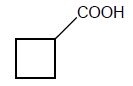
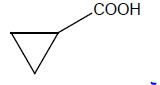
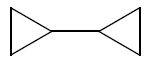
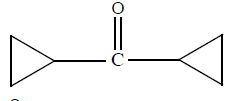
7.
The phenomenon observed when a beam of light is passed through a colloidal solution is_______.
Cataphoresis
Electrophoresis
Coagulation
Tyndall effect
8.
pH of a saturated solution of Ca(OH)2 is 9. The Solubility product (Ksp) of Ca(OH)2 _______.
0.5 × 10⁻¹⁵
0.25 × 10⁻¹⁰
0.125 × 10⁻¹⁵
0.5 × 10⁻¹⁰
9.
Orthophosphorus acid on heating gives______.
Hypophosphorous
Orthophosphoric acid
Phosphine gas
both (b) and (c)
10.
For a solid with the following structure. The co-ordination number of the point B is_______.
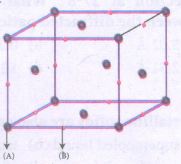
3
4
5
6
11.
The blistered appearance of Cu obtained from the reverberatory furnace is due to evolution of________.
CO2 gas
SO2 gas
NO2
Due to evaporation of volatile materials
12.
After 2 hours, a radioactive substance becomes \(\left( \frac { 1 }{ 16 } \right) ^{ th }\) of original amount Then the half life (in min) is _______.
60 minutes
120 minutes
30 minutes
15 minutes
13.
A complex in which the oxidation number of the metal is zero is_______.
K4[Fe(CN)6]
[Fe(CN)3(NH3)3]
[Fe(CO)5]
both (b) and (c)
14.
The magnetic moment of Mn2+ ion is _______.
5.92BM
2.80BM
8.95BM
3.90BM
15.
The stability of +1 oxidation state increases in the sequence ________.
Al < Ga < In < Tl
Tl < In < Ga < Al
In < Tl < Ga < Al
Ga< In < Al < Tl
16.
Account for the following : For a strong electrolyte molar conductivity decreases as concentration increases
17.
What is the action of HCN on
(i) propanone
(ii) 2,4-dichlorobenzaldehyde
iii) ethanal
18.
Ksp of AgCl is \(1.8\times10^{-10}\). Calculate molar solubility in 1 M AgNO3
19.
Identify the conjugate acid base pair for the following reaction in aqueous solution
i) HS- (aq) + HF \(\rightleftharpoons \) F-(aq) + H2S(aq)
ii) HPO2-4 + SO32- \(\rightleftharpoons \) PO43- + HSO3-
iii) NH4+ + CO32- \(\rightleftharpoons \) NH3 + HCO3-
20.
For a chemical reaction, Variation in the concentration In[A] Vs time in seconds is given as
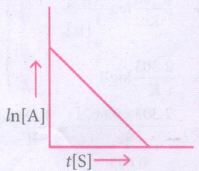
(i) What is the order of the reaction?
(ii) What is the unit of rate constant K?
(iii) Give the relationship between k and \({ t }_{ \frac { 1 }{ 2 } }\)
21.
Elements of group 16 show lower value of first ionization enthalpy compared to group 15, why?
22.
What is Co-ordination sphere?
23.
What is distillation?
24.
Write a note on zeolites.
25.
Give the structure of CO and CO2.
26.
Starting from the following reagents, how will your prepare ethanenitrile.
i) CH3Br
ii) CH3CONH2
iii) CH3CH=NOH
27.
Write the preparation of neoprene and give its use.
28.
Justify the presence of keto group in C2 in fructose.
29.
What is the oxidation and reduction half cell in a Daniel cell?
30.
How is glycerol obtained commercially? State its uses.
31.
Phenol is distilled with Zn dust followed by friedel – crafts alkylation with prophyl chloride to give a compound B, B on oxidation gives (c) Indentify A,B and C.
32.
Why are lyophillic colloidal sols are more stable than lyophobic colloidal sol.
33.
Draw the major product formed when 1-ethoxyprop-1-ene is heated with one equivalent of HI.
34.
What is chromyl chloride test? Give equations.
35.
What is cyanide leaching? Give an example
36.
Give any three characteristics of ionic crystals.
37.
An organic compound (A) of molecular formula C7H6O is called as oil of bitter almonds. (A) on oxidation gives (B) of molecular formula C7H6O2 which gives brisk effervescence with NaHCO3 solution. When (A) is refluxed with aqueous alcoholic (KCN) compound (C) is formed. Identify A, B and C and write the equations.
38.
Write the characteristics of catalysts.
39.
Complete the following reactions
(i) Cr2O72- ⟶
(ii) Cr2O72- + 6I-+ 14H+ ⟶
(iii) Cr2O72-+ 3S2-+ 14H+ ⟶
(iv) Cr2O72- + 3SO2 + 2H+ ⟶
(v) Cr2O72- + 3Sn2+ + 14H+ ⟶
(vi) K2Cr2O7 + 8H2SO4 + 3CH3CH2OH ⟶
(vii) 2MnO4- + 5(COO)2- + 6H+ ⟶
(viii) 2MnO4- + 10I- + 16H+ ⟶
(ix) 2MnO4- + 5S2-+ 16H+ ⟶
(x) 2MnO4- + 5NO2- + 6H+ ⟶
(xi) 2KMnO4 + 3H2SO4 + 5CH3CH2OH ⟶
(xii) 2MnO4- + 5SO32- + 6H+ ⟶
40.
How is sulphuric acid manufacture by contact process?
41.
What are stoichiometric defects in ionic solids? Explain
42.
How are Co-ordination compounds classified?
43.
The time for half change in a first order decomposition of a substance A is 60 seconds. Calculate the rate constant. How much of A will be left after 180 seconds?
1.
(a)
Schiff's Base, C6H5NH2
2.
(c)
penta acetate
3.
(c)
1.82 x 10⁻⁶ S cm2 mol-1
4.
(c)
2
5.
(c)
\(\alpha =\sqrt { \frac { { K }_{ a } }{ C } } \)
6.

7.
Scattering of light
8.
Ca(OH)2 ⇌ Ca2+ + 2OH-
Given that pH = 9
pOH = 14 - 9 = 5
[pOH = - log10 [OH]]
[OH-] = 10 [pOH]
[OH] = 10-5 M
Ksp = [Ca2+] [OH-]
= 10-5/2 x (10-5)2 = 0.5 x 10⁻¹⁵
9.
(d)
both (b) and (c)
10.
(d)
6
11.
(b)
SO2 gas
12.
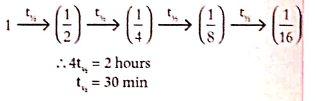
13.
a) Fe2+ b) Fe3+ c) Fe0
14.
Mn2+ ⇒ 3d5 contains 5 unpaired electrons
n = 5,
\( \sqrt{n(n+ 2)} \) BM
\(= \sqrt{5(5+ 2)} = \sqrt{35} = 5.92 BM\)
15.
(a)
Al < Ga < In < Tl
16.
(i) For a strong electrolyte, at high concentration, the number of constituent ions of the electrolyte in a given volume is high and hence the attractive force between the oppositely charged ions is also high.
(ii) Moreover the ions also experience a viscous drag due to greater solvation.
(iii) These factors attribute for the low molar conductivity at high concentration.
17.
.JPG)
(ii) 2,4-dichlorobenzaldehyde.
.JPG)
(iii) ethanal
.JPG)
18.
Ksp = 1.8 \(\times\)10-10, [AgNO3]= 1 M
\(\mathrm{AgCl}_{(\mathrm{s})} \rightleftharpoons \mathrm{Ag}_{(\mathrm{aq})}^{+}+\mathrm{Cl}_{(\mathrm{aq})}^{-} \)
s s
\(\mathrm{AgNO}_{3(\mathrm{aq})} \rightleftharpoons \mathrm{Ag}_{(\text {aq })}^{+}+\mathrm{NO}_{3_{(\text {aq })}}^{-}\\ 1 \mathrm{M} \quad \quad \quad \quad \quad 1 \mathrm{M} \quad \quad 1 \mathrm{M} \)
\(\left[\mathrm{Ag}^{+}\right]=(\mathrm{s}+1) \approx 1 \quad(\therefore \mathrm{s}<<1) \)
\(\left[\mathrm{Cl}^{-}\right]=\mathrm{s} \)
\(\mathrm{K}_{\mathrm{sp}}=\left[\mathrm{Ag}^{+}\right]\left[\mathrm{Cl}^{-}\right] \)
\(1.8 \times 10^{-10}=(1)(s) \)
\(\therefore \mathrm{s}=1.8 \times 10^{-10} \mathrm{M}\)
19.
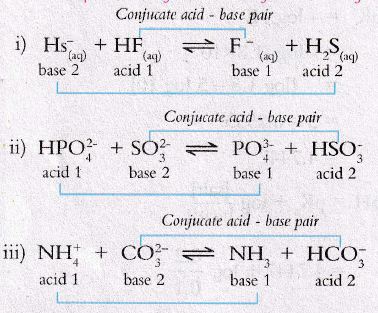
Conjugate Pairs:
\((a) \mathrm{HS}_{\text {(aq) }}^{-} \& \mathrm{H}_{2} \mathrm{~S}_{\text {(aq) }} \) \((b) \mathrm{HF}_{\text {(aq) }} \& \mathrm{~F}_{\text {(aq) }}^{-} \)
\((a) \mathrm{HPO}_{4}^{2-} \& \mathrm{PO}_{4}^{3-} \) \((b) \mathrm{SO}_{3}^{2-} \& \mathrm{HSO}_{3}^{-} \)
\((a) \mathrm{NH}_{4}^{+} \& \mathrm{NH}_{3} \) \((b) \mathrm{CO}_{3}^{2-} \& \mathrm{HCO}_{3}^{-}\)
20.
(i) I Order reaction
(ii) S-1
(iii) \({ t }_{ \frac { 1 }{ 2 } }\) = 0.693/k
21.
Element of group 15 have stable half-filled p-orbitals hence large amount of energy is required to remove electrons as compared to group 16, which has an incomplete p subshell.
22.
(i) The complex ion of the coordination compound containing the central metal atom/ion and the ligands attached to it is collectively called coordination sphere and are usually enclosed in square brackets with the net charge.
(ii) The other ionisable ions, are written outside the bracket are called counter ions. For example, the coordination compound K4[Fe(CN)6] contains the complex ion [Fe(CN)6]4- and is referred as the coordination sphere.
(iii) The other associated ion K+ is called the counter ion.
23.
(i) Distillation is employed for low boiling volatile metals like zinc (boiling point 1180 K) and mercury (630 K).
(ii) In this method, the impure metal is heated to evaporate and the vapours are condensed to get pure metal.
24.
(i) Zeolites are three-dimensional crystalline solids containing Al, Si and O in their regular three dimensional framework.
(ii) They are hydrated sodium alumino silicates with general formula Na2O(AI2O3).·x(SiO2)·yH2O
(x = 2 to 10; y = 2 to 6).
(iii) Zeolites have porous structure in which the monovalent sodium ions and water molecules are loosely held.
(iv) The Si and Al atoms are tetrahedrally coordinated with each other through shared oxygen atoms.
(v) Zeolites are similar to clay minerals but they differ in their crystalline structure.
(vi) Zeolites have a three dimensional crystalline structure looks like a honeycomb consisting of a network of interconnected tunnels and cages.
(vii) Water molecules moves freely in and out of these pores but the zeolite framework remains rigid
(viii) Another special aspect of this structure is that the pore/channel sizes are nearly uniform, allowing the crystal to act as a molecular sieve.
25.
| Oxides of Carbon | Structure | Parameters |
| CO |  |
Three electron pairs are shared between carbon and oxygen. The C-O bond distance is 1.128\(\overset{o}{A}\). |
| CO2 |  |
Equal bond distance for the both C-O bonds. Two C-O sigma bond, It has 3c-4e bond. |
26.
(i) Aryl cyanide cannot be prepared in this method because of their less reactivity towards nucleophilic substitution. Aryl cyanides are prepared using Sandmeyers reactions.
\(KCH+\underset { methyl \ bromide }{ { CH }_{ 3 }-Br } \rightarrow \underset { ethanenitrile }{ { CH }_{ 3 }-CN } +KBr\)
(ii) By dehydration' of primary amides a aldoximes with P2O5
\(\underset { Acetamide }{ { CH }_{ 3 }-CO{ NH }_{ 2 } } \xrightarrow [ { -H }_{ 2 }O ]{ { P }_{ 2 }{ O }_{ 5 } } \underset { Ethaneitrile }{ { CH }_{ 3 }-{ CN } } \)
(iii) \(\underset { Acetaldoximes }{ { CH }_{ 3 }-CH=NOH } \xrightarrow [ { -H }_{ 2 }O ]{ { P }_{ 2 }{ O }_{ 5 } } \underset { Ethaneitrile }{ { CH }_{ 3 }-{ CN } } \)
27.
The free radical polymeristion of the monomer, 2-c Woro buta -1,3-diene( chloroprene) gives neoprene.

It is superior to rubber and resistant to chemical action.
Uses: It is used in the manufacture of chemical containers, conveyer belts
28.
On oxidation with nitric acid, it gives glycolic acid and tartaric acids which contain smaller number of carbon atoms than in fructose.
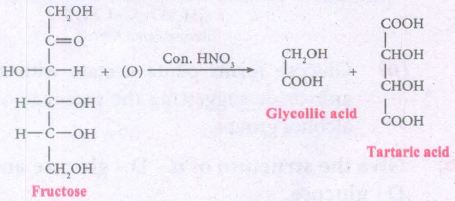
This shows that a keto group is present in C-2.
29.
Oxidation half cell : A metallic zinc strip that dips into an aqueous solution of zinc sulphate taken in a beaker.
Reduction half cell : A copper strip that dips into an aqueous solution of copper sulphate taken in a beaker.
30.
(i) Glycerol is prepared in a large scale by the hydrolysis of oils or fats either by using alkali or by super heated steam.
(ii) During this process, soap is formed along with the byproduct glycerol and this process is called saponification.
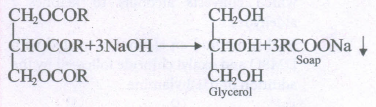
Uses of glycerol:
(i) Glycerol is used as a sweetening agent in confectionery and beverages.
(ii) It is used in the manufacture of cosmetics and transparent soaps.
(iii) It is used in making printing inks and stamp pad ink and lubricant for watches and clocks.
(iv) It is used in the manufacture of explosive like dynamite and cordite by mixing it with chaina clay.
31.
\(\underset {Phenol} {\mathrm{C}_{6} \mathrm{H}_{5} \mathrm{OH}}+\mathrm{Zn}(\text { dust }) \rightarrow \underset {benzene(A)} {\mathrm{C}_{6} \mathrm{H}_{6}}+\mathrm{ZnO}\)
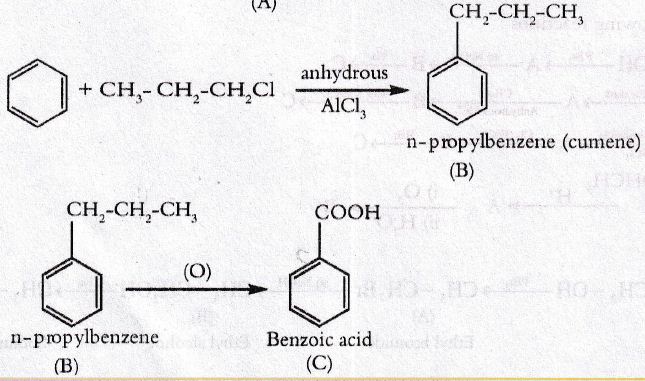
32.
(i) In lyophillic colloids or sols definite attractive force or affinity exists between dispersion medium and dispersed phase. Examples: sols of protein and starch. They are more stable and will not get precipitated easily.
(ii) In a lyophobic colloids, no attractive force exists between the dispersed phase and dispersion medium. They are less stable and precipitated readily, but cannot be produced again by just adding the dispersion medium.
Examples: sols of gold, silver, platinum and copper.
33.

34.
(i) When potassium dichromate is heated with any chloride salt in the presence of Conc. H2SO4, orange red vapours of chromyl chloride (CrO2CI2) is evolved.
(ii) This reaction is used to confirm the presence of chloride ion in inorganic qualitative analysis
.JPG)
(iii) The chromyl chloride vapours are dissolved in sodium hydroxide solution and then acidified with acetic acid and treated with lead acetate. A yellow precipitate of lead chromate is obtained
.JPG)
35.
(i) The crushed ore of gold is leached with aerated dilute solution of sodium cyanide.
(ii) Gold is converted into a soluble cyanide complex.
(iii) The gangue, aluminosilicate remains insoluble
\({ 4Au }_{ (s) }+{ 8CN }_{ (aq) }^{ - }+{ O }_{ 2(g) }+2{ H }_{ 2 }{ O }_{ (l) }\longrightarrow 4\left[ Au(CN)_{ 2 } \right] +_{ (aq) }^{ - }+{ 4OH }_{ (aq) }^{ - }\)
36.
(i) Ionic solids have high melting points.
(ii) These solids do not conduct electricity, because the ions are fixed in their lattice positions.
(iii) They are hard so strong external force can change the relative positions of ions.
37.
(i) From the molecular formula, (A) is identified as benzaldehyde and it is called as oil of bitter almonds.
(ii) Benzaldehyde is oxidised to benzoic acid by alkaline permanganate which gives brisk effervescence with NaHCO3.
\(\underset { (A) }{ { C }_{ 6 }{ H }_{ 5 }CHO } \overset { (O) }{ \longrightarrow } \underset { (B) }{ { C }_{ 6 }{ H }_{ 5 } } -COOH\)
(iii) When benzaldehyde is refluxed with aqueous alcoholic KCN, benzoin (C) is formed.
\({ C }_{ 6 }{ H }_{ 5 }CH=O+H-\overset { \underset { || }{ O } }{ C } -{ C }_{ 6 }{ H }_{ 5 }\overset { alc }{\underset{KCN} \longrightarrow } { C }_{ 6 }{ H }_{ 5 }-\underset { \overset { | }{ OH\\ (C) } }{ CH } -\overset { \underset { || }{ O } }{ C } -{ C }_{ 6 }{ H }_{ 5 }\)
| Compound | Compound Name | Formula |
| A | Benzaldehyde | C6H5CHO |
| B | Benzoic acid | C6HsCOOH |
| C | Benzoin | \({ C }_{ 6 }{ H }_{ 5 }CHOH-\overset { \underset { || }{ O } }{ C } -{ C }_{ 6 }{ H }_{ 5 }\) |
38.
(i) For a chemical reaction, catalyst is needed in very small quantity.
(ii) There may be some physical changes, but the catalyst remains unchanged in mass and chemical composition in a chemical reaction.
(iii) A catalyst itself cannot initiate a reaction.
(iv) A solid catalyst will be more effective if it is taken in a finely divided form.
(v) A catalyst are specific in nature.
(vi) In an equilibrium reaction, presence of catalyst reduces the time for attainment of equilibrium and hence it does not affect the position of equilibrium and the value of equilibrium constant.
(vii) A catalyst is highly effective at a particular temperature called as optimum temperature.
(viii) Presence of a catalyst generally does not change the nature of products
39.
(i) It oxidises ferrous salts to ferric salts.
Cr2O72- + 6Fe2++ 14H+ ⟶ 2Cr3+ + 6Fe3+ + 7H2O
(ii) It oxidises iodide ions to iodine
Cr2O72- + 6I-+ 14H+ ⟶ 2Cr3+ + 3I2 + 7H2O
(iii) It oxidises sulphide ion to sulphur
Cr2O72- + 3S2-+ 14H+ ⟶ 2Cr3+ + 3S + 7H2O
(iv) It oxidises sulphur dioxide to sulphate ion
Cr2O72- + 3SO2+ 2H+ ⟶ 2Cr3+ + 3SO42- + H2O
(v) It oxidises stannous salts to stannic salt
Cr2O72- + 3Sn2+ + 14H+ ⟶ 2Cr3+ + 3Sn4+ + 7H2O
(vi) It oxidises alcohols to acids
2K2Cr2O7 + 8H2SO4 + 3CH3CH2OH ⟶ 2K2SO4 +2Cr2(SO4)3+ 3CH3COOH + 11H2O
(vii) It oxidises oxalic acid to CO2
2MnO4- + 5(COO)2- + 6H+ ⟶ 2Mn2++ 10CO2 + 8H2O
(viii) It oxidises iodide ions to iodine
2MnO4- + 10I- + 16H+ ⟶ 2Mn2++ 5I2+ 8H2O
(ix) It oxidises sulphide ion to sulphur
2MnO4- + 5S2-+ 16H+ ⟶ 2Mn2++ 5S + 8H2O
(x) It oxidises nitrites to nitrates
2MnO4- + 5NO2- + 6H+ ⟶ 2Mn2++ 5NO3- + 3H2O
(xi) It oxidises alcohols to aldehydes.
2KMnO4 + 3H2SO4 + 5CH3CH2OH ⟶ 2K2SO4 + 2MnSO4 + 5CH3CHO + 8H2O
(xii) It oxidises sulphite to sulphate
2MnO4- + 5SO32- + 6H+ ⟶ 2Mn2+ + 5SO42- + 3H2O
40.
Manufacture of sulphuric acid by contact process:
The contact process involves the following steps.
(i) Initially sulphur dioxide is produced by burning sulphur or iron pyrites in oxygen/ air.
\(S+{ O }_{ 2 }\longrightarrow { SO }_{ 2 }\)
\({ 4FeS }_{ 2 }+{ 11O }_{ 2 }\longrightarrow { 2Fe }_{ 2 }{ { O }_{ 3 } }+8{ SO }_{ 2 }\)
(ii) Sulphur dioxide formed is oxidised to sulphur trioxide by air in the presence of a catalyst such as V2O5 or platinised asbestos.
(iii) The sulphur trioxide is absorbed in concentrated sulphuric acid and produces oleum (H2S2O7). The oleum is converted into sulphuric acid by diluting it with water.
\(\mathrm{SO}_{3}+\mathrm{H}_{2} \mathrm{SO}_{4} \longrightarrow \mathrm{H}_{2} \mathrm{~S}_{2} \mathrm{O}_{7} \stackrel{\mathrm{H}_{2} \mathrm{O}}{\longrightarrow} 2 \mathrm{H}_{2} \mathrm{SO}_{4}\)
(iv) To maximise the yield the plant is operated at 2 bar pressure and 720 K. The sulphuric acid obtained in this process is over 96 % pure.
41.
Schottky defect:
(i) Schottky defect arises due to the missing of equal number of cations and anions from the crystal lattice.
(ii) This effect does not change the stoichiometry of the crystal.
(iii) Ionic solids in which the cation and anion are of almost of similar size show schottky defect. Ex: NaCl.
(iv) Presence of large number of schottky defects in a crystal, lowers its density.
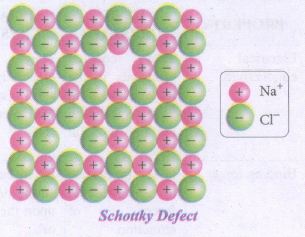
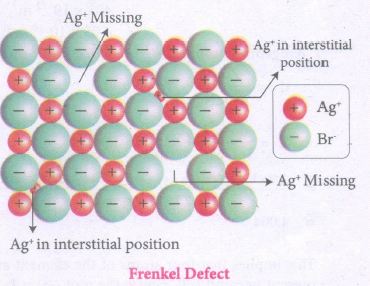
Frenkel defect:
(i) Frenkel defect arises due to the dislocation of ions from its crystal lattice.
(ii) The ion which is missing from the lattice point occupies an interstitial position.
(iii) This defect is shown by ionic solids in which cation and anion differ in size.
(iv) Unlike Schottky defect, this defect does not affect the density of the crystal.
(v) For example AgBr, in this case, small Ag+ ion leaves its normal site and occupies an interstitial position.
42.
The coordination compounds can be classified into the following types based on (i) the net charge of the complex ion, (ii) kinds of ligands present in the coordination entity.
Classification based on the net charge on the complex:
A coordination compound in which the complex ion.
(i) carries a net positive charge is called a cationic complex. Examples: [Ag(NH3)2]+, [Co(NH3)6]3+, [Fe(H2O)6]2+, etc.
(ii) carries a net negative charge is called an anionic complex. Examples: [Ag(CN)2]-, [Co(CN)6]3-, [Fe(CN)6]4-, etc.
(iii) bears no net charge, is called a neutral complex. Examples: [Ni(CO)4],[Fe(CO)5] [Co(NH3)3(CI)3].
Classification based on kind of ligands:
A coordination compound in which
(i) the central metal ion/atom is coordinated to only one kind of ligands is called a homoleptic complex. Examples: [Co(NH3)6]3+ +, [Fe(H2O)6]2+,
(ii) the central metal ion/atom is coordinated to more than one kind of ligands is called a heteroleptic complex. Example, [Co(NH3)5CI]2+, [Pt(NH3)2CI2)]
43.
(i) Order of the reaction =1; \(\mathrm{t}_{1 / 2}=60 \mathrm{~s} ; \mathrm{k}=?\)
\(\mathrm{k}=\frac{0.6932}{\mathrm{t}_{\frac{1}{2}}} \)
\(=\frac{0.6932}{60} \)
\(k =1.155 \times 10^{-2} \mathrm{~s}^{-1}\)
(ii) \(\left[\mathrm{A}_{0}\right]=100 \% ; \mathrm{t}=180 \mathrm{~s} ;[\mathrm{A}]=? ; \mathrm{k}=1.155 \times 10^{-2} \mathrm{~s}^{-1}\)
For first order reaction
\(\mathrm{k}=\frac{2.303}{\mathrm{t}} \log \frac{\left[\mathrm{A}_{0}\right]}{[\mathrm{A}]} \)
\(1.155 \times 10^{-2} =\frac{2.303}{180} \log \left(\frac{100}{[A]}\right) \)
\(\frac{0.01155 \times 180}{2.303} =\log \left(\frac{100}{[A]}\right) \)
\(0.9027 =\log 100-\log [\mathrm{A}] \)
\(\log [\mathrm{A}] =\log 100-0.9027 \)
\(\log [A]=2-0.9027 \)
\(\log [A]=1.0972 \)
[A] = antilog of (1.0972)
[A] =12.51 %

12th Standard Syllabus & Materials
12th Standard
TN 12th Computer Applications களப்பெயர் முறைமை (DNS) Sample Question Papers Study Material - QB365 Set A
NEW12th Standard
TN 12th Computer Applications வலையமைப்பு எடுத்துக்காட்டுகள் மற்றும் நெறிமுறைகள் Sample Question Papers Study Material - QB365 Set A
NEW12th Standard
TN 12th Computer Applications கணினி வலையமைப்பு ஓர் அறிமுகம் Sample Question Papers Study Material - QB365 Set A
NEW12th Standard
TN 12th Computer Applications PHP-உடன் MySQL-ஐ இணைத்தல் Sample Question Papers Study Material - QB365 Set A



Tamilnadu Stateboard 12th Standard Subjects

Maths
Chemistry

Physics

Biology

Computer Science

Business Maths and Statistics

Economics

Commerce

Accountancy

History

Computer Applications
Biology
Computer Technology
Computer Applications
Computer Science
Business Maths and Statistics
Commerce
Economics
Maths
Chemistry
Physics
Computer Technology
History
Accountancy

Tamil

English

French
Tamilnadu Stateboard Standards
