
 100% FREE ACCESS
12th Standard Syllabus & Materials
12th Standard
TN 12th Computer Applications மின்னணு தரவு பரிமாற்றம் Sample Question Papers Study Material - QB365 Set A
NEW12th Standard
TN 12th Computer Applications மின் - வணிக பாதுகாப்பு அமைப்புகள் Sample Question Papers Study Material - QB365 Set A
NEW12th Standard
TN 12th Computer Applications மின்னணு செலுத்தல் முறைகள் Sample Question Papers Study Material - QB365 Set A
NEW12th Standard
TN 12th Computer Applications மின் - வணிகம் Sample Question Papers Study Material - QB365 Set A
NEW12th Standard
TN 12th Computer Applications திறந்த மூல கருத்துருக்கள் Sample Question Papers Study Material - QB365 Set A
NEW12th Standard
TN 12th Computer Applications வலையமைப்பு வடமிடல் Sample Question Papers Study Material - QB365 Set A

Published on: 07/03/2020
12th Standard Commerce English Medium All Chapter Book Back and Creative Three Mark Questions 2020
Download Tamil Nadu 12th Standard Commerce question papers, model tests, one-mark questions, important questions, and public exam papers in PDF format. Free study materials and answer keys for TN State Board students.
Questions + Answers key
Take MCQ Commerce Test1.
Explain the appointment of company secretary.
2.
What are the difference between Managing director and Whole time director?
3.
What are the difference between Manager and Director?
4.
Write a short note on
(i) Issue of shares at par
(ii) Issue of securities at discount
5.
what are the main objectives of the company Laws 1956?
6.
Write a short note on
(i) Statutory License
(ii) Power Connection
7.
Explain in details of classification based on technology.
8.
Write a short note on
(i) Retail Entrepreneurs
(ii) Service Entrepreneur
9.
What are the methods of recent trend in recruitment?
10.
What are the functions of CWEI?
11.
What is meant by IFSC code?
12.
Write a note on MICR.
13.
Write short notes on
i) Future market
ii) Options market
14.
Briefly explain the stock exchanges in India.
15.
Write a note on Gilt-Edged market
16.
How new issues are floated in the primary market?
17.
Write a short note on conditions with examples.
18.
What are the difference between specific goods, Ascertained goods, and unascertained goods.
19.
What do you mean by Inland bills and foreign bills?
20.
Write a short note on clean bills and documentary bills.
21.
Explain the classification of financial assets.
22.
Write a short note on
(a) Primary market
(b) Secondary market
23.
What are the disadvantages of privatization?
24.
What is meant by public Sector Units (PSU)s ?
25.
'Controlling is Systematic Process involving a series of steps'. Do your agree? Discuss it briefly
26.
'Selection is a negative Process'. Do you agree?
27.
Explain the kinds of the GST.
28.
Distinguish between unity of command and unity of direction.
29.
Why management is regarded as a social process?
30.
When the complaints can be made?
31.
Who can make complaint?
32.
Explain the terms spot market and future market.
33.
What are the types of capital markets?
34.
Why is training important for an organisation? State any three reasons.
35.
Write a short note on
(i) Committee assignment method
(ii) Internship Training method
36.
What are the functions of the consumer dubs in schools?
37.
What are the consumer oriented legislation in India?
38.
Write a short note on
(i) Viral marketing
(ii) Ambush marketing
39.
Write a short note on Rural marketing.
40.
Write a shot notes on
a. Group interview method
b. Video conferencing method
41.
Write a shot notes on
(i) Mental arithmetic test
(ii) Vocabulary test
(iii) Number sequence test
42.
43.
What is Special Resolution?
44.
Who is a shadow director?
45.
When are alternative directors appointed?
46.
Explain different Kinds of Preference shares.
47.
State condition stipulated for capital subscription at the time of promotion.
48.
Write a short note on the following
a) Dairy Entrepreneurship development scheme.
b) Project report.
49.
Expand the following: i) STEP ii) JAM iii) SEED
50.
Explain about the imitative entrepreneur
51.
How does a professional entrepreneur operate?
52.
Distinguish between entrepreneur and Manager. (any 3)
53.
Define Entrepreneur.
54.
Distinguish between Negotiability and Assignability.
55.
Explain the nature of a Negotiable Instrument.
56.
Discuss in detail about existing goods.
57.
Explain the meaning of Agreement to sell
58.
Explain the concept of Privatisation.
59.
60.
State the framework of Corporate Governance in India.
61.
What are the political environment factors?
62.
Does District Forum exceeds the claim limit of Rs 20 lakhs. Explain the condition.
63.
Is Consumer Protection necessary?
64.
What do you understand about "Right to protection of health and safety"?
65.
What do you understand by "Right to redressal"?
66.
Write the importance of consumerism. (any 3)
67.
What is meant by artificial scarcity?
68.
Explain in detail about Niche marketing.
69.
Discuss the objectives E-Marketing. (any 3)
70.
What are the factors affecting Price of Product?
71.
What are the objectives of marketing?
72.
What is the need for market?
73.
What can be marketed in the market? (any 3)
74.
Write short note on trainer and trainee.
75.
Write down various steps in a training programme.
76.
List out the various selection interviews
77.
What do you mean by achievement test?
78.
What is meant by job portals?
79.
Define the term Recruitment.
80.
State the functions of Human Resource Management.
81.
Give two points of differences between HR and HRM.
82.
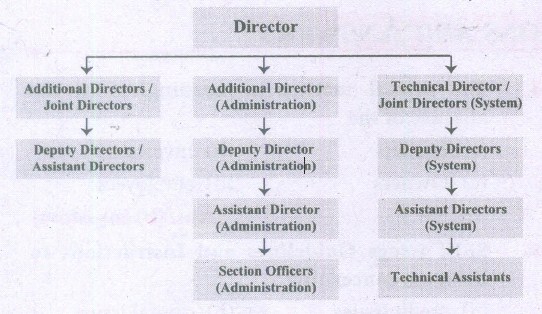
Draw the organization structure of SEBI.
83.
What are the documents required for a Demat account?
84.
Explain National Stock Exchange. (NSE).
85.
Explain Bull and Bear.
86.
Who are the participants of Money Market? (any 3)
87.
What are the features of Treasury Bills?(any 3)
88.
Explain about Factoring and Venture Capital Institutions.
89.
Discuss about evolution and growth of Indian Capital Market.
90.
Differentiate spot market from future market .
91.
Give the meaning of Financial Market.
92.
What are the Process of MBE?
93.
Write the features of MBO.
94.
State the importance of Motivation.
95.
What determines the span of management?
96.
Define the term management.
97.
List the subsidiary functions of management
98.
What are the objectives of MBO?
99.
Explain the concept of management .(any 5)
1.
Only an individual who is a member of the institute of company secretaries of India can be appointment as a company secretary.
(i) By the Promoters: The first secretary of a company is appointed by the promoters at the pre-incorporation stage and such name is mentioned in the Articles of Association.
(ii) By the First Board of Directors: After the company has been registered, the first board of directors appoints the secretary at the first board meeting. The board of directors can continue the existing secretary appointed by promoters or can appoint a new company secretary.
2.
| Basis | Managing director | Whole time director |
|---|---|---|
| 1. Power | Managing Director is entrusted with substantial powers. | The Power is stated in the term of employment. |
| 2. Prohibition | Section 197 Prohibits to act both a managing director and a manager simultaneously. | Sometimes a whole time directors may be appointed as manager and director of a company. |
| 3. Appointment | Consent of the shareholders of the company by means of resolution is not necessarily for the appointment of mana in the director. | Consent of shareholders of the company by a special resolution is must for the appointment of a whole-time director |
| 4. Duration Appointment | No individual can be appointed for more than five years at a time. | There is no such restriction regarding the appointment of a whole-time director. |
3.
| Basis | Manager | Director |
|---|---|---|
| 1. Nature of work | A person who is in charge of the particular department of the Company and is responsible for the performance of that department is called as manager. | A person appointed by the shareholders to lead the company to achieve its goal is known as Director |
| 2. Level of management | A manager comes under executive level i.e at the Middle-level management | Directors come under Top-level management and play an important role in Decision making. |
| 3. Responsibility | Managers are responsible for the implementation of plans and policies approved by the Board of Directors | Directors responsible for the formulation of plans and policies from time to time to achieve the goal of the company. |
4.
(i) Issue of shares at Par:
Normally shares are issued at their face value or par value i.e at a price mentioned on the face of share certificate concerned. There are no legal restrictions on issuing shares at par/face value.
(ii) Issue of securities at discount:
When the shares are issued at a price below the face value they are said to be issued at a discount. For example, a share having the face value of Rs 10 is issued at Rs 8. The companies act 2013, prohibits the issue of shares at discount (Section 53), except sweat Equity share.
5.
The main objectives of Company Law 1956 are:
(i) To sustain the trust and faith of Shareholders
(ii) To protect and preserve the rights of Shareholders
(iii) To have drastic control over all the activities of the company
(iv) To make regulation of an effective Annual Meeting,
(v) The investment of the general public should be used for the development of society or social welfare activities.
6.
(i) Statutory License: Entrepreneur has to obtain Municipal License from the authority. concerned. Then the Entrepreneur has to register the unit with the Central and Sales Tax Department.
(ii) Power Connection: Entrepreneur has to make application to Assistant Divisional Engineer of State Electricity Board for power connection after paying Security Deposit and fulfilling the official formalities prescribed.
7.
(i) Technical Entrepreneur:
(a) Technical entrepreneurs are such of those craftsmen like a welder, fitter, moulder, draughtsman, turner, carpenter, goldsmith, tailor, photographer, repairer, weaver, sculptor, potter, wiremen or so on who start small ventures.
(b) This type of entrepreneur demonstrates their creative talents by . producing innovative products.
(ii) Non-technical Entrepreneur:
Non-technical Entrepreneurs are those who do not possess any technical competence to produce the goods or service but have special talents to market the products successfully or expertise to distribute the products produced by technical entrepreneur effectively to channel members and end consumers.
(iii) Professional Entrepreneur:
(a) A professional entrepreneur is one who is having rich expertise in starting a venture but lack interest in, continuing the venture as a manager or as an owner.
(b) They keep on conceiving new ideas to develop alternative projects.
8.
(i) Retail Entrepreneurs:
(a) Retail entrepreneurs are those who enter into a venture of distributing the end-product to the final consumer while wholesale entrepreneurs take up the venture of distributing the product to the retailer.
(b) They used to buy the goods in small quantities from numerous wholesalers and make it available different products of different brands under one roof to end consumer.
(ii) Service Entrepreneur:
(a) Service entrepreneurs enter into - the venture of supplying service products to end consumers.
(b) Hoteliers, airlines, banking, insurance', and financial service providers, repair service organization, bus operators, train service, advisory organization, advertising firms, manpower supplier, etc., come under service entrepreneur's category.
9.
The recent methods of recruiting by organisations include the following methods:
(i) Outsourcing: There are outsourcing firms that help in the process of recruiting through screening of applications and finding the right person for the job for which job they are paid service charges.
(ii) Poaching: Organisations instead of training and developing their own employees, hire employees of other competitive companies by paying them more both financial and non-financial benefits. It is called raiding.
10.
A consortium of Women Entrepreneur of India (CWEI) are rendering the following functions:
(i) They are acting as a springboard for enterprises started by the women.
(ii) It is helping women achieve high economic empowerment.
(iii) It is acting as a catalyst to improve the access of womenfolk to natural resources.
(iv) It is providing technological support in the sphere of product design and development in the case of women-owned enterprises.
(v) It is providing quality control, marketing and technological supports to women-owned enterprises.
(vi) It is spreading knowledge to women entrepreneurs about various government schemes.
11.
(i) IFSC code is an alphanumeric code which facilitates electronic fund transfer in India.
(ii) This code uniquely identifies each bank branch participating in the two main Payment and Settlement systems in India.
(iii) The Real Time Gross Settlement (RTGS) and the National Electronic Fund Transfer (NEFT) systems.
(iv) IFSC is an 11 character code.
(v) The first 4 alphabetic characters represent the bank name and the last 6 characters (usually numeric) represent the branch.
(vi) The fifth character is 0 and reserved for future use. This code routes the messages to the destination banks or branch.
12.
(i) MICR code is a character - recognition technology used mainly by the banking industry to ease processing and clearance of cheques and other documents.
(ii) It is found at the bottom of the cheque. It includes bank code, bank account number, cheque number, cheque amount and a control indicator.
(iii) The MICR code helps the banker to ensure the legitimacy or originality of paper documents.
(iv) The special ink used in the MICR code is sensitive to magnetic fields.
(v) It prevents the crime of printing counterfeit cheques or documents using technology.
(vi) The magnetic ink will help discover fake documents.
13.
i) Future market:
(a) A Future market is an auction market in which participants buy and sell commodity and futures contracts for delivery on a specified future date.
(b) Examples of futures markets are the New York Mercantile Exchange, the Kansas City Board of Trade, the Chicago Mercantile Exchange, the Chicago Board of Options Exchange and the Minneapolis Grain Exchange.
ii) Options market:
(a) An 'Option' is a type of security that can be bought or sold at a specified price within a specified period of time, in exchange for a non-refundable up front deposit.
(b) Options are a type of derivative product. The right to sell a security is called a 'Put Option', while the right to buy is called the 'Call Option'.
14.
(i) There are 24 stock exchange in the country, with 21 of them being regional in nature.
(ii) Three others that have been set up in the reforms era, viz., National Stock Exchange (NSE), the Over the Counter Exchange of India Limited (OTCEI) and Interconnected Stock Exchange of India Limited (ISE) have mandate to nationwide trading network.
(iii) The ISE has been promoted by 15 regional stock exchanges in the country and is based at Mumbai.
(iv) The ISE provides a member-broker of any of these stock exchanges an access into the national market segment.
(v) The NSE, OTCEI, ISE and majority of the regional stock exchanges have adopted the Screen Based Trading System (SBTS) to provide automated and modern facilities for trading in a transparent, fair and open manner with access to investors across the country.
15.
Gilt-Edged Market also known as Government Securities market is the market for Government and semi-Government securities.
An important feature of the securities traded in this market. That they are stable in value and are much sought after by banks.
(i) Guaranteed return on investments
(ii) No speculation in securities
(iii) Institutional based investors which are compelled by law to invest a portion of their funds in these securities.
(iv) Predominated by such institutions as LIC, GIC, PFs and the commercial banks.
16.
There are three ways by which a company may raise capital in a primary market. They are:
(i) Public issue: The most common method of raising capital by new companies is through sale of securities to the public. It is called public issue.
(ii) Rights issue: When an existing company wants to raise additional capital, securities are first offered to the existing shareholders on a pre-emptive basis. It is called rights issue.
(iii) Private placement: Private placement is a way of selling securities privately to a small group of investors.
17.
(i) A condition is a stipulation which is essential to the main purpose of the contract. It is core to the contract.
(ii) The non-fulfillment of the condition cancels the very contract.
(iii) E.g. 'A' intends to buy a motorbike from 'B. 'A' insists that the bike should give him a mileage of 50 km per litter.
(iv) He prefers to have a red color bike. 'B' a mechanic gets a bike which gives him 55 kms per litter.
(v) But the color is green. In this case, 'A' cannot cancel the contract.
(vi) Since 'A'. is very particular about the mileage, it is a condition to the contract.
(vii) That part of the contract is fulfilled by 'B'. However, 'A' can ask the mechanic 'B' to bear the cost of repainting it with red color.
18.
(i) Specific Goods:
Specific goods denote goods identified and agreed upon at the time of contract of sale. For eg, if a buyer selects a particular variety of saree after examining several other sarees, the selected one denotes specific goods.
(ii) Ascertained Goods:
The term ascertained goods is also used as similar in meaning to specific goods. But this term may even refer to goods which become ascertained subsequent to the formation of the contract.
(iii) Unascertained or Generic Goods:
These are goods which are not identified and agreed upon at the time of contract of sale. For eg, A wants to buy a car from a showroom where different models at different prices have been displayed. All these displayed models represent unascertained goods.
19.
(i) Bills that are drawn and payable in India on a person who is resident in India are called inland bills.
(ii) Bills that are drawn outside India and are payable either in India or outside India are called foreign bills.
20.
(i) Bills that are accompanied by documents of title to goods are called documentary bills.
(ii) Clean bills are drawn without accompanying any document.
(iii) Example: Railway Receipt and Lorry Receipt.
21.
Financial assets can be classified differently under different circumstances. One such classification is :
(i) Marketable assets
(ii) Non-marketable assets
(I) Marketable Assets:
(a) Marketable assets are those which can be easily transferred from one person to another without much hindrance:
(b) Example: Shares of Listed companies, Government securities, Bonds of Public sector undertakings etc.
(ii) Non marketable Assets:
(a) If the assets cannot be transferred easily, they come under this category.
(b) Example: Bank deposits, Provident funds, Pension funds, National savings Certificates, Insurance policies etc.
22.
(a) Primary market:
(i) Primary market is a term used to include all the institutions that are involved in the sale of securities for the first time by the issuers.
(ii) Here the money from investors goes directly to the issuers.
(b) Second by market:
(i) Secondary market is the market for securities that are already issued.
(ii) Stock exchange is an important institution in the secondary market
23.
Disadvantages:
(i) Lack of welfare: Majority of private companies whose main motive is profitmaking, do not indulge in public interest or welfare services like free education to poor, free medical treatment, etc.
(ii) Political pressure: When private companies fail to deliver, the public has no powers to intervene and government does not always have time or expertise to force them to keep their promises.
(iii) Ignores the weaker sections: Privatisation often goes hand in hand with encouraging richer people to pay more and opt for best quality services.
24.
(i) Privatization means permitting the private sector to set up industries which were previously reserved for the public sector.
(ii) Under this policy many Public Sector Units (PSUs) were sold to private sector
(iii) The main reason for privatization was that PSUs were running in losses due to mismanagement and political interterence.
25.
Yes, controlling is a systematic process which involves following steps
(i) Setting performance standards.
(ii) Measurement of actual performance
(iii) Comparing actual performance with standards.
(iv) Analysing deviations
(v) Taking corrective action
26.
(i) Yes, as selection is choosing from among the candidates the ones, who best meet a position's requirements and eliminating the ones who are not suitable.
(ii) To achieve this target, candidates are required to take a series of tests and interviews in different stages.
(iii) At each stage, many candidates are eliminated and only a few candidates move to the next stage.
(iv) The process of elimination continues till the right ones are finalised .
(v) The above scenario clearly establishes the fact that selection is the process, through which unsuitable candidates are rejected and suitable ones are chosen.
(vi) Therefore, it is regarded as negative process.
27.
There are 3 taxes applicable under this system.
(i) CGST : Collected by the Central Government on an intra-state sale (Eg : transaction happening in TamilNadu)
(ii) SGST Collected by the State Government on an intra-state sale (Eg : transaction happening within TamilNadu)
(iii) IGST : Collected by the Central Government for inter-state sale (Eg : Punjab to Tamil Nadu)
28.
| Basis | Unity of command | Unity of direction | |
| 1. | Meaning | One subordinate should receive orders from one boss only | Each group of activities should have one head and one plan |
| 2. | Aim | It avoids dual subordination | It avoids overlapping of activities |
| 3. | Implication | It affects individual employee | It affects the entire organisation |
29.
(i) The substance of management should be identified as a process
(ii) A process is something that what a person does in the context of his individual duties and responsibilities assigned by his or her immediate higher authority.
(iii) A process also implies on going and unceasing cyclical operations.
(iv) In management, we have planning - action - control cycle.
(v) A process indicates the dynamic nature of management.
(iv) It also implies that change is a constant reality of organisational life and management is the management of change.
30.
A complaint may be made in writing under the following circumstances:
i) Loss or damage is caused to the consumer due to unfair trade practice of a trader.
ii) If the article purchased by a consumer is defective.
iii) If the services availed of by a consumer suffer from any deficiency.
iv) When the price paid by a consumer excess of the price displayed on the goods or when the price is in excess of the price fixed under any law in force.
v) Goods, which will be hazardous to life and safety, when used are being offered for sale to the public in contravention of the provisions of any law.
31.
(i) A consumer as defined under Consumer Protection Act, 1986
(ii) A registered Voluntary Consumer Association
(iii) Central Government
(iv) State Government / Union Territory
(v) One or more consumer representing numerous consumers having the same interest
32.
(i) Spot market: In such markets, goods are exchanged and the physical delivery of goods takes place immediately.
(ii) Future market:ln such markets, contracts are made over the price for future delivery. The dealing and settlement take place on different dates.
33.
(i) Money market: It is a type of market where short term securities are exchanged. It provides short term and very short term finance to industries, banks, governments agencies and financial intermediates.
(ii) Foreign exchange market: It is an international market. This type of markets helps exporters and importers, in converting their currencies into foreign currencies and vice versa.
(iii) Stock market: This is a market where sales and purchases of shares, debentures, bonds etc. It is also known as securities market.
34.
Training is important for an organisation because of the following reasons:
(i) Training of the workers leads to increase in productivity and reduction of wastages.
(ii) It reduces absenteeism and labour turnover as trained workers become more confident and thus, they became regular and stick to their job and place.
(iii) It is required to teach technology and work methods to employees.
35.
1) Committee assignment method:
(I) When employees are assigned to committee to address a particular issue, they are able to work closely with other members and committee leader.
(ii) They gain more knowledge by observing and participating in decision making process.
(2) Internship Training method:
(i) A superior gives training to a subordinates or understudy like an assistant to a manager or director.
(ii) Basic purpose of internship training is to prepare subordinate for assuming the full responsibilities and duties
36.
The following basic structure of functioning is recommended:
(i) Monthly meetings and demonstrations for one hour after school hours on the First Thursday of each month. Each month a topic/activity may be scheduled as in the model calendar.
(ii) Days of National and International importance to consumers may be celebrated in the School/College. Poster/ Speech / Essay competitions can be organised at school level by the Consumer Club to sensitise the students on the importance of the day.
(iii) Field visits to local markets / Consumer Courts and door to door campaign in the local community etc., may be organized for at least 4 days in a year. It can be done on Saturdays with prior arrangement.
(iv) Minutes of each activity have to be recorded by the Student and Teacher Co-ordinator jointly as properly document.
37.
(i) The Indian Contract Act, 1982 was passed to bind the people on the promise made in the contract.
(ii) The Sale of Goods Act, 1930: This Act protects consumers against sellers not complying with expressed and implied warranties in the sale contract.
(iii) The Agricultural Products Grading and Marketing Act, 1937 ensures the supply of agricultural commodities at high quality.
38.
(i) Viral Marketing:
(1) Viral marketing is able to generate interest and the potential sale of a brand or product through messages that spread quickly like a virus from person to person.
(2) The most widespread example in recent times is the creation of moving, surprising or spectacular videos on YouTube, which are then shared on Facebook, Twitter and other channels.
(ii) Ambush Marketing:
(1) Ambush marketing is a method of building brands in covert ways. For example X has sponsored a football event to promote his brand. Every time camera zooms on reference, a group of people sitting on the bench wearing 'Y' company brand name imposed shirt comes into focuses.
(2) Bigger companies engage in ambush marketing tactics to undermine official event sponsors
39.
(i) Rural marketing is a process of developing pricing, promoting and distributing rural specific goods and services leading to derived exchange with rural customers to satisfy their needs and wants.
(ii) Rural marketing is now a two-way marketing process. There is inflow of products into rural markets for production or consumption and there is also outflow of products to urban areas.
(iii) The urban to rural flow consists of agricultural inputs, fast-moving consumer goods (FMCG) such as soaps, detergents, cosmetics, textiles, and so on.
(iv) The rural to urban flow consists of agricultural produce such as rice, wheat, sugar, and cotton.
(v) There is also a movement of rural products within rural areas for consumption
40.
(a) Group interview method :
(i) A group interview is a screening process where multiple candidates are interviewed at the same time.
(ii) Group interview is a good time saving type of interview.
(iii) The competency of members of group is assessed by keenly observing the participation of members in the discussion.
(b) Video conferencing interview:
(i) Video conferences interview is similar to face to face interview.
(ii) Video conferencing interview is a kind of conference call that connects the candidate with companies located across various geographies.
(iii) Interview can be conducted from a desktop at work, a home computer or smart phone or a tablet.
41.
(i) Mental arithmetic test : It tests the candidate's basic numerical ability like addition, subtraction, multiplication, division and fraction. It test the speed of doing calculation.
(ii) Vocabulary test : The test measures candidate's ability to recognize the relationship among the ideas, think methodically and fluency in English language.
(iii) Number sequence test: This measures the candidate's ability to find a logic in a series or pattern. Under this test, candidates have to find out missing number in a sequence to determine the pattern.
42.
43.
Special resolution is one which is passed by not less than 75% of majority. The number of votes, cast in favour of the resolution should be three times the number of votes cast against it. The intention of proposing a resolution as a special resolution must be specifically mentioned in the notice of the general meeting.
A special resolution isrequired for the following matters :
(i) To change the registered office of the Company from one state to another
(ii) To change the objectives of the company
(iii) To change the name of the company
(iv) To alter the Articles of Association
(v) To commence any new business
(vi) Toappoint the auditor of the company
44.
A person who is not the member of Board but has some power to run it can be appointed as the director but according to his/her wish.
45.
(i) Alternate directors are appointed by the Board of Directors, as a substitute to a director who may be absent from India, for a period which is not less than three months.
(ii) The appointment must be authorised either by the Articles of Association of the company or by a passing a resolution in the General Meeting.
(iii) The alternative director is not a representative or agent of Original Director.
46.
There are eight types of preference shares :
(i) Cumulative Preference shares :
As the word indicates, all dividends are carried forward until specified, and paid out only at the end of the specified period.
(ii) Non-Cumulative Preference shares :
The opposite of cumulative, obviously. Dividends are paid out of profits for every year. There are no arrears carried over a time period to be paid at the end of the term
(iii) Redeemable Preference shares :
Such preference shares can be claimed after a fixed period or after giving due notice.
(iv) Non-Redeemable Preference shares :
Such shares cannot be redeemed during the lifetime of the company, but can only be obtained at the time of winding up (liquidation) of assets.
(v) Convertible Preference shares :
These shares can be converted into equity shares after a tinme period or as per theconditions laid doWn in the terms.
(vi) Non-convertible Prcference shares :
Non-convertible preference shares cannot be, at any time , converted into equity shares.
(vi) Participating Preference Shares :
Such shares have the right toparticipate in any additional profits, after paying the equity shareholders.
(viii) Non-Participating Preference shares :
Non-participating preference shares do not possess any right to participate in surplus profits or any surplus gained at the timeof liquidation of the company.
47.
Condition stipulated for capital subscription
(i) The fulfilling formalities to raise necessary capital.
(ii) Adhering to SEBI guidelines in this regard.
(iii) Fulfilling the condition for valid allotment by director.
(iv) Filing allotment return with the Registrar.
48.
(i) Dairy Entrepreneurship Development Scheme:
Dairy Entrepreneurship Development Scheme aims at helping entrepreneurs in the field of Agriculture, pets, and animals, and social impact to set up small dairy farms and incentives are provided to cover the cost of the required equipment or establishment of the facility.
(ii) Project Report:
(a) Project reports need to be prepared according to the format prescribed in the loan application form of term lending institutions.
49.
(i) STEP - Support to Training and Employment Programme for Women
(ii) JAM - Jan Dhan - Aadhaar - Mobile
(iii) SEED - Science for Equity Empowerment and Development
50.
Imitative Entrepreneur
(i) Imitative entrepreneur is one who simply imitates existing skill, knowledge or technology already in place in advanced countries.
(ii) A simply re-engineer or redesign the products developed in advanced countries and produce a version suited to their local conditions.
(iii) For example, many electronic products invented in advanced countries are simply re engineered in developing countries.
(iv) Similarly expensive medicines developed in advanced countries are simply reengineered by changing the composition of elements or changing the process of production.
51.
(i) Professional entrepreneur is one who is having a rich expertise in starting a venture but lack of interest in continuing the venture as a manager or as a owner.
(ii) He/she simply sells out the venture started by him to someone else after its successful take-off.
(iii) They keep on conceiving new ideas to develop alternative projects.
(iv) These entrepreneurs have got professional expertise in starting the venture and existing it after the establishment.
52.
| Basis of Difference | Entrepreneur | Manager |
|---|---|---|
| Motive | The very motive of an entrepreneur is to start a venture by setting of an entity. | The very motive of manager is to render service in an entity setup for execution of venture. |
| Status | Entrepreneur is owner of the entity. | Manager is a salaried employee in the entity set up for carrying on the venture. |
| Risk Bearing | Entrepreneur bears the eventual risk and uncertainty in operating the enterprise | Manager doesn't bear any risk in the venture where the venture is unsuccessful he/ she simply quits the enterprise. |
53.
According to J.A. Schumpeter Joseph A. Schumpeter, "Entrepreneurship is essentially a creative activity. It consists of doing such things as are generally not done in ordinary course of business. An entrepreneur is one who innovates, i.e. carries out new combination or enterprise''.
54.
| SI.No | Basis of Difference | Negotiability | Assignability |
|---|---|---|---|
| 1. | Legal ownership | It passes to the transferee by mere endorsement in the case of a bearer instrument and by endorsement and delivert in the case of an order instrument. | An assignment can be made by observing certain formalities. For instance, an instrument is to be made in writing, duly stamped and igned by the transferor or his agent. |
| 2. | Notice | Notice is not necessary for the holder of negotiable instrument to claim the payment from the debtor. | In case of actionable claim, notice of the assignment by the transferee regarding the transfer of debt to the debtor is necessary. |
| 3. | Nature of title | Holder of negotiable instrument in due course gets a better title than even the transferor. | The transferee's title to the instrument is subject to the defects of the transferor's title. |
| 4. | Consideration | Consideration is presumed | The assignee has to prove the consideration for the transfer. |
55.
(i) The word 'Negotiable' means transferable from one person to another in return for consideration
(ii) The word 'Instrument' means a written document by which a right is created in favour of certain person.
(iii) A negotiable instrument is a document which entitles a person to a certain . sum of money and which is transferable from one person to another by mere delivery or by endorsement and delivery.
(iv) The law relating to negotiable instruments is dealt in the Negotiable Instruments Act 1881.
(v) This Act speaks about promissory note, bills of exchange and cheques.
56.
Existing goods are those owned or possessed by the seller at the time of contract of sale. Goods possessed even refer to sale by agents or by pledgers. The existing goods may be either :
(i) Specific Goods : Specific goods denote goods identified and agreed upon at the time of contract of sale.
(ii) Ascertained Goods: The term 'ascertained goods' is also used as similar in meaning to specific goods.
(iii) Unascertained or Generic Goods: These are goods which are not identified and agreed upon at the time of contract of sale.
57.
The property (ownership or title) in the goods has to pass at a future time or after the fulfillment of certain conditions specified in the contract is called agreement to sell.
58.
i) Privatization is the incidence or process of transferring ownership of a business enterprise, agency or public service from the government to the private sector.
ii) Under this policy many Public Sector Units (PSUs) were sold to private sector.
iii) The main reason for privatisation was that PSUs were running in losses due to mismanagement and political interference.
iv) The managers could not work independently and the production capacity remained under-utilized.
v) To increase competition and efficiency privatisation of PSUs was inevitable.
59.
60.
The Indian Corporate Governance framework requires listed companies,
(i) To have independent directors on the board; Atleast one-third of the directors have to be independent directors.
(ii) To have atleast one independent woman director.
(iii) To disclose all deals and payments to related parties.
(iv) To disclose details of managerial compensation
(v) CEO and CFO to sign stating that the governance norms have been complied with in the financial statements.
61.
The major elements of the political and legal environment are:
(i) Political stability is reflected by the following parameters like the election system, the law and order situation, the role and structure of Military and Police force, the declaration of President's rule, civil war, etc
(ii)Political organisation refers to the ideology and philosophy of the political parties, the government, the role and degree of authority of bureaucracy, the level of political consciousness among citizens and the funding of political parties by business houses.
(iii) The image ofthe leader and the country in the inter-national arena
(iv) Legal tramework of business and their degree of tlexibility.
62.
No, The District Forum can entertain complaints within the territory of genuine district and, where the value of goods or services and the compensation if any claimed is less than Rs 20 Lakhs.
63.
(i) yes, it is for the welfare of the consumers is often deprived of their rights. They are often exploited through misleading advertisements, poor quality goods, fractional weights and measures, overcharging, etc.
(ii) The objects of the Councils, as per the Act, shall be to promote and protect the rights of the consumers.
64.
(i) There may be few products that are more likely to cause physical danger to consumers health lives and property. They may contain potentially harmful substances which are dangerous from the consumer welfare point of view.
(ii) The best examples of this kind are food additives, colours, emulsifiers, preservatives. The health hazards which are likely to arise have to be eradicated or reduced altogether.
(iii)In case of food items and drugs both life saving and life sustaining safety is to be guaranteed.One thing that is encouraging to-day is that recent legislations have shifted the responsibility for the production of such unsafe items on to the shoulders of sellers rather than on buyers.
65.
(i) The complaints and protests are not just to be heard; but the aggrieved party is to be granted compensation within a reasonable time period.
(ii) There should be prompt settlement of complaints and claims lodged by the aggrieved customers.
(iii) This will boost consumer confidence and help render justice to buyers.
(iv) There should be fair and just settlement of deserving claims in a definite time frame.
66.
The importance of consumerism lies in
(i) Awakening and uniting consumers.
(ii) Discouraging unfair trade practices.
(iii) Protecting against exploitation.
(iv) Awakening the government.
( v) Effective implementation of consumer protection laws.
67.
(i) There are certain situations where the shop-keepers put up the board 'No Stock' in front of their shops, even though there is plenty of stock in the store.
(ii) In such situations consumers who are desperate to buy such goods have to pay hefty price to buy those goods and thus earning more profit unconscientiously.
(iii) Even in Cinema houses, board may hang in the main entrance 'House Full' while cinema tickets will be freely available at a higher price in the black market.
68.
(i) Niche marketing denotes a strategy of directing all marketing efforts towards one well defined segment of the population.
(ii) It is found by company by identifying the need of customers which are not served or under served by the competilors.
(iii) A niche market does not mean a small market, but it involves specilic target audience with a specialized oflering.
(iv) It aimed at being a big fish in a small pond instead of being a small fish in a big pond.
(v) For example, there are various cinema halls across India, but there are few which have recliner seats to offer.
(vi) The sports channels like STAR Sports, ESPN, Star Cricket are the examples of Niche market.
69.
The following are the objectives of E-Marketing:
(i) Expansion of market share
(ii) Reduction of distribution and promotional expenses
(iii) Achieving higher brand awareness.
(iv) Strengthening data - base
70.
Factors affecting price of the product/service.
(a) Internal Factors:
(i) Marketing objectives
(ii) Marketing Mix strategy
(iii) Organisational considerations
(iv) Costs
(v) Organisation objectives
(b) External Factors:
(vi) The market and demand
(vii) Competition
(viii) Customers
(ix) Suppliers
(x) Legal factors
(xi) Regulatory factors
71.
The following are the objectives of marketing :
(i) Intelligent and capable application of modern marketing policies.
(ii) To develop the marketing field.
(iii) To develop guiding policies and their implementation for a good result.
(iv) To suggest solutions by studying the problems relating to marketing.
(v) To find sources for further information concerning the market problems.
(vi) To revive existing marketing function, if shortcomings are found.
72.
(i) To exchange goods and services
(ii) To adjust demand and supply by price mechanism.
(iii) To improve the quality of life of the society
(iv) To introduce new modes of life
(v) To develop product by enhancing market segment.
73.
The dynamic items that can be marketed are
listed below:
(i) Goods
(ii) Services
(iii) Experiences
(iv) Events
(v) Persons
(vi) Places
(vii) Properties
(viii) Organisations
(ix) Information
(x) Ideas
74.
Trainer:
(i) Trainer is a person who teaches skills to employce and prepare them or a job activity.
(ii) The trainer is otherwise called Instructor,Coach, Teacher, Mentor, Counsellor, Guide, Guru, Handler, Tutor and Educator etc.
Trainee :
(i) A person who is learning and practising the skills of particular job is called trainee.
(ii) Trainees should be selected on the basis of self interest and recommendation by the supervisor or by the human resource department itself.
75.
Training is one of the planned activities to transfer or modify knowledge, skill and attitude. Every training programme must address certain vital issues listed below.
(i) Whom to train? :
Training department has to determine the candidates for whom the training should be imparted.
(ii) Who is the trainee? :
A person who is learning and practicing the skills of particular job is called trainee.
(iii) Who are trainers? :
Trainer is a person who teaches skills to employee and prepare them for a job activity.
(iv) What method will be used for training?:
Training segment should decide the appropriate method of training among the various methods of training available.
(v) What should be level the training? :
Training department should decide the level of training to be imparted to the employees.
(vi) Where to conduct the training programme?:
The venue of training and duration of training should be fixed based on the availability of note other related factors.
76.
(i) Preliminary Interview
(ii) Structure/ Guided / Planned Interview
(ii) Unstructured Interview
(iv) In depth Interview
(v) Panel Interview
(vi) Stress Interview
(vii) Telephone Interview
(viii) Online Interview
(ix) Group Interview
(x) Video conferencing Interview
77.
(i) This test measures a candidate's capacity to achieve in a particular field.
(ii) The regular examination conducted in educational institution represents achievement test. It is also called as proficiency test.
(iii) This test is conducted before, during or after a learning experience. In short, it is a test conducted to find out candidates mastery over the subject. Example :
(1) A driver may be asked to drive a vehicle to test his driving efficiency.
(2) A music student may be asked to play a given instrument.
78.
(i) A job portal is a website which helps in the recruitment process by bringing together both the employer and the job seeking candidate.
(ii) The candidate will have to create his profile by uploading his resume which will be ther viewed by the employer as and when there is any opening.
(iii) It is a simplified process of job hunting.
(iv) A job portal also known as a career portal is a modern name for an online job board that helps applicants find jobs and aids employers in their quest to locate ideal candidates.
79.
According to edwin B. Flippo, "It is a process of searching for prospective employees and stimulating and encouraging them to apply for jobs in an organisation''.
80.
The functions of human resource management may be classified as:
(i) Managerial function
(ii) Operative function
(i) Managerial function:
Planning
Directing
Organising
Controlling
(ii) Operative function:
(i) Procurement
(ii) Compensation
(iii) Integration
(iv) Development
(v) Retention
(vi) Maintenance
81.
| Human Resources | Human Resource Management | |
| 1. | In an organisation the human resource are the employees who are inevitable for the survival and success of the enterprise. | 1. Human Resource Management is a function of management concerned with hiring, motivating and maintaining people in an organisation. |
| 2. | Human resource created all other resource. | 2. It focuses on people in an organisation. |
82.
Organization Structure of SEBI
83.
(i) We need to submit proof of identity and address along with a passport size photograph and the account opening form. Only photocopies ofthe documents are required for submission, and originals are also required for verification.
(ii) The Proof of identity may be, PAN card, voter's ID, passport, driver's license, bank attestation, IT returns, electricity bill, telephone bill, ID cards with applicant's photo issued by the central or state government and its departments, etc.
(iii) The Proof of address may be Ration card, passport, Voter's ID card, bank passbook or bank statement, verified copies of electricity bills, residence telephone bills, lease and license agreement or agreement for sale, etc.
84.
(i) NSE was incorporated in November, 1992.
(ii) It is a countrywide, screen based, Online and order driven trading system.
(iii) It uses satellite link to spread trading throughout the country thereby connecting members scattered all over the India.
(iv) Through computer network, member's orders for buying and selling within prescribed prices are matched by central computer with each other and instantly communicate to the trading member.
(v) NSE has two segments, i.e. Debt segment and capital segment. It has ushered in transparent, screen based and user friendly trading of global standards.
85.
Bull :
(a) A Bull or Tejiwala is an operator who expects a rise in prices of securities in the future.
(b) In anticipation of price rise he makes purchases of shares at present and other securities with the intention to sell at higher prices in future.
(c) He is called bull because just like a bull tends to throw his victim up in the air, the bull stimulates the price to rise. He is an optimistic speculator.
Bear :
(a) A Bear or Mandiwala speculator expects prices to fall in future and sells securities at present with a view to purchase them at lower prices in future.
(b) A bear does not have securities at present but sells them at higher prices in anticipation that he will supply them by purchasing at lower prices in future. A bear is a pessimistic speculator.
86.
There are many participants in the Money Market.
The participants are as follows:
(i) Government of different countries
(ii) Central banks of different countries
(iii) Private and Public banks
(iv) Mutual fund institutions
(v) Insurance companies
(vi) Non-Banking Financial Institutions
87.
The treasury Bills incorporate the following general features:
(i) Issuer
(ii) Finance Bills
(iii) Liquidity
(iv) Vital Source
(v) Monetary Management
88.
The functions of capital market are as follows:
(i) Factoring Institutions:
(a) "Factoring" is an arrangement whereby a financial institution provides financial accommodation, on the basis of assignment/sale of account receivables.
(b) The factoring institutions collect the book debts for and on behalf of its clients.
(c) Some of the factoring institutions operating in India are SBI Factors and Commercial Services Private Limited, a subsidiary of State Bank of India and Canbank Factors Limited, a subsidiary of Canara Bank.
(ii) Venture Fund Institutions:
(a) Venture capital financing is a form of equity financing designed especially for funding new and innovative project ideas.
(b) Venture capital funds bring into force the hi-technology projects which are converted into commercial production.
(c) Many specialized financial institution have promoted their own venture capital funds. They include Risk Capital Foundation of IFCI, Venture fund of IDBI, SIDBI Technology Development Infrastructure Corporation of India (TDICI) and others.
89.
(i) The period between 1947 and 1973 marked the development of infrastructure for capital market.
(ii) During this period, a network of development financial institutions such as IFCI, ICICI, IDBI and UTI, SFCs and SIDCs were established. These financial institutions strengthened the capital market.
(iii) During the period between 1980 and 1992, debenture emerged as a powerful instrument of resource mobilization in the primary market. The public sector bonds were introduced. A number of stock exchanges came into existence. There was a momentous growth in the secondary market.
(iv) SEBI emerged as an effective regulatory body for the primary and secondary markets and afford a measure of protection to small investors. New financial services such as credit rating was introduced.
(v) A number of committees were constituted in order to suggest measures to revamp and restructure the working of the secondary market and cause buoyancy in the primary market.
(vi) A High Powered Study Group on Establishment of New Stock Exchange, A Committee on Trading in Public Sector Bonds and Units of Mutual Funds.
90.
| Spot Market | Future Market |
| Spot market is a market where the delivery of the financial instrument and payment of cash occurs immediately i.e. settlement is completed immediately. It is otherwise called Cash Market | Future market is a market where the delivery of asset and payment of cash takes place at a pre-determined time frame in future. It is otherwise called Forward Market. |
91.
A market wherein financial instruments such as financial claims, assets and securities are traded is known as a 'financial market'. In another words, financial markets may be channels through which flow loanable funds directed from a supplier who has an excess of assets toward a demander who experiences a deficit of funds.
92.
(i) Primarily, it is necessary to set objectives or norms with predictable or estimated results.
(ii) These performances are assessed and get equated to the actual performance. Next, the deviation gets analysed.
(iii) With an insignificant or no deviation; no action is a required and senior managers can concentrate on other matters.
(iv) If actual performances deviates significantly, the issue needs to be passed to the senior managers, as an exception has occurred.
(v) Finally the union is to solve this "exception" immediately.
93.
(i) An attempt ismade by the management to integrate the goals of an organisation and individuals. This will lead to effective managerment.
(ii) MBO tries to combine the long run goals of organisation with short run goals.
(iii) Management tries to relate the organisation goals with society goals.
(iv) MBO's emphasis is not only on goals but also on effective performance.
(v) It increases the organisational capability of achieving goals at all levels.
(vi) Aims at replacingthe exercise of authority with consultations.
94.
(i) The goals are achieved with the help of motivation.
(ii) Motivation includes increasing the speed of performance of a work and developing a willingness on the part of workers.
(iii) The workers expect, favourable climate conditions to work, fair treatment, monetary or non-monetary incentive, effective communication and gentleman approach.
95.
(i) The Span ofManagement has two implications:
1. Influences the complexities of the individual manager's job
2. Determine the shape or configuration of the Organization
(ii) The span of management is related to the horizontal levels of the organization structure, There is a wide and a narrow span of management.
(iii) With the wider span, there will be lesshierarchical levels,and thus, the organizational structure would be flatter.
(iv) Whereas,with the narrow span, the hierarchical levels increases,hence the organizational structure would be tall.
96.
According to Koontz and Weihrich, "Management is the process of designing and maintaining of an environment in which individuals working together in groups efficiently accomplish selected aims.
97.
(i) Innovation
(ii) Representation
(iii) Decision-making
(iv) Communication
98.
Management by objectives is intended primarily
(i) To measure and judge performance
(ii) To relate individual performance to organisational goals.
(ii) To clarify both the job to be done and the expectations of accomplishment.
(iii) To foster the increasing competence and growth of the subordinate.
(v) To serve as a basis for judgements about salary and promotion.
(vi) To stimulate the subordinates motivation
(vii) To serve as a device for organisational control and integration.
99.
The management concept can be understood from its profound characteristic features as follows:
1. Body Knowledge:
(i) Management has now developed a specialised body of management theory and philosophy.Management literature is growing in all countries.
2. Management Tools:
Tools of management have been developed such as, accounting, busines law, psychology, statistics, econometrics, data processing, etc.
3. Separate Discipline:
Management studies in many universitis and institutions of higher learning are recognised as a separate discipline.
4. Specialisation:
There is a growing tendency to select and appoint highly qualified, trained and experienced persons to manage the business in each functional area of management.
5. Code of Conduct:
Enlightened businessmen have recognised that business management is a social institution and it has social responsibilities to be fulfilled - towards customers, employees, and the public or community.

12th Standard Syllabus & Materials
12th Standard
TN 12th Computer Applications களப்பெயர் முறைமை (DNS) Sample Question Papers Study Material - QB365 Set A
NEW12th Standard
TN 12th Computer Applications வலையமைப்பு எடுத்துக்காட்டுகள் மற்றும் நெறிமுறைகள் Sample Question Papers Study Material - QB365 Set A
NEW12th Standard
TN 12th Computer Applications கணினி வலையமைப்பு ஓர் அறிமுகம் Sample Question Papers Study Material - QB365 Set A
NEW12th Standard
TN 12th Computer Applications PHP-உடன் MySQL-ஐ இணைத்தல் Sample Question Papers Study Material - QB365 Set A



Tamilnadu Stateboard 12th Standard Subjects

Maths

Chemistry

Physics

Biology

Computer Science

Business Maths and Statistics

Economics
Commerce

Accountancy

History

Computer Applications
Biology
Computer Technology
Computer Applications
Computer Science
Business Maths and Statistics
Commerce
Economics
Maths
Chemistry
Physics
Computer Technology
History
Accountancy

Tamil

English

French
Tamilnadu Stateboard Standards

