
 100% FREE ACCESS
12th Standard Syllabus & Materials
12th Standard
TN 12th Computer Applications மின்னணு தரவு பரிமாற்றம் Sample Question Papers Study Material - QB365 Set A
NEW12th Standard
TN 12th Computer Applications மின் - வணிக பாதுகாப்பு அமைப்புகள் Sample Question Papers Study Material - QB365 Set A
NEW12th Standard
TN 12th Computer Applications மின்னணு செலுத்தல் முறைகள் Sample Question Papers Study Material - QB365 Set A
NEW12th Standard
TN 12th Computer Applications மின் - வணிகம் Sample Question Papers Study Material - QB365 Set A
NEW12th Standard
TN 12th Computer Applications திறந்த மூல கருத்துருக்கள் Sample Question Papers Study Material - QB365 Set A
NEW12th Standard
TN 12th Computer Applications வலையமைப்பு வடமிடல் Sample Question Papers Study Material - QB365 Set A

Published on: 01/09/2020
12th Standard Commerce English Medium Sample 3 Mark Book Back Questions (New Syllabus) 2020
Download Tamil Nadu 12th Standard Commerce question papers, model tests, one-mark questions, important questions, and public exam papers in PDF format. Free study materials and answer keys for TN State Board students.
Questions + Answers key
Take MCQ Commerce Test1.
What do you understand by 'Poll'?
2.
When are alternative directors appointed?
3.
State condition stipulated for capital subscription at the time of promotion.
4.
Write a short note on the following
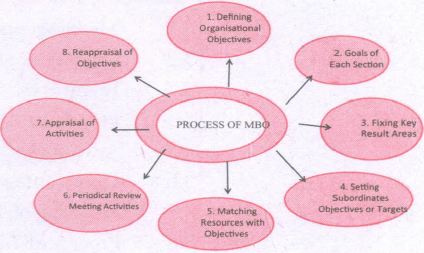
a) Dairy Entrepreneurship development scheme.
b) Project report.
5.
List down few examples of pure entrepreneurship.
6.
Explain the promotional functions of entrepreneur.(any 3)
7.
Distinguish between Bill of Exchange & Promissory Note.
8.
Discuss in detail the rights of an unpaid seller against the buyer personally.
9.
State any three impacts on Globalisation.
10.
State the framework of Corporate Governance in India.
11.
Does District Forum exceeds the claim limit of Rs 20 lakhs. Explain the condition.
12.
Define "Consumer Rights".
13.
Write the importance of consumerism. (any 3)
14.
Discuss the objectives E-Marketing. (any 3)
15.
What are the factors affecting Price of Product?
16.
Mention any three role of Marketer.
17.
Write down various steps in a training programme.
18.
Name the types of selection test?
19.
What is meant by job portals?
20.
Give two points of differences between HR and HRM.
21.
What is meant by Insiders trading?
22.
Explain Bull and Bear.
23.
What are the features of Certificate of Deposit?
24.
Write a note on National Clearance and Depository System (NCDS).
25.
Write a note on Secondary Market.
26.
What are the process involved in MBO?
27.
State the importance of Motivation.
28.
Differentiate management from Administration.(any 3)
1.
1. Poll means tendering or offering vote by ballot to a specially appointed officer, called the polling officer.
2. Under the Companies Act, poll means exercising a voting right in the proportion to shareholder's contribution to the paid up capital of a limited company having a share capital.
2.
(i) Alternate directors are appointed by the Board of Directors, as a substitute to a director who may be absent from India, for a period which is not less than three months.
(ii) The appointment must be authorised either by the Articles of Association of the company or by a passing a resolution in the General Meeting.
(iii) The alternative director is not a representative or agent of Original Director.
3.
Condition stipulated for capital subscription
(i) The fulfilling formalities to raise necessary capital.
(ii) Adhering to SEBI guidelines in this regard.
(iii) Fulfilling the condition for valid allotment by director.
(iv) Filing allotment return with the Registrar.
4.
(i) Dairy Entrepreneurship Development Scheme:
Dairy Entrepreneurship Development Scheme aims at helping entrepreneurs in the field of Agriculture, pets, and animals, and social impact to set up small dairy farms and incentives are provided to cover the cost of the required equipment or establishment of the facility.
(ii) Project Report:
(a) Project reports need to be prepared according to the format prescribed in the loan application form of term lending institutions.
5.
(i) They nurture desire of starting a particular venture and earning high profit there from and thus attaining a social status.
(ii) They apply their knowledge, skill and insight in making the venture a great success in order to earn maximum profit out of the venture.
6.
Promotional functions of entrepreneur
(i) Discovery of ldlea : The first and foremost function of cntrepreneur is idea gencration. Ideas can be generated through several ways like own experience and exposure of entreprencur, keen observation of environment, education, training, market survey, environmental scanning and so on.
(ii) Detailed Investigation: Entrepreneur has to analyse in detail the product proposes to produce.
(iv) Choice of form of enterprise: Entrepreneur has to choose the appropriate form of organisation suited to implement the venture. There are various forms of organisation namely sole proprietor, partnership, company and cO-operatives etc.
(iv) Preparation of Business Plan: Entrepreneur has to prepare a business plan or project report of the venture that he is proposing to take up.
(v) Mobilisation of Funds: Entrepreneur has to take steps to mobilize capital needed to implement the venture.Entrepreneur has to estimate the fixed capital and working capital required for running the project.
7.
| SI.No. | Basis of Difference | Bill of Exchange | Promissory Note |
|---|---|---|---|
| 1. | Nature of Undertaking | A bill of exchange contains an unconditional order to pay money. | A promissory note contains an unconditional undertaking to pay money. |
| 2. | No. of Parties | There are three parties in a bill of exchange drawer, drawee and payee. | In a promissory note, there are only two parties the maker and the payee. |
| 3. | Drawer of the instrument | A creditor draws a bill on a debtor. | A debtor executes a promissory note in favour of a creditor. |
| 4. | Conditionality | A bill may be accepted conditionally. | A note cannot be made conditional. |
8.
(i) Suit for price:
Where the ownership in the goods has passed to the buyer and the buyer refuses to pay for the goods, the seller can file a case against the buyer for the price.
(ii) Suit for Damages for Non-acceptance:
Where the buyer wrongfully refuses to accept the goods, the seller can sue him for damages for non-acceptance of the goods.
(iii) Suit for Cancellation of the Contract before the Due Date:
Where the buyer cancels the contract before the date of delivery, the seller may either treat the contract as continuing or wait till the due date or he can file a case against buyer immediately.
(iv) Suit for Interest:
Where there is a specific agreement between buyer and seller regarding charging interest on the price, the seller can recover interest from the buyer from the due date of contract till the date of payment of purchase price.
9.
(i) Corporations got a competitive advantage from lower operating costs, and access to new raw materials and additional markets.
(ii) Multinational corporations (MNCs) can manufacture, buy and sell goods world wide.
(iii) Globalisation has led to a boom in consumer products market.
10.
The Indian Corporate Governance framework requires listed companies,
(i) To have independent directors on the board; Atleast one-third of the directors have to be independent directors.
(ii) To have atleast one independent woman director.
(iii) To disclose all deals and payments to related parties.
(iv) To disclose details of managerial compensation
(v) CEO and CFO to sign stating that the governance norms have been complied with in the financial statements.
11.
No, The District Forum can entertain complaints within the territory of genuine district and, where the value of goods or services and the compensation if any claimed is less than Rs 20 Lakhs.
12.
Consumer right is interpreted as "the right to have information about the quality, potency, quantity, purity, price and standard of goods or services".
13.
The importance of consumerism lies in
(i) Awakening and uniting consumers.
(ii) Discouraging unfair trade practices.
(iii) Protecting against exploitation.
(iv) Awakening the government.
( v) Effective implementation of consumer protection laws.
14.
The following are the objectives of E-Marketing:
(i) Expansion of market share
(ii) Reduction of distribution and promotional expenses
(iii) Achieving higher brand awareness.
(iv) Strengthening data - base
15.
Factors affecting price of the product/service.
(a) Internal Factors:
(i) Marketing objectives
(ii) Marketing Mix strategy
(iii) Organisational considerations
(iv) Costs
(v) Organisation objectives
(b) External Factors:
(vi) The market and demand
(vii) Competition
(viii) Customers
(ix) Suppliers
(x) Legal factors
(xi) Regulatory factors
16.
(i) Instigator : As an instigator, marketer keenly watches the developments taking place in the market and identifies marketing opportunities emerging in the ever changing market. In such a case, marketer plays an instigator and leads the business towards new directions.
(ii) Innovator : Marketer seeks to distinguish his products/services byadding additional features to the existing product. He also does modifying the price structure, introducing new delivery pattern, creating new business models etc.
(iii) Integrator :Marketer playsa role ofintegrator in the sense that he collects feedback or vital inputs from channel members and consumers and provides products/service solutions to customers/consumers by co-ordinating multiple functions of organisation.
17.
Training is one of the planned activities to transfer or modify knowledge, skill and attitude. Every training programme must address certain vital issues listed below.
(i) Whom to train? :
Training department has to determine the candidates for whom the training should be imparted.
(ii) Who is the trainee? :
A person who is learning and practicing the skills of particular job is called trainee.
(iii) Who are trainers? :
Trainer is a person who teaches skills to employee and prepare them for a job activity.
(iv) What method will be used for training?:
Training segment should decide the appropriate method of training among the various methods of training available.
(v) What should be level the training? :
Training department should decide the level of training to be imparted to the employees.
(vi) Where to conduct the training programme?:
The venue of training and duration of training should be fixed based on the availability of note other related factors.
18.
Several tests are, conducted in the selection process. They are
(1)Ability Test
(i) Aptitude test
(ii) Achievement test
(iii) Intelligence test
(iv) Judgment test
(2)Personality Test
(i) Interest test
(ii) Personality test
(iii) Projective test
(iv) Altitude test
19.
(i) A job portal is a website which helps in the recruitment process by bringing together both the employer and the job seeking candidate.
(ii) The candidate will have to create his profile by uploading his resume which will be ther viewed by the employer as and when there is any opening.
(iii) It is a simplified process of job hunting.
(iv) A job portal also known as a career portal is a modern name for an online job board that helps applicants find jobs and aids employers in their quest to locate ideal candidates.
20.
| Human Resources | Human Resource Management | |
| 1. | In an organisation the human resource are the employees who are inevitable for the survival and success of the enterprise. | 1. Human Resource Management is a function of management concerned with hiring, motivating and maintaining people in an organisation. |
| 2. | Human resource created all other resource. | 2. It focuses on people in an organisation. |
21.
Insider trading means the buying and selling of securities by directors Promoters, etc. Who have access to some confidential information about the company and who wish to take advantage of the confidential information.
22.
Bull :
(a) A Bull or Tejiwala is an operator who expects a rise in prices of securities in the future.
(b) In anticipation of price rise he makes purchases of shares at present and other securities with the intention to sell at higher prices in future.
(c) He is called bull because just like a bull tends to throw his victim up in the air, the bull stimulates the price to rise. He is an optimistic speculator.
Bear :
(a) A Bear or Mandiwala speculator expects prices to fall in future and sells securities at present with a view to purchase them at lower prices in future.
(b) A bear does not have securities at present but sells them at higher prices in anticipation that he will supply them by purchasing at lower prices in future. A bear is a pessimistic speculator.
23.
Features of certificate of deposits are:
(i) Document of title to time deposit
(ii) It is unsecured negotiable instruments.
(iii) It is freely transferable by endorsement and delivery.
(iv) It is issued at discount to face value.
(v) It is repayable on a fixed date without grace days.
24.
(i) Under the scriplesss trading system, settlement of transactions relating to securities takes place through a book entry.
(ii) The entire scripless trading system comprises the following three segments.
(iii) National Trade Comparison and Reporting System, which prescribes the terms and conditions of contract for the securities market.
(iv) National Clearing System which aims at determining the net cash and stock liability of each broker on a settlement date.
(v) National Depository System, which arranges to provide for the transfer of ownership of securities in exchange on payment by book entry on electronic ledgers without any physical movement of transfer deed.
25.
(i) Secondary market may be defined as the market for old securities, in the sense that securities which are previously issued in the primary market are traded here.
(ii) The trading takes place between investors who follow the original issue in the primary market.
(iii) It covers both stock exchange and over the counter market.
26.
The MBO process is characterised by the balance of objectives of the organisation and individual. The process of MBO is explained below
(i) Defining Organisational Objectives
(ii) Goals of Each Section.
(iii) Fixing Key Result Areas
(iv) Setting subordinate objectives or targets.
(v) Matching resources with objective.
(vi) Periodical review meetings.
(vii) Appraisal of activities.
(viii) Re-appraisal of objectives.
27.
(i) The goals are achieved with the help of motivation.
(ii) Motivation includes increasing the speed of performance of a work and developing a willingness on the part of workers.
(iii) The workers expect, favourable climate conditions to work, fair treatment, monetary or non-monetary incentive, effective communication and gentleman approach.
28.
| Basis | Management | Administration | |
|---|---|---|---|
| 1. | Meaning | An organised way of managing people and things of a business is called management | The process of administering an organisation by a group of people is known as administration |
| 2. | Authority | Middle and lower level | Top level |
| 3. | Concerned with | Policy implementation | Policy formulation |
| 4. | Role | Executive | Decisive |
| 5. | Area of operation | It works under administration | It has full control over the activities of the organisation. |

12th Standard Syllabus & Materials
12th Standard
TN 12th Computer Applications களப்பெயர் முறைமை (DNS) Sample Question Papers Study Material - QB365 Set A
NEW12th Standard
TN 12th Computer Applications வலையமைப்பு எடுத்துக்காட்டுகள் மற்றும் நெறிமுறைகள் Sample Question Papers Study Material - QB365 Set A
NEW12th Standard
TN 12th Computer Applications கணினி வலையமைப்பு ஓர் அறிமுகம் Sample Question Papers Study Material - QB365 Set A
NEW12th Standard
TN 12th Computer Applications PHP-உடன் MySQL-ஐ இணைத்தல் Sample Question Papers Study Material - QB365 Set A



Tamilnadu Stateboard 12th Standard Subjects

Maths

Chemistry

Physics

Biology

Computer Science

Business Maths and Statistics

Economics
Commerce

Accountancy

History

Computer Applications
Biology
Computer Technology
Computer Applications
Computer Science
Business Maths and Statistics
Commerce
Economics
Maths
Chemistry
Physics
Computer Technology
History
Accountancy

Tamil

English

French
Tamilnadu Stateboard Standards

