
 100% FREE ACCESS
12th Standard Syllabus & Materials
12th Standard
TN 12th Computer Applications மின்னணு தரவு பரிமாற்றம் Sample Question Papers Study Material - QB365 Set A
NEW12th Standard
TN 12th Computer Applications மின் - வணிக பாதுகாப்பு அமைப்புகள் Sample Question Papers Study Material - QB365 Set A
NEW12th Standard
TN 12th Computer Applications மின்னணு செலுத்தல் முறைகள் Sample Question Papers Study Material - QB365 Set A
NEW12th Standard
TN 12th Computer Applications மின் - வணிகம் Sample Question Papers Study Material - QB365 Set A
NEW12th Standard
TN 12th Computer Applications திறந்த மூல கருத்துருக்கள் Sample Question Papers Study Material - QB365 Set A
NEW12th Standard
TN 12th Computer Applications வலையமைப்பு வடமிடல் Sample Question Papers Study Material - QB365 Set A

Published on: 01/09/2020
12th Standard Computer Science English Medium Model 3 Mark Creative Questions (New Syllabus) 2020
Download Tamil Nadu 12th Standard Computer Science question papers, model tests, one-mark questions, important questions, and public exam papers in PDF format. Free study materials and answer keys for TN State Board students.
Questions + Answers key
Take MCQ Computer Science Test
1.
How will you generate queries and retrieve data from the table? Explain?
2.
Write the function performed by DDL.
3.
Write a program to accept a string and print it in reverse order.
4.
Explain the data model that represent parent child relationship.
5.
List the buttons in matlibplot window.
6.
Write the advantages of DBMS.
7.
Explain how a connect to be made to a database (Academy through python SQlite3.
8.
Write a note on format () with an example.
9.
Write a note on "Required arguments".
10.
How to import modules in python?
11.
Why the following program give an error while displaying the value of n2. Give Reason.
12.
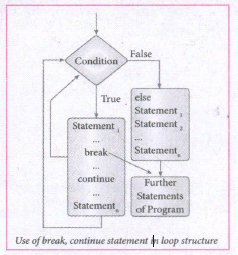
Draw a flowchart that illustrate how looping construct gets executed.
13.
Draw a flowchart that illustrates the working of while loop.
14.
Write a note on object.
15.
Write a program to read a file with default delimiter comma.
16.
How will create a set in python? Give an example.
17.
Write the output for the following.
list = [36, 12, 12]
(I) print (list. count (12))
(ii) print (list. index (12))
(iii) print (list. reverse ())
18.
What is the output for the following code?
19.
How will you find the length of a list? Explain with an example.
20.
Write a pseudo code for bubble sort algorithm
21.
Identify the type of literals.
(i) OX13B
(ii) i+34j
(iii) 12e05
(iv) 0346
22.
Write a Python program to get the following output.
Output:
Enter Number 1: 50
Enter Number 2: 50
The sum of 50 and 50 is 100
23.
Fill in the blanks.
>>> city = \(\overset { (1) }{ \_ \_ \_ \_ \_ } \) ("Enter your City")
Enter your city \(\overset { (2) }{ \_ \_ \_ \_ \_ } \)
>>> print ("I am from", \(\overset { (3) }{ \_ \_ \_ \_ \_ } \))
I am from Chennai
24.
Write a note on access modifiers of a class.
25.
Write a note on Data Abstraction.
26.
Explain the syntax of function definitions.
1.
One of the most important tasks when working with SQL is to generate Queries and retrieve data. A Query is a command given to get a desired result from the database table. The SELECT command is used to query or retrieve data from a table in the database. It is used to retrieve a subset of records from one or more tables. The SELECT command can be used in various forms:
Syntax of SELECT command:
SELECT < column-list > FROM < table-name > ;
(i) Table-name is the name of the table from which the information is retrieved.
(ii) Column-list includes one or more columns from which data is retrieved.
2.
(i) It should identify the type of data division such as data item, segment, record and database file.
(ii) It gives a unique name to each data item type, record type, file type and data base.
(iii) It should specify the proper data type.
(iv) It should define the size of the data item.
(v) It may define the range of values that a data item may use.
(vi) It may specify privacy locks for preventing unauthorized data entry.
3.
str1 = input ("Enter a string:")
Index=-1
while index >= -(lentstrl1)):
print ("Subscript[",index,"] :" + str1 [index])
index +=-1
Output:
Enter a string: welcome
Subscript [ -1 ] : e
Subscript [ -2 ] : m
Subscript [ -3 ] : 0
Subscript [ -4 ] : c
Subscript [ -5 ] : I
Subscript [ -6 ] : e
Subscript [ -7 ] : w
4.
(i) Hierarchical model was developed by IBM as Information Management System.
(ii) In Hierarchical model, data is represented as a simple tree like structure form. This model represents a one-to-many relationship ie parent-child relationship.
(iii) One child can have only one parent but one parent can have many children. This model is mainly used in IBM Main Frame computers.
5.
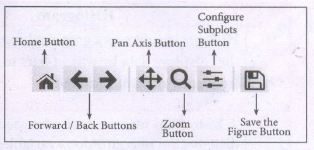
6.
Advantages of DBMS:
(i) Segregation of application program
(ii) Minimal data duplication or Data Redundancy
(iii) Easy retrieval of data using the Query Language
(iv) Reduced development time and maintenance
7.
# Python code to demonstrate table creation and insertions with SQL
# importing module
import sqlite3
# connecting to the database
connection = sqlite3.connect ("Academy.db")
# cursor
cursor = connection.cursor ( )
8.
| format () | Returns the output based on the given format. 1. Binary format. Outputs the number in base 2. 2. Octal format. Outputs the number in base 8. 3. Fixed-point notation. Displays the number as a fixed-point number. The default precision is 6. |
format (value [, format_spec]) | x=14 y=25 print ('x value in binary :',format(x,'b')) print ('y value in octal :',format(y,'o')) print('y value in Fixed-point no ',format(y,'f')) Output: x value in binary: 1110 y value in octal: 31 y value in Fixed-point no: 25.000000 |
9.
(i) "Required Arguments" are the arguments passed to a function in correct positional order. Here, the number of arguments in the function call should match exactly with the function definition.
(ii) Atleast one parameter to prevent syntax errors to get the required output.
(iii) Example:
def printstring(str):
print ("Example - Required arguments")
print (str)
return
# Now you can call printstring() function
printstring ("Welcome")
Output:
Example - Required arguments
Welcome
10.
(i) We can import the definitions inside a module to another module. We use the import keyword to do this.
(ii) Using the module name we can access the functions defined inside the module. The dot (.) operator is used to access the functions. The syntax for accessing the functions from the module is
<module name>. <function name>
(iii) Example: >>> factorial.fact(5)
11.
class Sample:
def _init_(self, n1, n2):
self.n1=n1
self._n2=n2
def display(self):
print("Class variable 1 = ", self.n1)
print("Class variable 2 = ", self._n2)
S=Sample(12,14)
S.display()
print("Value 1 = ", S.n1)
print("Value 2 = ". S._n2)
Reason: The print statements defined within class will successfully display the values of n1 and n2, even though the class variable n2 is private because, in this case, n2 is called by a method defined inside the class. But, when we try to access the value of n2 from outside the class Python throws an error because, private variable cannot be accessed from outside the class.
12.
13.
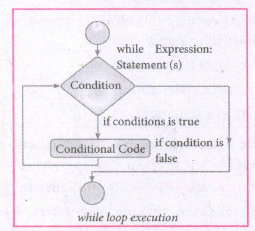
14.
(i) Object is a collection of data and function that act on those data. Class is a template for the object
(ii) According to the concept of Object Oriented Programming, objects are also called as instances of a class or class variable.
(iii) In Python, everything is an object. For example, all integer variables that we use in our program is an object of class into Similarly all string variables are also object of class string.
15.
#importing csv
import csv
#opening the csv file which is in different location with read mode
with open('c:\\pyprg\\ sample1.csv', 'r') as F:
#other way to open the file is f= ('c:\\pyprg\\ sample1.csv', 'r')
reader = csv.reader(F)
# printing each line of the Data row by row
print(row)
F.close ( )
16.
(i) A set is created by placing all the elements separated by comma within a pair of curly brackets. The set( ) function can also used to create sets in Python.
(ii) Syntax:
See Variable = {E1, E2, E3 .......... En}
(iii) Example:
> > > S1 = {1, 2, 3, 'A', 3.14}
> > > print(S1)
{1, 2, 3, 3.14, 'A'}
> > > S2={1, 2, 2, 'A', 3.14}
> > > print(S2)
{1, 2, 'A', 3.14}
In above examples, the set S1 is created with different types of elements without duplicate values. Whereas in the set S2 is created with duplicate values, but Python accepts only one element among the duplications, which means python removed the duplicate value because a set in Python cannot have duplicate elements.
17.
Output:
(i) 2
(ii) 1
(iii) [12, 12, 36]
18.
MyList = [2, 4, 5, 8, 10]
print ("MyList elements before update ... ")
for x in MyList:
print (x)
MyList[2] = 6
print ("MyList elements after updation ... ")
for y in MyList:
print (y)
Output:
MyList elements before update ...
2
4
5
8
10
MyList elements after updation ...
2
4
6
8
10
19.
(i) The len( ) function in Python is used to find the length of a list. (i.e., the number of elements in a list).
(ii) Usually, the len( ) function is used to set the upper limit in a loop to read all the elements of a list.
(iii) If a list contains another list as an element, len( ) returns that inner list as a single element.
(iv) Example: Accessing single element
> > > MySubject = ['Tamil', 'English', 'Comp', 'Science', 'Maths']
> > > len(MySubject)
4
20.
(i) Start with the first element i.e., index = 0, compare the current element with the next element of the array.
(ii) If the current element is greater than the next element of the array, swap them.
(iii) If the current element is less than the next or right side of the element, move to the next element. Go to Step 1 and repeat until end of the index is reached.
21.
(i) Hexadecimal literal
(ii) Complex literal
(iii) Floating point literal
(iv) Octal literal
22.
x = int(input ("Enter Number 1")
y = int(input("Enter Number 2")
print ("The sum of", x, " and ", y, "is", x+y)
23.
(1) input
(2) Chennai
(3) City
24.
(i) Public members (generally methods declared in a class) are accessible from outside the class.
(ii) Protected members of a class are accessible from within the class and are also available to its sub-classes.
(iii) Private members of a class are denied access from outside the class. They can be handled only from within the class.
25.
(i) Data abstraction is supported by defining an abstract data type (ADT) which is a collection of constructors and selectors.
(ii) Constructors create an object, bundling together different pieces of information, while selectors extract individual pieces of information from the object.
26.
(i) The syntax to define functions is close to the mathematical usage: the definition is introduced by the keyword let, followed by the name of the function and its arguments; then the formula that computes the image of the argument is written after an = sign. If you want to define a recursive function: use "let rec" instead of "let".
(ii) Syntax: The syntax for function definitions:
let rec fn a1 a2 ... an :;= k
(iii) Here the 'fn' is a variable indicating an identifier being used as a function name. The names 'a1' to 'an' are variables indicating the identifiers used as parameters. The keyword 'rec' is required if 'fn' is to be a recursive function; otherwise it may be omitted.

12th Standard Syllabus & Materials
12th Standard
TN 12th Computer Applications களப்பெயர் முறைமை (DNS) Sample Question Papers Study Material - QB365 Set A
NEW12th Standard
TN 12th Computer Applications வலையமைப்பு எடுத்துக்காட்டுகள் மற்றும் நெறிமுறைகள் Sample Question Papers Study Material - QB365 Set A
NEW12th Standard
TN 12th Computer Applications கணினி வலையமைப்பு ஓர் அறிமுகம் Sample Question Papers Study Material - QB365 Set A
NEW12th Standard
TN 12th Computer Applications PHP-உடன் MySQL-ஐ இணைத்தல் Sample Question Papers Study Material - QB365 Set A



Tamilnadu Stateboard 12th Standard Subjects

Maths

Chemistry

Physics

Biology
Computer Science

Business Maths and Statistics

Economics

Commerce

Accountancy

History

Computer Applications
Biology
Computer Technology
Computer Applications
Computer Science
Business Maths and Statistics
Commerce
Economics
Maths
Chemistry
Physics
Computer Technology
History
Accountancy

Tamil

English

French
Tamilnadu Stateboard Standards
