
 100% FREE ACCESS
12th Standard Syllabus & Materials
12th Standard
TN 12th Computer Applications மின்னணு தரவு பரிமாற்றம் Sample Question Papers Study Material - QB365 Set A
NEW12th Standard
TN 12th Computer Applications மின் - வணிக பாதுகாப்பு அமைப்புகள் Sample Question Papers Study Material - QB365 Set A
NEW12th Standard
TN 12th Computer Applications மின்னணு செலுத்தல் முறைகள் Sample Question Papers Study Material - QB365 Set A
NEW12th Standard
TN 12th Computer Applications மின் - வணிகம் Sample Question Papers Study Material - QB365 Set A
NEW12th Standard
TN 12th Computer Applications திறந்த மூல கருத்துருக்கள் Sample Question Papers Study Material - QB365 Set A
NEW12th Standard
TN 12th Computer Applications வலையமைப்பு வடமிடல் Sample Question Papers Study Material - QB365 Set A

Published on: 12/02/2020
12th standard Economics All Chapter Book back and Creative Question-I-2019-2020
Download Tamil Nadu 12th Standard Economics question papers, model tests, one-mark questions, important questions, and public exam papers in PDF format. Free study materials and answer keys for TN State Board students.
Questions + Answers key
Take MCQ Economics Test
1.
The following is not a characteristic of a tax.
It is a compulsory payment
Every tax involves a sacrifice by tax payer
There is a quid-pro-quo between the tax payer and the Government
Refusal to pay tax is a punishable offence.
2.
Match the correct codes
| 1 | Commercial banks issue letters of credit to their customers to certify their creditworthiness | i | Issuing Traveler’s Cheques |
| 2 | It includes services, such as debit cards, credit card and Internet banking | ii | General Utility Functions |
| 3 | Banks issue traveler’s cheques to individuals for traveling outside the country | iii | Electronic Banking |
| 4 | It implies that commercial banks provide some utility services to customers by performing various functions | iv | Letter of Credit |
(1) – (i) (2) – (ii) (3) – (iv) (4) – (iii)
(1) – (ii) (2) – (iii) (3) – (iv) (4) – (i)
(1) – (iv) (2) – (iii) (3) – (i) (4) – (ii)
(1) – (i) (2) – (ii) (3) – (iii) (4) – (iv)
3.
During the past 67 years of planning, the population of India has increased from 36.1 crore in…………, to 121 crore in………..?
1951 and 2011
1981 and 2011
1991 and 2018
1971 and 2001
4.
Who is associated with the doctrine of “monetarism” and who received Nobel prize in 1976?
Milton Friedman
Joseph Schumpeter
John Stuart Mill
Keynes
5.
Demand Deposits refers to deposits that can be withdrawn by individuals _____ to the bank.
without any prior notice
with prior notice
both a and b are correct
none of the above
6.
Which of the following is not one of the international institutions established in the late 1940s?
The General Agreement on Tariffs and Trade (GATT)
The World Bank
The International Monetary Fund (IMF)
The World Trade Organization
7.
Which of the following statements is not correct?
Both the IMF & IBRD have headquarters in Washington
Both IMF & IBRD are the Constituent organizations of United Nations Organization
IBRD is also called World Bank
India's vote share in the International Monetary Fund is 10%
8.
Inflation is measured by the
I. consumer price index (CPI).
II. GDP deflator.
III. current account.
IV. depreciation.
I and II only.
I and III only.
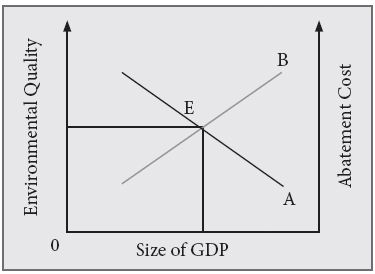
III and IV only.
I, II and III.
9.
Which of the following was not a classical economist?
Adam Smith
Thomas R. Malthus
John Stuart Mill
John Maynard Keynes
10.
In classical theory of employment, there is the possibility of:
Voluntary unemployment
No unemployment
Involuntary unemployment
Disguised unemployment
11.
_____ is a branch of economics that provides a framework for analyzing money.
Fiscal Economics
Micro Economics
Monetary Economics
International Economics
12.
GNI Per Capita of $906 and below refers to ___________?
High Income Countries
Middle Income Countries
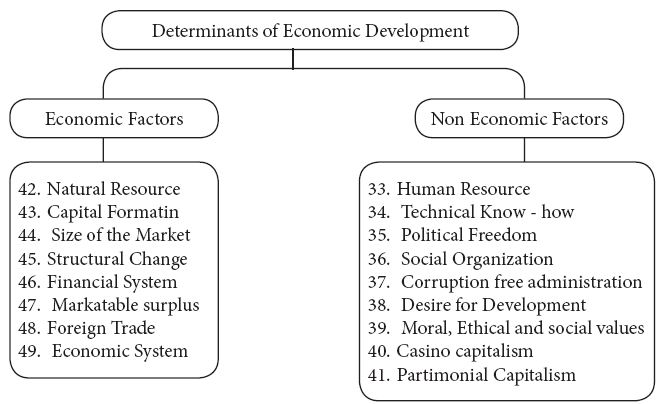
Poor Countries
Low Income Countries
13.
The value of a correlation is reported by a researcher to be r = −0.5. Which of the following statements is correct?
The x-variable explains 25% of the variability in the y-variable
The x-variable explains −25% of the variability in the y-variable.
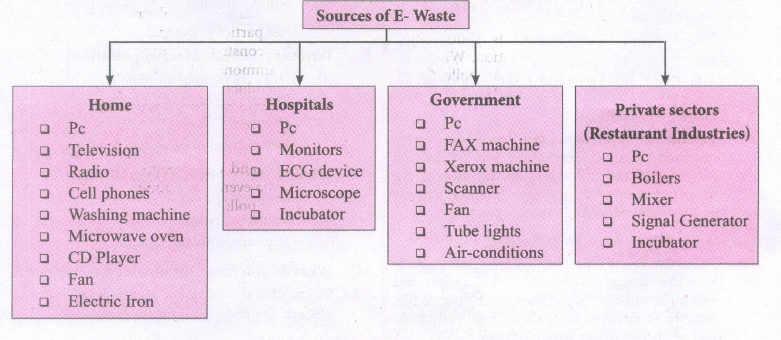
The x-variable explains 50% of the variability in the y-variable
The x-variable explains −50% of the variability in the y-variable.
14.
GDP Deflator is equal to________
\(\cfrac { (NominalGDP) }{ (NominalGDP) } \times 100\)
\(\cfrac { (RealGDP) }{ (NominalGDP) } \times 100\)
\(\cfrac { (NominalGNP) }{ (RealGNP) } \times 100\)
\(\cfrac { (NominalNDP) }{ (RealNDP) } \times 100\)
15.
________ are further classified as nominal and rank data. Eg. Gender, Community, honesty.
Raw data
Qualitative data
Refined data
Quantitative data
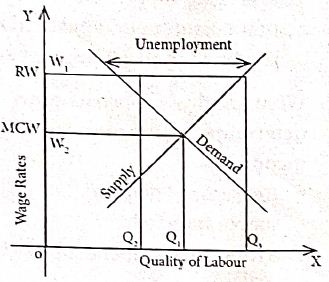
16.
Which is not a limitation of statistics?
Statistics is not suitable to the study of qualitative phenomenon
Statistical laws are not exact
Statistical collection should be systematic with a predetermined purpose
Statistics is only one of the methods of studying a problem
17.
Windfall gains such as lotteries are also not to be included as they do not represent receipts from any _________ productive activity
current
previous
future
none of the above
18.
In the context of Labour income, which of the following is wrong?
Wages and salaries
fringe benefits
employer’s contribution to social security
state insurance
19.
The Heckscher-Ohlin assumes that _______ are identical between countries
tastes and preferences
technology levels
factor endowments
both (a) and (b)
20.
In the classical model of Ricardo, the direction of trade is determined by:
absolute advantage
comparative advantage
physical advantage
which way the wind blows
21.
Keynes considered subjective and objective factors:
Important determinants of consumption
Unimportant determinants of consumption
Determinants of investment
Determinants of business’s willingness to pay
22.
Find the relevant term of the following statement. “When some residents of a locality hire a private security agency to patrol their area, the other residents of the area also benefit from better security without bearing cost”
NegativeProduction Externality
Negative Consumption Externality
Positive production Externality
Positive Consumption Externality
23.
Environmental Economics is the subset of economics that is concerned with the efficient allocation of _______________ resources.
economical
environmental
natural
industrial
24.
Match the correct codes
| 1 | Y = C + I | i | Don’t exist |
| 2. | Y = C + I + G | ii | Two Sector |
| 3. | Y = C + I + G + (X – M) | iii | Three Sector |
| 4. | Y = C | iv | Four Sector |
(1) – (i) (2) – (ii) (3) – (iv) (4) – (iii)
(1) – (ii) (2) – (iii) (3) – (iv) (4) – (i)
(1) – (iv) (2) – (iii) (3) – (i) (4) – (ii)
(1) – (i) (2) – (ii) (3) – (iii) (4) – (iv)
25.
Arrange the order of accelerator effects Increase in consumer demand Films get close to fill capacity Films invest to meet rising demand
I, II, III
II, I, III
III, II, I
III, I, II
26.
In the circular-flow diagram
Firms are sellers in the resource market and the product market
Households are sellers in the resource market
Firms are buyers in the product market
Spending on goods and services flow from firms to households
27.
The modern theory of international trade explains the causes for …………….?
comparative cost difference
absolute cost difference
comparative cost similarities
absolute cost similarities
28.
The value of multiplier itself depends on ______ or marginal propensity to consume.
savings function
investment function
consumption function
interest function
29.
Pick basic composition of three sector of model of economy
Y = C + I + G + (X – M)
Y = C + I + G
Y = C + S
Y = C + I
30.
_____________ is the example of negative consumption externality.
Non-smoker
Smoker
Chain smoker
Rare-smoker
31.
The International Monetary Fund was established in ________.
1985
1940
1945
1918
32.
The vicious circle of poverty was introduced by______
Adam smith
Nurkse
Dalton
Robbins
33.
In capitalism, the allocation of resources and distribution of rewards are done through the ____ system.
supply
demand
price
curve
34.
Classicism theory is based on _________ equilibrium.
Very short run
Short run
Long run
very long run
35.
"The purchasing power of money" was a book published by________in 1911
J.M. Keynes
Irving Fisher
Adam smith
Ricardo
36.
In the regression equation \(Y={ \beta }_{ 0 }+{ \beta }_{ 1 }{ X }_{ , }\) the X is called:
Independent variable
Dependent variable
Continuous variable
None of the above
37.
Sources of secondary data are______
Published sources
Unpublished sources
Neither published nor unpublished sources
Both (a) and (b)
38.
Who wrote the book 'The Road to Serfdom'?
Friedrich Hayek
H.R. Hicks
David Ricardo
Thomas Robert Malthus
39.
The non-economic determinant of economic development
Natural resources
Human resource
Capital formation
Foreign trade
40.
One of the most important market failures is caused by __________
Positive externalities
Negative externalities
Both
None of the above
41.
Ecosystem is smallest unit of
Ionosphere
Lithosphere
Biosphere
Mesosphere
42.
Finance Commission determines
The finances of Government of India
The resources transfer to the states
The resources transfer to the various departments
None of the above
43.
The difference between total expenditure and total receipts including loans and other liabilities is called
Fiscal deficit
Budget deficit
Primary deficit
Revenue deficit
44.
SAARC Agricultural Information Centre (SAle) works as a central information institution for agriculture related resources was founded on
1985
1988
1992
1998
45.
46.
Benefits of FDI include, theoretically
Boost in Economic Growth
Increase in the import and export of goods and services
Increased employment and skill levels
All of these
47.
If there is an imbalance in the trade balance (more imports than exports), it can be reduced by
decreasing customs duties
increasing export duties
stimulating exports
stimulating imports
48.
Monetary policy his formulated by.
Co-operative banks
Commercial banks
Central Bank
Foreign banks
49.
Repo Rate means.
Rate at which the Commercial Banks are willing to lend to RBI
Rate at which the RBI is willing to lend to commercial banks
Exchange rate of the foreign bank
Growth rate of the economy
50.
During inflation, who are the gainers?
Debtors
Creditors
Wage and salary earners
Government
51.
Paper currency system is managed by the______.
Central Monetary authority
State Government
Central Government
Banks
52.
According to Keynes, investment is a function of the MEC and ____.
Demand
Supply
Income
Rate of interest
53.
The MPC is equal to :
Total spending / total consumption
Total consumption / total income
Change in consumption / change in income
none of the above
54.
Say’s law stressed the operation of________ in the economy
Induced price mechanism
Automatic price mechanism
Induced demand
Induced investment
55.
If every able bodied person who is willing to work at the prevailing wage rate is employed called _______.
Full employment
Under employment
Unemployment
Employment opportunity
56.
When net factor income from abroad is deducted from NNP, the net value is__________
Gross National Product
Disposable Income
Net Domestic Product
Personal Income
57.
National income is a measure of the__________ performance of an economy
Industrial
Agricultural
Economic
Consumption
58.
Quantity of a commodity accumulated at a point of time is termed as ____________..
production
stock
variable
flow
59.
Macro economics is a study of_________
individuals
firms
a nation
aggregates
60.
What is Repudiation?
61.
Differential in short – NEFT and RTGS.
62.
What is a debit card?
63.
What are the major achievements of WTO?
64.
What is the multi fibre agreement?
65.
What is the key difference between comprehensive and partial plan?
66.
Write the Fisher’s Extended Form of equation.
67.
Explain paper currency Standard.
68.
What is Technical Unemployment?
69.
What is Cyclical Unemployment?
70.
Comment – “Statistics and Education”
71.
What do you understand by Net Factor Income from Abroad (X-M)?
72.
What is the features of GDPMP?
73.
What are the types Trade?
74.
Draw the diagram depicts the interdependence of economics and environment.
75.
Increase in income always leads to an increase in both consumption and saving. – Explain.
76.
List out the assumption of psychological Law of Consumption.
77.
What do you mean by development?
78.
What is unemployment?
79.
Write a note on Central Planning?
80.
Write the equation for Four-sector economy.
81.
Give the countries which have communism.
82.
What do you mean by Socialism?
83.
Define Correlation.
84.
What do you mean by Inferential Statistics?
85.
Distinguish between economic growth and development.
86.
What are environmental goods? Give examples
87.
Differentiate tax and fee.
88.
What is meant by Exchange Rate?
89.
Define Commercial banks.
90.
What is barter?
91.
What is consumption function?
92.
List out the assumptions of Say’s law.
93.
What is the main feature of rural unemployment ?
94.
Write the formula for calculating GNP.
95.
Define ‘Economic Model'.
96.
Discuss the Primary Functions.
97.
List the economic and non-economic determinants of economic development.
98.
What is money? Explain the three functions that money performs. Which one is the primary function of money?
99.
What are the economic costs of unemployment?
100.
State the types of correction on the basis of number of variables studied.
101.
Compare and contrast different measures of GDP calculations.
102.
List of uses of multiplier.
103.
Draw the classification of sources of e-waster.
104.
What are the main sources of internal public debt?
105.
What are the Determinants of Exchange Rates?
106.
List out the limitations of Modern Theory of International Trade?
107.
Outline major demerits of capitalism.
108.
Mention the uses of Regression Analysis.
109.
How would you break the vicious circle of poverty?
110.
What are the causes of water pollution?
111.
Describe Canons of Taxation.
112.
What are trade blocks?
113.
State the objectives of Foreign Direct Investment.
114.
Give a brief note on NBFI.
115.
Explain disinflation.
116.
Differentiate autonomous and induced investment.
117.
According to classical theory of employment, how wage reduction solve the problem of unemployment diagramatically explain.
118.
Explain briefly NNP at factor cost.
119.
Distinguish between Capitalism and Globalism.
120.
Find the Pearsonian correlation coefficient between sales (in thousand units) and expenses (in thousand rupees) of the following 10 firms:
| Firm | 1 | 2 | 3 | 4 | 5 | 6 | 7 | 8 | 9 | 10 |
| Sales: | 50 | 50 | 55 | 60 | 65 | 65 | 65 | 60 | 60 | 50 |
| Expenses: | 11 | 13 | 14 | 16 | 16 | 15 | 15 | 14 | 13 | 13 |
121.
In each of the following scenarios, classify the individual as frictionally, structurally, or cyclically unemployed. Explain your classification.
(a) There has been a general economic slow down. Because of weak demand, Kumar has lost his portering job at the railway station.
(b) Sathish, a newly qualified dental graduate, is looking for a place to set up practice.
(c) Latha is thrown out of work by the introduction of a more mechanized production process.
(d) Devi, a computer programmer with a large bank, quit her job two months ago in search of a better-paid programming position. She is still looking.
122.
Elaborate various Gains from International Trade?
123.
Consider the following are the only transactions take place in an economy:
(i) Industry A imports goods worth Rs. 100. It sells goods worth Rs. 400 to industry B, goods worth Rs. 200 to industry C, and goods worth Rs. 1,000 for private consumption.
(ii) Industry B sells goods worth Rs. 500 to industry C and goods worth Rs. 800 for private consumption.
(iii) Industry C sells goods worth Rs. 600 to private consumption. and exports goods, valued at Rs. 500.
(iv) Depreciation cost during the year amounts to Rs. 100,
(v) Government realises taxes of the value of Rs. 100. Calculate the following with the help of net value added method from the data given above
(a) GNPMP
(b) GNPFC
(c) NNPMP and
(d) NNPFC
124.
Derive the value of the multiplier assuming the basic form of the consumption function as C = a + bY where "a" is autonomous consumption and "b" is the marginal propensity to consume. You may assume a two-sector economy.
125.
Discuss the features of Capitalist economy.
126.
What are the advantages of GST?
127.
Explain non-economic factors determining development?
128.
What are the objectives of ARDC? Explain.
129.
What are the differences between MEC and MEI.
1.
(a)
It is a compulsory payment
2.
(a)
(1) – (i) (2) – (ii) (3) – (iv) (4) – (iii)
3.
(a)
1951 and 2011
4.
(a)
Milton Friedman
5.
(a)
without any prior notice
6.
(d)
The World Trade Organization
7.
(d)
India's vote share in the International Monetary Fund is 10%
8.
(a)
I and II only.
9.
(d)
John Maynard Keynes
10.
(a)
Voluntary unemployment
11.
(c)
Monetary Economics
12.
(d)
Low Income Countries
13.
(a)
The x-variable explains 25% of the variability in the y-variable
14.
(a)
\(\cfrac { (NominalGDP) }{ (NominalGDP) } \times 100\)
15.
(b)
Qualitative data
16.
(c)
Statistical collection should be systematic with a predetermined purpose
17.
(a)
current
18.
(d)
state insurance
19.
(d)
both (a) and (b)
20.
(b)
comparative advantage
21.
(b)
Unimportant determinants of consumption
22.
(d)
Positive Consumption Externality
23.
(b)
environmental
24.
(b)
(1) – (ii) (2) – (iii) (3) – (iv) (4) – (i)
25.
(a)
I, II, III
26.
(b)
Households are sellers in the resource market
27.
(a)
comparative cost difference
28.
(c)
consumption function
29.
(a)
Y = C + I + G + (X – M)
30.
(a)
Non-smoker
31.
(c)
1945
32.
(b)
Nurkse
33.
(c)
price
34.
(c)
Long run
35.
(b)
Irving Fisher
36.
(a)
Independent variable
37.
(d)
Both (a) and (b)
38.
(a)
Friedrich Hayek
39.
(b)
Human resource
40.
(b)
Negative externalities
41.
(c)
Biosphere
42.
(b)
The resources transfer to the states
43.
(a)
Fiscal deficit
44.
(b)
1988
45.
(c)
46.
(d)
All of these
47.
(c)
stimulating exports
48.
(c)
Central Bank
49.
(b)
Rate at which the RBI is willing to lend to commercial banks
50.
(a)
Debtors
51.
(a)
Central Monetary authority
52.
(d)
Rate of interest
53.
(c)
Change in consumption / change in income
54.
(b)
Automatic price mechanism
55.
(a)
Full employment
56.
(c)
Net Domestic Product
57.
(c)
Economic
58.
(b)
stock
59.
(d)
aggregates
60.
(i) It is the easiest way for the Government to get rid of the burden of payment of a loan.
(ii) In such cases, the Government does not recognise its obligation to repay the loan.
(iii) It is certainly not paying off a loan but destroying it.
(iv) However, in normal case the Government does not do so; if done it will lose its credibility.
61.
| BASIS | NEFT | RTGS |
| Meaning | NEFT is a system of online money transfers where the payment is made in a near real-time basis. | RTGS is an electronic payment system where the funds are transferred at the same time when the transaction took place. |
| Introduced in | 2005 | 2004 |
| Ceiling limit | No such limit, but the maximum amount per transaction is restricted to Rs. 50,000. | Minimum - 2 lakh, Maximum - No limit |
| Appropriate for | Small value transaction | High-value transaction. |
| Processing | Comparatively Slow | Fast |
62.
Debit card is a card allowing the holder to transfer money electronically from their bank account when making a purchase.
63.
1) Use of restrictive measures for BoP problems has declined markedly;
2) Services trade has been brought into the multilateral system and many countries, as in goods, are opening their markets for trade and investment;
3) The trade policy review mechanism has created a process of continuous monitoring of trade policy developments.
64.
(i) Multi fibre agreement governed the world trade in textiles and garments since 1974.
(ii) It imposed quotas on export of textiles by developing nations to the developed countries.
(iii) This quota system was to be phased out over a period of ten years. This was beneficial to India.
65.
| Comprehensive Plan | Partial Plan |
|---|---|
| General planning which concerns itself with the major issues for the whole economy is known as comprehensive planning | Partial planning is to consider only the few important sectors of the economy |
66.
Fisher extended his original equation of exchange to include bank deposits M1 and its velocity V1. The revised equation was:
\(\frac { PT=MV+{ M }^{ 1 }{ V }^{ 1 } }{ T } \)
67.
The paper currency standard refers to the monetary system in which the paper currency notes issued by the Treasury or the Central Bank or both circulate as unlimited legal tender.
68.
i. Modern technology being capital intensive requires lesslabourers and contributes to technological unemployment.
ii. Now a days, invention and innovations lead to the adoption of new techniques there by the existing workers are retrenched
69.
1. Cyclical unemployment exists during the downturn phase of trade cycle in the economy.
2. In a business cycle during the period of recession and depression, income and output fall leading to widespread unemployment.
70.
1. Statistics is necessary for the formulation of policies to start new course, according to the changing environment.
2. There are many educational institutions owned by public and private engaged in research and development work to test the past knowledge and evolve new knowledge.
3. These are possible only through statistics.
71.
Net factor income from abroad is the difference between the income received from abroad for rendering factor services by the normal residents of the country to the rest of the world and income paid for the factor services rendered by nonresidents in the domestic territory of a country
72.
The main features of GDPMP are:
1. It includes only final goods and services produced in the domestic territory of a country;
2. It includes consumption of fixed capital (depreciation);
3. It is estimated at the prevailing prices.
| BASIS FOR COMPARISON |
NOMINAL GDP | REAL GDP |
| Meaning | The aggregate market value of the economic output produced in a year within the boundaries of the country is known as Nominal GDP. | Real GDP refers to the value of economic output produced in a given period, adjusted according to the changes in the general price level. |
| What is it? | GDP without the effect of inflation. | Inflation adjusted GDP |
| Expressed in | Current year prices | Base year prices or constant prices |
| Value | Higher | Generally, lower |
73.
a) Internal Trade and
b) International Trade.
74.
The interdependence of economics and environment is given in the figure
75.
This means that increased income is unlikely to lead to fall in either consumption or saving. Thus with increased income both consumption and saving increase.
76.
(i) Ceteris paribus (constant extraneous variable).
(ii) Existence of Normal conditions.
(iii) Existence of a Laissez-faire capitalist economy.
77.
The concept "development" refers to the structural changes towards betterment.
78.
Unemployment is problem faced when there are people, who are willing to work and able to work but can't find suitable job.
79.
(i) Planning is an integral part of a socialist economy.
(ii) In socialist economy all decisions are undertaken by the Central Planning Authority.
80.
y = C + I + G + (X - M)
C - Consumption Expenditure (Households)
I - Investment Expenditure (Firms)
G - Government Expenditure (Government)
(X-M) - Net Exports (External Sector)
81.
i) North Korea
ii) China
iii) Venezuela
82.
(i) Socialism refers to a system of total planning.
(ii) Public ownership and state control on economic activities.
83.
(i) Correlation is a statistical device that helps to analyse the covariation of two or more variables.
(ii) Correlation is the relationship between two or more variables which vary with the other in the same or the opposite direction.
84.
The branch of statistics concerned with using sample data to make an inference about a population of data is called Inferential Statistics.
85.
| Economic Growth | Economic Development |
|---|---|
| Deals with the problems of develop ed countries |
Deals with the problems of UDCs (Under Developed Countries) |
| Change is gradual and stead | Change is discontinuous and s spontaneous |
| Means more output | Means not only more output but also its composition. |
| Concerns Quantitative aspects i.e. increase in per capita income | Quantitative as well as Qualitative |
| Narrow Concept | Wider Concept Development = Growth + Change. |
86.
Environmental goods are typically non-market goods, including clear air, clean water, landscape, green transport infrastructure, public parks, rivers, mountains, forest and beaches.
87.
(i) Both are source of public revenue.
(ii) Tax is a compulsory payment but the tax payer cannot claim any specific benefit by paying a tax.
(iii) Fee does not involve compulsion.
(iv) Government provides certain services (e.g.) driving license and charges a fee for it.
88.
The rate at which one currency is exchanged for another currency.
89.
A Commercial bank is a financial institution that accepts deposits and advances loans and are profit motivated.
90.
(i) Exchange of goods for goods.
(ii) Commodities and services were directly exchanged for other commodities and services.
91.
(i) The consumption function or propensity to consume refers to income consumption relationship.
(ii) It is a "functional relationship between two aggregates viz., total consumption and gross national, income".
92.
1. No single buyer or seller can affect the price.
2. Full employment
3. People are motivated by self interest Market forces determine everything right.
4. Perfect competition exists in labour and product market.
5. There is wage price flexibility.
6. Money acts as medium of exchange.
7. Long run analysis.
8. No overproduction or unemployment.
93.
The major feature of rural unemployment is the existence of unemployment in the form of disguised unemployment and seasonal unemployment.
94.
\(\mathrm{GNP}=\mathrm{C}+\mathrm{I}+\mathrm{G}+(\mathrm{X}-\mathrm{M})+(\mathrm{R}-\mathrm{P})\) or \(\mathrm{GNP}_{\mathrm{MP}}=\mathrm{GDP}_{\mathrm{MP}}\) + Net Factor income from Abroad.
95.
(i) A Model is a simplified representation of real situation.
(ii) Economists use models to describe economic activities, their relationships and their behaviour.
96.
Accepting Deposits
It implies that commercial banks are mainly dependent on public deposits.
There are two types of deposits, which are discussed as follows
(i) Demand Deposits
It refers to deposits that can be withdrawn by individuals without any prior notice to the bank. In other words, the owners of these deposits are allowed to withdraw money anytime by writing a withdrawal slip or a cheque at the bank counter or from ATM centres using debit card.
(ii) Time Deposits
It refers to deposits that are made for certain committed period of time. Banks pay higher interest on time deposits. These deposits can be withdrawn only after a specific time period by providing a written notice to the bank.
97.
98.
(i) Money is anything that is generally accepted as a medium of exchange.
(ii) Money must be able to act as a medium of exchange, a store of value, and a unit of account. For money to act as a medium of exchange, sellers must generally accept and buyers must generally use it to pay for goods and services.
(iii) For money to serve as a store of value, it can be used to transport purchasing power from one period of time to another.
(iv) For money to serve as a unit of account, it must function as a consistent way of quoting prices.
(v) The primary function of money is to serve as a medium of exchange.
99.
i. Whenever resources are unemployed there is always some sort of waste.
ii. In the case of unemployment it manifests itself in the potential production of goods and services irretrievably lost.
iii. There are also other costs such as increased burdens to taxpayers to fund unemployment compensation programs and the individual cost in terms of a loss of self esteem and dignit
100.
There are three types based upon the number of variables studied as
a) Simple Correlation
b) Multiple Correlation
c) Partial Correlation
Simple Correlation:
If only two variables are taken for study then it is said to be simple correlation. Ex. Y= a + bx
Multiple Correlations:
If three or more than three variables are studied simultaneously, then it is termed as multiple correlation.
Ex: Determinants of Quantity demanded
Qd = f (P, Pc, Ps, t, y)
Where Qd stands for Quantity demanded, f stands for function.
P is the price of the goods,
Pc is the price of competitive goods
Ps is the price of substituting goods
t is the taste and preference
y is the income.
Partial Correlation:
If there are more than two variables but only two variables are considered keeping the other variables constant, then the correlation is said to be Partial Correlation
101.
| GDP (Expenditure) | GDP (Factor Incomes) | GDP (Value of Output) |
|---|---|---|
| 1. Consumption 2. Government 3. Spending 4. Investment spending 5. Change in value of stocks 6. Exports 7. Imports 8. GDP (Known as aggregate demand) |
(i) Income from People in jobs and in self employment (eg. wages and Salaries) (ii) Profit of private sector business (iii) Rent income from the ownership of land |
(i) Value added from each of the main economic sectors (ii) These sectors are (iii) Primary (iv) Secondary (v) Manufacturing (vi) Quaternary |
| Government spending | Profits of private sector business |
102.
Uses of multiplier
1. Multiplier highlights the importance of investment in income and employment theory.
2. The process throws light on the different stages of trade cycle.
3. It also helps in bringing the equality between S and I.
4. It helps in formulating Government policies.
5. It helps to reduce unemployment and achieve full employment.
103.
104.
(i) Individuals purchase government bonds and securities.
(ii) Banks, both private and public buy bonds from the government.
(iii) Non financial institutions like UTI, LIC, GIC etc. also buy the government bonds.
(iv) Central Bank can lend the government in the form of money supply.
105.
Factors determining exchange rates are,
(i) Differentials in Inflation
(ii) Differential in Interest rates
(iii) Current Account Deficits
(iv) Public Debt
(v) Terms of Trade
(vi) Political and Economic Stability
(vii) Recession
(viii) Speculation
106.
(i) Factor endowment of a country may change over time.
(ii) The efficiency of the same factor may differ in the two countries. For example: America may be labour scarce in terms of no. of workers
107.
(i) Concentration of wealth and income
(ii) Wastage of Resources
(iii) Class struggle
(iv) Business cycle
(v) Production of non essential goods.
108.
(i) Besides verification it is used for the prediction of one value, in relation to the other given value.
(ii) Regression coefficient is an absolute figure. If we know the value of the independent variable, we can find the value of the dependent variable.
(iii) It has wider application, as it studies linear and nonlinear relationship between the variables.
(iv) It is widely used for further mathematical treatment.
109.
(i) On the supply side of the vicious circle of poverty there is low rate of saving and investment.
(ii) In UDCs to increase the rate of investment and capital formation, the marginal rate of savings must be greater than the average rate of savings.
(iii) On the demand side, Nurkse suggested balanced growth.
(iv) If investment is made in several industries simultaneously the workers will become consumers of each other's products creating mutual demand.
110.
Discharge of sewage and waste water:
(i) Sewage, garbage and liquid waste of households, agricultural runoff and effluents from factories are discharged into lakes and rivers.
(ii) These wastes contain harmful chemicals and toxins which make the water poisonous for aquatic animals and plants.
Dumping of solid wastes:
(i) The dumping of solid wastes and litters in water bodies cause huge problems.
Discharge of industrial wastes:
(i) Industrial waste contains asbestos, lead, mercury, grease oil and petrochemicals.
Oil Spill:
(i) Sea water gets polluted due to oil spilled from ships and tankers.
Acid Rain:
(i) When the acidic particles caused by air pollution mix with water vapour, it results in acid rain.
Global warming:
(i) The increase in water temperature affects aquatic plants and animals.
Eutrophication:
(i) The increased level of nutrients in water depletes oxygen in water and this negatively affects fish and other aquatic animal population.
111.
Canon of Ability
1. The Government should impose tax in such a way that the people have to pay taxes according to their ability.
2. Rich person should pay more tax.
Canon of Certainty
1. There is no uncertainty regarding the rate of tax or the time of payment.
Canon of Convenience
1. The method of tax collection and the timing of the tax payment should be convenient to the people.
Canon of Economy
1. The Government should impose only those taxes whose collection costs are very less and cheap.
112.
(i) Trade blocks cover different kinds of arrangements between or among countries for mutual benefit.
(ii) Free Trade Area, Customs Union, Common Market and Economic Union.
113.
FDI has the following objectives.
(i) Sales Expansion
(ii) Acquisition of resources
(iii) Diversification
(iv) Minimization of competitive risk
114.
(i) A non-banking financial institution or company is a financial institution that does not have a full banking license or is not supervised by the central bank.
(ii) They receive deposits and give loans.
(iii) They mobilize people's savings and use the funds to finance expenditure on investment activities.
(iv) The undertake borrowing and lending in the money and capital markets.
(v) They are classified into Stock Exchange and Other Financial institutions.
(vi) Under other financial institutions come Finance Companies, Finance Corporations, Chit Funds, Building Societies, Issue Houses, Investment Trusts, Unit Trusts and Insurance Companies.
115.
(i) It is the slowing down the rate of inflation by controlling the amount of credit (bank loan, hire purchase) available to consumers without causing more unemployment.
(ii) It is defined as the process of reversing inflation without creating unemployment or reducing output in the company.
116.
| S. No | Autonomous Investment | Induced Investment |
|---|---|---|
| 2. | Independent | Planned |
| 3. | Income inelastic | Income elastic |
| 4. | Welfare motive | Profit motive |
117.
(i) Classical unemployment occurs when real wages are kept above the market clearing wage rate, leading to a surplus of labour supplied.
(ii) Classical unemployment is also called real wage unemployment.
(iii) Unemployment occurs when the worker is willing to accept (Real Wages)(RW) is in excess of those an employer is willing to pay (Market Clearing Wage)(MCW).
(iv) Real wage may be above the equilibrium level because of minimum wage policies or union bargaining.
(v) classical unemployment of Q1-Q2 can be solved by a wage cut.
(vi) If wages are allowed to fall to the market clearing level, unemployment is solved
118.
(i) It is the total of income payment made to factors of production.
(ii) From the money value of NNP at market price, we deduct indirect tax and add subsidy.
(iii) \(\mathrm{NNP}_{\mathrm{FC}}=\mathrm{NNP}_{\mathrm{MP}}-\) Indirect taxes + Subsidies
119.
| S.No. | Capitalism | Globalism |
| 1 | Also called free economy or laissez faire or market economy where the role of the government is minimum | Also called extended capitalism. It connects nations together through international trade |
| 2 | Market determines economic activities within a nation | It aims at global development Manfred |
| 3 | Adam Smith is the father of the capitalism | D. Steger (2002) coined the term |
120.
Let sales of a firm be denoted by X and expenses be denoted by Y
Calculations for Coefficient of Correlation
| Form | X | Y | dx= (X- x̅) | dy=(y – y) | d2x | d2y | dxdy |
| 1 | 50 | 11 | -8 | -3 | 64 | 9 | 24 |
| 2 | 50 | 13 | -8 | -1 | 64 | 1 | 8 |
| 3 | 55 | 14 | -3 | 0 | 9 | 0 | 0 |
| 4 | 60 | 16 | 2 | 2 | 4 | 4 | 4 |
| 5 | 65 | 16 | 7 | 2 | 49 | 4 | 14 |
| 6 | 65 | 15 | 7 | 1 | 49 | 1 | 7 |
| 7 | 65 | 15 | 7 | 1 | 49 | 1 | 7 |
| 8 | 60 | 14 | 2 | 0 | 4 | 00 | 15 |
| 9 | 60 | 13 | 2 | -1 | 4 | 1 | -2 |
| 10 | 50 | 13 | -8 | -1 | 64 | 1 | 8 |
| ΣX | ΣY | 11 | Σd2x | Σd2y | Σdxdy | ||
| - | - | -360 | -22 | -70 | |||
| 580 | 140 | ||||||
\(\bar { X } =\frac { \sum { X } }{ N } =\frac { 580 }{ 10 } =58\ and\ \bar { Y } =\frac { \sum { Y } }{ N } =\frac { 140 }{ 10 } =14\)
Applying the Eq. (4.3a), we have, Pearsonian coefficient of correlation
\({ r }_{ xy }=\frac { { \sum { d } }_{ x }{ d }_{ y } }{ \sqrt { { \sum { d } }_{ x }{ ^{ 2 } }d_{ y }^{ 2 } } } \)
\({ r }_{ xy }=\frac { 70 }{ \sqrt { 360x22 } } \)
\({ r }_{ xy }=\frac { 70 }{ \sqrt { 7920 } } \)
\({ r }_{ xy }=0.78\)
The value of = 0.78 xyr , indicate a high degree of positive correlation between sales and expenses.
121.
(a) Kumar is cyclically unemployed. He has lost his job as a result of the general economic recession.
(b) Sathish is frictionally unemployed. Job openings exist for him. It is merely a case of tracking down a position.
(c) Latha is structurally unemployed. Unemployment due to technological change in an industry is classified as structural.
(d) Devi, is frictionally unemployed. Job openings exist for her.
122.
Introduction
(i) International trade helps a country to export its surplus goods to other countries and secure a better market for it.
(ii) Similarly, international trade helps a country to import the goods which cannot be produced at all or can be produced at a higher cost.
(iii) The gains from international trade may be categorized under four heads.
I. Efficient Production
International trade enables each participatory country to specialize in the production of goods in which it has absolute or comparative advantages. International specialization offers the following gains.
1. Better utilization of resources.
2. Concentration in the production of goods in which it has a comparative advantage.
3. Saving in time.
4. Perfection of skills in production.
5. Improvement in the techniques of production.
6. Increased production.
7. Higher standard of living in the trading countries
II. Equalization of Prices between Countries
International trade may help to equalize prices in all the trading countries
1. Prices of goods are equalized between the countries (However, in reality it has not happened).
2. The difference is only with regard to the cost of transportation.
3. Prices of factors of production are also equalized (However, in reality it has not happened).
III. Equitable Distribution of Scarce Materials
International trade may help the trading countries to have equitable distribution of scarce resources.
IV. General Advantages of International Trade
1. Availability of variety of goods for consumption.
2. Generation of more employment opportunities.
3. Industrialization of backward nations.
4. Improvement in relationship among countries (However, in reality it has not happened).
5. Division of labour and specialisation.
6. Expansion in transport facilities
123.
(A) GNPMP = Sum of net value added by all the industries
(i) value - added by industry A.
= Sale of goods to industry B + Sale of goods to industry C − Value of imports
Sale of goods to consumers = Rs. 400 + Rs. 200 + Rs. 1,000 − Rs. 100
= Rs. 1,590.
(ii) Value - added by industry B
= Sale of goods to industry C + Sale of goods to consumers.− Purchase of goods from industry A
= Rs. 500 + Rs. 800 − Rs. 400
= Rs. 900.
(iii) Value - added by industry C
= Sale of goods to consumers + Exports − (purchase of goods from industry A+purchase of goods from industry B)
= Rs. 600 + Rs. 500 - Rs. 200 - Rs. 500
= Rs. 400.
Gross National Product at market prices, or
GNPMP equals
Rs. 1,500 + Rs. 900 + Rs. 400
= Rs. 2,800
Gross National Product at factor cost or GNPFC equals
GNPMP − Indirect taxes + Subsidies
= Rs. 2,800 − Rs.100 + Rs. 50
= Rs. 2,750.
Net National Product at market prices, or NNPMP equals.
GNPMP − Depreciation
= Rs. 2,800 − Rs. 100
= Rs. 2,700.
Net National Product at factor cost or NNPFC equals
NNPMP - Indirect.taxes + Subsidies
= Rs. 2,700-Rs. 100 + Rs. 50
= 2,650.
as factors of production and include things such as land, labour, capital and entrepreneurship.
1. Producers of goods and services incur a cost for using these factors of production. These costs are ultimately added onto the price of the product.
2. The factor cost refer to the cost of production that is incurred by a firm when producing goods and services.
3. Examples of such production costs include the cost of renting machines, purchasing machinery and land, paying salaries and wages, cost of obtaining capital, and the profit margins that are added by the entrepreneur.
4. The factor cost does not include the taxes that are paid to the government since taxes are not directly involved in the production process and, therefore, are not part of the direct production cost.
5. However, subsidies received are included in the factor cost as subsidies are direct inputs into the production.
124.
Since Y = C + I we can write Y = a + bY + I.
This equation can be rearranged to yield
Y - bY = a + I
Y(1 - b) = a + I
We can then solve for Y in terms of I by dividing through by (1 - b):
Y = (a + I) (1/1 - b)
Now we can see that an increase in I will increase Y by
ΔY = ΔI x (1/1 - b)
Since b D MPC, the expression becomes
ΔY = ΔI x 1/(1 - MPC)
Therefore, the multiplier is 1/1 - MPC or 1/MPS.
125.
1. Private Ownership of Property and Law of Inheritance: The basic feature of capitalism is that all resources namely, land, capital, machines, mines etc. are owned by private individuals. The owner has the right to own, keep, sell or use these resources according to his will. The property can be transferred to heirs after death.
2. Freedom of Choice and Enterprise: Each individual is free to carry out any occupation or trade at any place and produce any commodity. Similarly, consumers are free to buy any commodity as per their choice
3. Profit Motive: Profit is the driving force behind all economic activities in a capitalistic economy. Each individual and organization produce only those goods which ensure high profit. Advance technology, division of labour, and specialisation are followed. The golden rule for a producer under capitalism is ‘to maximize profit.’
4. Free Competition: There is free competition in both product and factor market. The government or any authority cannot prevent firms from buying or selling in the market. There is competition between buyers and sellers.
5. Price Mechanism: Price mechanism is the heart of any capitalistic economy. All economic activities are regulated through price mechanism i.e, market forces of demand and supply.
6. Role of Government: As the price mechanism regulates economic activity, the government has a limited role in a capitalistic economy. The government provides basic services such as, defense, public health, education, etc.
7. Inequalities of Income: A capitalist society is divided into two classes – ‘haves’ that is those who own property and ‘have-nots’ who do not own property and work for their living. The outcome of this situation is that the rich become richer and poor become poorer. Here, economic inequality goes on increasing.
126.
(i) GST will mainly remove the cascading effect on the sale of goods and services.
(ii) Removal of cascading effect will directly impact of the cost of goods.
(iii) Tax is eliminated in this regime, the cost of goods decreases.
(iv) GST is also mainly technologically driven.
(v) All activities like registration, return filing, application for refund and response to notice need to be done online on the GST portal. This will speed up the processes.
127.
1. Human Resources
(i) Human resource is named as human capital because of its power to increase productivity and thereby national income. There is a circular relationship between human development and economic growth.
(ii) If labour is efficient and skilled, its capacity to contribute to growth will be high. For example Japan and China.
2. Technical Know-how: As the scientific and technological knowledge advances, more and more sophisticated techniques steadily raise the productivity levels in all sectors.
3. Political freedom: The process of development is linked with the political freedom.
4. Social organization: People show interest in the development activity only when they feel that the fruits of development will be fairly distributed. Mass participation in development programs is a pre-condition for accelerating the development process.
5. Corruption free administration:
Corruption is a negative factor in the growth process. Unless the countries rootout corruption in their administrative system, the crony capitalists and traders will continue to exploit national resources. The tax evasion tends to breed corruption and hamper economic progress.
6. Desire for development:
The pace of economic growth in any country depends to a great extent on people's desire for development.
7. Moral, ethics and social values:
(i) These determine the efficiency of the market.
(ii) If people are not honest, market cannot function.
8. Casino Capitalism:
If People spend larger proportion of their income and time on entertainment liquor and other illegal activities, productive activities may suffer.
9. Patrimonial Capitalism:
If the assets are simply passed on to children from their parents, the children would not work hard, because the children do not know the value of the assets. Hence productivity will be low.
128.
(i) The agricultural development, an organization is called The Agricultural Refinance Development Corporation.
(ii) It was established by an act of parliament and it started functioning from 1 July, 1953.
(iii) The main aim of ARDC is to bridging the gap in agricultural finance and to extend credit for projects.
Objective of ARDC:
(i) To provide necessary funds by way of refinance to eligible institutions such as the Central land development Banks, State co-operative Banks and Scheduled Banks.
(ii) To subscribe to the debentures floated by the Central land Development Banks, State co-operative Banks, and Scheduled Bank provided they were approved by the RBI.
129.
| S. No | Marginal Efficiency of Captial (MEC) | Marginal Efficiency of Investment (MEI) |
|---|---|---|
| 1. | It is based on given supply price for capital. | It is based on the induced change in the price due to change in the demand for capital. |
| 2. | It represents the rate of return on all successive unit of capital without regard to existing capital. | It shows the rate of return on just those units of capital over and above the existing capital stock |
| 3. | The capital stock is taken on the X axis of diagram. | The amount of investment is taken on the X axis of diagram. |
| 4. | It is a 'Stock' concept. | It is a 'Flow' concept. |
| 5. | It determines the optimum capital stock in an economy at each level of interest rate. | It determines the net investment of the economy at each interest rate given the capital stock. |

12th Standard Syllabus & Materials
12th Standard
TN 12th Computer Applications களப்பெயர் முறைமை (DNS) Sample Question Papers Study Material - QB365 Set A
NEW12th Standard
TN 12th Computer Applications வலையமைப்பு எடுத்துக்காட்டுகள் மற்றும் நெறிமுறைகள் Sample Question Papers Study Material - QB365 Set A
NEW12th Standard
TN 12th Computer Applications கணினி வலையமைப்பு ஓர் அறிமுகம் Sample Question Papers Study Material - QB365 Set A
NEW12th Standard
TN 12th Computer Applications PHP-உடன் MySQL-ஐ இணைத்தல் Sample Question Papers Study Material - QB365 Set A



Tamilnadu Stateboard 12th Standard Subjects

Maths

Chemistry

Physics

Biology

Computer Science

Business Maths and Statistics
Economics

Commerce

Accountancy

History

Computer Applications
Biology
Computer Technology
Computer Applications
Computer Science
Business Maths and Statistics
Commerce
Economics
Maths
Chemistry
Physics
Computer Technology
History
Accountancy

Tamil

English

French
Tamilnadu Stateboard Standards
