
 100% FREE ACCESS
12th Standard Syllabus & Materials
12th Standard
TN 12th Computer Applications மின்னணு தரவு பரிமாற்றம் Sample Question Papers Study Material - QB365 Set A
NEW12th Standard
TN 12th Computer Applications மின் - வணிக பாதுகாப்பு அமைப்புகள் Sample Question Papers Study Material - QB365 Set A
NEW12th Standard
TN 12th Computer Applications மின்னணு செலுத்தல் முறைகள் Sample Question Papers Study Material - QB365 Set A
NEW12th Standard
TN 12th Computer Applications மின் - வணிகம் Sample Question Papers Study Material - QB365 Set A
NEW12th Standard
TN 12th Computer Applications திறந்த மூல கருத்துருக்கள் Sample Question Papers Study Material - QB365 Set A
NEW12th Standard
TN 12th Computer Applications வலையமைப்பு வடமிடல் Sample Question Papers Study Material - QB365 Set A

Published on: 09/03/2020
12th standard Economics English Medium All Chapter Book Back and Creative Three Mark Questions 2020
Download Tamil Nadu 12th Standard Economics question papers, model tests, one-mark questions, important questions, and public exam papers in PDF format. Free study materials and answer keys for TN State Board students.
Questions + Answers key
Take MCQ Economics Test
1.
Mention the Sources of revenue of municipalities.
2.
Discuss the Agency Functions of RBI.
3.
General Utility Functions of RBI – Discuss.
4.
Explain the primary function of money.
5.
Write a note of John Maynard Keynes.
6.
What is NSSO?
7.
Write a note on CSO.
8.
Mention the difference between FDI and FPI.
9.
General Utility Functions of RBI – Discuss.
10.
What are the items should be included while estimating national income through income method?
11.
What are the steps involved in income method?
12.
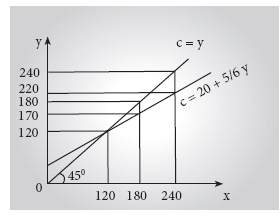
Draw the diagram depicting the psychological law of consumption.
13.
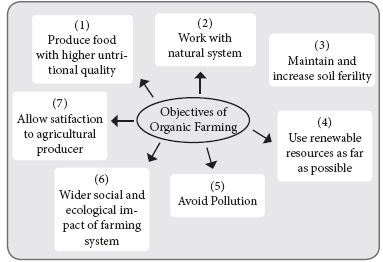
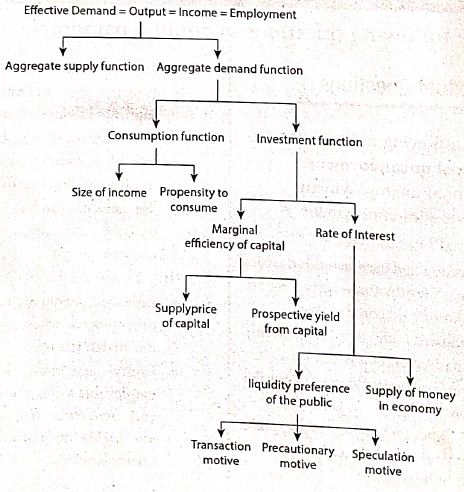
What are the objectives of organic farming?
14.
Explain are the Demerits of Capitalism.
15.
Define water pollution.
16.
What are the achievements of World Bank?
17.
What are the Objectives of the IBRD?
18.
Write any six principles of Federal Finance.
19.
Specify the limitations of accelerator.
20.
What are the Economics factors of determinants of economics development?
21.
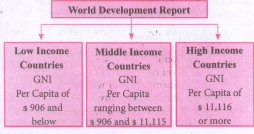
Classify the various countries on the basis of gross national income (GNI) per capita?
22.
Give the factors on which the aggregate demand depends.
23.
Explain the history of Barter System.
24.
Describe the three models of circular flow of income.
25.
26.
What are the functions of Statistics?
27.
Distinguish between functional and structural planning.
28.
How would you break the vicious circle of poverty?
29.
What are the causes of water pollution?
30.
31.
Mention any three methods of redemption of public debt.
32.
Mention any three similarities between public finance and private finance.
33.
State briefly the functions of SAARC.
34.
Mention any three lending programmes of IMF.
35.
State the objectives of Foreign Direct Investment.
36.
Write a brief note on flexible exchange rate.
37.
Specify the functions of IFCI.
38.
Give a brief note on NBFI.
39.
Explain disinflation.
40.
41.
Specify the limitations of the multiplier.
42.
State the propositions of Keynes’s Psychological Law of Consumption
43.
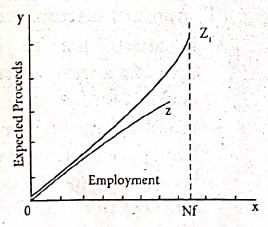
Explain about aggregate supply with the help of diagram.
44.
Explain Keynes’ theory.
45.
List out the uses of national income.
46.
Give short note on Expenditure method.
47.
Distinguish between Capitalism and Globalism.
48.
Outline the major merits of capitalism.
1.
(i) tax on property,
(ii) tax on vehicles and animals,
(iii) tax on trades, calling and employment,
(iv) theatre and show tax,
(v) taxes on goods brought into the cities for sale,
(vi) taxes on advertisements,
(vii) octroi and terminal tax etc.
2.
Agency Functions implies that commercial banks act as agents of customers by performing various functions.
(i) Collecting Cheques Banks collect cheques and bills of exchange on the behalf of their customers through clearing house facilities provided by the central bank.
(ii) Collecting Income Commercial banks collect dividends, pension, salaries, rents, and interests on investments on behalf of their customers. A credit voucher is sent to customers for information when any income is collected by the bank.
(iii) Paying Expenses Commercial banks make the payments of various obligations of customers, such as telephone bills, insurance premium, school fees, and rents. Similar to credit voucher, a debit voucher is sent to customers for information when expenses are paid by the bank.
3.
It implies that commercial banks provide some utility services to customers by performing various functions.
(i) Providing Locker Facilities
Commercial banks provide locker facilities to its customers for safe custody of jewellery, shares, debentures, and other valuable items. This minimizes the risk of loss due to theft at homes. Banks are not responsible for the items in the lockers.
(ii) Issuing Traveler’s Cheques
Banks issue traveler’s cheques to individuals for traveling outside the country. Traveler’s cheques are the safe and easy way to protect money while traveling.
(iii) Dealing in Foreign Exchange
Commercial banks help in providing foreign exchange to businessmen dealing in exports and imports. However, commercial banks need to take the permission of the Central Bank for dealing in foreign exchange.
4.
(i) Money as a medium of exchange: This is considered as the basic function of money. Money has the quality of general acceptability, and all exchanges take place in terms of money.
(ii) Money as a measure of value: The second important function of money is that it measures the value of goods and services.
5.
(i) John Maynard Keynes was one of the most influential economists of the 20th century.
(ii) He was born in Cambridge in1883. In addition to his work as an economist he held position as civil servant a director of the Bank of England, and leader of British delegation of negotiators at the Bretton Woods conference at points in his career.
(iii) Economic theory based on his idea is known as Keynesian economics, and remain highly influential today, particularly in the field of macroeconomics.
6.
National Sample Survey Organisation (NSSO)
i. The National Sample Survey Organisation, now known as National Sample Survey Office, is an organization under the Ministry of Statistic of the Government of India.
ii. It is the largest organisation in India, conducting regular socio-economic surveys.
7.
Central Statistical Office (CSO)
1. The Central Statistical Office is one of the two wings of the National Statistical Organisation (NSO).
2. It is responsible for co-ordination of statistical activities in the country and for evolving and maintaining statistical standards.
3. Its activities include compilation of National Accounts; conduct of Annual Survey of Industries and Economic Censuses, compilation of Index of Industrial Production as well as Consumer Price Indices.
4. It also deals with various social statistics, training, international cooperation, Industrial Classification, etc.
8.
| BASIS FOR COMPARISON | REPO RATE | REVERSE REPO RATE |
| Meaning | FDI refers to the investment made by the foreign investors to obtain a substantial interest in the enterprise located in a different country. | When an international investor, invests in the passive holdings of an enterprise of another country, i.e. investment in the financial asset, it is known as FPI. |
| Degree of control | High | Very less |
| Term | Long term | Short term |
| Investment in | Physical assets | Financial assets |
| Entry and exit | Difficult | Relatively easy. |
| Results in | Transfer of funds, technology and other resources | Capital inflows |
9.
| BASIS FOR COMPARISON | CURRENT ACCOUNT | CAPITAL ACCOUNT |
| Meaning | An account which records the export and import of merchandise and unilateral transfers done during the year by a nation are known as Current Account. | An account which records the trading of foreign assets and liabilities during the year by a country is known as Capital Account. |
| Reflects | Net Income of the country. | Net change in ownership in national assets. |
| Deals with | Receipt and disbursements of cash and noncapital items. | Sources and application of capital. |
| Components | Trade in goods and services, investment income, unrequited transfers. | Foreign Direct Investment, Portfolio Investment, Government loans etc. |
10.
1. Imputed value of rent for self occupied houses or offices is to be included.
2. Imputed value of services provided by owners of production units (family labour) is to be included.
11.
1. The enterprises are classified into various industrial groups.
2. Factor incomes are grouped under labour income, capital income and mixed income.
i) Labour income - Wages and salaries, fringe benefits, employer’s contribution to social security.
ii) Capital income – Profit, interest, dividend and royalty
iii) Mixed income – Farming, sole proprietorship and other professions.
3. National income is calculated as domestic factor income plus net factor incomes from abroad.
12.
13.
14.
1. Concentration of Wealth and Income: Capitalism causes concentration of wealth and income in a few hands and thereby increases inequalities of income.
2. Wastage of Resources: Large amount of resources are wasted on competitive advertising and duplication of products.
3. Class Struggle: Capitalism leads to class struggle as it divides the society into capitalists and workers.
4. Business Cycle: Free market system leads to frequent violent economic fluctuations and crises.
5. Production of non essential goods: Even the harmful goods are produced if there is possibility to make profit.
15.
The introduction (directly or indirectly) of substances or energy into the marine environment (including, estuaries) result in deleterious effects to living resources, hazards to human health, hindrance to marine activities.
16.
(i) The World Bank is said to be successful in achieving its primary objectives of reconstruction and development of war ravaged nations.
(ii) It is noted that the bank's membership has increased from the initial number of 30 countries to 68 countries in 1960 to 151 countries in 1988.
(iii) The Bank grants medium and long term loans (i, e, payable over a period of 15 - 20 years) for reconstruction and development purpose to the member countries.
(iv) Initially the World Bank's loans were mainly directed at the European countries for financing their programmes of reconstruction.
(v) The World Bank grants loans to member countries only for productive purposes particularly for agriculture irrigation, power and transport.
(vi) The International Development Association (IDA) the Soft Loan Window of the Bank provides loans to UDCs at very low rate of interest.
17.
Objectives of the world Bank:
(i) Reconstruction and Development.
(ii) Encouragement to capital investment.
(iii) Encouragement to international trade.
(iv) Establishment of peace - Time economy.
(v) Environmental protection.
18.
Principles of federal finance:
(1) Principle of Indiependence
(2) Principle of Equity
(3) Principle of Uniformity
(4) Principle of Adequacy
(5) Principle of Fiscal Access
(6) Principle of Accountability
19.
(i) Constant capital output ratio is unrealistic.
(ii) Resources are available only before full employment.
(iii) Excess capacity in capital goods industries is assumed.
(iv) It will work only when credit is available easily.
20.
| Economic Factors | Non-Economic Factorss | |
|---|---|---|
| 1. | Natural resource | Human resource |
| 2. | Capital formation | Technical know-how |
| 3. | Size of the market | Political freedom |
| 4. | Structural change | Social organization |
| 5. | Financial system | Corruption free administration |
| 6. | Marketable surplus | Desire for development |
| 7. | Foreign trade | Moral, ethical and social values |
| 8. | Economic system | Patrimonial capitalism |
21.
(i) The WorlthBank in its World Development Report classified various countries on the basis of Gross National Income (GNI) per capita.
(ii) Various countries on the basis of Gross National Income (GNI) per capita.
22.
The aggregate demand is the amount of money which entrepreneurs expect to get by selling the output produced by the number of labourers employed. Therefore, it is the expected income or revenue from the sale of output at different levels of employment.
Aggregate demand has the following four components:
(i) Consumption demand
(ii) Investment demand
(iii) Government expenditure and
(iv) Net Export (export - import)
23.
Barter System:
(i) Goods exchange for goods is known as Barter System.
(ii) In olden days goods were exchanged for goods and not for cash.
(iii) Barter system was introduced by Mesopotamia tribes.
(iv) Babylonian's also developed an improved barter system, where goods were exchanged for goods.
24.
Two Sector Model:
It is for simple economy with households and firms
Three Sector Model:
It is for mixed and closed economy with households, firms and government.
Four Secto Model:
It is for an open economy with households, firms, government and rest of the world.
25.
26.
(I) Statistics presents facts in a definite form.
(ii) It simplifies mass of figures.
(iii) It facilitates comparison.
(iv) It helps in formulating and testing.
(v) It helps in prediction.
(vi) It helps in the formulation of suitable policies.
27.
Functional Planning:
(i) It refers to that planning which seeks to remove economic difficulties by directing all the planning activities within the existing economic and social structure.
Structural Planning:
(i) It refers to a good deal of changes in the socioeconomic framework of the country.
(ii) Under developed countries follow this type of planning.
28.
(i) On the supply side of the vicious circle of poverty there is low rate of saving and investment.
(ii) In UDCs to increase the rate of investment and capital formation, the marginal rate of savings must be greater than the average rate of savings.
(iii) On the demand side, Nurkse suggested balanced growth.
(iv) If investment is made in several industries simultaneously the workers will become consumers of each other's products creating mutual demand.
29.
Discharge of sewage and waste water:
(i) Sewage, garbage and liquid waste of households, agricultural runoff and effluents from factories are discharged into lakes and rivers.
(ii) These wastes contain harmful chemicals and toxins which make the water poisonous for aquatic animals and plants.
Dumping of solid wastes:
(i) The dumping of solid wastes and litters in water bodies cause huge problems.
Discharge of industrial wastes:
(i) Industrial waste contains asbestos, lead, mercury, grease oil and petrochemicals.
Oil Spill:
(i) Sea water gets polluted due to oil spilled from ships and tankers.
Acid Rain:
(i) When the acidic particles caused by air pollution mix with water vapour, it results in acid rain.
Global warming:
(i) The increase in water temperature affects aquatic plants and animals.
Eutrophication:
(i) The increased level of nutrients in water depletes oxygen in water and this negatively affects fish and other aquatic animal population.
30.
31.
Introduction:
(i) The process of repaying a public debt is called redemption.
(a) Sinking Fund
(i) The Government establishes a separate fund into which every year a fixed amount of money is credited.
(ii) By the time the debt matures, the fund accumulates enough amount to pay off the principal along with interest.
(a) Conversion
(i) An old loan is converted into a new loan.
(ii) A high interest public debt is converted into a low interest public debt.
(c) Budgetary Surplus
(i) When the Government has a surplus budget, it can be used for repaying the debt.
32.
Rationality
1. Both public finance and private finance are based on rationality.
2. Maximization of welfare and least cost factor combination underlie both.
Limit to borrowing
1. Both have to be restrained with borrowing.
2. Government cannot live beyond its means.
3. There is a limit to deficit financing by the state.
Resource utilisation
1. Both have to make optimum use of their limited resources.
Administration
1. If the administrative machinery is inefficient and corrupt it will result in wastages and losses.
33.
The main functions of SAARC are as follows.
1) Maintenance of the cooperation in the region.
2) Prevention of common problems associated with the member nations.
3) Ensuring strong relationship among the member nations.
4) Removal of the poverty through various packages of programmes.
5) Prevention of terrorism in the region.
34.
1. Basic Credit Facility
2. Extended Fund Facility
3. Compensatory Financing Facility
4. Buffer Stock Facility
5. Supplementary Financing Facility
6. Structural Adjustment Facility
35.
FDI has the following objectives.
(i) Sales Expansion
(ii) Acquisition of resources
(iii) Diversification
(iv) Minimization of competitive risk
36.
Also known as floating exchange rate, the exchange rates are freely determined in an open market by market forces of demand and supply.
37.
The IFCI does the following functions
(i) Providing long-term loans in rupees and foreign currencies.
(ii) Underwriting of equity, preference and debenture issues.
(iii) Subscribing to equity, preference and debenture issues.
(iv) Guaranteeing the deferred payments for machinery imported from abroad or purchased in India
(v) Guaranteeing of loans raised in foreign currency from foreign financial institutions.
38.
(i) A non-banking financial institution or company is a financial institution that does not have a full banking license or is not supervised by the central bank.
(ii) They receive deposits and give loans.
(iii) They mobilize people's savings and use the funds to finance expenditure on investment activities.
(iv) The undertake borrowing and lending in the money and capital markets.
(v) They are classified into Stock Exchange and Other Financial institutions.
(vi) Under other financial institutions come Finance Companies, Finance Corporations, Chit Funds, Building Societies, Issue Houses, Investment Trusts, Unit Trusts and Insurance Companies.
39.
(i) It is the slowing down the rate of inflation by controlling the amount of credit (bank loan, hire purchase) available to consumers without causing more unemployment.
(ii) It is defined as the process of reversing inflation without creating unemployment or reducing output in the company.
40.
41.
(i) Payment towards past debts
(ii) Purchase of existing wealth
(iii) Import of goods and services
(iv) Non availability of consumer goods
(v) Full employment situation
42.
(i) When income incrcases, consumption expenditure also incrcases but by a smaller amount.
(ii) The increased income will be divided in some proportion between consumption expenditure and saving.
(iii) Increase in income always leads to an increase in both consumption and saving.
43.
(i) Aggregate supply refers to the value of total output of goods and services produced in an economy in a year ie national product or income.
(ii) The components of aggregate supply are:
(iii) Aggregate (desired) consumption expenditure (C)
(iv) Aggregate (desired) private savings (S)
(v) Net tax payments (T)
(vi) Personal (desired) transfer payments to the foreigners (Rf)
AS = C + S + T + Rf
In this figure 2 aggregate supply curves are drawn for the assumption of fixed money wages and variable wages.
Explanation
(i) Z Curve is linear (fixed money wages)
(ii) Z1 curve is non-linear (wage rate increases with employment)
(iii) When full employment level of Nf is reached output cannot be increased by employing more men.
(iv) So aggregate supply curve becomes inelastic (Vertical straight line).
(v) In reality aggregate supply curve will be like Z1 .
(vi) If prices are high and wages low, the producers will employ more labourers.
(vii) 4YAggregate supply is an important factor in determining the level of economic activity.
44.
45.
(i) National income is of great importance for the economy of a country.
(ii) National income helps us to know the relative importance and contribution of each sector. We could find how income is produced, how it is distributed, how much is spent, saved or taxed.
(iii) National income data is used to build economic models in short run and long run.
(iv) Data regarding gross income, output, saving & consumption is used in economic planning.
(v) National income data is used to build economic models in short run and long run.
(vi) It is used to make international comparison, inter - regional comparison and inter - temporal comparison of growth of the economy during different periods.
(vii) If income is equally distributed, the per capita income will reflect the economic welfare of the country.
46.
(i) The total expenditure incurred by the society in a particular year is added.
(ii) It includes personal consumption expenditure (C), net domestic investment (I), Government expenditure on consumption and capital goods (G) and net exports (X - M).
\(\mathrm{GNP}=\mathrm{C}+\mathrm{I}+\mathrm{G}+(\mathrm{X}-\mathrm{M})\)
(iii) Second hand goods, purchase of shares and bonds, transfer payments and expenditure on intermediate goods must not be included.
47.
| S.No. | Capitalism | Globalism |
| 1 | Also called free economy or laissez faire or market economy where the role of the government is minimum | Also called extended capitalism. It connects nations together through international trade |
| 2 | Market determines economic activities within a nation | It aims at global development Manfred |
| 3 | Adam Smith is the father of the capitalism | D. Steger (2002) coined the term |
48.
(i) Automatic working without any government intervention.
(ii) Efficient use of resources.
(iii) Incentives for hard work.
(iv) Production and productivity are high, so there is economic progress.
(v) Consumers sovereignty exist.
(vi) Increased saving and investment leads to higher capital formation.
(vii) Development of new technology.

12th Standard Syllabus & Materials
12th Standard
TN 12th Computer Applications களப்பெயர் முறைமை (DNS) Sample Question Papers Study Material - QB365 Set A
NEW12th Standard
TN 12th Computer Applications வலையமைப்பு எடுத்துக்காட்டுகள் மற்றும் நெறிமுறைகள் Sample Question Papers Study Material - QB365 Set A
NEW12th Standard
TN 12th Computer Applications கணினி வலையமைப்பு ஓர் அறிமுகம் Sample Question Papers Study Material - QB365 Set A
NEW12th Standard
TN 12th Computer Applications PHP-உடன் MySQL-ஐ இணைத்தல் Sample Question Papers Study Material - QB365 Set A



Tamilnadu Stateboard 12th Standard Subjects

Maths

Chemistry

Physics

Biology

Computer Science

Business Maths and Statistics
Economics

Commerce

Accountancy

History

Computer Applications
Biology
Computer Technology
Computer Applications
Computer Science
Business Maths and Statistics
Commerce
Economics
Maths
Chemistry
Physics
Computer Technology
History
Accountancy

Tamil

English

French
Tamilnadu Stateboard Standards
