
 100% FREE ACCESS
12th Standard Syllabus & Materials
12th Standard
TN 12th Computer Applications மின்னணு தரவு பரிமாற்றம் Sample Question Papers Study Material - QB365 Set A
NEW12th Standard
TN 12th Computer Applications மின் - வணிக பாதுகாப்பு அமைப்புகள் Sample Question Papers Study Material - QB365 Set A
NEW12th Standard
TN 12th Computer Applications மின்னணு செலுத்தல் முறைகள் Sample Question Papers Study Material - QB365 Set A
NEW12th Standard
TN 12th Computer Applications மின் - வணிகம் Sample Question Papers Study Material - QB365 Set A
NEW12th Standard
TN 12th Computer Applications திறந்த மூல கருத்துருக்கள் Sample Question Papers Study Material - QB365 Set A
NEW12th Standard
TN 12th Computer Applications வலையமைப்பு வடமிடல் Sample Question Papers Study Material - QB365 Set A

Published on: 01/09/2020
12th Standard Economics English Medium Model 3 Mark Creative Questions (New Syllabus) 2020
Download Tamil Nadu 12th Standard Economics question papers, model tests, one-mark questions, important questions, and public exam papers in PDF format. Free study materials and answer keys for TN State Board students.
Questions + Answers key
Take MCQ Economics Test
1.
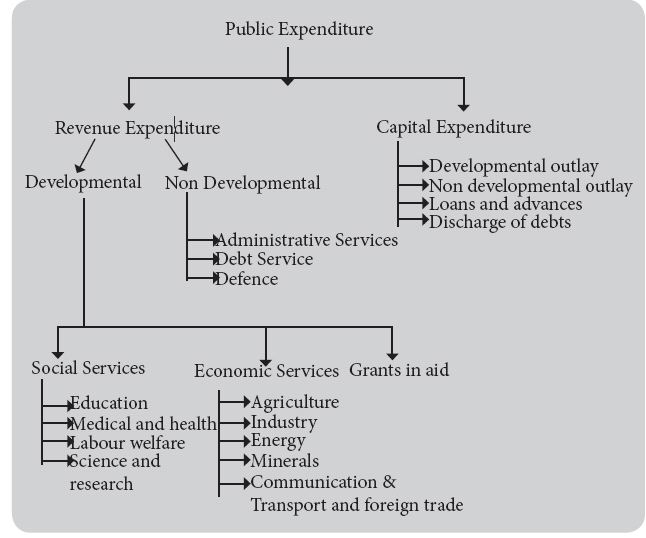
Present chart depicting public expenditure.
2.
List the main principles of federal system of finance
3.
Write a short note on former Indian Planning Commission.
4.
What are the economic costs of unemployment?
5.
Explain how it might be possible for the unemployment rate to decline even though the number of unemployed is growing
6.
7.
What are the divisions of NSSO?
8.
Mention any five Determinants of Investment Function.
9.
Given the table, write the proposition for consumptions function (value in crores).
10.
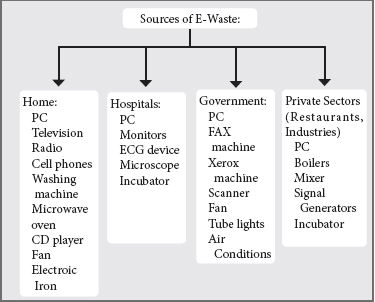
What are the various sources of E-Wastes?
11.
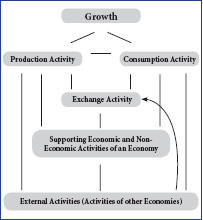
Draw the flow chart of Functioning of an Economy Based on Activities
12.
Mention any two objectives of SAARC.
13.
Specify the two achievements of BRICS.
14.
Bring out the sources of revenue of district boards.
15.
What are the types of budget?
16.
What are the Determinants of Exchange Rates?
17.
What is Output method? What is its major challenge?
18.
What is Per capita income?
19.
Tabulate the details of short, medium and long term planning.
20.
Explain about Agricultural Refinance Development Corporation (ARDC).
21.
What are the Objectives of the ARDC.
22.
Write a note on paper currency standard
23.
What are the four measures of Money Supply?
24.
What are the demerits of mixed economy?
25.
What are the major sectors benefitted from FDI in India?
1.
2.
1. Principle of Independence.
2. Principle of Equity.
3. Principle of Uniformity.
4. Principle of Adequacy.
5. Principle of Fiscal Access.
6. Principle of Integration and coordination.
7. Principle of Efficiency.
8. Principle of Administrative Economy.
9. Principle of Accountability.
3.
(i) On January 26, 1950, the Constitution came into force.
(ii) In logical order, the Planning Commission was created on March 15, 1950.
(iii) The plan era began on April 1, 1951, with the launch of the first five-year plan (1951-56).
(iv) Planning Commission was set up to formulate Five Year Plan in India by Jawaharlal Nehru.
(v) He was the first Chairman of Planning Commission, Government of India.
4.
i. Whenever resources are unemployed there is always some sort of waste.
ii. In the case of unemployment it manifests itself in the potential production of goods and services irretrievably lost.
iii. There are also other costs such as increased burdens to taxpayers to fund unemployment compensation programs and the individual cost in terms of a loss of self esteem and dignit
5.
i. This may be possible if the number of new entrants into the labor force is increasing at a greater rate than the number of people who are becoming unemployed.
ii. Since the unemployment rate is a ratio and the numerator is growing more slowly than the denominator then the unemployment rate will fall.
6.
7.
NSSO has four divisions:
1. Survey Design and Research Division (SDRD)
2. Field Operations Division (FOD)
3. Data Processing Division (DPD)
4. Co-ordination and Publication Division (CPD)
8.
1. Rate of interest
2. Level of uncertainty
3. Political environment
4. Rate of growth of population
5. Stock of capital goods
6. Necessity of new products
7. Level of income of investors
8. Inventions and innovations
9. Consumer demand
10. Policy of the state
11. Availability of capital
12. Liquid assets of the investors.
9.
| Income | Consumption | Savings |
| 120 | 120 | 0 |
| 180 | 170 | 10 |
| 240 | 220 | 20 |
Proposition (1):
Income increases by Rs. 60 crores and the increase in consumption is by Rs. 50 crores.
Proposition (2):
The increased income of Rs. 60 crores in each case is divided in some proportion between consumption and saving respectively. (i.e., Rs. 50 crores and Rs. 10 crores).
Proposition (3):
As income increases consumption as well as saving increase. Neither consumption nor saving has fallen.
10.
11.
12.
i) To promote the welfare of the people of South Asia and improve their quality of life.
ii) To accelerate economic growth, social progress and cultural development in the region.
13.
i) The establishment of the Contingent Reserve Arrangement (CRA).
ii) In the sixth BRICS summit in Brazil the member countries, signed an agreement to create a development bank (New Development.
14.
(i) Grants - in- aid from the state government.
(ii) Land cesses
(iii) Toll, fees etc.
(iv) Income from the property and loans from the State Government.
(v) Income from fairs and exhibitions.
(vi) Property tax and other taxes
(vii) Grants for the centrally sponsored schemes relating to development work.
15.
(i) Revenue and capital budget
(ii) Supplementary budget
(iii) Zero base budget
(iv) Performance budget
(v) Balance and Unbalanced budget
(vi) Unbalanced budget
(a) Deficit budget
(b) Surplus budget
16.
Factors determining exchange rates are,
(i) Differentials in Inflation
(ii) Differential in Interest rates
(iii) Current Account Deficits
(iv) Public Debt
(v) Terms of Trade
(vi) Political and Economic Stability
(vii) Recession
(viii) Speculation
17.
(i) In the output or product method, the measures of GDP are calculated by adding the total value of the output (of goods and services) produced by all activities during any time period, such as a year.
(ii) The major challenge of this method is the problem of double counting.
18.
(i) Per Capita income (or) output per person is an indicator to show the living standards of people in a country.
(ii) If real PCI increases.
(iii) It is considered to be an improvement in the overall living standard of people.
(iv) PCI is arrived at by dividing the GDP by the size of population.
(v) It is also arrived by making some adjustment with GDP
(vi) \(PCI=\frac { GDP }{ Total\ number\ of\ people\ in\ a\ country } \) (or)\(PCI=\frac { National\ Income }{ Total\ Population } \)
19.
| Planning | ||
|---|---|---|
| Long-term over 10 year | Medium-term 3-7 years | Short-term up to 1 year |
| Long-term planning is considered for a time period over 10 years | Medium-term, planning is considered for a time period of 5 years | Short-term planning concerns the plans in a time period of 1 year. |
| Strategic planning. | Tactical planning. | Operational planning. |
20.
(i) Agricultural Refinance Development Corporation (ARDC) was established by an act of parliament.
(ii) It was started functioning from July 1, 1963.
(iii) Formers in India require mainly medium term and long term loans, but it faces a lot of difficulties to getting it.
(iv) The only organisation providing long term credit is land development banks which have lagged behind and only limited success.
(v) The credit requirement of the agriculture sectors are increasing.
(vi) The aim of bridging the gap in agriculture finance and to extend credit for projects involving agricultural development
21.
(I) To provide necessary funds by way of refinance to eligible institutions such as
(i) Central land development banks
(ii) State cooperative banks
(ill) Schedule banks
(II) To subscribe to the debentures floated by
(i) The central land development banks.
(ii) State cooperative banks
(ill) Scheduled banks
(iv) Provided and approved by the RBI.
22.
(i) The paper currency standard reffers to the monetary system in which the paper currency notes issued by the treasury of the Central Bank.
(ii) Paper currency is not convertible into any metal.
(iii) Its value is determined independent of the value of gold or any other commodity.
(iv) It also known as managed currency standard.
23.
M1 = Currency, Coins and demand deposits.
M2 = M1 + Saving deposits with post office savings banks.
M3 M2 + Time deposits of all commercial and cooperative banks.
M4 = M3 + Total deposits with post offices.
M1 and M2 are known as narrow money.
M3 and M4 are known as broad money.
The graduations are in decreasing order of liquidity.
24.
(i) Lack of Coordination: The greatest drawback of mixedism is lack of coordination between public sector and private sector. As both work with divergent motives, it creates many coordination related problems.
(ii) Competitive Attitude: It is expected that both government and private should work with a complementary spirit towards the welfare of the society, but in reality they are competitive in their activities.
(iii) Inefficiency: Most of the public sector enterprises remain inefficient due to lethargic bureaucracy, red tapism and lack of motivation.
(iv) Fear of Nationalization: In a mixed economy, the fear of nationalization discourages the private entrepreneurs in their business operations and innovative initiatives.
(v) Widening Inequality: Ownership of resources, laws of inheritance and profit motive of people widens the gap between rich and poor.
25.
(i) Financial Sector (Banking and Non Banking)
(ii) Insurance
(iii) Telecommunication
(iv) Hospitality and Tourism
(v) Pharmaceuticals
(vi) Software and Information Technology

12th Standard Syllabus & Materials
12th Standard
TN 12th Computer Applications களப்பெயர் முறைமை (DNS) Sample Question Papers Study Material - QB365 Set A
NEW12th Standard
TN 12th Computer Applications வலையமைப்பு எடுத்துக்காட்டுகள் மற்றும் நெறிமுறைகள் Sample Question Papers Study Material - QB365 Set A
NEW12th Standard
TN 12th Computer Applications கணினி வலையமைப்பு ஓர் அறிமுகம் Sample Question Papers Study Material - QB365 Set A
NEW12th Standard
TN 12th Computer Applications PHP-உடன் MySQL-ஐ இணைத்தல் Sample Question Papers Study Material - QB365 Set A



Tamilnadu Stateboard 12th Standard Subjects

Maths

Chemistry

Physics

Biology

Computer Science

Business Maths and Statistics
Economics

Commerce

Accountancy

History

Computer Applications
Biology
Computer Technology
Computer Applications
Computer Science
Business Maths and Statistics
Commerce
Economics
Maths
Chemistry
Physics
Computer Technology
History
Accountancy

Tamil

English

French
Tamilnadu Stateboard Standards
