
 100% FREE ACCESS
12th Standard Syllabus & Materials
12th Standard
TN 12th Computer Applications மின்னணு தரவு பரிமாற்றம் Sample Question Papers Study Material - QB365 Set A
NEW12th Standard
TN 12th Computer Applications மின் - வணிக பாதுகாப்பு அமைப்புகள் Sample Question Papers Study Material - QB365 Set A
NEW12th Standard
TN 12th Computer Applications மின்னணு செலுத்தல் முறைகள் Sample Question Papers Study Material - QB365 Set A
NEW12th Standard
TN 12th Computer Applications மின் - வணிகம் Sample Question Papers Study Material - QB365 Set A
NEW12th Standard
TN 12th Computer Applications திறந்த மூல கருத்துருக்கள் Sample Question Papers Study Material - QB365 Set A
NEW12th Standard
TN 12th Computer Applications வலையமைப்பு வடமிடல் Sample Question Papers Study Material - QB365 Set A

Published on: 30/09/2020
12th Standard Economics English Medium Model 5 Mark Creative Questions (New Syllabus 2020)
Download Tamil Nadu 12th Standard Economics question papers, model tests, one-mark questions, important questions, and public exam papers in PDF format. Free study materials and answer keys for TN State Board students.
Questions + Answers key
Take MCQ Economics Test
1.
Compare and contrast economic growth and economic development.
2.
Explain causes of noise pollution.
3.
List out the achievements of SAARC.
4.
What are the advantages of GST?
5.
Draw the flow chart for correction of Balance Payment Disequilibrium
6.
What are the determinants of investment function?
7.
Discuss the method measuring the National Income by Income Method.
8.
Comparison of Classicism and Keynesianism.
9.
Distinguish between RTGS and NEFT.
10.
Explain the merits of Mixed Economy.
11.
Explain the Secondary Functions.
1.
| BASIS FOR COMPARISON | ECONOMIC GROWTH | ECONOMIC DEVELOPMENT |
|---|---|---|
| MEANING | Economic Growth is the positive change in the real output of the country in a particular span of time. | Economic Development involves a rise in the level of production in an economy along with the advancement of technology, improvement in living standards and so on. |
| CONCEPT | Narrow | Broad |
| SCOPE | Increase in the indicators like GDP, per capita income, etc. | Improvement in life expectancy rate, infant mortality rate, literacy rate, and poverty rates |
| TERM | Short term process | Long term process |
| APPLICABLE TO | Developed Economies | Developing Economies |
| HOW IT CAN BE MEASURED? | Upward movement in national income. | An upward movement in real national income. |
| WHICH KIND OF CHANGES ARE EXPECTED? | Quantitative changes | Qualitative and quantitative change |
| TYPE OF PROCESS | Automatic | Manual |
| WHEN IT ARISES? | In a certain period of time | Continuous process. |
2.
Causes of Noise Pollution:
(i) Poor urban planning: Improper urban planning will cause more nuisances among the city travelers.
(ii) Sounds from motor vehicles: Sounds from motor vehicles can cause temporary hearing loss.
(iii) Crackers: Enormous Crackers are used during some occasions. Such activities create a very louder noise to the level of harming the public. Sometimes, they may even cause deafness to children and aged.
(iv) Factory machinery: The industrial noise caused by continuous operation of mills, machines and pneumatic drills, is unbearable nuisance to the workers.
3.
(i) The establishment of SAARC Preferential Trading Agreement (SAPTA) and reduction in tariff and non - tariff barriers in imports.
(ii) The setting up for Technical Committees for economic co - operation among SAARC countries relating to agriculture, communication, education, health, population, rural development, science and technology, tourism etc.
(iii) SAARC was established a three - tier mechanism, for exchanging information on poverty reduction programmes.
(vi) SAARC agricultural information centre(SAIC) in1988 works as central information institution for agriculture related resources like fisheries, forestry etc.
(v) South Asian Development fund (SADF) for development projects, human resource development and infrastructural development projects
4.
(i) GST will mainly remove the cascading effect on the sale of goods and services.
(ii) Removal of cascading effect will directly impact of the cost of goods.
(iii) Tax is eliminated in this regime, the cost of goods decreases.
(iv) GST is also mainly technologically driven.
(v) All activities like registration, return filing, application for refund and response to notice need to be done online on the GST portal. This will speed up the processes.
5.
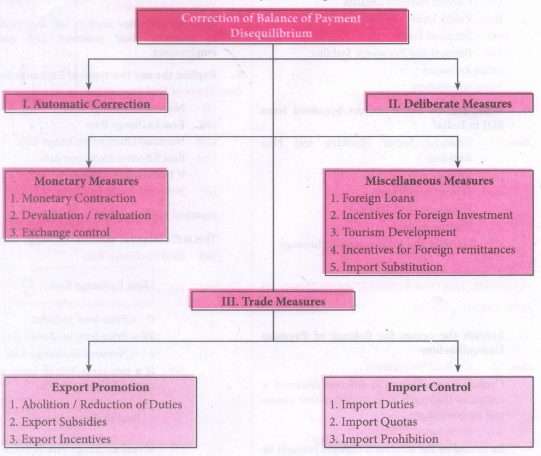
6.
(i) The classical economists believed that investment depended exclusively on rate of interest.
(ii) Investment decision depends on a number of factors.
(iii) They are as follows:
(1) Rate of interest
(2) Level of uncertainty
(3) Political environment
(4) Rate of growth of population
(5) Stock of capital goods
(6) Necessity of new products
(7) Level of income of investors
(8) Inventions and innovations
(9) Consumer demand
(10 ) Policy of the state
(11) Available of capital
(12) Liquid assets of the investors
7.
(i) Income by Income Method. Income method approaches National Income from the distribution side.
(ii) National income is calculated by adding up all the incomes generated in the course of producing national product.
(iii) Factor incomes are grouped under labour income, capital income and mixed income.
(iv) national income is calculated as domestic factor income plus net factor incomes from abroad. In short,
Y = w + r + i + π + (R-P)
w = wages
r = rent
i = interest
π = profits
R = Exports
P = Imports
(v) This method is adopted for estimating the contributions of the remaining sector, viz.
(vi) Data on income from abroad (the rest of) the world sector or foreign sector are obtained from the account of the balance of payment of the country.
Items no to be included:
(1) Transfer payments are not to be included in estimation of national income.
(2) The receipts from the sale of second hand goods should not be treated as part of national income.
Item to be included:
(1) Imputed value of rent for self occupied house or offices is to be included.
(2) Imputed value of services provided by owners of production unit (family labour) is to be included.
8.
| S.No | Keynesianism | Classicism |
|---|---|---|
| 1. | Short-run equilibrium | Long-run equilibrium |
| 2. | Saving is a vice | Saving is a social virtue |
| 3. | The function of money is a medium of exchange on the one side and a store of value on the other side. | The function of money is to act as a medium of exchange |
| 4. | Macro approach to national problems | Micro foundation to macro problems |
| 5. | State intervention is advocated | Champions of Laissez-fair policy |
| 6. | Applicable to all situations - full employment and less than full employment. | Applicable only to the full employment situation |
| 7. | Capitalism has inherent contradictions | Capitalism is well and good |
| 8. | Budgeting should be adjusted to the requirements of economy. | Balanced budget |
| 9. | The equality between saving and investment is advanced through changes in income. | The equality between saving and investment is achieved through chances of rate of interest. |
| 10. | Rate of interest is determined by the demand for and supply of money. | Rate of interest is determined by saving and investment. |
| 11. | Rate of interest is a flow. | Rate of interest is a stock. |
| 12. | Demand creates its own supply. | Supply creates its own demand. |
| 13. | Rate of interest is a reward for parting with liquidity. | Rate of interest is a reward for saving. |
9.
| S.No | NEFT | RTGS |
|---|---|---|
| (i) | National Electronic Fund Transfer | Real Time Gross Settlement. |
| (ii) | Transaction happens in batches hence slow | Transaction happens in real time hence fast |
| (iii) | Timings: 8.00 am to 6.30 pm | Timings: 9.00 am to 4.30 pm (1.30 pm on Saturday) |
10.
(a) Rapid Economic Growth:
(i) It promotes rapid economic growth.
(ii) Thus both public requirements and private needs are taken care of.
(b) Balanced Economic Growth:
(i) Mixedism promotes balanced growth of the economy.
(ii) It promotes balanced growth between agriculture and industry.
(c) Proper utilization of Resources:
(i) The government can ensure proper utilization of resources.
(ii) The government controls must of the important activities directly.
(d) Economic Equality:
(i) The government uses progressive rates of taxation.
(ii) Income tax to bring about economic equality.
11.
(i) Savings done in terms of commodities were not permanent.
(ii) With the invention of money, this difficulty has now disappeared and savings are now done in terms of money.
(iii) Money also serves as an excellent store of wealth.
(iv) Money can be easily converted into other assets such as land, machinery, plant etc.
(v) The modern money - economy has greatly facilitated the borrowing and lending processes.
(vi) In other words, money now acts as the standard of deferred payments.
(vii) The field of exchange also went on extended to distant lands.
(viii) It is therefore, felt necessary to transfer purchasing power from one place to another.

12th Standard Syllabus & Materials
12th Standard
TN 12th Computer Applications களப்பெயர் முறைமை (DNS) Sample Question Papers Study Material - QB365 Set A
NEW12th Standard
TN 12th Computer Applications வலையமைப்பு எடுத்துக்காட்டுகள் மற்றும் நெறிமுறைகள் Sample Question Papers Study Material - QB365 Set A
NEW12th Standard
TN 12th Computer Applications கணினி வலையமைப்பு ஓர் அறிமுகம் Sample Question Papers Study Material - QB365 Set A
NEW12th Standard
TN 12th Computer Applications PHP-உடன் MySQL-ஐ இணைத்தல் Sample Question Papers Study Material - QB365 Set A



Tamilnadu Stateboard 12th Standard Subjects

Maths

Chemistry

Physics

Biology

Computer Science

Business Maths and Statistics
Economics

Commerce

Accountancy

History

Computer Applications
Biology
Computer Technology
Computer Applications
Computer Science
Business Maths and Statistics
Commerce
Economics
Maths
Chemistry
Physics
Computer Technology
History
Accountancy

Tamil

English

French
Tamilnadu Stateboard Standards
