
 100% FREE ACCESS
12th Standard Syllabus & Materials
12th Standard
TN 12th Maths Applications of Matrices and Determinants Sample Question Papers Study Material - QB365 Set A
NEW12th Standard
TN 12th Computer Applications மின்னணு தரவு பரிமாற்றம் Sample Question Papers Study Material - QB365 Set A
NEW12th Standard
TN 12th Computer Applications மின் - வணிக பாதுகாப்பு அமைப்புகள் Sample Question Papers Study Material - QB365 Set A
NEW12th Standard
TN 12th Computer Applications மின்னணு செலுத்தல் முறைகள் Sample Question Papers Study Material - QB365 Set A
NEW12th Standard
TN 12th Computer Applications மின் - வணிகம் Sample Question Papers Study Material - QB365 Set A
NEW12th Standard
TN 12th Computer Applications திறந்த மூல கருத்துருக்கள் Sample Question Papers Study Material - QB365 Set A

Published on: 06/01/2020
Environmental Economics
Download Tamil Nadu 12th Standard Economics question papers, model tests, one-mark questions, important questions, and public exam papers in PDF format. Free study materials and answer keys for TN State Board students.
Questions + Answers key
Take MCQ Economics Test
1.
__________ are the particles, and gases out comes during the construction and agricultural activates to affect the air.
Dust particles
Gaseous emission
Ammonia
Oxygen gas
2.
__________ gases are released in to the atomssphere during the burning of fossil fuels
Nitrogen oxides
Sulfur oxides
Acid rain
Ammonia
3.
Which of the following is main cause for deforestation?
Timber harvesting industry
Natural afforestation
Soil stabilization
Climate stabilization
4.
Which one of the following causes of global warming?
Earth gravftation force
Oxygen
Centripetal force
Increasing temperature
5.
One of the most important market failures is caused by __________
Positive externalities
Negative externalities
Both
None of the above
6.
Draw the diagram depicts the interdependence of economics and environment.
7.
What is the key objective of Environmental Economics
8.
Specify the meaning of seed ball.
9.
Define Global warming.
10.
What do you mean by ecosystem?
11.
Explain different types of Noise.
12.
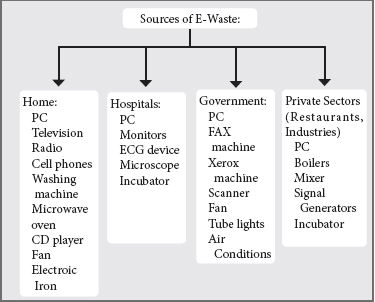
What are the various sources of E-Wastes?
13.
Explain the Types of Land Pollution.
14.
What are the causes of water pollution?
15.
16.
Enumerate the general principles of organic farming.
17.
List the Remedial measures to control Land Pollution
18.
Explain the importance of sustainable development and its goals.
19.
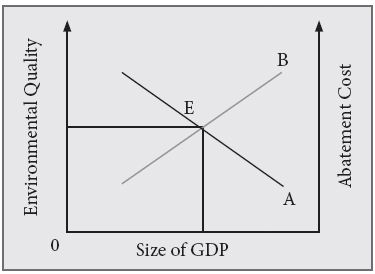
Briefly explain the relationship between GDP growth and the quality of environment.
1.
(d)
Oxygen gas
2.
(d)
Ammonia
3.
(a)
Timber harvesting industry
4.
(d)
Increasing temperature
5.
(b)
Negative externalities
6.
The interdependence of economics and environment is given in the figure
7.
(i) The key objective of EE is to identify those particular tools or policy alternatives that will move the market towards the most efficient allocation of natural resources.
(ii) EE takes into consideration issues such as the conservation and valuation of natural resources, pollution control, waste management, and recycling.
8.
(i) A seed ball is a seed that has been wrapped in soil materials, usually a mixture of clay and compost and then dried.
(ii) The seed is pre-planted and can be sown by depositing the seed ball anywhere suitable for the species, keeping the seed safely until the proper germination window arises.
9.
Global warming is the current increase in temperature of the earth's surface (both land and water) and its atmosphere.
10.
(i) An ecosystem includes all living things (plants, animals and organisms) in a given area, interacting with each other and also with their non-living environments (weather, earth, sun, soil, climate, atmosphere).
(ii) It is the foundation of the Biosphere and determine the health of the earth.
11.
i. Atmospheric Noise:
Atmospheric noise or static is caused by lightning discharges in thunderstorms and other natural electrical disturbances occurring in the atmosphere.
ii. Industrial Noise:
Industrial noise refers to noise that is created in the factories. Sound becomes noise it becomes unwanted. Heavy industries like shipbuilding, iron, and steel have long been associated with Noise-Induced Hearing Loss (NIHL).
iii. Man-made Noise:
The main sources of man-made noise pollution are ships, aircraft, seismic exploration, marine construction, drilling, and motor boats.
12.
13.
i. Solid waste:
It includes all kinds of rubbish like paper, plastic containers, bottles, cans, food, used cars, broken electronic goods, municipal waste, and hospital waste.
ii. Pesticides and Fertilizers:
Many farming activities engage in the application of fertilizers, pesticides and insecticides for higher crop yield which pollute land.
iii. Deforestation:
Humans depend on trees for many things including life. Trees absorb carbon dioxide from the air and release Oxygen, which is needed for life. Forest helps replenish soils and help retain nutrients being washed away. Deforestation is led to land pollution.
14.
Discharge of sewage and waste water:
(i) Sewage, garbage and liquid waste of households, agricultural runoff and effluents from factories are discharged into lakes and rivers.
(ii) These wastes contain harmful chemicals and toxins which make the water poisonous for aquatic animals and plants.
Dumping of solid wastes:
(i) The dumping of solid wastes and litters in water bodies cause huge problems.
Discharge of industrial wastes:
(i) Industrial waste contains asbestos, lead, mercury, grease oil and petrochemicals.
Oil Spill:
(i) Sea water gets polluted due to oil spilled from ships and tankers.
Acid Rain:
(i) When the acidic particles caused by air pollution mix with water vapour, it results in acid rain.
Global warming:
(i) The increase in water temperature affects aquatic plants and animals.
Eutrophication:
(i) The increased level of nutrients in water depletes oxygen in water and this negatively affects fish and other aquatic animal population.
15.
16.
1. Protect the environment, minimize soil degradation and erosion, decrease pollution, optimize biological productivity and promote a sound state of health.
2. Maintain long-term soil fertility by optimizing conditions for biological activity within the soil.
3. Maintain biological diversity within the system.
4. Recycle materials and resources to the greatest extent possible within the enterprise.
5. Provide attentive care that promotes health and meets the behavioural needs of livestock.
6. Prepare organic products, emphasizing careful processing, and handling methods in order to maintain the organic integrity and vital qualities of the products at all stages of production.
7. Rely on renewable resources in locally organized agricultural systems.
17.
1. Making people aware about the concept of a Reduce, Recycle and Reuse
2. Buying biodegradable products
3. Minimizing the usage of pesticides
4. Shifting cultivation
5. Disposing of unwanted garbage properly either by burning or by burying under the soil.
6. Minimizing the usage of plastics.
18.
Introduction:
(i) Sustainable development is concerned with the welfare of the present and future generation.
(ii) It aims at satisfying the luxury wants of the rich and the basic necessities of the poor.
Definition:
(i) Sustainable development is development that meets the needs of the present without compromising the ability of future generations to meet their own needs.
Goals:
(i) It is crucial to harmonize three core elements such as economic growth, social inclusion and environmental protection.
(ii) A set of 17 goals for the world's future can be achieved before 2030 with three unanimous principles fixed by United Nations such as Universality, Integration and Transformation.
1) End poverty in all its forms everywhere.
2) End hunger, achieve food security and improved nutrition and promote sustainable agriculture.
3) Ensure healthy lives and promote wellbeing for all at all ages.
4) Ensure inclusive and quality education for all and promote lifelong learning.
5) Achieve gender equality and empower women and girls.
6) Ensure access to water and sanitation for all.
7) Ensure access to affordable, reliable, sustainable and modern energy for all.
8) Promote inclusive and sustainable economic growth, employment and decent work for all.
9) Build resilient infrastructure, promote, sustainable industrialization and foster innovation.
10) Reduce inequality within and among countries.
11) Make cities inclusive, safe, resilient and sustainable.
12) Ensure sustainable consumption and production pattern.
13) Take urgent action to combat climate change and its impacts
14) Conserve and sustainably use the oceans, seas and marine resources.
15) Sustainably manage forests, combat desertification, stop and reverse land degradation, stop biodiversity loss.
16) Promote just, peaceful and inclusive societies.
17) Revitalize the global partnership for sustainable development.
19.
(i) Strong economic growth or high GDP growth leads to excessive use of resources.
(ii) Natural resources are essential inputs for production in many sectors;
(iii) Production and consumption lead to pollution and other pressures on the environments.
(iv) Poor environmental quality affects economic growth and well being by lowering the quantity and quality of resources or due to health impact.
(v) There is the need to balance growth and the sustainability of eco system.
(vi) So we have to ensure our sustainable existence, consume less and curb economic growth.

12th Standard Syllabus & Materials
12th Standard
TN 12th Computer Applications வலையமைப்பு வடமிடல் Sample Question Papers Study Material - QB365 Set A
NEW12th Standard
TN 12th Computer Applications களப்பெயர் முறைமை (DNS) Sample Question Papers Study Material - QB365 Set A
NEW12th Standard
TN 12th Computer Applications வலையமைப்பு எடுத்துக்காட்டுகள் மற்றும் நெறிமுறைகள் Sample Question Papers Study Material - QB365 Set A
NEW12th Standard
TN 12th Computer Applications கணினி வலையமைப்பு ஓர் அறிமுகம் Sample Question Papers Study Material - QB365 Set A



Tamilnadu Stateboard 12th Standard Subjects

Maths

Chemistry

Physics

Biology

Computer Science

Business Maths and Statistics
Economics

Commerce

Accountancy

History

Computer Applications
Biology
Computer Technology
Computer Applications
Computer Science
Business Maths and Statistics
Commerce
Economics
Maths
Chemistry
Physics
Computer Technology
History
Accountancy

Tamil

English

French
Tamilnadu Stateboard Standards
