
 100% FREE ACCESS
12th Standard Syllabus & Materials
12th Standard
TN 12th Computer Applications மின்னணு தரவு பரிமாற்றம் Sample Question Papers Study Material - QB365 Set A
NEW12th Standard
TN 12th Computer Applications மின் - வணிக பாதுகாப்பு அமைப்புகள் Sample Question Papers Study Material - QB365 Set A
NEW12th Standard
TN 12th Computer Applications மின்னணு செலுத்தல் முறைகள் Sample Question Papers Study Material - QB365 Set A
NEW12th Standard
TN 12th Computer Applications மின் - வணிகம் Sample Question Papers Study Material - QB365 Set A
NEW12th Standard
TN 12th Computer Applications திறந்த மூல கருத்துருக்கள் Sample Question Papers Study Material - QB365 Set A
NEW12th Standard
TN 12th Computer Applications வலையமைப்பு வடமிடல் Sample Question Papers Study Material - QB365 Set A

Published on: 12/02/2020
12th Standard Economics Important Question All Chapter Part-I-2020
Download Tamil Nadu 12th Standard Economics question papers, model tests, one-mark questions, important questions, and public exam papers in PDF format. Free study materials and answer keys for TN State Board students.
Questions + Answers key
Take MCQ Economics Test
1.
Match the correct codes
| 1 | Revenue Deficit (RD) | i | Fiscal deficit (PD) - Interest Payment (IP) |
| 2 | Budget Deficit | ii | Total Revenue Expenditure (RE) - Total Revenue Receipts (RR), |
| 3 | Fiscal deficit (FD) | iii | Total Expenditure – Total Revenue |
| 4 | Primary Deficit (PD) | iv | Budget deficit + Government’s market borrowings and liabilities |
(1) – (i) (2) – (ii) (3) – (iv) (4) – (iii)
(1) – (ii) (2) – (iii) (3) – (iv) (4) – (i)
(1) – (iv) (2) – (iii) (3) – (i) (4) – (ii)
(1) – (i) (2) – (ii) (3) – (iii) (4) – (iv)
2.
Find the correct answer.
| Finance Commission | Formed in | |
| I. | Twelfth | 2002 |
| II. | Thirteenth | 2013 |
| III. | Fourteenth | 2007 |
| IV. | Fifteenth | 2017 |
All are correct
I and II are incorrect
II and III are incorrect
III and IV are only correct
3.
The Union List consists of ________ of national importance such as Defence, Railways, Post and Telegraph, etc.
22 subjects
100 subjects
3 subjects
200 subjects
4.
Which of the following is not a scheme of Electronic Banking?
debit cards
demand draft
credit cards
Internet banking.
5.
Identify the odd one.
Bank of Imperial (1921)
Bank of Bengal (1809)
Bank of Bombay (1840)
Bank of Madras (1843)
6.
Match the correct codes
| 1 | Modern technology being capital intensive requires slanderousness contributes to technological unemployment. | i | Technical Unemployment |
| 2 | Due to drastic change in the structure of the society | ii | structural unemployment |
| 3. | Occurs when more people are than what is actually required | iii | Seasonal Unemployment |
| 4. | ice cream industry, holiday resorts etc | iv | Disguised unemployment |
(1) – (i) (2) – (ii) (3) – (iv) (4) – (iii)
(1) – (ii) (2) – (iii) (3) – (iv) (4) – (i)
(1) – (iv) (2) – (iii) (3) – (i) (4) – (ii)
(1) – (i) (2) – (ii) (3) – (iii) (4) – (iv)
7.
What problems are we most likely to see at which stage of the business cycle?
High inflation during recessions
High unemployment during booms
Low inflation during booms.
High unemployment during recessions
8.
Expand the term TRIPs
Tradition Related Intellectual Procedural Rights
Trade Related Intellectual Property Rights
Tourism Related Intellectual Procedural Rights
Travel Related Intellectual Property Rights
9.
In the classical model:
flexible markets will keep the economy at a full-employment level of spending and output
both households ’saving activity and firms’ investment activity are quite sensitive to changes in the interest rate.
adjustments in the interest rates quickly correct any imbalances between saving and investment
all of the above
10.
Most mixed or capitalist developing countries are limited to an indicative plan, which indicates expectations, aspirations, and intentions
but falls short of authorization
with immediate implementation
of the central bank
of implementation through foreign aid.
11.
Why Was the SDR Created?
To assist developed nations
To improve FOREX imbalances
To be the World Reserve Currency
none of the above
12.
Expand the term GATT
General Agreement on Tariff and Trade
Joint Agreement on Tariff and Trade
General Arrangement on Tariff and Trade
General Agreement on Travel and Trade
13.
In the Fisher’s extended equation of exchange MI VI represents:
Credit money
Primary money
Both primary and credit money
General price level
14.
Find the author of book, “The General Theory of Employment, Interest and Money” published in 1936.
David Ricardo
J.S. Mill
J.M. Keynes
J.B. Say
15.
Find an example of Statistics Regression.
Yi = β0 + β1Xi
Yi = β0 + β1Xi + Ui
Xi = β0 + β1Xi + Ui
Yo = β0 + β1Xi + Uo
16.
Match the correct codes
| 1 | Mercantilism | i | Takes an usversus- them view of trade |
| 2 | Free Trade theories | ii | Absolute Advantage |
| 3 | Free Trade refined | iii | David Ricardo |
| 4 | Comparative Advantage | iv | Heckscher - Ohlin |
(1) – (i) (2) – (ii) (3) – (iv) (4) – (iii)
(1) – (ii) (2) – (iii) (3) – (iv) (4) – (i)
(1) – (iv) (2) – (iii) (3) – (i) (4) – (ii)
(1) – (i) (2) – (ii) (3) – (iii) (4) – (iv)
17.
In order to test the efficiency of a new drug or to compare the efficiency of two drugs or two medicines, __________ for the two samples is used.
F - test
Z - test
Large test
t - test
18.
___________ is known as the founder of modern statistics and also as father of ________ in India.
P.C. Mahalanobis and statistical economics
Viswesvaraya and statistics
P.C. Mahalanobis and statistics
None of the above
19.
Disposable Income does not include:
Excise duty paid
Income tax
Customs duty paid
None of the above
20.
The comparative advantage model of Ricardo was based on
intraindustry specialization and trade
interindustry specialization and trade
demand conditions underlying specialization and trade
income conditions underlying specialization and trade
21.
Assertion: Wastes contain harmful chemicals and toxins which make the water poisonous for aquatic animals and plants.
Reason: Sewage, garbage, and liquid waste of households, agricultural runoff, and effluents from factories are discharged into lakes and rivers.
Both A and R are true and R is the correct explanation of A
Both A and R are true but R is not the correct explanation of A
A is true but R is false
A is false but R is true
22.
If the international terms of trade settle at a level that is between each country’s opportunity cost
There is no basis for gainful trade for either country
Both countries gain from trade
Only one country gains from trade
One country gains and the other country loses from trade
23.
Match the items in the List – I with items in List – II. Select the correct answer from the code given below:
| List - I | List - II |
| I. Y | 1. C + IA + IP |
| II. (β) | 2. ΔI / ΔC |
| III. K | 3. 1/1 - MPC |
| IV. MPS | 4. ΔS / ΔY |
| I | II | III | IV |
| 3 | 2 | 1 | 4 |
| I | II | III | IV |
| 2 | 4 | 1 | 3 |
| I | II | III | IV |
| 2 | 4 | 1 | 3 |
| I | II | III | IV |
| 2 | 3 | 4 | 1 |
24.
Find the odd one in the context green house effect.
Oxygen
Carbon dioxide
methane
Chlorofluoro Carbon
25.
The slope of the consumption function is called
MPC
MPS
APC
APS
26.
Assertion: In a mixed economy, all the resources are owned and operated by the government.
Reason: Public welfare is the main motive behind all economic activities in mixed economy.
Both A and R are true and R is the correct explanation of A.
Both A and R are true but R is not the correct explanation of A.
A is true but R is false.
Both A and R are false.
27.
What is the nature of the relationship between the national income and induced investment?
positive
negative
zero
infinite
28.
Pick basic composition of two sector of model of economy
Y = C + I + G + (X – M)
Y = C + I + G
Y = C + S
Y = C + I
29.
Who defined the following statement for an economy? “A system by which people earn their living.”
J.R. Hicks
A.J. Brown
J.S. Mill
J.M. Keynes
30.
"What goes in must come out" This is known as
Eco system
Material balance Approach
Material balance model
Material balance principle
31.
The per capita income of an economy can be calculated by __________.
Dividing GDP by population
Dividing GNP by population
Multiplying GNP by population
Dividing GNP by number of people employed
32.
_________ provides the social goods like public health and education etc.
Private
Government
Unorganised sector
None of these
33.
The aim of Seventh five year plan
agricultural growth in food grains production
increasing employment opportunities
raising productivity in all sectors
all the above
34.
Which is not the characteristics of UDCs?
Low per capita
Wide in equality
High rate of unemployment
Price mechanism
35.
The modern banks create deposits in ________ways
1
2
3
4
36.
'Inflation is taxation without legislation' was said by______
Rudi Dorbush
Adam smith
Milton Friedman
Alfred Marshall
37.
A measure of the strength of the linear relationship that exists between two variables is called:
Slope
Intercept
Correlation coefficient
Regression equation
38.
The word 'statistics' is used as _______
Singular.
Plural
Singular and Plural.
None of above
39.
Which among the following is a characteristic of underdevelopment?
Vicious circle of poverty
Rising mass consumption
Growth of Industries
High rate of urbanization
40.
"Redistribution with Growth" became popular slogan under which approach?
Traditional approach
New welfare oriented approach
Industrial approach
None of the above
41.
The process of nutrient enrichment is termed as
Eutrophication
Limiting nutrients
Enrichment
Schistosomiasis
42.
Who developed Material Balance Models?
Thomas and Picardy
AlenKneese and R.Y. Ayres
Joan Robinson and J.M. Keynes
Joseph Stiglitz and Edward Chamberiin
43.
Which of the following is not a tax under Union list?
Personal Income Tax
Corporation Tax
Agricultural Income Tax
Excise duty
44.
The tax possesses the following characteristics
Compulsory
No quid pro quo
Failure to pay is offence
All the above
45.
Which of the following is not the member of SAARC?
Pakistan
Sri Lanka
Bhutan
China
46.
The first ministerial meeting of WTO was held at
Singapore
Geneva
Seattle
Doha
47.
Which of the following is not an example of foreign direct investment?
the construction of a new auto assembly plant overseas
the acquisition of an existing steel mill overseas
the purchase of bonds or stock issued by a textile company overseas
the creation of a wholly owned business firm overseas
48.
49.
NBFI does not have.
Banking license
government approval
Money market approval
Finance ministry approval
50.
A Commercial Bank is an institution that provides services
Accepting deposits
Providing loans
Both a and b
None of the above
51.
Debit card is an example of
currency
paper currency
plastic money
money
52.
The basic distinction between M1 and M2 is with regard to
post office total deposits
saving deposits with post office savings bank
Terms deposits of banks
currency
53.
As income increases, consumption will______
fall
not change
fluctuate
increase
54.
If the Keynesian consumption function is C=10+0.8Y then, when disposable income is Rs 100, what is the marginal propensity to consume?
₹ 0.8
₹ 800
₹ 810
₹ 0.81
55.
Say’s law stressed the operation of________ in the economy
Induced price mechanism
Automatic price mechanism
Induced demand
Induced investment
56.
Structural unemployment is a feature in a ________.
Static society
Socialist society
Dynamic society
Mixed economy
57.
Which is the largest figure?
Disposable income
Personal Income
NNP
GNP
58.
Net National product at factor cost is also known as
National Income
Domestic Income
Per capita Income
Salary
59.
The country following Capitalism is ________________
Russia
America
India
China
60.
Identify the other name for Macro Economics.
Price Theory
Income Theory
Market Theory
Micro Theory
61.
Define – “Escheats”.
62.
Mention few major functions of RBI.
63.
Who are the founding fathers of Brettenwoods twin?
64.
List the NITI Aayog’s seven pillars of effective governs.
65.
State the Fiscal Measures for Inflation.
66.
What is Reserve deposit Ratio (RDR)?
67.
Draw the diagram of effective demand
68.
Write any two Criticisms of Say’s Law.
69.
What is Technical Unemployment?
70.
What is the important Disadvantages of Scatter diagram method?
71.
Mention the examples of factor costs
72.
Write the formula for calculating Market Price and factor cost
73.
List the assumption of Adam smith trade theory.
74.
Explain how the following two equations can both be true: Multiplier k = 1/MPS Multiplier k = 1/1-MPC.
75.
Write the definition of “Leverage Effect”.
76.
Expand the given equation :Y = C + I + G + (X-M).
77.
What are the types of water pollution?
78.
What is perspective plan?
79.
What are the two credit measures of RBI?
80.
What is Economic Policies?
81.
What is Business Cycle?
82.
Who is the controll authority of socialistic economy?
83.
84.
What are the kinds of data?
85.
Distinguish between economic growth and development.
86.
Specify the meaning of seed ball.
87.
Define public finance.
88.
What is the main difference between Adam Smith and Ricardo with regard to the emergence of foreign trade?
89.
What is rationing of credit?
90.
What is gold standard?
91.
What do you mean by propensity to save?
92.
93.
Define full employment.
94.
95.
96.
Differentiate CRR and SLR.
97.
What is money? Explain the three functions that money performs. Which one is the primary function of money?
98.
What are the divisions of NSSO?
99.
Mention the difference between FDI and FII.
100.
List the “Role of a state” according to mercantilists?
101.
What are the items should not be included while estimating national income through income method?
102.
Draw the diagram of induced investment and autonomous investment.
103.
Explain the Types of Land Pollution.
104.
Explain the achievements of WTO.
105.
Comparison between the direct and indirect taxes.
106.
List out the types of Planning.
107.
Write the criticism of Say's Law.
108.
Describe the three models of circular flow of income.
109.
State and explain the different kinds of Correlation
110.
How would you break the vicious circle of poverty?
111.
Brief the linkage between economy and environment.
112.
Mention any three similarities between public finance and private finance.
113.
State briefly the functions of SAARC.
114.
What are import quotas?
115.
What are the functions of NABARD?
116.
Write a note on metallic money.
117.
State the propositions of Keynes’s Psychological Law of Consumption
118.
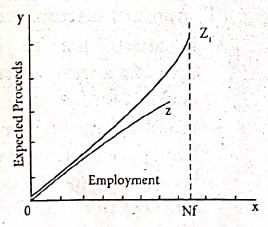
Explain about aggregate supply with the help of diagram.
119.
What is the solution to the problem of double counting in the estimation of national income?
120.
Describe the different types of economic systems.
121.
numerate the factors are taken into account while preparing the budget
122.
Compare and contrast primary and secondary data.
123.
Explain Multiplier with help of suitable diagram.
124.
Explain the four sector model of economy with chart.
125.
Explain the causes for Balance of Payment Disequilibrium.
126.
Discuss the method measuring the National Income by Income Method.
127.
Draw the 7 pillars of NITI Aayog.
128.
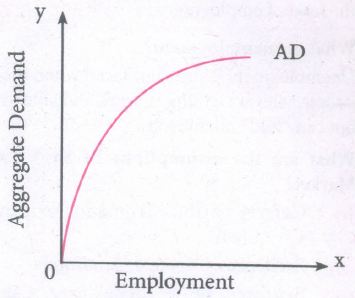
Draw the diagram ADF.
129.
What are the objectives of ARDC? Explain.
130.
What are the differences between MEC and MEI.
1.
(b)
(1) – (ii) (2) – (iii) (3) – (iv) (4) – (i)
2.
(d)
III and IV are only correct
3.
(b)
100 subjects
4.
(b)
demand draft
5.
(a)
Bank of Imperial (1921)
6.
(a)
(1) – (i) (2) – (ii) (3) – (iv) (4) – (iii)
7.
(d)
High unemployment during recessions
8.
(b)
Trade Related Intellectual Property Rights
9.
(d)
all of the above
10.
(a)
but falls short of authorization
11.
(c)
To be the World Reserve Currency
12.
(a)
General Agreement on Tariff and Trade
13.
(a)
Credit money
14.
(a)
David Ricardo
15.
(a)
Yi = β0 + β1Xi
16.
(a)
(1) – (i) (2) – (ii) (3) – (iv) (4) – (iii)
17.
(d)
t - test
18.
(c)
P.C. Mahalanobis and statistics
19.
(b)
Income tax
20.
(b)
interindustry specialization and trade
21.
(a)
Both A and R are true and R is the correct explanation of A
22.
(b)
Both countries gain from trade
23.
(d)
| I | II | III | IV |
| 2 | 3 | 4 | 1 |
24.
(a)
Oxygen
25.
(a)
MPC
26.
(d)
Both A and R are false.
27.
(a)
positive
28.
(d)
Y = C + I
29.
(b)
A.J. Brown
30.
(b)
Material balance Approach
31.
(b)
Dividing GNP by population
32.
(b)
Government
33.
(d)
all the above
34.
(d)
Price mechanism
35.
(b)
2
36.
(c)
Milton Friedman
37.
(c)
Correlation coefficient
38.
(c)
Singular and Plural.
39.
(a)
Vicious circle of poverty
40.
(b)
New welfare oriented approach
41.
(a)
Eutrophication
42.
(d)
Joseph Stiglitz and Edward Chamberiin
43.
(c)
Agricultural Income Tax
44.
(d)
All the above
45.
(d)
China
46.
(a)
Singapore
47.
(c)
the purchase of bonds or stock issued by a textile company overseas
48.
(d)
49.
(a)
Banking license
50.
(c)
Both a and b
51.
(c)
plastic money
52.
(b)
saving deposits with post office savings bank
53.
(d)
increase
54.
(a)
₹ 0.8
55.
(b)
Automatic price mechanism
56.
(c)
Dynamic society
57.
(d)
GNP
58.
(a)
National Income
59.
(b)
America
60.
(b)
Income Theory
61.
Escheats refer to the claim of the state to the property of persons who die without legal heirs or documented will.
62.
(i) Issues currency
(ii) Banker to the government
(iii) collects receipts of funds and makes payments on behalf of the government
(iii) Regulator of Indian Banking system
(iv) Custodian of Forex
(v) Controller of credit
63.
John Maynard Keynes and Harry Dexter Whiteare the “founding fathers” of both the World Bank and the International Monetary Fund (IMF) which came as an outcome of Brettenwoods conference.
64.
NITI Aayog is based on the 7 pillars of effective governance –
(1) Pro-People
(2) Pro-Activity
(3) Participation
(4) Empowering
(5) Inclusion of all
(6) Equality
(7) Transparency
65.
(i) Fiscal policy is now recognized as an important instrument to tackle an inflationary situation.
(ii) The major anti-inflationary fiscal measures are the following: Reduction of Government Expenditure and Public Borrowing and Enhancing taxation.
66.
Reserve Money consists of two things (a) vault cash in banks and (b) deposits of commercial banks with RBI.
67.
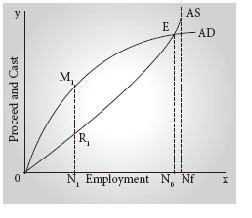
68.
The following are the criticisms against Say’s law:
1. According to Keynes, supply does not create its demand. It is not applicable where demand does not increase as much as production increases.
2. Automatic adjustment process will not remove unemployment. Unemployment can be removed by increase in the rate of investment
69.
i. Modern technology being capital intensive requires lesslabourers and contributes to technological unemployment.
ii. Now a days, invention and innovations lead to the adoption of new techniques there by the existing workers are retrenched
70.
It cannot establish the exact degree of correlation between the variables, but provides direction of correlation and depicts it is high or low.
71.
There are three major types of economic systems.
(i) The factor cost refer to the cost of production such as the cost of renting machines, purchasing machinery and land, paying salaries and wages, cost of obtaining capital, and the profit margins that are added by the entrepreneur
72.
Market Price = MP = FC + Indirect Taxes - Subsidies
Factor Cost = FC = MP - Indirect Taxes + Subsidies
73.
1. There are two countries and two commodities (2 x 2 model).
2. Labour is the only factor of production.
3. Labour units are homogeneous.
4. The cost or price of a commodity is measured by the amount of labour required to produce it.
5. There is no transport cost.
74.
The reason that both equations are true is because of the identity MPS + MPC = 1. This is true because there are only two things that one can do with one's income - consume and save.
75.
The combined effect of the multiplier and the accelerator is also called the leverage effect which may lead the economy to very high or low level of income propagation.
Symbolically,
Y= C + IA + IP
Y = Aggregate income.
C = Consumption expenditure
IA = autonomous investment
IP = induced private investment
76.
Y = National Income
C = Consumption Expenditure
I = Investment Expenditure
G = Government Expenditure
(X – M) = Net Exports
77.
(i) Surface water pollution.
(ii) Ground water pollution.
(iii) Micro biological pollution.
(iv) Oxygen depletion pollution.
78.
(i) Long term plan is also known as perspective plan.
(ii) The period of perspective plan is 10 - 30 years.
(iii) This plan brings structural changes in the economy.
79.
(i) Quantitative Method
(ii) Qualitative Method
80.
Economic policies are necessary to solve the basic problems to overcome the obstacles and to achieve growth.
81.
All economics face the problem of business fluctuations.
82.
(i) Central planning authority is the controlling authority in a socialistic economy.
(ii) All the decisions are under taken by the central planning authority.
(iii) It means all factors of production are nationalized and managed by public authority.
83.
84.
(i) Based on characteristics there are quantitative and qualitative data.
(ii) Qualitative data is classified as nominal data and rank data.
(iii) Based on the data sources there are primary data and secondary data.
85.
| Economic Growth | Economic Development |
|---|---|
| Deals with the problems of develop ed countries |
Deals with the problems of UDCs (Under Developed Countries) |
| Change is gradual and stead | Change is discontinuous and s spontaneous |
| Means more output | Means not only more output but also its composition. |
| Concerns Quantitative aspects i.e. increase in per capita income | Quantitative as well as Qualitative |
| Narrow Concept | Wider Concept Development = Growth + Change. |
86.
(i) A seed ball is a seed that has been wrapped in soil materials, usually a mixture of clay and compost and then dried.
(ii) The seed is pre-planted and can be sown by depositing the seed ball anywhere suitable for the species, keeping the seed safely until the proper germination window arises.
87.
(i) "Public finance is one of those subjects that lie on the border linè between Economics and Politics. It is concerned with income and expenditure of public authorities and with the adjustment of one to the other". . - Huge Dalton
(ii) Public finance is an investigation into the nature and principles of the state revenue and expenditure - Adam Smith
88.
(i) According to Adam Smith, the basis of international trade was absolute cost advantage.
(ii) To Ricardo the basis of trade is comparative cost advantage.
(iii) Trade can take place even if the absolute cost difference is absent but there is comparative cost difference.
89.
(i) It aims to control and regulate the purposes for which credit is granted by commercial banks.
(ii) It is of 2 types: variable portfolio ceiling and variable capital asset ratio
90.
(i) The value of the monetary unit is directly linked with a certain weight of gold.
(ii) The purchasing power of a unit of money is maintained equal to the value of a fixed weight of gold.
91.
It is the proportion of total income that the consumers save rather the spend on goods.
92.
93.
(i) "Full employment is the absence of involuntary unemployment." - Keynes
(ii) "Full employment is that level of employment at which any further increase in spending would result in an inflationary spiral of wages and prices" - Lerner
94.
95.
96.
| BASIS | CRR | SLR |
| Meaning | CRR is the percentage of money which the bank has to keep with the Central Bank of India in the form of cash. | The bank has to keep a certain percentage of their Net Time and Demand Liabilities in the form of liquid assets as specified by RBI |
| Form | Cash | Cash and other assets like gold and government securities viz. Central and State government securities. |
| Effect | It controls excess money flow in the economy. | It helps in meeting out the unexpected demand of any depositor by selling the bonds. |
| Maintenance with | Central Bank of India i.e. RBI |
Bank itself. |
| Regulates | Liquidity in the economy | Credit growth in the economy. |
97.
(i) Money is anything that is generally accepted as a medium of exchange.
(ii) Money must be able to act as a medium of exchange, a store of value, and a unit of account. For money to act as a medium of exchange, sellers must generally accept and buyers must generally use it to pay for goods and services.
(iii) For money to serve as a store of value, it can be used to transport purchasing power from one period of time to another.
(iv) For money to serve as a unit of account, it must function as a consistent way of quoting prices.
(v) The primary function of money is to serve as a medium of exchange.
98.
NSSO has four divisions:
1. Survey Design and Research Division (SDRD)
2. Field Operations Division (FOD)
3. Data Processing Division (DPD)
4. Co-ordination and Publication Division (CPD)
99.
| BASIS FOR COMPARISON | FDI | FII |
| Meaning | When a company situated in one country makes an investment in a company situated abroad, it is known as FDI. | FII is when foreign companies make investments in the stock market of a country. |
| Entry and Exit | Difficult | Easy |
| What it brings? | Long term capital | Long/Short term capital |
| Transfer of | Funds, resources, technology, strategies, know how etc. | Funds only. |
| Economic Growth | Yes | No |
| Consequences | Increase in country's Gross Domestic Product (GDP). | Increase in capital of the country. |
| Target | Specific Company | No such target, investment flows into the financial market. |
| Control over a company | Yes | No |
100.
i. Stimulate exports and export more goods than import. This approach will provide the gold inflow;
ii. Restrict the importation of goods, especially luxury goods that will provide export balance of trade;
iii. Forbid the production of the final products in its colonies;
iv. Forbid the exportation of raw materials from the parent states to the colonies and allow free importation of raw materials, which are not obtained within the country;
v. Stimulate an export of mainly cheap raw commodities from the colonies;
vi. Forbid any trade of its colonies with other countries, except the parent state, which can resell the colonial goods abroad by itself.
101.
1. Transfer payments are not to be included in estimation of national income as these payments are not received for any services provided in the current year such as pension, social insurance etc.
2. The receipts from the sale of second hand goods should not be treated as part of national income as they do not create new flow of goods or services in the current year.
3. Windfall gains such as lotteries are also not to be included as they do not represent receipts from any current productive activity.
4. Corporate profit tax should not be separately included as it has been already included as a part of company profit.
102.
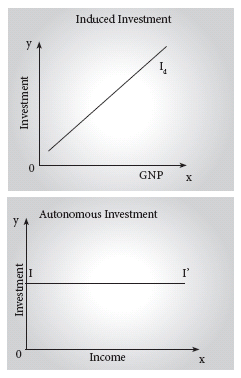
103.
i. Solid waste:
It includes all kinds of rubbish like paper, plastic containers, bottles, cans, food, used cars, broken electronic goods, municipal waste, and hospital waste.
ii. Pesticides and Fertilizers:
Many farming activities engage in the application of fertilizers, pesticides and insecticides for higher crop yield which pollute land.
iii. Deforestation:
Humans depend on trees for many things including life. Trees absorb carbon dioxide from the air and release Oxygen, which is needed for life. Forest helps replenish soils and help retain nutrients being washed away. Deforestation is led to land pollution.
104.
i) Use of restrictive measures for BoP problems has declined markedly.
ii) Services trade has been brought in to the multilateral system and many countries.
105.
| S.No | Direct tax | Indirect tax |
|---|---|---|
| 1. | Taxes on income. | Taxes on commodities and services. |
| 2. | Taxes are imposed on one person and collect from the -same person. | Taxes are imposed on one person and collected from another person. |
| 3. | Tax cannot be shifted. | Tax can be shifted. |
| 4. | Tax paid by the rich. | This tax is paid by the poor. |
| 5. | Tax evasion is impossible. | Tax evasion is possible. |
| 6. | This tax is progressive. | This tax is Regressive. |
| 7. | Examples: Income tax, wealth tax, corporate tax, gift tax, estate duty, expenditure tax, etc. | Examples: Excise duty, customs duties, sales tax, etc. |
106.
Types of planning:
1. Democratic
2. Totalitarian
3. Planning by Direction
4. Inducement
5. Short, Medium and Long term
6. Functional
7. Structural
8. Centralized
9. Decentralized
10. Indicative
11. Imperative
12. Financial
13. Physical
14. Comprehensive
15. Partial
107.
The following are the criticisms against Say's law:
(i) According to Keynes, supply does not create its demand. It is not applicable where demand does not increase as much as production increases.
(ii) Automatic adjustment process will not remove unemployment. Unemployment can be removed by increase in the rate of investment.
(iii) Money is not neutral. Individuals hold money for unforeseen contingencies while businessmen keep cash reserve for future activities.
108.
Two Sector Model:
It is for simple economy with households and firms
Three Sector Model:
It is for mixed and closed economy with households, firms and government.
Four Secto Model:
It is for an open economy with households, firms, government and rest of the world.
109.
Three of the most important ways of classifying correlation are:
(i) Based on the direction of change of variables
Positive Correlation:
(i) The correlation is said to be positive if the values of two variables move in the same direction.
(ii) Ex. Y = a + bx
Negative Correlation:
(i) When the values of variables move in the opposite directions.
(ii) Ex. Y = a - bx
(ii) Based on the number of variables studied.
Simple Correlation:
(i) If only two variables are taken for study.
Multiple Correlations:
(i) If three or more than three variables are studied simultaneously.
\(\operatorname{Ex}: Q_{d}=f\left(P, P_{v}, P, t, y\right)\)
Partial Correlation:
(i) If there are more than two variables but only two variables are considered keeping the other variables constant, then the correlation is said to be Partial Correlation.
(iii) Based on the constancy of the ratio of change between the variables
Linear Correlation:
(i) When on the amount of change in one variable tends to bear a constant ratio to the amount of change in the other.
(ii) Ex. Y = a + bx2
Non Linear:
(i) The amount of change in one variable does not bear a constant ratio to the amount of change in the other variables.
(ii) Ex. Y = a + bx2
110.
(i) On the supply side of the vicious circle of poverty there is low rate of saving and investment.
(ii) In UDCs to increase the rate of investment and capital formation, the marginal rate of savings must be greater than the average rate of savings.
(iii) On the demand side, Nurkse suggested balanced growth.
(iv) If investment is made in several industries simultaneously the workers will become consumers of each other's products creating mutual demand.
111.
1. Man's life is interconnected with various other living and non-living things.
2. Life also depends on social, political, ethical, philosophical and other aspects of economic system.
3. The life of human beings is shaped by his living environment.
4. The relationship between the economy and the economy is explained in the "Material Balance Model" developed by Alen Kneese and R.V. Ayres.
5. Households and firms are connected to environment, and they are interconnected too.
6. Households and firms depend on nature for resources.
7. They send out residuals of consumption and production to nature.
8. Nature assimilates all forms of waste.
9. Thus the economy and environment are interconnected.
112.
Rationality
1. Both public finance and private finance are based on rationality.
2. Maximization of welfare and least cost factor combination underlie both.
Limit to borrowing
1. Both have to be restrained with borrowing.
2. Government cannot live beyond its means.
3. There is a limit to deficit financing by the state.
Resource utilisation
1. Both have to make optimum use of their limited resources.
Administration
1. If the administrative machinery is inefficient and corrupt it will result in wastages and losses.
113.
The main functions of SAARC are as follows.
1) Maintenance of the cooperation in the region.
2) Prevention of common problems associated with the member nations.
3) Ensuring strong relationship among the member nations.
4) Removal of the poverty through various packages of programmes.
5) Prevention of terrorism in the region.
114.
(i) It is a trade restriction that sets a limit on the quantity of a good that can be imported into a country in a given period of time.
(ii) Quotas are used to benefit the producers of good in that economy.
115.
1) NABARD acts as a refinancing institution for all kinds of production and investment credit to agriculture, small-scale industries, cottage and village industries, handicrafts, rural crafts and real artisans to promote integrated rural development.
2) It provides short-term, medium term and long-term credit to state co-operative Banks, RRBs, LDBs and other financial institutions approved by RBI.
3) NABARD gives long-term loans (20 Years) to State Government to enable them to subscribe to the share capital of co-operative credit societies.
4). It gives long-term loans to any institution approved by the Central Government or contribute to the share capital or invests in securities of any institution concerned with agriculture and rural development.
5) NABARD co-ordinates the activities of Central and State Governments, Planning Commission and all India and State level institutions entrusted with the development of small scale industries, village and cottage industries, rural crafts, industries in the tiny and decentralized sectors
6) It has the responsibility to inspect RRBs and CO-operative banks, other than primary co-operative societies.
7) It maintains a Research and Development Fund to promote research in agriculture and rural development
116.
(i) After the barter system and commodity money system, modern money systems evolved.
(ii) Metallic standard is the premier one.
(iii) Some kind of metal, gold or silver is used to determine the standard value of the money and currency.
(iv) Standard coins made out of the metal are the principal coins used under the metallic standard.
(v) These Standard coins are full bodied or full weighted legal tender.
(vi) Their face value is equal to their intrinsic metal value.
117.
(i) When income incrcases, consumption expenditure also incrcases but by a smaller amount.
(ii) The increased income will be divided in some proportion between consumption expenditure and saving.
(iii) Increase in income always leads to an increase in both consumption and saving.
118.
(i) Aggregate supply refers to the value of total output of goods and services produced in an economy in a year ie national product or income.
(ii) The components of aggregate supply are:
(iii) Aggregate (desired) consumption expenditure (C)
(iv) Aggregate (desired) private savings (S)
(v) Net tax payments (T)
(vi) Personal (desired) transfer payments to the foreigners (Rf)
AS = C + S + T + Rf
In this figure 2 aggregate supply curves are drawn for the assumption of fixed money wages and variable wages.
Explanation
(i) Z Curve is linear (fixed money wages)
(ii) Z1 curve is non-linear (wage rate increases with employment)
(iii) When full employment level of Nf is reached output cannot be increased by employing more men.
(iv) So aggregate supply curve becomes inelastic (Vertical straight line).
(v) In reality aggregate supply curve will be like Z1 .
(vi) If prices are high and wages low, the producers will employ more labourers.
(vii) 4YAggregate supply is an important factor in determining the level of economic activity.
119.
(i) To avoid double counting, either the value of the final output should be taken into the estimate of GNP or the sum of values added should be taken.
(ii) The value of the final product is derived by the summation of all the values added in the productive process.
(iii) Any commodity which is either raw material or intermediate good should not be included.
(iv) For example, value of cotton enters value of yarn as cost, and value of yarn in cloth and that of cloth in garments.
(v) At every stage only the value which is added should be considered.
120.
Capitalism:
(i) The means of production are privately owned.
(ii) Manufacturers produce goods and services with profit motive.
(iii) Individual can take up any occupation and develop any skill. E.g. USA.
Socialism:
(i) All resources are owned and operated by the government.
(ii) Public welfare is the main motive.
(iii) There is equality in the distribution of income and wealth. E.g. China
Mixedism:
(i) Both private and public sectors co-exist and work together.
(ii) Resources are owned by individuals and the government. E.g. India
121.
(i) The macro economic targets to be achieved within a plan period;
(ii) The basic strategy of the budget;
(iii) The financial requirements of different projects;
(iv) Estimates of the revenue expenditures (includes defence expenditure, subsidy, interest payment on debt etc.);
(v) Estimates of the capital expenditures (includes development of railways, roadways, irrigations etc.);
(vi) Estimates of revenue receipts from tax and non-tax revenues;
(vii) Estimates of capital receipts from the recovery of loans, disinvestment of public sector units, market borrowings etc.
(viii) Estimates of the gap between revenue receipts and revenue expenditure; and
(ix) Estimates of fiscal deficit, primary deficit, and revenue deficit.
(x) Finance commission is a quasi-judicial body set up under Article 280 of the Indian Constitution. It was established in the year 1951, to define the fiscal relationship framework between the Centre and the state.
122.
| BASIS FOR COMPARISON |
PRIMARY DATA | SECONDARY DATA |
| Meaning | Those data which do not ready exist in any form, and thus have to be collected for the first time from the primary source(s). | They already exist in zome form: published or npublished in an identifiable secondary source. |
| Nature | Real time data - first-time collected | Past data - available from published source(s) |
| Process | Very involved | Quick and easy |
| Source | Surveys, observations, experiments, questionnaire, personal interview, etc. |
Government publications, websites, books, journal articles, internal records etc. Eg. Data from CSO, NSSO, RBI |
| Cost-effectiveness | Expensive | Economical |
| Collection time | Long | Short |
| Form | Crude form | Refined form |
| Accuracy and Reliability | More | Relatively less |
123.
Definition
(i) The multiplier is defined as the ratio of the change in national income to change in investment.
(ii) If ΔI stands for increase in investment and ΔY stands for resultant increase in income, the multiplier K =ΔY/ΔI.
Assumptions of Multiplier
1. There is change in autonomous investment.
2. There is no induced investment
3. The marginal propensity to consume is constant.
4. Consumption is a function of current income.
5. There are no time lags in the multiplier process.
6. Consumer goods are available in response to effective demand for them.
7. There is a closed economy unaffected by foreign influences.
8. There are no changes in prices.
9. There is less than full employment level in the economy.
The value of multiplier depends on MPC
Multiplier K = 1/1-MPC
(i) The multiplier is the reciprocal of one minus marginal propensity to consume. Since marginal propensity to save is 1 - MPC. (MPC + MPS = 1).
(ii) Multiplier is 1/ MPS. The multiplier is therefore defined as reciprocal of MPS. Multiplier is inversely related to MPS and directly with MPC.
Numerically, if MPC is 0.75, MPS is 0.25 and k is 4.
Using formula k = 1/1- MPC
1/1-0.75 =1/0.25 =4
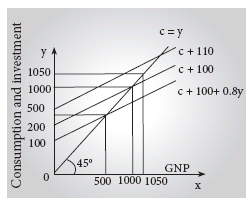
Diagrammatic Explanation.
(1) At 45° line y = C+ S
(2) It implies the variables in axis and axis are equal.
(3) The MPC is assumed to be at 0.8 (C = 100 + 0.8y)
(4) The aggregate demand (C + I) curve intersects 45° line at point E.
(5) The original national income is 500. (C = 100 + 0.8y = 100 + 0.8(500) = 500)
(6) When I is 100, y = 1000, C = 900; S = 100 = I
(7) The new aggregate demand curve is C + I = 100 + 0.8y + 100 +10
(8) Y = 210 / 0.2 = 1050
(9) C = 940; S = 110 = I
124.
(i) In a four-sector economy, in addition households, firms and government, a fourth sector namely, external sector is included.
(ii) In the real life, only four-sector economy exists. This model is composed of four sectors namely,
1. Households
2. Firms
3. Government
4. External Sector
The external sector comprises exports and imports. It is illustrated in the Flow Chart
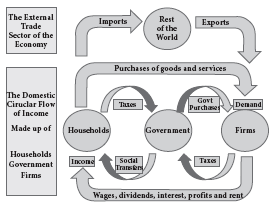
In four-sector economy, expenditure for the entire economy include domestic expenditure (C + I + G) and net exports (X - M). Therefore,
Y = C + I + G + (X - M)
125.
(i) Cyclical Fluctuation:
Cyclical disequilibrium in different countries is caused by their cyclical fluctuations their phases and magnitude.
(ii) Structure Change:
Its caused by the structural changes brought by huge development and investment programmes in the developing countries.
(iii) Development Expenditure:
(1) Its caused by rapid economic development which results in income and price effects.
(2) The less developed countries in the early stage of development are not self sufficient.
(iv) Consumerism:
Balance of payments position of a country is adversely affected by a huge increase in consumption.
v) Demonstration Effect:
Deficit in the balance of payments of developing countries is also caused by demonstration effect.
vi) Borrowing:
International borrowing and investment may cause a deficit in the balance of payments.
(vii) Global Politics:
The rich countries need to sell their weapons to promote their economy and generate employment.
126.
(i) Income by Income Method. Income method approaches National Income from the distribution side.
(ii) National income is calculated by adding up all the incomes generated in the course of producing national product.
(iii) Factor incomes are grouped under labour income, capital income and mixed income.
(iv) national income is calculated as domestic factor income plus net factor incomes from abroad. In short,
Y = w + r + i + π + (R-P)
w = wages
r = rent
i = interest
π = profits
R = Exports
P = Imports
(v) This method is adopted for estimating the contributions of the remaining sector, viz.
(vi) Data on income from abroad (the rest of) the world sector or foreign sector are obtained from the account of the balance of payment of the country.
Items no to be included:
(1) Transfer payments are not to be included in estimation of national income.
(2) The receipts from the sale of second hand goods should not be treated as part of national income.
Item to be included:
(1) Imputed value of rent for self occupied house or offices is to be included.
(2) Imputed value of services provided by owners of production unit (family labour) is to be included.
127.
7 pillars of effective governance:
NITI AAYOG
| Pro-People | Fulfills aspirations of society as well as individuals |
| Pro-Activity | in anticipation response to citizen needs |
| Participation | involvement of citizenry |
| Empowering | Women in all aspects |
| Inclusion of all | SC, ST, OBC, minorities, gareeb, gaon, kisaan |
| Equality | of opportunity for the youth |
| Transparency | making government visible and responsive. |
128.
129.
(i) The agricultural development, an organization is called The Agricultural Refinance Development Corporation.
(ii) It was established by an act of parliament and it started functioning from 1 July, 1953.
(iii) The main aim of ARDC is to bridging the gap in agricultural finance and to extend credit for projects.
Objective of ARDC:
(i) To provide necessary funds by way of refinance to eligible institutions such as the Central land development Banks, State co-operative Banks and Scheduled Banks.
(ii) To subscribe to the debentures floated by the Central land Development Banks, State co-operative Banks, and Scheduled Bank provided they were approved by the RBI.
130.
| S. No | Marginal Efficiency of Captial (MEC) | Marginal Efficiency of Investment (MEI) |
|---|---|---|
| 1. | It is based on given supply price for capital. | It is based on the induced change in the price due to change in the demand for capital. |
| 2. | It represents the rate of return on all successive unit of capital without regard to existing capital. | It shows the rate of return on just those units of capital over and above the existing capital stock |
| 3. | The capital stock is taken on the X axis of diagram. | The amount of investment is taken on the X axis of diagram. |
| 4. | It is a 'Stock' concept. | It is a 'Flow' concept. |
| 5. | It determines the optimum capital stock in an economy at each level of interest rate. | It determines the net investment of the economy at each interest rate given the capital stock. |

12th Standard Syllabus & Materials
12th Standard
TN 12th Computer Applications களப்பெயர் முறைமை (DNS) Sample Question Papers Study Material - QB365 Set A
NEW12th Standard
TN 12th Computer Applications வலையமைப்பு எடுத்துக்காட்டுகள் மற்றும் நெறிமுறைகள் Sample Question Papers Study Material - QB365 Set A
NEW12th Standard
TN 12th Computer Applications கணினி வலையமைப்பு ஓர் அறிமுகம் Sample Question Papers Study Material - QB365 Set A
NEW12th Standard
TN 12th Computer Applications PHP-உடன் MySQL-ஐ இணைத்தல் Sample Question Papers Study Material - QB365 Set A



Tamilnadu Stateboard 12th Standard Subjects

Maths

Chemistry

Physics

Biology

Computer Science

Business Maths and Statistics
Economics

Commerce

Accountancy

History

Computer Applications
Biology
Computer Technology
Computer Applications
Computer Science
Business Maths and Statistics
Commerce
Economics
Maths
Chemistry
Physics
Computer Technology
History
Accountancy

Tamil

English

French
Tamilnadu Stateboard Standards
