
 100% FREE ACCESS
12th Standard Syllabus & Materials
12th Standard
TN 12th Computer Applications மின்னணு தரவு பரிமாற்றம் Sample Question Papers Study Material - QB365 Set A
NEW12th Standard
TN 12th Computer Applications மின் - வணிக பாதுகாப்பு அமைப்புகள் Sample Question Papers Study Material - QB365 Set A
NEW12th Standard
TN 12th Computer Applications மின்னணு செலுத்தல் முறைகள் Sample Question Papers Study Material - QB365 Set A
NEW12th Standard
TN 12th Computer Applications மின் - வணிகம் Sample Question Papers Study Material - QB365 Set A
NEW12th Standard
TN 12th Computer Applications திறந்த மூல கருத்துருக்கள் Sample Question Papers Study Material - QB365 Set A
NEW12th Standard
TN 12th Computer Applications வலையமைப்பு வடமிடல் Sample Question Papers Study Material - QB365 Set A

Published on: 12/02/2020
12th Standard Economics Important Question-I-2019-2020
Download Tamil Nadu 12th Standard Economics question papers, model tests, one-mark questions, important questions, and public exam papers in PDF format. Free study materials and answer keys for TN State Board students.
Questions + Answers key
Take MCQ Economics Test
1.
Find the correct answer.
| Head | Duration |
| C. Rangarajan | 2005–10 |
| Dr. Vijay L. Kelkar | 2020–25 |
| Dr. Y. V Reddy | 2015–20 |
| N. K. Singh | 2010–15 |
All are incorrect
I and II are incorrect
II and III are incorrect
II and IV are incorrect
2.
Direct taxes satisfy the canon of ……….?
efficiency
economy
elasticity
equity
3.
The interest payment of the central government has increased from Rs. 21,500 crores in ________ to Rs. 5, 75,794 crores in _________?
1950-51 and 2018-19
2000-01 and 2018-19
1990-91 and 2018-19
1960-61 and 2018-19
4.
Assertion: The power of commercial bank to create deposits through expanding their loans and advances is known as credit creation.
Reason: Banks have the power to expand or contract demand deposits and they exercise this power through granting more or less loans and advances and acquiring other assets.
Both A and R are true and R is the correct explanation of A
Both A and R are true but R is not the correct explanation of A
A is true but R is false
A is false but R is true
5.
Expand SIDC
State Industrial Development Company
Small Industrial Development Corporation
State Investment Development Corporation
State Industrial Development Corporation
6.
_____ and _____ are the frequently used tools with which the RBI can control the availability and the supply of money in the economy.
The Repo Rate and the Reverse Repo Rate
CRR, SLR
Moral Suasion, Credit Ceiling
The Reverse Repo Rate, The Repo Rate
7.
Assertion: SDRs act both as an international unit of account and a means of payment.
Reason: SDRs are used as a means of payment by Fund members to meet balance of payments deficits and their total reserve position with the Fund.
Both A and R are true and R is the correct explanation of A
Both A and R are true but R is not the correct explanation of A
A is true but R is false
A is false but R is true
8.
Who issues the Special Drawing Rights (SDR) in the following?
World Bank
World Trade Organization
Asian Development Bank
International Monetary Fund
9.
Thalib lost his job during the last recession. What type of unemployment is he experiencing?
frictional unemployment
structural unemployment
cyclical unemployment
natural unemployment
10.
The development of money as a medium of exchange has facilitated the expansion of trade because
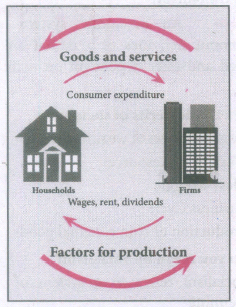
Holding money increases people's income
No other mediums of exchange are available
Money eliminates the "double coincidence of wants" problem
Holding money increases people's wealth
11.
Assertion: When the disposable income of the people increases, it raises their demand for goods and services.
Reason: Disposable income may increase with the rise in national income or reduction in taxes or reduction in the saving of the people.
Both (A) and (R) are true and (R) is the correct explanation of (A)
Both (A) and (R) are true, but (R) is not the correct explanation of (A)
(A) is true, but (R) is false
(A) is false, but (R) is true
12.
__________can be cured by public investment or expansionary monetary policy.
Frictional unemployment
Structural unemployment
Cyclical unemployment
educational unemployment
13.
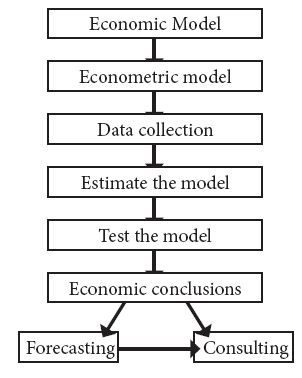
The branch of economics wherein mathematics and statistics are used to measure and analyze economics activities is called _________.
Applied Economics
Econometrics
Statistics
Macro Economics
14.
Identify an example of digital currency.
crypto currencies
ATM
Legal Tender Money
None of the above
15.
The concept "development" refers to the _____________ changes towards betterment.
systematic
seasonal
structural
functional
16.
When the correlation coefficient, r, is close to one:
there is no relationship between the two variables
there is a strong linear relationship between the two variables
it is impossible to tell if there is a relationship between the two variables
the slope of the regression line will be close to one
17.
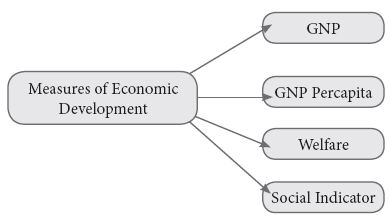
Match the correct codes
| 1 | Monetary measures | i | Import Duties |
| 2 | Export Promotion | ii | Foreign Loans |
| 3 | Import Control | iii | Abolition / reduction of duties |
| 4 | Miscellaneous Measures | iv | Monetary Contraction / Expansion |
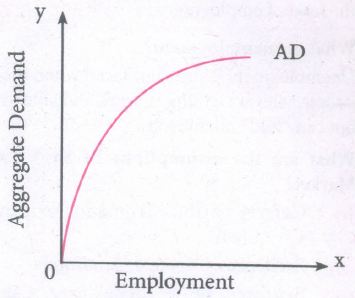
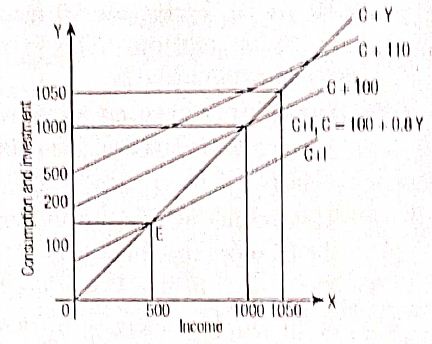
(1) – (i) (2) – (ii) (3) – (iv) (4) – (iii)
(1) – (ii) (2) – (iii) (3) – (iv) (4) – (i)
(1) – (iv) (2) – (iii) (3) – (i) (4) – (ii)
(1) – (i) (2) – (ii) (3) – (iii) (4) – (iv)
18.
Ronald Fisher is known as __________?
Father of statistics
Father of Mathematical economics
Father of econometrics
Father of Applied Economics
19.
Find the incorrect one in the context of Income from illegal activities
gambling
arbitration
smuggling
illicit extraction of liquor
20.
Which of the following conditions indicate the impact of global warming?
1. Melting of glaciers
2. Lowering down of sea level
3. Changes in weather conditions
4. Rise in global temperature
Select the correct answer from the codes given below:
Codes:
1 and 2
1, 2 and 3
1, 3 and 4
1,4
21.
Suppose a doctor from England is invited to diagnose the health status of a VIP in our State. The fees which we pay to the doctor are entered in to which account of the BOPs Account?
The current account
The capital account
State account of expenses
The official settlements account or official reserve assets account
22.
Keynes assumed the presence of _____ economy for the fundamental law of consumption.
Capitalistic
Socialistic
Planned
None of the above
23.
Ratio of consumption expenditure to any particular level of income
MPS
APS
APC
MPC
24.
Pure public goods pose a ________________?
free-rider problem
environment tax
environment fee
none of the above
25.
_________________ considers the total economic process as a physically balanced flow between inputs and outputs.
Material Balance Model
Material Equality Model
Material Environmental Model
Material atmospheric Model
26.
The government may impose industrial safety regulations and occupational licensing requirements in which of the following economic systems?
laissez-faire economy
laissez-faire economy
mixed market economy
macroeconomic system
27.
Mercantilism
Is the philosophy of free international trade
Was a system of export promotion and barriers to imports practiced by governments
Was praised by Adam Smith in The Wealth of Nations
Both (a) and (c)
28.
Who is the proponent of the following statement? “The community with more equal distribution of income tends to have high propensity to consume.”
Keynes
V.K.R.V. Rao
Hicks
Say
29.
World Bank is otherwise called ______.
ASEAN
IBRD
International finance
SAARC
30.
__________ employ factors of production to produce the goods and services.
Consumer
Business sectors
House holds
Farmers
31.
National income per person is used as an indicator of ________.
standard of living of people
poverty of the people
the richness of people
growth of industrialisation
32.
There will be ______ planning in acapitalist economy
rural
urban
total
partial
33.
________________ started functioning from 1st July 1963.
ARDC
IMF
RBI
SBI
34.
The first Five Year Plan of India was launched in
1947
1951
1956
1961
35.
Identify the stock variable.
Wealth
Income
Foreign exchange
Money
36.
Father of socialism _________.
Adamsmith
J.M. Keynes
Karl Marx
J.R. Hicks
37.
In the regression equation \(Y={ \beta }_{ 0 }+{ \beta }_{ 1 }{ X }_{ , }\) the X is called:
Independent variable
Dependent variable
Continuous variable
None of the above
38.
A measure of the strength of the linear relationship that exists between two variables is called:
Slope
Intercept
Correlation coefficient
Regression equation
39.
Sarvodaya Plan was advocated by__________
Mahatma Gandhi
J.P.Narayan
S.N Agarwal
M.N. Roy
40.
The basic philosophy behind long-term planning is to bring _______changes in the economy?
Financial
Agricultural
Industrial
Structural
41.
Primary cause of Soil pollution is ________
Pest control measures
Land reclamation
Agricultural runoff
Chemical fertilizer
42.
Global warming also refers to as
Ecological change
Climate Change
Atmosphere change
None of the above
43.
The primary purpose of deficit financing is
Economic development
Economic stability
Economic equality
Employment generation
44.
Which of the following is not a tax under Union list?
Personal Income Tax
Corporation Tax
Agricultural Income Tax
Excise duty
45.
The Tenth BRICS Summit was held in July 2018 at
Beijing
Moscow
Johannesburg
Brasilia
46.
47.
Benefits of FDI include, theoretically
Boost in Economic Growth
Increase in the import and export of goods and services
Increased employment and skill levels
All of these
48.
If there is an imbalance in the trade balance (more imports than exports), it can be reduced by
decreasing customs duties
increasing export duties
stimulating exports
stimulating imports
49.
Expansions of ATM
Automated Teller Machine
Adjustment Teller Machine
Automatic Teller mechanism
Any Time Money
50.
Online Banking is also known as.
E-Banking
Internet Banking
RTGS
NEFT
51.
“Money can be anything that is generally acceptable as a means of exchange and that thesame time acts as a measure and a store of value”, This definition was given by
Crowther
A.C.Pigou
F.A.Walker
Francis Bacon
52.
MV stands for
demand for money
supply of legal tender money
Supply of bank money
Total supply of money
53.
The multiplier tells us how much _______ changes after a shift in _____.
Consumption, income
investment, output
savings, investment
output, aggregate demand
54.
As national income increases
The APC falls and gets nearer in value to the MPC
The APC increases and diverges in value from the MPC.
The APC stays constant
The APC always approaches infinity
55.
According to classical theory, rate of interest is a reward for ______.
Investment
Demand
Capital
Saving
56.
If every able bodied person who is willing to work at the prevailing wage rate is employed called _______.
Full employment
Under employment
Unemployment
Employment opportunity
57.
When net factor income from abroad is deducted from NNP, the net value is__________
Gross National Product
Disposable Income
Net Domestic Product
Personal Income
58.
__________ is deducted from gross value to get the net value
Income
Depreciation
Expenditure
Value of final goods
59.
The country following Capitalism is ________________
Russia
America
India
China
60.
Who is regarded as Father of Modern Macro Economics?
Adam Smith
J M Keynes
Ragnar Frisch
Karl Marx
61.
List the sources of external public debt of India
62.
List any two of concessions RBI to RRBs.
63.
What is the key difference between comprehensive and partial plan?
64.
What is Currency Deposit Ratio (CDR)?
65.
Explain paper currency Standard.
66.
What is Aggregate supply?
67.
Mention few names of Classical theory.
68.
What is Technical Unemployment?
69.
List the major differences between Descriptive Statistics and Inferential Statistics.
70.
Mention any two statistical problems as Difficulties in Measuring National Income
71.
Mention the factors included in PQLI.
72.
What is Favourable BoP?
73.
What is a static multiplier?
74.
What are positive and negative multipliers?
75.
What are the dimensions of sustainable development?
76.
Mention the any three Capitalist Learning economies
77.
Mention any two limitations of macroeconomics
78.
Why was the SDR created?
79.
What is short term planning?
80.
What are the two credit measures of RBI?
81.
Write a note on Central Planning?
82.
Draw the diagram for Circular flow of income in a Two-sector economy
83.
What are the kinds of Statistics?
84.
What is Statistics?
85.
What is GNP?
86.
Define Global warming.
87.
Define public finance.
88.
State any two merits of trade.
89.
90.
What is plastic money? Give example.
91.
Define Accelerator.
92.
What are the components of aggregate supply ?
93.
Define full employment.
94.
What do you mean by the term ‘Personal Income’?
95.
Classify the economies based on status of development.
96.
Discuss the Primary Functions.
97.
Explain the “General Agreement on Trade in Services (GATS)”
98.
What are the Contingent Functions?
99.
Write a note of John Maynard Keynes.
100.
How an econometric model is done?
101.
List the assumption of Comparative advantage theory of international trade.
102.
Compare and contrast different measures of GDP calculations.
103.
State Duesenberry hypothesis.
104.
Explain the Types of Land Pollution.
105.
What are external public debt?
106.
List out the limitations of Modern Theory of International Trade?
107.
Write short note on second five year plan
108.
What are the demerits of mixed economy?
109.
Specify the objectives of econometrics.
110.
Distinguish between functional and structural planning.
111.
Write a note on
a) Climate change and
b) Acid rain
112.
What is primary deficit?
113.
What is Multilateral Agreement?
114.
Compare the Classical Theory of international trade with Modern Theory of International trade.
115.
What are the functions of NABARD?
116.
What is money supply?
117.
State the concept of super multiplier.
118.
Write short note on the implications of Say’s law
119.
Give short note on Expenditure method.
120.
Indicate the demerits of socialism.
121.
Distinguish between Balanced and Unbalanced Budget.
122.
Explain the chain of events that results from an expansionary monetary policy.
123.
Calculate Karl pearson's Cofficient of correlation form the followng data and interpret its value:
| Price:X | 10 | 12 | 14 | 15 | 19 |
| Supply:Y | 40 | 41 | 48 | 60 | 50 |
124.
Elucidate various measures of economic development.
125.
Compare and contrast fixed and flexible exchange rates.
126.
Consider the following are the only transactions take place in an economy:
(i) Industry A imports goods worth Rs. 100. It sells goods worth Rs. 400 to industry B, goods worth Rs. 200 to industry C, and goods worth Rs. 1,000 for private consumption.
(ii) Industry B sells goods worth Rs. 500 to industry C and goods worth Rs. 800 for private consumption.
(iii) Industry C sells goods worth Rs. 600 to private consumption. and exports goods, valued at Rs. 500.
(iv) Depreciation cost during the year amounts to Rs. 100,
(v) Government realises taxes of the value of Rs. 100. Calculate the following with the help of net value added method from the data given above
(a) GNPMP
(b) GNPFC
(c) NNPMP and
(d) NNPFC
127.
Derive the value of the multiplier assuming the basic form of the consumption function as C = a + bY where "a" is autonomous consumption and "b" is the marginal propensity to consume. You may assume a two-sector economy.
128.
Discuss the features of Capitalist economy.
129.
Draw the diagram ADF.
130.
Illustrate the working of Multiplier.
1.
(c)
II and III are incorrect
2.
(c)
elasticity
3.
(c)
1990-91 and 2018-19
4.
(a)
Both A and R are true and R is the correct explanation of A
5.
(d)
State Industrial Development Corporation
6.
(a)
The Repo Rate and the Reverse Repo Rate
7.
(a)
Both A and R are true and R is the correct explanation of A
8.
(d)
International Monetary Fund
9.
(c)
cyclical unemployment
10.
(c)
Money eliminates the "double coincidence of wants" problem
11.
(b)
Both (A) and (R) are true, but (R) is not the correct explanation of (A)
12.
(c)
Cyclical unemployment
13.
(a)
Applied Economics
14.
(a)
crypto currencies
15.
(c)
structural
16.
(b)
there is a strong linear relationship between the two variables
17.
(c)
(1) – (iv) (2) – (iii) (3) – (i) (4) – (ii)
18.
(a)
Father of statistics
19.
(b)
arbitration
20.
(c)
1, 3 and 4
21.
(a)
The current account
22.
(a)
Capitalistic
23.
(c)
APC
24.
(a)
free-rider problem
25.
(a)
Material Balance Model
26.
(c)
mixed market economy
27.
(b)
Was a system of export promotion and barriers to imports practiced by governments
28.
(b)
V.K.R.V. Rao
29.
(b)
IBRD
30.
(b)
Business sectors
31.
(a)
standard of living of people
32.
(d)
partial
33.
(a)
ARDC
34.
(b)
1951
35.
(a)
Wealth
36.
(c)
Karl Marx
37.
(a)
Independent variable
38.
(c)
Correlation coefficient
39.
(b)
J.P.Narayan
40.
(c)
Industrial
41.
(d)
Chemical fertilizer
42.
(d)
None of the above
43.
(a)
Economic development
44.
(c)
Agricultural Income Tax
45.
(c)
Johannesburg
46.
(c)
47.
(d)
All of these
48.
(c)
stimulating exports
49.
(a)
Automated Teller Machine
50.
(b)
Internet Banking
51.
(a)
Crowther
52.
(b)
supply of legal tender money
53.
(d)
output, aggregate demand
54.
(a)
The APC falls and gets nearer in value to the MPC
55.
(d)
Saving
56.
(a)
Full employment
57.
(c)
Net Domestic Product
58.
(b)
Depreciation
59.
(b)
America
60.
(b)
J M Keynes
61.
The main sources of External public debt are IMF, World Bank, IDA and ADB etc. Loan from other countries and the Governments
62.
(a) They are allowed to maintain cash reserve ratio at 3 per cent and statutory liquidity ratio at 25 per cent; and
(b) They also provide refinance facilities through NABARD.
63.
| Comprehensive Plan | Partial Plan |
|---|---|
| General planning which concerns itself with the major issues for the whole economy is known as comprehensive planning | Partial planning is to consider only the few important sectors of the economy |
64.
It is the ratio of money held by the public in currency to that they hold in bank deposits.
65.
The paper currency standard refers to the monetary system in which the paper currency notes issued by the Treasury or the Central Bank or both circulate as unlimited legal tender.
66.
The value of total output of goods and services produced in an economy in a year
67.
David Ricardo, J.S.Mill, J.B.Say and A.C.Pigou. List some limitations of GDP as a measurement of social welfare.
68.
i. Modern technology being capital intensive requires lesslabourers and contributes to technological unemployment.
ii. Now a days, invention and innovations lead to the adoption of new techniques there by the existing workers are retrenched
69.
| S.No | Descriptive Statistics |
Inferential Statistics |
| 1 | It describes the population under study |
It draws the conclusion for the population-based on the sample result. |
| 2 | It presents the data in a meaningful way through charts, diagrams, graphs, other than describing in words | It uses hypotheses, testing and predicting on the basis of the outcome |
| 3 | It gives the summary of data | It tries to understand the population beyond the sample. |
70.
1. Accurate and reliable data are not adequate, as farm output in the subsistence sector is not completely informed.
2. Different languages, customs, etc., also create problems in computing estimates.
71.
(i) The Physical Quality of Life Index PQLI is considered a better indicator of economic welfare.
(ii) It includes standard of living, life expectancy at birth and literacy.
72.
When receipts exceed payments, the BoP is said to be favourable. That is, R / P > 1.
73.
(i) Under static multiplier the change in investment and the resulting change in income are simultaneous. There is no time lag.
(ii) There is also no change in MPC as the economy moves from one equilibrium position to another.
74.
Positive Multiplier
When an initial increases in an injection (or a decrease in a leakage ) leads to a greater final increase in real GDP.
Negative Multiplier
When an initial increases in an injection (or an increase in a leakage ) leads to a greater final decrease in real GDP.
75.
The SDGs links three dimensions of sustainable development: economic development, social inclusion and environmental sustainability.
76.
| France | Sweden |
| United States | Japan |
77.
Macro economics suffers from certain limitations. They are:
1. There is a danger of excessive generalisation of the economy as a whole
2. It assumes homogeneity among the individual units.
3. There is a fallacy of composition. What is good of an individual need not be good for nation and viceversa. And, what is good for a country is not good for another country and at another time.
4. Many non - economic factors determine economic activities; but they do not find place in the usual macroeconomic books
78.
i) The SDR (Special Drawing Right) was created for supplementary 'The World Reserve Currency (asset).
ii) Create global liquidity.
79.
(i) Short term plans are also known as 'controlling plans'.
(ii) They encompass the period of one year, therefore, they are also known as 'annual plans'.
80.
(i) Quantitative Method
(ii) Qualitative Method
81.
(i) Planning is an integral part of a socialist economy.
(ii) In socialist economy all decisions are undertaken by the Central Planning Authority.
82.
83.
There are two major types of statistics.
(i) Descriptive statistics
(ii) Inferential statistics
84.
(i) Statistics as a science of estimates and probabilities.
(ii) Statistics is the collection, organisation, presentation, analysis and interpretation of numerical data.
85.
Gross National Product is the total total market value of all final goods and services produced within a nation in a particular year, plus income earned by its citizens (abroad) minus income of non residents located in that country.
86.
Global warming is the current increase in temperature of the earth's surface (both land and water) and its atmosphere.
87.
(i) "Public finance is one of those subjects that lie on the border linè between Economics and Politics. It is concerned with income and expenditure of public authorities and with the adjustment of one to the other". . - Huge Dalton
(ii) Public finance is an investigation into the nature and principles of the state revenue and expenditure - Adam Smith
88.
(i) Availability of variety of goods for consumption.
(ii) Generation of more employment.
(iii) Industrialization of backward nations.
(iv) Division of labour and specialisation.
89.
90.
(i) Plastic money refers to the hard plastic cards used everyday in place of actual bank notes.
(ii) They aim at removing the need for carrying cash to make transactions.
(iii) (E.g.) Cash cards, Credit cards, Debit cards, Pre-paid Cash cards, Store cards, Forex cards and Smart cards.
91.
Accelerator is the ratio between induced investment and an initial change in consumption.
(β) = \(\frac{ΔI}{ΔC}\)
92.
(i) Aggregate (desired) consumption expenditure (C)
(ii) Aggregate (desired) private savings (S)
(iii) Net tax payments (T)
(iv) Personal (desired) transfer payments to the foreigners (Rf)
AS = C + S + T + Rf
93.
(i) "Full employment is the absence of involuntary unemployment." - Keynes
(ii) "Full employment is that level of employment at which any further increase in spending would result in an inflationary spiral of wages and prices" - Lerner
94.
It is the total income received by the individuals of a country before payment of direct tax.
Personal Income = National Income
- (Social Security Contribution and undistributed corporate profits)
+ Transfer payments
95.
Economies can be classified into different types based on the Status of Development are
1. Developed
2. Underdeveloped
3. Undeveloped and
4. Developing economies
96.
Accepting Deposits
It implies that commercial banks are mainly dependent on public deposits.
There are two types of deposits, which are discussed as follows
(i) Demand Deposits
It refers to deposits that can be withdrawn by individuals without any prior notice to the bank. In other words, the owners of these deposits are allowed to withdraw money anytime by writing a withdrawal slip or a cheque at the bank counter or from ATM centres using debit card.
(ii) Time Deposits
It refers to deposits that are made for certain committed period of time. Banks pay higher interest on time deposits. These deposits can be withdrawn only after a specific time period by providing a written notice to the bank.
97.
The important concepts used in macro economics are presented below:
(i) GATS is the first multilateral set of rules covering trade in services like banking, insurance, transportation, communication, etc.,
(ii) All members countries are supposed to extend MFN (Most Favoured Nation) status to all other countries without any discrimination
(iii) Transparency should be maintained by publishing all relevant laws and regulations over services.
98.
(i) Basis of the Credit System: Money is the basis of the Credit System. Business transactions are either in cash or on credit.
(ii) Money facilitates distribution of National Income: The task of distribution of national income was exceedingly complex under the barter system.
(iii) Money helps to Equalize Marginal Utilities and Marginal Productivities: Consumer can obtain maximum utility only if he incurs expenditure on various commodities in such a manner as to equalize marginal utilities accruing from them.
(iv) Money Increases Productivity of Capital: Money is the most liquid form of capital. In other words, capital in the form of money can be put to any use.
99.
(i) John Maynard Keynes was one of the most influential economists of the 20th century.
(ii) He was born in Cambridge in1883. In addition to his work as an economist he held position as civil servant a director of the Bank of England, and leader of British delegation of negotiators at the Bretton Woods conference at points in his career.
(iii) Economic theory based on his idea is known as Keynesian economics, and remain highly influential today, particularly in the field of macroeconomics.
100.
The following chart depicts how an economic model is done.
101.
1. There are only two nations and two commodities (2 x 2 model)
2. Labour is the only element of cost of production.
3. All labourers are of equal efficiency
4. Labour is perfectly mobile within the country but perfectly immobile between countries.
5. Production is subject to the law of constant returns
6. Foreign trade is free from all barriers.
7. No change in technology.
8. No transport cost.
9. Perfect competition.
10. Full employment.
11. No government intervention
102.
| GDP (Expenditure) | GDP (Factor Incomes) | GDP (Value of Output) |
|---|---|---|
| 1. Consumption 2. Government 3. Spending 4. Investment spending 5. Change in value of stocks 6. Exports 7. Imports 8. GDP (Known as aggregate demand) |
(i) Income from People in jobs and in self employment (eg. wages and Salaries) (ii) Profit of private sector business (iii) Rent income from the ownership of land |
(i) Value added from each of the main economic sectors (ii) These sectors are (iii) Primary (iv) Secondary (v) Manufacturing (vi) Quaternary |
| Government spending | Profits of private sector business |
103.
Duesenberry has made two observations regarding the factors affecting consumption.
a) The consumption expenditure depends not only on his current income but also past income and standard of living. As the individuals are accustomed to a particular standard of living, they continue to spend the same amount on consumption even though the current income is reduced.
b) Consumption is influenced by demonstration effect. The consumption standards of low income groups are influenced by the consumption standards of high income groups. In other words, the poor people want to imitate the consumption pattern of rich. This results in spending beyond their income level.
104.
i. Solid waste:
It includes all kinds of rubbish like paper, plastic containers, bottles, cans, food, used cars, broken electronic goods, municipal waste, and hospital waste.
ii. Pesticides and Fertilizers:
Many farming activities engage in the application of fertilizers, pesticides and insecticides for higher crop yield which pollute land.
iii. Deforestation:
Humans depend on trees for many things including life. Trees absorb carbon dioxide from the air and release Oxygen, which is needed for life. Forest helps replenish soils and help retain nutrients being washed away. Deforestation is led to land pollution.
105.
(i) When a loan is taken from abroad or from an international organisation it is called external public debt.
(ii) The main sources of external public debt are IMP, World Bank, IDA and ADB etc.
(iii) Loan from other countries and the governments.
106.
(i) Factor endowment of a country may change over time.
(ii) The efficiency of the same factor may differ in the two countries. For example: America may be labour scarce in terms of no. of workers
107.
(i) The Second Five Year Plan (1951- 56) aimed at rapid industrialization with particular emphasis on the development of basic and heavy industries.
(ii) It was during the second plan period, the Goverriment embraced the goal of democratic socialism
108.
(i) Lack of Coordination: The greatest drawback of mixedism is lack of coordination between public sector and private sector. As both work with divergent motives, it creates many coordination related problems.
(ii) Competitive Attitude: It is expected that both government and private should work with a complementary spirit towards the welfare of the society, but in reality they are competitive in their activities.
(iii) Inefficiency: Most of the public sector enterprises remain inefficient due to lethargic bureaucracy, red tapism and lack of motivation.
(iv) Fear of Nationalization: In a mixed economy, the fear of nationalization discourages the private entrepreneurs in their business operations and innovative initiatives.
(v) Widening Inequality: Ownership of resources, laws of inheritance and profit motive of people widens the gap between rich and poor.
109.
(i) The general objective of Econometrics is to give empirical content to economic theory
(ii) The specific objectives are :
(i) It helps to explain the behaviour of a forthcoming period that is forecasting economic phenomena.
(ii) It helps to prove the old and established relationships among the variables or between the variables.
(iii) It helps to establish new theories and new relationships.
(iv) It helps to test the hypotheses and estimation of the parameter.
110.
Functional Planning:
(i) It refers to that planning which seeks to remove economic difficulties by directing all the planning activities within the existing economic and social structure.
Structural Planning:
(i) It refers to a good deal of changes in the socioeconomic framework of the country.
(ii) Under developed countries follow this type of planning.
111.
a) Climate change
(i) Climate change refers to seasonal changes over a long period with respect to the growing accumulation of greenhouse gases in the atmosphere.
(ii) Industrial revolution has increased the concentration of carbon dioxide in the atmosphere by 40 %.
(iii) Several parts of the world have experienced warming of coastal waters, high temperatures, a marked change in rainfall patterns and an increased intensity and frequency of storms.
(iv) Sea levels and temperatures are expected to be rising.
b) Acid rain
(i) Acid rain is one of the results of air pollution.
112.
(i) Primary deficit is equal to fiscal deficit minus interest payments. PD = Fiscal deficit (FD) - Interest Payment (IP)
(ii) It shows the real burden of the government and it does not include the interest burden on loans taken in the past.
(iii) It shows the borrowing requirement of the government exclusive of interest payments.
113.
(i) It is a multinational legal or trade agreements between countries.
(ii) It is an agreement between more than two countries but not many.
114.
| S.No | Classical Theory of International Trade |
Modern Theory of International Trade |
|---|---|---|
| 1 |
International trade is on the basis of labour theory of value.
|
International trade is on the basis of general theory of value. |
| 2 | It presents a one factor (labour) model. | It presents a multi factor (labour and capital) model. |
| 3 | It attributes the differences in the comparative costs to differences in the productive efficiency of workers in the two countries. |
It attributes the differences in comparative costs to the differences in factor endowments in the two countries. |
115.
1) NABARD acts as a refinancing institution for all kinds of production and investment credit to agriculture, small-scale industries, cottage and village industries, handicrafts, rural crafts and real artisans to promote integrated rural development.
2) It provides short-term, medium term and long-term credit to state co-operative Banks, RRBs, LDBs and other financial institutions approved by RBI.
3) NABARD gives long-term loans (20 Years) to State Government to enable them to subscribe to the share capital of co-operative credit societies.
4). It gives long-term loans to any institution approved by the Central Government or contribute to the share capital or invests in securities of any institution concerned with agriculture and rural development.
5) NABARD co-ordinates the activities of Central and State Governments, Planning Commission and all India and State level institutions entrusted with the development of small scale industries, village and cottage industries, rural crafts, industries in the tiny and decentralized sectors
6) It has the responsibility to inspect RRBs and CO-operative banks, other than primary co-operative societies.
7) It maintains a Research and Development Fund to promote research in agriculture and rural development
116.
(i) Money supply means the total amount of money in an economy.
(ii) It refers to the amount of money which is in circulation in an economy at any given time.
(iii) Money supply determines the price level and interest rates.
(iv) Money supply viewed at a given point of time is a stock and over a period of time it is a flow.
117.
(i) Hicks combined multiplier and accelerator to measure the total effect of initial investment on income.
(ii) Both induced consumption and induced investment are combined.
(iii) Also called leverage effect, it may lead the economy to a very high or low level of income propagation.
\(\mathrm{Y}=\mathrm{C}+\mathrm{I}_{\mathrm{A}}+\mathrm{I}_{\mathrm{P}}\)
Y = aggregate income
C = consumption expenditure
IA = autonomous investment
IB = induced private investment
118.
(i) There is no possibility for over production or unemployment.
(ii) If there exist unutilized resources, it is profitable to employ them up to full employment.
(iii) There is automatic price mechanism, so no need for government intervention
(iv) Interest flexibility brings about equality between saving and investment.
(v) Money acts as the medium of exchange.
119.
(i) The total expenditure incurred by the society in a particular year is added.
(ii) It includes personal consumption expenditure (C), net domestic investment (I), Government expenditure on consumption and capital goods (G) and net exports (X - M).
\(\mathrm{GNP}=\mathrm{C}+\mathrm{I}+\mathrm{G}+(\mathrm{X}-\mathrm{M})\)
(iii) Second hand goods, purchase of shares and bonds, transfer payments and expenditure on intermediate goods must not be included.
120.
(i) Red tapism and bureaucracy since, approval of many officials is needed.
(ii) Absence of incentive and so productivity is less.
(iii) Limited freedom of choice in the consumption of goods and services.
(iv) The state takes all major decisions. There is concentration and misuse of power.
121.
| Balanced Budget | Unbalanced Budget |
| 1. In case of balanced budget, the proposed govt. expenditure is equal to the estimated govt. receipts in the budget year. | 1. In case of unbalanced budget, the proposed expenditure and the estimated receipt are unequal during the budget year. |
| 2. Balanced budget reduces unproductive and extravagant expenditure of the govt | 2. Unbalanced (deficit) budget helps the govt. to incur unproductive and extravagant expenditure. |
| 3. It is ineffective during economic instability. | 3. It is effective during economic instability (surplus during inflation and deficit during deflation). |
| 4. It fails to achieve full employment from under-employment equilibrium | 4. Unbalanced (deficit) budget is a powerful instrument to achieve full employment |
| 5. It cannot solve the problems of underdeveloped countries (UDCs). | 5. Unbalanced (deficit) budget is a powerful instrument of resource mobilisation for economic development of UDCs. |
122.
1. The money supply increases which places downward pressure on the interest rate.
\(\downarrow \)
2. The lower interest rate stimulates planned investment and aggregate output.
\(\downarrow \)
3. This in turn increases the amount of money demand.
\(\downarrow \)
4. This in turn may cause interest rates to fall by less than they otherwise would had there been
\(\downarrow \)
5. No feedback effect from the increased demand for money hence forth.
123.
Let us take price as X and supply as Y
| Compulation of Pearson's Correlation Coefficient | ||||
| Price: X | Price: Y | XY | X2 | Y2 |
| 10 | 40 | 400 | 100 | 1600 |
| 12 | 41 | 492 | 144 | 1681 |
| 14 | 48 | 672 | 196 | 2304 |
| 15 | 60 | 900 | 2250 | 3600 |
| 19 | 50 | 950 | 3610 | 2560 |
| Σx=70 | Σy=239 | Σxy=3414 | Σx2=1026 | Σy2=11685 |
\(r=\frac { N\sum { XY-(\sum { X } )(\sum { Y } ) } }{ \sqrt { N\sum { { X }^{ 2 }-{ (\sum { X } ) }^{ 2 } } \sqrt { N\sum { { Y }^{ 2 }-{ (\sum { y } ) }^{ 2 } } } } } \)
\(r=\frac { (5x3414)-70x239) }{ \sqrt { (5x1026)-{ (70 })^{ 2 } } \sqrt { 5x11685-{ (239) }^{ 2 } } } \)
\(r=\frac { 17,070-16,730 }{ \sqrt { 230x } \sqrt { 1304 } } \)
\(r=\frac { 340 }{ 547.65 } =+0.621\)
Pirce of the product and supply for the product is positively correlated. When price of the product increases then the supply for the product also incresases.
124.
Economic development is measured on the basis of four criteria
Gross National Product (GNP):
(i) GNP is the total market value of all final goods and services produced within a nation in a particular year, plus income earned by its citizens (including income of those located abroad), minus income of non-residents located in that country.
(ii) GNP is one measure of the economic condition of a country, under the assumption that a higher GNP leads to a higher quality of living, all other things being equal.
GNP per capita:
(i) This relates to increasing in the per capita real income of the economy over the long period
(ii) This indicator of economic growth emphasizes that for economic development the rate of increase in real per capita income should be higher than the growth rate of population.
Welfare:
(i) Economic development is regarded as a process whereby there is an increase in the consumption of goods and services by individuals.
(ii) From the welfare perspective, economic development is defined as a sustained improvement in health, literacy, and standard of living
Social Indicators:
(i) Social indicators are normally referred to as basic and collective needs of the people
(ii) The direct provision of basic needs such as health, education, food, water, sanitation, and housing facilities check social backwardness.
| S/N | Basic need | Indicators |
|---|---|---|
| 1 | Health | Life expectancy at birth |
| 2 | Education | Literacy signifying primary school enrolment as a percent of the population. |
| 3 | Food | Calorie Supply per head |
| 4 | Water supply | Infant mortality and percentage of the population with access to potable water |
| 5 | Sanitation | Infant mortality and percentage of the population with access to sanitation. |
125.
| BASIS FOR COMPARISON | FIXED EXCHANGE RATE | FLEXIBLE EXCHANGE RATE |
| Meaning | Fixed exchange rate refers to a rate which the government sets and maintains at the same level. | Flexible exchange rate is a rate that varies according to the market forces. |
| Determined by | Government or central bank | Demand and Supply forces |
| Changes in currency price | Devaluation and Revaluation | Depreciation and Appreciation |
| Speculation | Takes place when there is rumor about change in government policy. | Operates to remove external instability by change in Forex rate. |
| Self adjusting mechanism | Operates through variation in supply of money, domestic interest rate and price. | No |
126.
(A) GNPMP = Sum of net value added by all the industries
(i) value - added by industry A.
= Sale of goods to industry B + Sale of goods to industry C − Value of imports
Sale of goods to consumers = Rs. 400 + Rs. 200 + Rs. 1,000 − Rs. 100
= Rs. 1,590.
(ii) Value - added by industry B
= Sale of goods to industry C + Sale of goods to consumers.− Purchase of goods from industry A
= Rs. 500 + Rs. 800 − Rs. 400
= Rs. 900.
(iii) Value - added by industry C
= Sale of goods to consumers + Exports − (purchase of goods from industry A+purchase of goods from industry B)
= Rs. 600 + Rs. 500 - Rs. 200 - Rs. 500
= Rs. 400.
Gross National Product at market prices, or
GNPMP equals
Rs. 1,500 + Rs. 900 + Rs. 400
= Rs. 2,800
Gross National Product at factor cost or GNPFC equals
GNPMP − Indirect taxes + Subsidies
= Rs. 2,800 − Rs.100 + Rs. 50
= Rs. 2,750.
Net National Product at market prices, or NNPMP equals.
GNPMP − Depreciation
= Rs. 2,800 − Rs. 100
= Rs. 2,700.
Net National Product at factor cost or NNPFC equals
NNPMP - Indirect.taxes + Subsidies
= Rs. 2,700-Rs. 100 + Rs. 50
= 2,650.
as factors of production and include things such as land, labour, capital and entrepreneurship.
1. Producers of goods and services incur a cost for using these factors of production. These costs are ultimately added onto the price of the product.
2. The factor cost refer to the cost of production that is incurred by a firm when producing goods and services.
3. Examples of such production costs include the cost of renting machines, purchasing machinery and land, paying salaries and wages, cost of obtaining capital, and the profit margins that are added by the entrepreneur.
4. The factor cost does not include the taxes that are paid to the government since taxes are not directly involved in the production process and, therefore, are not part of the direct production cost.
5. However, subsidies received are included in the factor cost as subsidies are direct inputs into the production.
127.
Since Y = C + I we can write Y = a + bY + I.
This equation can be rearranged to yield
Y - bY = a + I
Y(1 - b) = a + I
We can then solve for Y in terms of I by dividing through by (1 - b):
Y = (a + I) (1/1 - b)
Now we can see that an increase in I will increase Y by
ΔY = ΔI x (1/1 - b)
Since b D MPC, the expression becomes
ΔY = ΔI x 1/(1 - MPC)
Therefore, the multiplier is 1/1 - MPC or 1/MPS.
128.
1. Private Ownership of Property and Law of Inheritance: The basic feature of capitalism is that all resources namely, land, capital, machines, mines etc. are owned by private individuals. The owner has the right to own, keep, sell or use these resources according to his will. The property can be transferred to heirs after death.
2. Freedom of Choice and Enterprise: Each individual is free to carry out any occupation or trade at any place and produce any commodity. Similarly, consumers are free to buy any commodity as per their choice
3. Profit Motive: Profit is the driving force behind all economic activities in a capitalistic economy. Each individual and organization produce only those goods which ensure high profit. Advance technology, division of labour, and specialisation are followed. The golden rule for a producer under capitalism is ‘to maximize profit.’
4. Free Competition: There is free competition in both product and factor market. The government or any authority cannot prevent firms from buying or selling in the market. There is competition between buyers and sellers.
5. Price Mechanism: Price mechanism is the heart of any capitalistic economy. All economic activities are regulated through price mechanism i.e, market forces of demand and supply.
6. Role of Government: As the price mechanism regulates economic activity, the government has a limited role in a capitalistic economy. The government provides basic services such as, defense, public health, education, etc.
7. Inequalities of Income: A capitalist society is divided into two classes – ‘haves’ that is those who own property and ‘have-nots’ who do not own property and work for their living. The outcome of this situation is that the rich become richer and poor become poorer. Here, economic inequality goes on increasing.
129.
130.
Introduction
The concept of multiplier Was first developed by R.F. Khan in terms of employment. J.M Keynes redefined it as investment multiplier.
Definition
Multiplier is defined as the ratio of the change in national income to change in investment.
\(K=\Delta Y / \Delta I\)
The value of multiplier depends on MPC.
\(\mathrm{K}=\frac{1}{1-\mathrm{MPC}} \text { since } \mathrm{MPC}+\mathrm{MPS}=1\)
\(k=\frac{1}{N 118}\)
Multiplier is inversely related to MPS and directly with MPC.
If MPC is, 0.75, MPS is 0.25 then K=4.00
\(\frac{1}{1-0.75} \text { or } \frac{1}{0.25}=4\)
| MPC | MPS | k |
| 0.00 | 1.00 | 1 |
| 0.10 | 0.90 | 1.11 |
| 0.50 | 0.50 | 2.00 |
| 0.75 | 0.25 | 4.00 |
Working
(i) Suppose government undertakes investment expenditure equal to र100 cr on public works.
(ii) Income of labourers and suppliers of materials increases by र100 cr
(iii) If MPC is 0.8 that is 80 %. र80 cr is spent on consumption र20 cr salved
(iv) Suppliers of goods get an income of र80 cr. They spend र64 cr (ie 80% of र80 cr).
(v) In this manner consumption expenditure and increase in income act in a chain like manner.

12th Standard Syllabus & Materials
12th Standard
TN 12th Computer Applications களப்பெயர் முறைமை (DNS) Sample Question Papers Study Material - QB365 Set A
NEW12th Standard
TN 12th Computer Applications வலையமைப்பு எடுத்துக்காட்டுகள் மற்றும் நெறிமுறைகள் Sample Question Papers Study Material - QB365 Set A
NEW12th Standard
TN 12th Computer Applications கணினி வலையமைப்பு ஓர் அறிமுகம் Sample Question Papers Study Material - QB365 Set A
NEW12th Standard
TN 12th Computer Applications PHP-உடன் MySQL-ஐ இணைத்தல் Sample Question Papers Study Material - QB365 Set A



Tamilnadu Stateboard 12th Standard Subjects

Maths

Chemistry

Physics

Biology

Computer Science

Business Maths and Statistics
Economics

Commerce

Accountancy

History

Computer Applications
Biology
Computer Technology
Computer Applications
Computer Science
Business Maths and Statistics
Commerce
Economics
Maths
Chemistry
Physics
Computer Technology
History
Accountancy

Tamil

English

French
Tamilnadu Stateboard Standards
