
 100% FREE ACCESS
12th Standard Syllabus & Materials
12th Standard
TN 12th Maths Applications of Matrices and Determinants Sample Question Papers Study Material - QB365 Set A
NEW12th Standard
TN 12th Computer Applications மின்னணு தரவு பரிமாற்றம் Sample Question Papers Study Material - QB365 Set A
NEW12th Standard
TN 12th Computer Applications மின் - வணிக பாதுகாப்பு அமைப்புகள் Sample Question Papers Study Material - QB365 Set A
NEW12th Standard
TN 12th Computer Applications மின்னணு செலுத்தல் முறைகள் Sample Question Papers Study Material - QB365 Set A
NEW12th Standard
TN 12th Computer Applications மின் - வணிகம் Sample Question Papers Study Material - QB365 Set A
NEW12th Standard
TN 12th Computer Applications திறந்த மூல கருத்துருக்கள் Sample Question Papers Study Material - QB365 Set A

Published on: 22/06/2021
QB365 provides detailed and simple solution for every Creative Questions in class 12 Biology Subject. It will helps to get more idea about question pattern in every Creative questions with solution.
Download Tamil Nadu 12th Standard Biology question papers, model tests, one-mark questions, important questions, and public exam papers in PDF format. Free study materials and answer keys for TN State Board students.
Questions + Answers key
Take MCQ Biology Test1.
Explain Agarose Gel electrophoresis technique.
2.
Explain the steps involved in recombinant DNA technology
3.
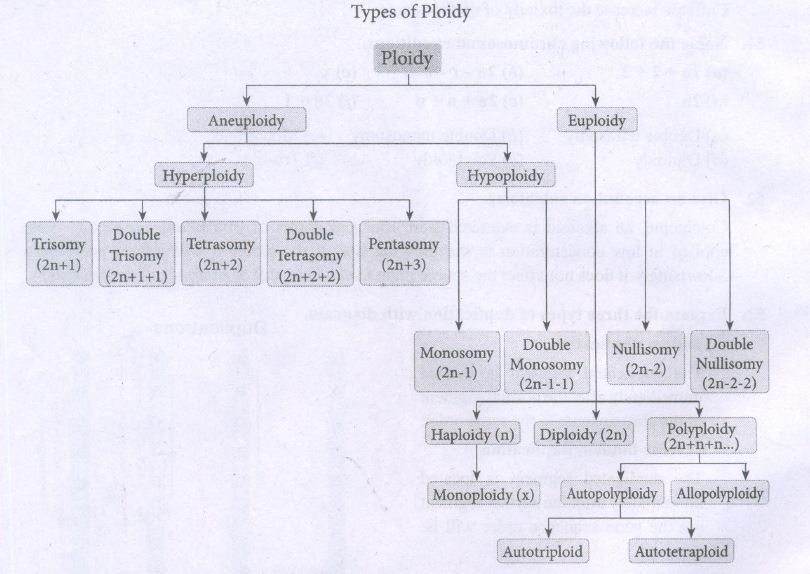
Draw a flow chart depicting the various types of ploidy.
4.
Describe incomplete dominance exhibited by Mirabilis jalapa.
5.
Give the characteristic features of Anemophilous plants.
6.
Bring out the importance of plant succession.
7.
Write a note on the strategies of ecosystem management.
8.
Discuss the protocol for micropropagation of banana.
9.
Give a comparative account on Seaweed liquid fertilizer.
10.
Write a comparative note on Carbon Foot Print (CFP).
11.
Draw a table mentioning binominals, family name, useful part and their medical uses of any five local medicinal plants
12.
Write the botanical name, origin, cultivational area and uses of Black gram.
Botanical name : Vigna mungo
13.
Explain a method for screening of recombinant Plasmid
14.
List out the significance of ploidy.
15.
Prepare a protocol for virus free meristem tip culture.
1.
Agarose Gel Electrophoresis is used mainly for the purification of specific DNA fragments. Agarose is convenient for separating DNA fragments ranging in size from a few hundred to about 20000 base pairs. Polyacrylamide is preferred for the purification of smaller DNA fragments. The gel is complex network of polymeric molecules. DNA molecule is negatively charged molecule - under an electric field DNA molecule migrates through the gel. The electrophoresis is frequently performed with marker DNA fragments of known size which allow accurate size determination of an unknown DNA molecule by interpolation. The advantages of agarose gel electrophoresis are that the DNA bands can be readily detected at high sensitivity. The bands of DNA in the gel are stained with the dye Ethidium Bromide and DNA can be detected as visible fluorescence illuminated in UV light will give orange fluorescence, which can be photographed.
2.
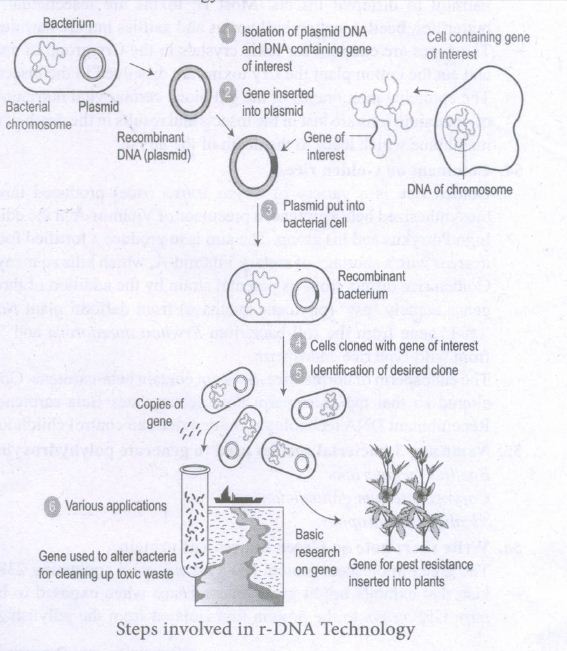
The steps involved in recombinant DNA technology are:
(i) Isolation of a DNA fragment containing a gene of interest that needs to be cloned. This is called an insert.
(ii) Generation of recombinant DNA (rDNA) molecule by insertion of the DNA fragment into a carrier molecule called a vector that can self-replicate within the host cell.
(iii) Selection of the transformed host cells that is carrying the rDNA and allowing them to multiply thereby multiplying the rDNA molecule.
(iv) The entire process thus generates either a large amount of rDNA or a large amount of protein expressed by the insert.
(v) Wherever vectors are not involved the desired gene is multiplied by PCR technique. The multiple copies are injected into the host cell protoplast or it is shot into the host cell protoplast by shot gun method.
3.
4.
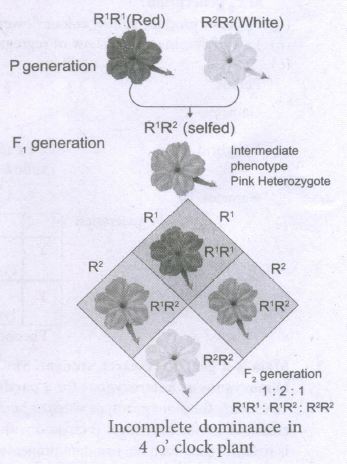
The German Botanist Carl Correns's (1905) Experiment - In 4 0' clock plant, Mirabilis jalapa when the pure breeding homozygous red (R1 R1) parent is crossed with homozygous white (R 2R2), the phenotype of the F1 hybrid is heterozygous pink (R1R2). The F1 heterozygous phenotype differs from both the parental homozygous phenotype. This cross did not exhibit the character of the dominant parent but an intermediate colour pink. When one allele is not completely dominant to another allele it shows incomplete dominance. Such allelic interaction is known as incomplete dominance. F1 generation produces intermediate phenotype pink coloured flower.
When pink coloured plants of F 1 generation were interbred in F2 both phenotypic and genotypic ratios were found to be identical as 1 : 2 : 1(1 red: 2 pink: 1 white). Genotypic ratio is 1 R1R1 : 2 R1R2 : 1 R2R2. From this we conclude that the alleles themselves remain discrete and unaltered proving the Mendel's Law of Segregation. The phenotypic and genotypic ratios are the same. There is no blending of genes. In the F2 generation R1 and R2 genes segregate and recombine to produce red, pink and white in the ratio of 1 : 2 : 1. R 1 allele codes for an enzyme responsible for the formation of red pigment. R2 allele codes for defective enzyme. R1 and R2 genotypes produce only enough red pigments to make the flower pink. Two R1R1 are needed for producing red flowers. Two R2R2 genes are needed for white flowers. If blending had taken place, the original pure traits would not have appeared and all F2 plants would have pink flowers. It is very clear that Mendel's particulate inheritance takes place in this cross which is confirmed by the reappearance of original phenotype in F2.
5.
Anemophilous plants have the following characteristic features:
(i) The flowers are produced in pendulous, catkin-like or spike inflorescence.
(ii) The axis of inflorescence elongates so that the flowers are brought well above the leaves.
(iii) The perianth is absent or highly reduced.
(iv) The flowers are small, inconspicuous, colourless, not scented, do not secrete nectar.
(v) The stamens are numerous, filaments are long, exerted and versatile.
(vi) Anthers produce enormous quantities of pollen grains compared to a number of ovules available for pollination. They are minute, light and dry so that they can be carried to long distances by wind.
(vii) In some plants, anthers burst violently and release the pollen into the air. Example: Urtica.
(viii) Stigmas are comparatively large, protruding, sometimes branched and feathery, adapted to catch the pollen grains. Generally, a single ovule is present.
(ix) The plant produces flowers before the new leaves appear, so the pollen can be carried without hindrance of leaves.
6.
Significance of Plant Succession
(I) Succession is a dynamic process. Hence an ecologist can access and study the seral stages of a plant community found in a particular area.
(II) The knowledge of ecological succession helps to understand the controlled growth of one or more species in a forest.
(III) Utilizing the knowledge of succession, even dams can be protected by preventing siltation.
(IV) It gives information about the techniques to be used during reforestation and afforestation.
(V) It helps in the maintenance of pastures.
(VI) Plant succession helps to maintain species diversity in an ecosystem.
(VII) Patterns of diversity during succession are influenced by resource availability and disturbance by various factors.
(VIII) Primary succession involves the colonization of habitat of an area devoid of life.
(IX) Secondary succession involves the re-establishment of a plant community in disturbed area or habitat.
(X) Forests and vegetation that we come across all over the world are the result of plant succession.
7.
Strategy of ecosystem management
(I) It is used to maintain biodiversity of ecosystems.
(II) It helps in indicating the damaged ecosystem (Some species indicate the health of the ecosystem: such species are called a flagship species).
(III) It is used to recognize the inevitability of ecosystem change and plan accordingly.
(IV) It is one of the tools used for achieving sustainability of ecosystem through sustainable development programme (or projects).
(V) It is also helpful in identifying ecosystems which are in need of rehabilitation.
(VI) It involves collaborative management with government agencies, local population, communities and NGO's.
(VII) It is used to build the capacity of local institutions and community groups to assume responsibility for long term implementation of ecosystem management activities even after the completion of the project.
8.
Micropropagation protocol for banana
\(\downarrow\)
In vitro micropropagation of banana (Musa sp.)
\(\downarrow\)
Suckers surface sterilized with 1% NaOCl for 30 minutes
\(\downarrow\)
Apical meristems were isolated - cultured on MS basal medium supplemented with Benzylaminopurine (BAP) 10.0 mg/l and Indole Acetic Acid (IAA) 1.0 mg/l
\(\downarrow\)
Induction of shoots within 168 days
\(\downarrow\)
Kinetin 2.0 mg/l and Naphthalene Acetic Acid (NAA) 0.5 mg/l for root induction
\(\downarrow\)
Acclimatization in polyhouse
\(\downarrow\)
Followed by shade-house under 50% light for hardening process
\(\downarrow\)
Tested for genetic Uniformity
\(\downarrow\)
Transferred to field
9.
Seaweed liquid fertilizer (SLF) contains cytokinin, gibberellins, and auxin apart from macro and micro nutrients. Most seaweed-based fertilizers are made from kelp (brown algae) which grows to length of 150 metres. Liquid seaweed fertilizer is not only organic but also eco-friendly. The alginates in the seaweed that reacts with metals in the soil and form long, crosslinked polymers in the soil. These polymers improve the crumbing in the soil, swell up when they get wet and retain moisture for a long time. They are especially useful in organic gardening which provides carbohydrates for plants. Seaweed has more than 70 minerals, vitamins and enzymes. It promotes vigorous growth. Improves resistance of plants to frost and disease. Seeds soaked in seaweed extract germinate much rapidly and develop a better root system.
10.
Every human activity leaves a mark just like our footprint. This Carbon footprint is the total amount of greenhouse gases produced by human activities such as agriculture, industries, deforestation, waste disposal, burning fossil fuels directly or indirectly. It can be measured for an individual, family, organization like industries, state level or national level. It is usually estimated and expressed in equivalent tons of CO2 per year. The burning of fossil fuels releases CO2 and other greenhouse gases. In turn, these emissions trap solar energy and thus increase the global temperature resulting in ice melting, submerging of low lying areas and imbalance in nature Iike cyclones, tsunamis, and extreme weather conditions. To reduce the carbon footprint we can follow some practices like
(i) Eating indigenous fruits and products
(ii) Reduce use of your electronic devices
(iii) Reduce traveling
(iv) Do not buy fast and preserved, processed, packed foods.
(v) Plant a garden
(vi) Less consumption of meat and seafood. Poultry requires little space, nutrients and less pollution comparing cattle farming.
(vii) reduce the use of Laptops (when used for 8 hours, it releases nearly 2 kg. of CO2 annually)
(viii) Line dry your clothes. (Example: If you buy imported fruit like kiwi, indirectly it increases CFP. How? The fruit has traveled a long distance in shipping or airliner thus emitting tons of CO2)
11.
| S.No | Common Name | Botanical Name | Family | Plant Part Used | Medicinal Uses |
| 1 | Holy basil | Ocimum Sanctum | Lamiaceae | Leaves and Roots | The leaves are stimulant, antiseptic, antihypertensive and anti-bacterial and expectorant used in bronchitis. Decoction of roots is given as a diaphoretic in malarial fever. |
| 2 | Indian Phyllanthus | Phyllanthus emblica | Phyllanthaceae | Fruit | It is a potent rejuvenator and immune modulator. It has a anti-ageing properties. It helps to promote longevity, enhance digestion, treat constipation and reduce fever and cough. |
| 3 | Indian Acalypha | Acalypha indica | Euphorbiaceae | Leaves | Used to cure skin diseases caused by ringworms. Powdered leaves are used to cure bedsores and infected wounds |
| 4 | Vilvam | Aegle marmelos | Rutaceae | Fruit | The unripe fruit is used to treat problems of stomach indigestion. It kills intestinal parasites. |
| 5 | Veldt grape | Cissus quandran-gularis | Vitaceae | Stem and Root | Paste obtained from the and powdered stem and root root of this plant is used in bone fractures. Whole plant is useful to treat asthma and stomach troubles. |
12.
Black gram
(i) Botanical name : Vigna mungo.
(i) Origin and Area of cultivation : Black gram is native to India.
(ii) Earliest archeobotanical evidences record the presence of black gram about 3,500 years ago.
(iii) It is cultivated as a rain fed crop in drier parts of India.
(iv) India contributes to 80% of the global production of black gram.
(v) important states growing black gram in India are Uttar Pradesh, Chattisgarh and Karnataka.
Uses:
(i) Black gram is eaten whole or split, boiled or roasted or ground into flour.
(ii) Black gram batter is a major ingredients for the preparation of popular Southern Indian breakfast dishes.
(iii) Split pulse is used in seasoning Indian curries.
13.
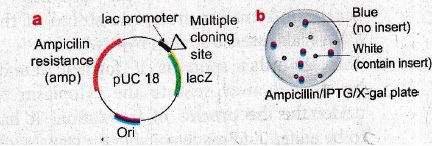
(i) Blue- White Colony Selection Method is a powerful method used for screening of recombinant plasmid.
(ii) In this method, a reporter gene lacZ is inserted in the vector.
(iii) The lacZ encodes the enzyme β-galactosidase and contains several recognition sites for restriction enzyme.
(iv) β-galactosidase breaks a synthetic substrates called X-gal (5-bromo - 4 -chloroindolyl- β-D-galactose- pyranoside) into an insoluble blue coloured product.
(v) If a foreign gene is inserted into lacZ, this gene will be inactivated. Therefore, no-blue colour will develop (white) because β-galactosidase is not synthesized due to inactivation of lacZ.
(vi)Therefore, the host cell containing r-DNA form white coloured colonies on the medium contain X-gal, whereas the other cells containing non-recombinant DNA will develop the blue coloured colonies.
(vii) On the basis of colony colour, the recombinants can be selected.
14.
Many polyploids are more vigorous and more adaptable than diploids.
(i) Many ornamental plants are autotetraploids and have larger flower and longer flowering duration than diploids.
(ii) Autopolyploids usually have increase in fresh weight due to more water content.
(iii) Aneuploids are useful to determine the phenotypic effects of loss or gain of different chromosomes.
(iv) Many angiosperms are allopolyploids and they play a role in an evolution of plants.
15.
Protocol for virus free meristem tip culture
\(\downarrow\)
Apical meristem tip with 1 or 2 leaf primordia are excised in sterile condition from the explant
\(\downarrow\)
In vitro culture in 10 ml of solid MS medium supplemented with growth hormones
\(\downarrow\)
Cultures are maintained at 24±1°C in dark for 3 days followed by normal illumination of 2400Lux
\(\downarrow\)
Plantlets developed from meristem tip culture after organogenesis process, transferred to hardening process
\(\downarrow\)
Transferred to field condition

12th Standard Syllabus & Materials
12th Standard
TN 12th Computer Applications வலையமைப்பு வடமிடல் Sample Question Papers Study Material - QB365 Set A
NEW12th Standard
TN 12th Computer Applications களப்பெயர் முறைமை (DNS) Sample Question Papers Study Material - QB365 Set A
NEW12th Standard
TN 12th Computer Applications வலையமைப்பு எடுத்துக்காட்டுகள் மற்றும் நெறிமுறைகள் Sample Question Papers Study Material - QB365 Set A
NEW12th Standard
TN 12th Computer Applications கணினி வலையமைப்பு ஓர் அறிமுகம் Sample Question Papers Study Material - QB365 Set A



Tamilnadu Stateboard 12th Standard Subjects

Maths

Chemistry

Physics
Biology

Computer Science

Business Maths and Statistics

Economics

Commerce

Accountancy

History

Computer Applications
Biology
Computer Technology
Computer Applications
Computer Science
Business Maths and Statistics
Commerce
Economics
Maths
Chemistry
Physics
Computer Technology
History
Accountancy

Tamil

English

French
Tamilnadu Stateboard Standards



