
 100% FREE ACCESS
12th Standard Syllabus & Materials
12th Standard
TN 12th Maths Applications of Matrices and Determinants Sample Question Papers Study Material - QB365 Set A
NEW12th Standard
TN 12th Computer Applications மின்னணு தரவு பரிமாற்றம் Sample Question Papers Study Material - QB365 Set A
NEW12th Standard
TN 12th Computer Applications மின் - வணிக பாதுகாப்பு அமைப்புகள் Sample Question Papers Study Material - QB365 Set A
NEW12th Standard
TN 12th Computer Applications மின்னணு செலுத்தல் முறைகள் Sample Question Papers Study Material - QB365 Set A
NEW12th Standard
TN 12th Computer Applications மின் - வணிகம் Sample Question Papers Study Material - QB365 Set A
NEW12th Standard
TN 12th Computer Applications திறந்த மூல கருத்துருக்கள் Sample Question Papers Study Material - QB365 Set A

Published on: 27/02/2021
12th Standard English Medium Biology Reduced Syllabus Annual Exam Model Question Paper - 2021
Download Tamil Nadu 12th Standard Biology question papers, model tests, one-mark questions, important questions, and public exam papers in PDF format. Free study materials and answer keys for TN State Board students.
Questions + Answers key
Take MCQ Biology Test1.
Point out the biosphere reserves in Tamil Nadu.
2.
In Drosophila melanogaster, there are four pairs of chromosomes. If there occurs chromosomal aberrations resulting in trisomic and monosomic condition, what will be the chromosomal count? Write the correct chromosomal count against respective chromosomal aberration.
3.
What is thermal stratification? Explain its types.
4.
Give an account on clonal selection.
5.
Discuss the gross primary productivity is more efficient than net primary productivity.
6.
Give the characters of a Biome ?
7.
Write the key features of organic farming.
8.
9.
10.
Distinguish tenuinucellate and crassinucellate ovules.
11.
Why does the zygote divides only after the division of Primary endosperm cell.
12.
Which is NOT a part of transcription unit?
Promoter
Operator
Structural gene
Terminator
13.
Statement 1: Pairing of homologous chromosome is called as syndesis.
Statement 2: Proterminal synapsis occurs from telomeres.
Statement 1 is correct and Statement 2 is incorrect
Statement 1 is incorrect and Statement 2 is correct
Both the statements are correct
Both the statements are incorrect
14.
In monoecious plants,
Both autogamy and geitonogamy are prevented
Both autogamy and geitonogamy are takes place
Autogamy takes place preventing geitonogamy
Autogamy is prevented whereas geitonogamy takes place
15.
The ideal soil for Cultivation is:
Loamy soil
Clayey soil
Sandy soil
Silt soil
16.
Which one of the following is not a functional unit of an ecosystem?
Productivity
Stratification
Energy flow
Decomposition
17.
Assertion (A): Ozone acts as a natural sunblock.
Reason (R): UV rays reaching the earth are deviated from earth.
A is correct R is incorrect.
A is incorrect R is correct.
R explains A.
Both A and R are incorrect.
18.
What gases are produced in anaerobic sludge digesters?
Methane and CO2 only
Methane, hydrogen sulphide and CO2
Methane, hydrogen sulphide and O2
Hydrogen sulphide and CO2
19.
Van't Hoffs rule describes the impact of ____________ on the environment.
Light
Temperature
Water
Soil
20.
______ is a seasonal breeder.
Poultry
Honey bees
Deers
Rabbit
21.
22.
Which of the following is correct for r-selected species
Large number of progeny with small size
large number of progeny with large size
small number of progeny with small size
small number of progeny with large size
23.
The time duration for sterilization process by using autoclave is ______ minutes and the temperature is ______.
10 to 30 minutes and 125° C
15 to 30 minutes and 121° C
15 to 20 minutes and 125° C
10 to 20 minutes and 121° C
24.
25.
Identify the correct statements from the following.
Chlamydiasis is a viral disease
Gonorrhoea is caused by a spirochaete bacterium, Treponema palladium
The incubation period for syphilis is 2 to 14 days in males and 7 to 21 days in females
Both syphilis and gonorrhoea are easily cured with antibiotics
26.
Due to incomplete linkage in maize, the ratio of parental and recombinants are ______.
50:50
7:1:1:7
96.4: 3.6
1:7:7:1
27.
What is a replication fork?
28.
Differentiate between infectious and non-infections disease.
29.
State the allelic forms of I gene and mention its chromosomal location.
30.
Define Vivipary.
31.
What is toddy?
32.
How does immune system work?
33.
How do forests help in maintaining the climate?
34.
Why are some organisms called as eurythermals and some others as stenohaline ?
35.
36.
Explain the transcription process in prokaryotes with needed diagram.
37.
Describe the structure of human ovary.
38.
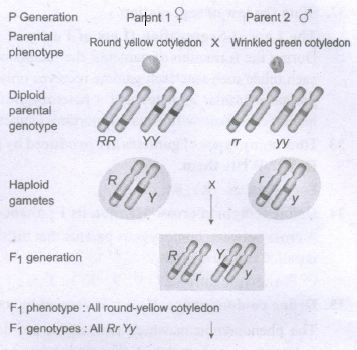
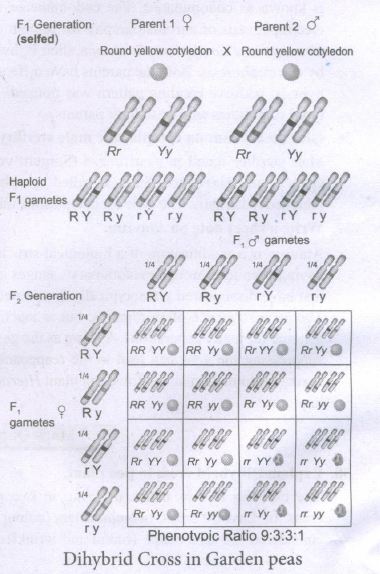
Explain Dihybrid cross in pea plant.
39.
Point out any five morphological adaptations of epiphytes.
40.
Give a detailed account on anyone fibre yielding plant.
41.
What are the effects of deforestation and benefits of agroforestry?
42.
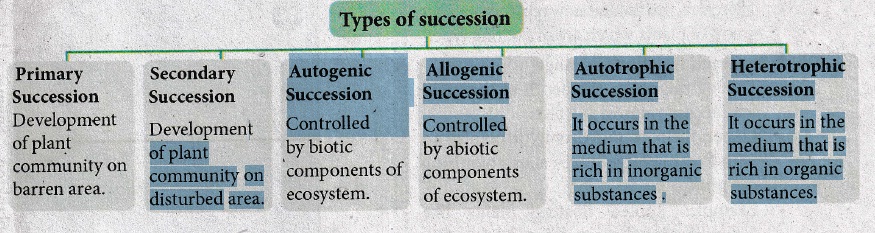
Generally in summer the forest are affected by natural fire. Over a period of time it recovers itself by the process of successions .Find out the types of succession and explain.
43.
1.
(a) Nilgiris (Tamil Nadu - Kerala)
(b) Agasthya malai (Tamil Nadu - Kerala - Karnataka)
(c) Gulf of Mannar (Tamil Nadu)
2.
Normal chromosome of Drosophila melanogaster (2n) = 8
Trisomic condition (2n+ 1) = 9
Monosomic condition (2n-l) = 7
3.
Thermal stratification is usually found in aquatic habitat. The change in the temperature profile with increasing depth in a water body is called thermal stratification. There are three kinds of thermal stratifications.
1. Epilimnion - The upper layer of warmer water.
2. Metalimnion - The middle layer with a zone of gradual decrease in temperature.
3. Hypolimnion - The bottom layer of colder water.
4.
In asexually propagated crop, progenies derived from a plant resemble in genetic constitution with the parent plant as they are mitotically divided. Based on their phenotypic appearance, clonal selection is employed to select improved variety from a mixed population (clones). The selected plants are multiplied through vegetative propagation to give rise to a clone. The genotype of a clone remains unchanged for a long period of time.
5.
Gross Primary Productivity (GPP) is the total amount of food energy or biomass produced in an ecosystem by autotrophs through the process of photosynthesis whereas Net Primary Productivity (NPP) is the proportion of energy which remains after respiration loss in the plant. When we compare GPP with NPP more energy is present in former than in latter.
6.
Characters of biome
(i) Location, geographical position (Latitude, Longitude)
(ii) Climate and physiochemical environment
(iii) Predominant plant and animal life
(iv) Boundaries between biomes are not always sharply defined. Transition or transient zones are seen as in case of grassland and forest biomes.
7.
(i) Protecting soil quality using organic materials and encouraging biological activity.
(ii) Indirect provision of crop nutrients using soil microorganisms.
(iii) Nitrogen fixation in soils using legumes.
(iv) Weed and pest control based on methods like crop rotation, biological diversity, natural predators, organic manures and suitable chemical, thermal and biological interventions.
8.
9.
10.
ovule is divided into two types based on the position of the sporogenous cell
| Tenuinucellate type | Crassinucellate type |
|---|---|
| Sporogenous cell is hypodermal with a single layer of nucellar tissue around it. | Sporogenous cell is sub hypodermal |
| Have very small nucellus | Have fairly large nucellus. |
11.
The primary endosperm nucleus divides immediately after fertilization. It develops into an endosperm which is a nutritive tissue and a regulatory structure. The zygote divides only after that to form an embryo so that it can get nourishment from the endosperm that has formed earlier.
12.
(b)
Operator
13.
(a)
Statement 1 is correct and Statement 2 is incorrect
14.
(d)
Autogamy is prevented whereas geitonogamy takes place
15.
(a)
Loamy soil
16.
(b)
Stratification
17.
(c) R explains A.
18.
(b)
Methane, hydrogen sulphide and CO2
19.
(b)
Temperature
20.
(c)
Deers
21.
(b)
22.
(a)
Large number of progeny with small size
23.
(b)
15 to 30 minutes and 121° C
24.
(d)
25.
(d)
Both syphilis and gonorrhoea are easily cured with antibiotics
26.
(b)
7:1:1:7
27.
At the point of origin of replication, the helicases and topoisomerases (DNA gyrase) unwind and pull apart the strands, forming a Y-Shaped structure called the replication fork. There are two replication forks at each origin
28.
| Infectious disease | Non-infectious disease |
|---|---|
| Disease which are transmitted form one person to another are called infectious disease. e.g. Common cold | Disease which do not transmitted form one person to another are called non-infectious disease. e.g. Anaemia |
29.
The I gene exists in three forms: lA, IB and 1O. The alleles are located on chromosome 9.
30.
Vivipary is a condition in which animals give rise to living young ones after being nourished in the uterus through the placenta. E.g. human
31.
Inflorescence of palmyra is tapped for its sap which is used as health drink. Sap is processed to get palm jaggery or fermented to give toddy.
32.
The immune responses may be primary or secondary.
(i) The primary immune response occurs when a pathogen comes in contact with the immune system for the first time.
(ii) The secondary immune response occurs when a person is exposed to the same antigen again. During this time, immunological memory has been established and the immune system can start producing antibodies immediately. Within hours after recognition of the antigen, a new army of plasma cells are generated. Within 2 to 3 days, the antibody concentration in the blood rises steeply to reach much higher level than primary response. This is also called as "booster response".
33.
(a) Trees provide micro climate for crops and maintain O2 - CO2 balance atmospheric temperature & relative humidity
(b) Suitable for dry land where rainfall is minimum hence it is a good system for alternate land use pattern
34.
1. Eurythermal: Organisms which can tolerate a wide range of temperature fluctuations.
2. Stenohaline: Organisms which can withstand only small range of salinity.
3. These variations the organisms also grow in different environment.
35.
36.
In prokaryotes, there are three major types of RNAs: mRNA, tRNA, and rRNA. All three RNAs are needed to synthesize a protein in a cell. The mRNA provides the template, tRNA brings amino acids and reads the genetic code, and rRNAs play structural and catalytic role during translation. There is a single DNA-dependent RNA polymerase that' catalyses transcription of all types of RNA. It binds to the promoter and initiates transcription (Initiation).
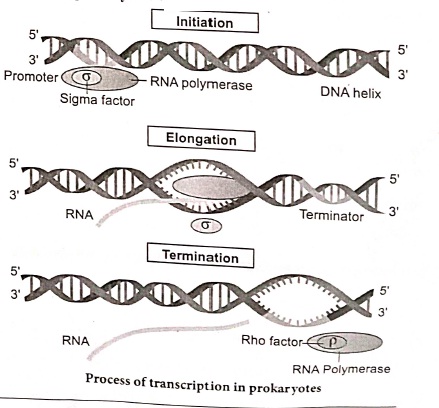
The polymerases binding sites are called promoters. It uses nucleoside triphosphate as substrate and polymerases in a template depended fashion following the rule of complementarity. After the initiation of transcription, the polymerase continues to elongate the RNA, adding one nucleotide after another to the growing RNA chain. Only a short stretch of RNA remains bound to the enzyme, when the polymerase reaches a terminator at the end of a gene, the nascent RNA falls off, so also the RNA polymerase.
The RNA polymerase is only capable of catalyzing the process of elongation. The RNA polymerase associates transiently with initiation factor sigma (\(\sigma \)) and termination factor rho (\(\rho \)) to initiate and terminate the transcription, respectively. Association of RNA with these factors instructs the RNA polymerase either to initiate or terminate the process of transcription.
In bacteria, since the mRNA does not require any processing to become active and also since transcription and translation take place simultaneously in the same compartment (since there is no separation of cytosol and nucleus in bacteria), many times the translation can begin much before the mRNA is fully transcribed. This is because the genetic material is not separated from other cell organelles by a nuclear membrane consequently; transcription and translation can be coupled in bacteria.
37.
(i) Ovaries are the primary female sex organ producing eggs (ovum).
(ii) They are located one on each side of lower abdomen (pelvis).
(iii) The ovary is attached in pelvic wall uterus by an ovarian ligament called mesovarium.
(iv) It is an elliptical structure of 2-4 cm long
(v) Each ovary is covered by thin cuboidal germinal epithelium encloses ovarian stroma.
(vi) Below germinal epithelium is a dense connective tissue called tunica albuginea.
(vii) The stroma is differentiated into an outer cortex and an inner medulla.
(viii) The cortex is dense and granular due to follicular cells at varying development stages.
(ix) The medulla is a loose connective tissue with blood vessels, lymph vessels and nerve fibres.
38.
The crossing of two plants differing in two pairs of contrasting traits is called dihybrid cross. In a dihybrid cross, two characters (colour and shape) are considered at a time. Mendel considered the seed shape (round and wrinkled) and cotyledon colour (yellow & green) as the two characters. In seed shape round (R) is dominant over wrinkled (r); in cotyledon colour yellow (Y) is dominant over green (y). Hence the pure breeding round yellow parent is represented by the genotype RRYY and the pure breeding green wrinkled parent is represented by the genotype rryy. During gamete formation the paired genes of a character assort out independently of the other pair. During the F1 x F1 fertilization each zygote with an equal probability receives one of the four combinations from each parent. The resultant gametes thus will be genetically different and they are of the following four types:
1) Yellow round (YR)- 9/16
2) Yellow wrinkled (Yr)- 3/16
3) Green round (yR) - 3/16
4) Green wrinkled(yr) - 1/16
These four types of gametes of F1 dihybrids unite randomly in the process of fertilization and produce sixteen types of individuals in F2 in the ratio of 9 : 3 : 3 : 1 as shown in the figure. Mendel's 9:3:3:1 dihybrid ratio is an ideal ratio based on the probability including segregation, independent assortment and random fertilization. In sexually reproducing organism / plants from the garden peas to human beings, Mendel's findings laid the foundation for understanding inheritance and revolutionized the field of biology. The dihybrid cross and its result led Mendel to propose a second set of generalisations that we called Mendel's Law of independent assortment.
39.
Morphological adaptations:
Root system is extensively developed. These roots may be of two types. They are Clinging roots and Aerial roots.
Clinging roots fix the epiphytes firmly on the surface of the supporting objects.
Aerial roots are green coloured roots which may hang downwardly and absorb moisture from the atmosphere with the help of a spongy tissue called velamen.
1. Stem of some epiphytes are succulent and develop pseudo bulb or tuber.
2. Generally the leaves are lesser in number and may be fleshy and leathery.
3. Myrmecophily is a common occurrence in the epiphytic vegetation to prevent the predators
4. The fruits and seeds are very small and usually dispersed by wind, insects and birds.
40.
Jute
Botanical name : Corchorus spp.
Family: Malvaceae
Origin and Area of cultivation: Jute is derived from the two cultivated species (1) Core horns capsularis and (2) Colittorius is of African origin whereas C. Capsularis, is believed to Indo Burmaese origin. It is an important cultivated commercial crop in Gangetic plains of India and Bangladesh.
Uses: It is one of the largest exported fibre material of India. The jute industry occupies an important place in the national economy Of India. Jute is used for 'safe' packaging in view of being natural, renewable, bio-degradable and eco-friendly product. It is used in bagging and wrapping textile. About 75% of the jute produced is used for manufacturing sacks and bags. It is also used in manufacture of blankets, rags, curtains etc. It is also being used as a textile fibre in recent years.
41.
Effects of deforestation:
(i) Burning of forest wood release stored carbon, a negative impact just opposite of carbon sequestration,
(ii) Trees and plants bind the soil particles. The removal of forest cover increases soil erosion and decreases soil fertility. Deforestation in dry areas leads to the formation of deserts.
(iii) The amount of runoff water increases soil erosion and also creates flash flooding, thus reducing moisture and humidity.
(iv) The alteration of local precipitation patterns leading to drought conditions in many regions. It triggers adverse climatic conditions and alters water cycle in the ecosystem.
(v) It decreases the bio-diversity significantly as their habitats are disturbed and disruption of natural cycles.
(vi) Loss of livelihood for forest dwellers and rural people.
(vii) Increased global warming and account for one-third of total CO2 emission.
(viii) Loss of life support resources, fuel, medicinal herbs, and wild edible fruits.
Benefits of agroforestry:
(i) It is an answer to the problem of soil and water conservation and also to stabilize the soil (salinity and water table) reduce landslide and water run-off problem.
(ii) Nutrient cycling between species improves and organic matter is maintained.
(iii) Trees provide a micro climate for crops and maintain O2 - CO2 balanced, atmospheric temperature and relative humidity.
(iv) Suitable for dry land where rainfall is minimum and hence it is a good system for alternate land use pattern.
(v) Multipurpose tree varieties like Acacia are used for wood pulp, tanning, paper, and firewood industries.
(vi) Agroforestry is recommended for the following purposes. It can be used as Farm Forestry for the extension of forests, mixed forestry, shelterbelts, and linear strip plantation.
42.
Types of succession
(a) Primary succession
The development of plant community in a barren area where no community existed before is called primary succession.
The plants which colonize first in a barren area is called pioneer species or primary community or primary colonies.
Generally, Primary succession takes a very, long time for the occurrence in any region.
Examples: Microbes, Lichen, Mosses.
The forest destroyed by fire and excessive lumbering may be re-occupied by herbs over period of times.
(b) Secondary succession
The development of a plant community in an area where an already developed community has been destroyed by some natural disturbance (Fire, flood, human activity) is known as secondary succession
Generally, this succession takes less time than the time taken for primary succession.
Example: The forest destroyed by fire and excessive lumbering may be re-occupied by herbs over Period of times.
(c) Autogenic succession
Autogenic succession occurs as a result of biotic factors
The vegetation reacts with its environment and modifies its own environment causing its own replacement by new communities. This is known as autogenic succession.
Example: In forest ecosystem, the larger trees produce broader leaves providing shade to the forest floor area. It affects the shrubs and herbs which require more light (heliophytes) but supports the shade tolerant species (sciophytes) to grow well.
(d) Allogenic succession
Allogeneic succession occurs as a result of abiotic factors.
The replacement of existing community is caused by other external factors (soil erosion, leaching, etc.,) and not by existing organisms.
Example: In a forest ecosystem soil erosion and leaching alter the nutrient value of the soil leading to the change of vegetation in that area.
(e) Autotrophic succession
If the autotrophic organisms like green plants are dominant during the early stages of succession it is called autotrophic succession, this occurs in the habitat which is rich in inorganic substances.
Since, green plants dominate in the beginning of this succession, there is a gradual increase in organic matter and subsequently the energy flow in the ecosystem.
(f) Heterotrophic succession
If heterotrophic organisms like bacteria, fungi, actinomycetes, and animals are dominant during the early stages of succession it is called heterotrophic succession.
Such a succession takes place in organic habitats.
Since heterotrophs dominate in the beginning of such succession, there will be a gradual decrease in the energy content.
43.

12th Standard Syllabus & Materials
12th Standard
TN 12th Computer Applications வலையமைப்பு வடமிடல் Sample Question Papers Study Material - QB365 Set A
NEW12th Standard
TN 12th Computer Applications களப்பெயர் முறைமை (DNS) Sample Question Papers Study Material - QB365 Set A
NEW12th Standard
TN 12th Computer Applications வலையமைப்பு எடுத்துக்காட்டுகள் மற்றும் நெறிமுறைகள் Sample Question Papers Study Material - QB365 Set A
NEW12th Standard
TN 12th Computer Applications கணினி வலையமைப்பு ஓர் அறிமுகம் Sample Question Papers Study Material - QB365 Set A



Tamilnadu Stateboard 12th Standard Subjects

Maths

Chemistry

Physics
Biology

Computer Science

Business Maths and Statistics

Economics

Commerce

Accountancy

History

Computer Applications
Biology
Computer Technology
Computer Applications
Computer Science
Business Maths and Statistics
Commerce
Economics
Maths
Chemistry
Physics
Computer Technology
History
Accountancy

Tamil

English

French
Tamilnadu Stateboard Standards

