
 100% FREE ACCESS
12th Standard Syllabus & Materials
12th Standard
TN 12th Maths Applications of Matrices and Determinants Sample Question Papers Study Material - QB365 Set A
NEW12th Standard
TN 12th Computer Applications மின்னணு தரவு பரிமாற்றம் Sample Question Papers Study Material - QB365 Set A
NEW12th Standard
TN 12th Computer Applications மின் - வணிக பாதுகாப்பு அமைப்புகள் Sample Question Papers Study Material - QB365 Set A
NEW12th Standard
TN 12th Computer Applications மின்னணு செலுத்தல் முறைகள் Sample Question Papers Study Material - QB365 Set A
NEW12th Standard
TN 12th Computer Applications மின் - வணிகம் Sample Question Papers Study Material - QB365 Set A
NEW12th Standard
TN 12th Computer Applications திறந்த மூல கருத்துருக்கள் Sample Question Papers Study Material - QB365 Set A

Published on: 27/02/2021
12th Standard English Medium Biology Reduced Syllabus Annual Exam Model Question Paper with Answer key - 2021
Download Tamil Nadu 12th Standard Biology question papers, model tests, one-mark questions, important questions, and public exam papers in PDF format. Free study materials and answer keys for TN State Board students.
Questions + Answers key
Take MCQ Biology Test1.
Differentiate Missense mutation from Nonsense mutation.
2.
What are the adverse effects of temperature on plant?
3.
Point out the objectives of plant breeding.
4.
What is extinction?
5.
Which one gas is most abundant out of the four commonest greenhouse gases? Discuss the effect of this gas on the growth of plants?
6.
Discuss the gross primary productivity is more efficient than net primary productivity.
7.
Explain the role of cry-genes in genetically modified crops.
8.
9.
Explain the role of oxytocin and relaxin in parturition and lactation.
10.
List out the functions of tapetum.
11.
Explain the properties of DNA that makes it an ideal genetic material.
12.
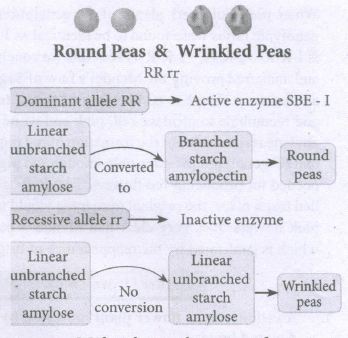
How does the wrinkled gene make Mendel's peas wrinkled? Find out the molecular explanation.
13.
What does competition refers to? Classify and describe it.
14.
Write the botanical name, origin, cultivational area and uses of Black gram.
Botanical name : Vigna mungo
15.
16.
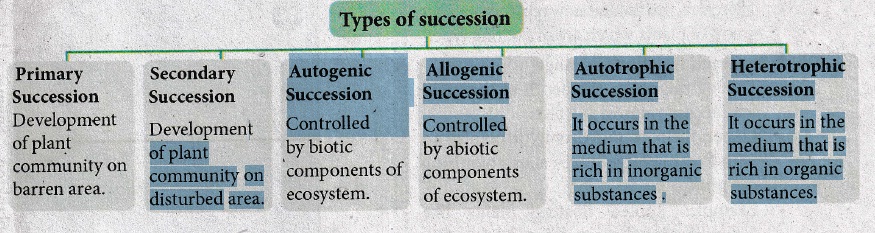
Generally in summer the forest are affected by natural fire. Over a period of time it recovers itself by the process of successions .Find out the types of succession and explain.
17.
Classify the adaptive traits found in organisms
18.
How does Mutation theory of De Vries differ from Lamarck and Darwin’s view in the origin of new species.
19.
Discuss the steps involved in Microsporogenesis.
20.
Semi-conservative model of replication was proved by _________
Hershey and Chase
Griffith
Meselson and Stahl
Macleod and McCarty
21.
Assertion (A): Complete linkage is noticed in male species of Drosophila.
Reason (R): Completely linked genes show some crossing over.
A is true R is false
Both A and R are false
A is true, R is not correct explanation for A
R explains A
22.
Utricularia is a __________.
Rooted floating hydrophyte
Submerged floating hydrophyte
Rooted submerged hydrophyte
Amphibious hydrophyte
23.
Innermost layer of anther wall is ________________
Endothecium
Endothecum
Endothelium
Tapetum
24.
The upright pyramid is not a feature of _______
Pond ecosystem
Grassland ecosystem
Forest ecosystem
Terminal ecosystem
25.
___________ is not a method of waste water treatment.
oxidation ponds
Anaerobic lagoons
Catalytic converter
Anaerobic bioreactor
26.
_________is used for recycling of PET plastics
Dechloromonas aromatica
Phanerochaete chrysosporium
Ideonella sakaiensis
Nitrosomonas
27.
Nuts are eaten by birds and squirrels. This is an example of an interaction called _____________
Commensalism
Mutualism
Amensalism
Competition
28.
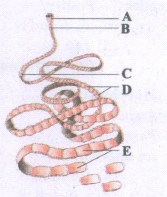
Identify the correct option to label the diagram Identify the structure
1- Immature proglottids
2 - Gravid proglottids
3 - Scolex
4 - Mature proglottids
5 - Neck
1-C 2-E 3-A 4-D 5-B
1-B 2-D 3-C 4-E 5-A
1-D 2-E 3-B 4-C 5-A
1-A 2-E 3-D 4-B 5-C
29.
Consider the following statements and choose the right option.
i) Cereals are members of grass family.
ii) Most of the food grains come from monocotyledon.
(i) is correct and (ii) is wrong
Both (i) and (ii) are correct
(i) is wrong and (ii) is correct
Both (i) and (ii) are wrong
30.
Animals that can move from fresh water to sea called as______
Stenothermal
Eurythermal
Catadromous
Anadromous
31.
The prevention of large scale loss of biological integrity ____.
Biopatent
Bioethics
Biosafety
Biofuel
32.
33.
Match column I with column II and select the correct option from the codes given below.
| Column I | Column II |
| A. Copper releasing IUD | (i) LNG-20 |
| B. Hormone releasing | (ii) Lippes loop IUD |
| C. Non medicated IUD | (iii) Saheli |
| D. Mini pills | (iv) Multiload-375 |
| A | B | C | D |
| (iv) | (ii) | (i) | (iii) |
| A | B | C | D |
| (iv) | (i) | (iii) | (ii) |
| A | B | C | D |
| (i) | (iv) | (ii) | (iii) |
| A | B | C | D |
| (iv) | (i) | (ii) | (iii) |
34.
Accurate mapping of genes can be done by three point test cross because increases _____.
Possibility of single cross over
Possibility of double cross over
Possibility of multiple cross over
Possibility of recombination frequency
35.
How many base pairs are present in one complete turn of DNA helix? What is the distance between two consecutive base pairs?
36.
Name the causative agent and confirmatory test for Typhoid.
37.
What is the phenotype of (a) IAlO (b) 1O1O
38.
Write the health benefits of Kodo millet.
39.
What is artificial parthenogenesis?
40.
41.
Soil formation can be initiated by biological organisms. Explain how?
42.
43.
At what stage of development are the gametes formed in new born male and female?
1.
| Mis-sense Mutation | Non-sense Mutation |
| The mutation where the codon for one amino acid is changed into a codon for another amino acid is called Mis-sense or non-synonymous mutations. | The mutations where codon for one amino acid is changed into a termination or stop codon is called Non-sense mutation. |
2.
1. Temperature affects the enzymatic action of all the bio-chemical reactions in a plant body.
2. Low temperature with high humidity can spread diseases to plants.
3. The varying temperature with moisture determines the distribution of the vegetation types.
3.
i) To increase yield, vigour, and fertility of the crop.
ii) To increase tolerance to environmental condition, salinity, temperature, and drought.
iii) To prevent the premature falling of buds and fruits, etc.
iv) To improve synchronous maturity.
v) To develop resistance to pathogens and pests.
vi) To develop photosensitive and thermos-sensitive varieties.
4.
Species is considered extinct when none of its members are- alive anywhere in the world
Eg.DODO.
5.
Most abundant gas - CO2
Effect of CO2 on the growth of plants
(i) Change in flowering seasons and pollinators
(ii) Change in Species distributional ranges
(iii) Species extinction
(iv) Low agricultural productivity in tropics
(v) Frequent heat waves (Weeds, pests, fungi need warmer temperature)
(vi) Increase of vectors and epidemics
(vii) Strong storms and intense flood damage
(viii) Water crisis and decreased irrigation
6.
Gross Primary Productivity (GPP) is the total amount of food energy or biomass produced in an ecosystem by autotrophs through the process of photosynthesis whereas Net Primary Productivity (NPP) is the proportion of energy which remains after respiration loss in the plant. When we compare GPP with NPP more energy is present in former than in latter.
7.
(i) Bacillus thuringiensis is a soil dwelling bacterium which is commonly used as a biopesticide and contains a toxin called cry toxin. Scientists have introduced this toxin producing genes into plants and have raised genetically engineered insect resistant plants. Eg. Bt-cotton.
(ii) When the insects ingest the toxin crystals their alkaline digestive tract denatures the insoluble crystals making them soluble. The cry toxin then gets inserted into the gut cell membrane and paralyzes the digestive tract. The insect then stops eating and starves to death.
8.
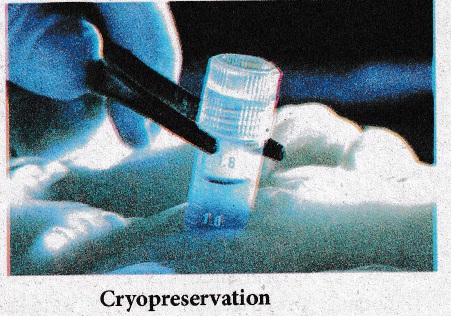
9.
Relaxin
(i) It is a hormone secreted by the placenta and also by the corpus luteum during pregnancy.
(ii) It promotes parturition by relaxing the pelvic joints and by dilation of cervical ligaments with continued powerful contractions.
Oxytocin:
(i) It causes the "Let-Down" reflex.
(ii) The actual ejection of milk from the alveoli of the mammary glands.
(iii) During lactation, oxytocin also stimulates the recently emptied uterus to contract, helping it to return to pre-pregnancy size..
10.
Supplies nutrition to the developing microspores contributes sporopollenin through, ubisch bodies. This plays an important role in pollen wall formation. The pollen kit material is contributed by tapetal cells, and is later, transferred to the pollen surface. Exine protein responsible for rejection reaction are derived from tapetal cells.
11.
i) Self Replication: It should be able to replicate. According to the rule of base pairing and complementarity, both nucleic acids (DNA and RNA) have the ability to direct duplications. Proteins fail to fulfill this criteria.
ii) Stability: It should be stable structurally and chemically. The genetic material should be stable enough not to change with different stages of life cycle, age or with change in physiology of the organism. Stability as one of property of genetic material was clearly evident in Griffith's transforming principle. Heat which killed the bacteria did not destroy some of the properties of genetic material. in DNA the two strands being complementary, if separated (denatured) by heating can come together (renaturation) when appropriate condition is provided. Further, 2' OH group present at every nucleotide in RNA is a reactive group that makes RNA liable and easily degradable. RNA is also known to be catalytic and reactive. Hence, DNA is chemically more stable and chemically less reactive when compared to RNA. Presence of thymine instead of uracil in DNA confers additional stability to DNA.
iii) Information storage: It should be able to express itself in the form of 'Mendelian characters'. RNA can directly code for protein synthesis and can easily express the characters. DNA, however, depends on RNA for synthesis of proteins. Both DNA and RNA can act as genetic material, but DNA being more stable stores the genetic information and RNA transfers the genetic information.
iv) Variation through mutation: It should be able to mutate. Both DNA and RNA are able to mutate. RNA being unstable mutates at a faster rate. Thus viruses having RNA genome with shorter life span can mutate and evolve faster. The above discussion indicates that both RNA and DNA can function as genetic material. DNA is more stable and is preferred for storage of genetic information.
12.
The protein called starch branching enzyme (SBEI) is encoded by the wild-type allele of the gene (RR) which is dominant. When the seed matures, this enzyme SBEI catalyzes the formation of highly branched starch molecules. Normal gene (R) has become interrupted by the insertion of extra piece of DNA (0.8 kb) into the gene, resulting in r allele. In the homozygous mutant form of the gene (rr) which is recessive, the activity of the enzyme SBEI is lost resulting in wrinkled peas. The wrinkled seed accumulates more sucrose and high water content. Hence the osmotic pressure inside the seed rises. As a result, the seed absorbs more water and when it matures it loses water as it dries. So it becomes wrinkled at maturation. When the seed has at least one copy of normal dominant gene heterozygous, the dominant allele helps to synthesize starch, amylopectin an insoluble carbohydrate, with the osmotic balance which minimises the loss of water resulting in smooth structured round seed.
13.
Competition: It is an interaction between two organisms or species in which both the organisms or species are harmed. Competition is the severest in population that has irregular distribution. Competition is classified into intraspecific and interspecific.
1. Intraspecific competition: It is an interaction between individuals of the same species. This competition is very severe because all the members of species have similar requirements of food, habitat and pollination etc., and they also have similar adaptations to fulfill their needs.
2. Interspecific competition: It is an interaction between individuals of different species. In grassland, many species of grasses grow well as there is little competition when enough nutrients and water is available. During drought shortage of water occurs. A life and death competition starts among the different species of grass lands. Survival in both these competitions is determined by the quantity of nutrients, availability of water and migration to new areas. Different species of herbivores, larvae and grass hopper competing for fodder or forage plants. Trees, shrubs and herbs in a forest struggle for sunlight, water and nutrients and also for pollination and dispersal of fruits and seeds. The Utricularia (Bladderwort) competes with tiny fishes for small crustaceans and insects.
14.
Black gram
(i) Botanical name : Vigna mungo.
(i) Origin and Area of cultivation : Black gram is native to India.
(ii) Earliest archeobotanical evidences record the presence of black gram about 3,500 years ago.
(iii) It is cultivated as a rain fed crop in drier parts of India.
(iv) India contributes to 80% of the global production of black gram.
(v) important states growing black gram in India are Uttar Pradesh, Chattisgarh and Karnataka.
Uses:
(i) Black gram is eaten whole or split, boiled or roasted or ground into flour.
(ii) Black gram batter is a major ingredients for the preparation of popular Southern Indian breakfast dishes.
(iii) Split pulse is used in seasoning Indian curries.
15.
16.
Types of succession
(a) Primary succession
The development of plant community in a barren area where no community existed before is called primary succession.
The plants which colonize first in a barren area is called pioneer species or primary community or primary colonies.
Generally, Primary succession takes a very, long time for the occurrence in any region.
Examples: Microbes, Lichen, Mosses.
The forest destroyed by fire and excessive lumbering may be re-occupied by herbs over period of times.
(b) Secondary succession
The development of a plant community in an area where an already developed community has been destroyed by some natural disturbance (Fire, flood, human activity) is known as secondary succession
Generally, this succession takes less time than the time taken for primary succession.
Example: The forest destroyed by fire and excessive lumbering may be re-occupied by herbs over Period of times.
(c) Autogenic succession
Autogenic succession occurs as a result of biotic factors
The vegetation reacts with its environment and modifies its own environment causing its own replacement by new communities. This is known as autogenic succession.
Example: In forest ecosystem, the larger trees produce broader leaves providing shade to the forest floor area. It affects the shrubs and herbs which require more light (heliophytes) but supports the shade tolerant species (sciophytes) to grow well.
(d) Allogenic succession
Allogeneic succession occurs as a result of abiotic factors.
The replacement of existing community is caused by other external factors (soil erosion, leaching, etc.,) and not by existing organisms.
Example: In a forest ecosystem soil erosion and leaching alter the nutrient value of the soil leading to the change of vegetation in that area.
(e) Autotrophic succession
If the autotrophic organisms like green plants are dominant during the early stages of succession it is called autotrophic succession, this occurs in the habitat which is rich in inorganic substances.
Since, green plants dominate in the beginning of this succession, there is a gradual increase in organic matter and subsequently the energy flow in the ecosystem.
(f) Heterotrophic succession
If heterotrophic organisms like bacteria, fungi, actinomycetes, and animals are dominant during the early stages of succession it is called heterotrophic succession.
Such a succession takes place in organic habitats.
Since heterotrophs dominate in the beginning of such succession, there will be a gradual decrease in the energy content.
17.
Adaptation is a dynamic evolutionary process that fits organisms to their environment and enhancing their evolutionary fitness.
(a) Structural adaptations:
1. The external and internal structures of animals can help them to adapt better to their environment. Some of the most common examples are mammals growing thicker fur to survive freezing climates.
2. Some of the most attractive adaptations in nature occur for reasons of crypsis. (e.g: Camouflage) and mimicry.
3. Cryptic animals are those which camouflage perfectly with their environment and are almost impossible to detect. Certain reptiles and insects such as chameleons and stick insects show this type of adaptation, which helps in prey capture or to evade from predators. Likewise, horse legs are suitable for fast running and adapted for grasslands or plains and similar terrestrial environments.
(b) Behavioural adaptations:
1. Action and behaviour of animals are instinctive or learned. Animals develop certain behavioural traits or adaptations for survival.
2. Fleeing from a predator, hiding during sleep, seeking refuge from climate change or moving to find different food sources are all behavioural adaptations.
3. The two most characteristic forms of behavioural adaptations are migration and courtship.
4. Migration allows the animals to find better resources or evade threat.
5. Courtship is a set of behavioural patterns to find a made to reproduce.
6. Most nocturnal animals remain underground (or) inactive during daytime.
7. This is a modification of their feeding and activity pattern (or) habit (or) behaviour.
(c) Physiological adaptations:
1. The adaptations of organisms that help them to live and survive in their environment with unique niches.
2. Example: Lions have sharp canines to hunt and tear meat of preys and digestive system suitable for digesting raw meat.
3. The two most well-known physiological adaptations are hibernation and aestivation.
4. These are two different types of inactivity where the metabolic rate slows down so much that the animal can survive without eating or drinking.
5. Aquatic medium and terrestrial habitats have their own respective environmental conditions. Hence organisms have to evolve appropriate adaptations to select suitable habitats and niches.
18.
1. Hugo de Vries by his experiment suggest that variations is caused due to mutation among the genetic sequence of an individual.
2. Hugo de vries for the first time gave the term saltation which stands for huge mutation in a single step resulting in speciation.
3. Darwin during his voyage in H.M.S. Beagle he found that living organism share similar features existed from million of years.
4. Evolution is a sequential process that leads to betterment of life forms to cope with change in environment and that is passed to successive generation called as natural selection.
5. Mutation is a random process and direction which is not specific.
19.
(i) The primary sporogeneous cells undergoes mitotic divisions to form sporogeneous tissue.
(ii) Each cell of the sporogenous tissue is a potential microspore mother cell.
(iii) The microspore mother cell divides meiotically to form four haploid microspores. Microspore soon separates from one another.
(iv) They remain free in the anther locule. Then they develop into pollen grains.
20.
(c)
Meselson and Stahl
21.
(a)
A is true R is false
22.
(b)
Submerged floating hydrophyte
23.
(d)
Tapetum
24.
(a)
Pond ecosystem
25.
(c)
Catalytic converter
26.
(c)
Ideonella sakaiensis
27.
(d)
Competition
28.
(a)
1-C 2-E 3-A 4-D 5-B
29.
(b)
Both (i) and (ii) are correct
30.
(c)
Catadromous
31.
(c)
Biosafety
32.
(a)
33.
(d)
| A | B | C | D |
| (iv) | (i) | (ii) | (iii) |
34.
(d)
Possibility of recombination frequency
35.
There are ten base pairs in each turn with a distance of 0.34 x 10⁻⁹m between two adjacent base pairs.
36.
Typhoid is caused by Salmonella typhi. Widal test can be done to confirm typhoid
37.
(a) IAlO - A blood group person
(b) 1O1O - O blood group person
38.
Kodo millet is a good diuretic and cures constipation. Helps to reduce obesity, blood sugar and blood pressure.
39.
In artificial parthenogenesis, the unfertilized egg (ovum) is induced to develop into a complete individual by physical or chemical stimuli. E.g. Annelid and seaurchin eggs.
40.
41.
Soil formation is initiated by the weathering process. Biological weathering takes place when organisms like bacteria, fungi, lichens & plants help in the breakdown of rocks through the production of acids & certain chemical substances.
42.
43.
Development of female gamete is called oogenesis. Oogenesis starts at the beginning of puberty.
Development of male gamete is called spermatogenesis. Spermatogenesis starts at puberty

12th Standard Syllabus & Materials
12th Standard
TN 12th Computer Applications வலையமைப்பு வடமிடல் Sample Question Papers Study Material - QB365 Set A
NEW12th Standard
TN 12th Computer Applications களப்பெயர் முறைமை (DNS) Sample Question Papers Study Material - QB365 Set A
NEW12th Standard
TN 12th Computer Applications வலையமைப்பு எடுத்துக்காட்டுகள் மற்றும் நெறிமுறைகள் Sample Question Papers Study Material - QB365 Set A
NEW12th Standard
TN 12th Computer Applications கணினி வலையமைப்பு ஓர் அறிமுகம் Sample Question Papers Study Material - QB365 Set A



Tamilnadu Stateboard 12th Standard Subjects

Maths

Chemistry

Physics
Biology

Computer Science

Business Maths and Statistics

Economics

Commerce

Accountancy

History

Computer Applications
Biology
Computer Technology
Computer Applications
Computer Science
Business Maths and Statistics
Commerce
Economics
Maths
Chemistry
Physics
Computer Technology
History
Accountancy

Tamil

English

French
Tamilnadu Stateboard Standards

