
 100% FREE ACCESS
12th Standard Syllabus & Materials
12th Standard
TN 12th Maths Applications of Matrices and Determinants Sample Question Papers Study Material - QB365 Set A
NEW12th Standard
TN 12th Computer Applications மின்னணு தரவு பரிமாற்றம் Sample Question Papers Study Material - QB365 Set A
NEW12th Standard
TN 12th Computer Applications மின் - வணிக பாதுகாப்பு அமைப்புகள் Sample Question Papers Study Material - QB365 Set A
NEW12th Standard
TN 12th Computer Applications மின்னணு செலுத்தல் முறைகள் Sample Question Papers Study Material - QB365 Set A
NEW12th Standard
TN 12th Computer Applications மின் - வணிகம் Sample Question Papers Study Material - QB365 Set A
NEW12th Standard
TN 12th Computer Applications திறந்த மூல கருத்துருக்கள் Sample Question Papers Study Material - QB365 Set A

Published on: 27/02/2021
12th Standard English Medium Biology Reduced Syllabus Creative Five mark Question with Answer key - 2021(Public Exam )
Download Tamil Nadu 12th Standard Biology question papers, model tests, one-mark questions, important questions, and public exam papers in PDF format. Free study materials and answer keys for TN State Board students.
Questions + Answers key
Take MCQ Biology Test1.
Explain Oparin - Haldane hypothesis on evolution.
2.
Explain the properties of DNA that makes it an ideal genetic material.
3.
Explain structural and behavioural adaptations seen in organism.
4.
List out the effects of air pollution.
5.
How microbes are used in Gobar gas production?
6.
Explain the types of cells involved in immune system.
7.
Give an account of helminthic disease.
8.
Point out any 5 functional attributions of biodiversity.
9.
Describe the procedure by which Dolly was developed.
10.
Explain in detail about Erythroblastosis foetalis.
11.
Explain Agarose Gel electrophoresis technique.
12.
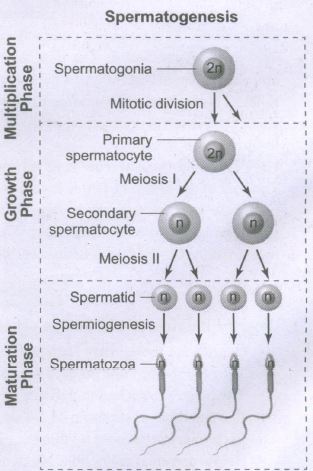
Describe the spermatogenesis with diagram.
13.
What are IUD's? Explain its way of functioning. Also describe their types.
14.
Describe the regeneration process noticed in living organism.
15.
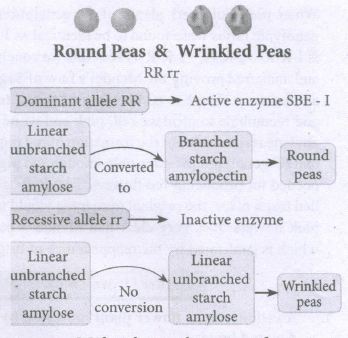
How does the wrinkled gene make Mendel's peas wrinkled? Find out the molecular explanation.
16.
Describe the development of monosporic embryo sac.
17.
List out the characteristics of ecological succession.
18.
What does competition refers to? Classify and describe it.
19.
Enumerate the advantages of Artificial seeds.
20.
Give a comparative account on Seaweed liquid fertilizer.
21.
What are the objectives of Afforestation programme?
22.
Draw a table mentioning binominals, family name, useful part and their medical uses of any five local medicinal plants
23.
Write the characteristics of tundra.
24.
List the salient features of genetic code.
25.
List out the significance of ploidy.
1.
According to the theory of chemical evolution, primitive organisms in the primordial environment of the Earth evolved spontaneously from inorganic substances and physical forces such as lightning, UV radiations, volcanic activities, etc. Oparin (1924) suggested that the organic compounds could have undergone a series of reactions leading to more complex molecules. He proposed that the molecules formed colloidal aggregates or 'coacervates' in an aqueous environment. The coacervates were able to absorb and assimilate organic compounds from the environment. Haldane (1929) proposed that the primordial sea served as a vast chemical laboratory powered by solar energy. The atmosphere was oxygen free and the combination of CO2, NH3 and UV radiations gave rise to organic compounds. The sea became a 'hot' dilute soup containing large populations of organic monomers and polymers. They envisaged that groups of monomers and polymers acquired lipid membranes and further developed into the first living cell. Haldane coined the term prebiotic soup and this became the powerful symbol of the Oparin-Haldane view on the origin of life (1924-1929). Oparin and Haldane independently suggested that if the primitive atmosphere was reducing and if there was appropriate supply of energy such as lightning or UV light then a wide range of organic compounds can be synthesized.
2.
i) Self Replication: It should be able to replicate. According to the rule of base pairing and complementarity, both nucleic acids (DNA and RNA) have the ability to direct duplications. Proteins fail to fulfill this criteria.
ii) Stability: It should be stable structurally and chemically. The genetic material should be stable enough not to change with different stages of life cycle, age or with change in physiology of the organism. Stability as one of property of genetic material was clearly evident in Griffith's transforming principle. Heat which killed the bacteria did not destroy some of the properties of genetic material. in DNA the two strands being complementary, if separated (denatured) by heating can come together (renaturation) when appropriate condition is provided. Further, 2' OH group present at every nucleotide in RNA is a reactive group that makes RNA liable and easily degradable. RNA is also known to be catalytic and reactive. Hence, DNA is chemically more stable and chemically less reactive when compared to RNA. Presence of thymine instead of uracil in DNA confers additional stability to DNA.
iii) Information storage: It should be able to express itself in the form of 'Mendelian characters'. RNA can directly code for protein synthesis and can easily express the characters. DNA, however, depends on RNA for synthesis of proteins. Both DNA and RNA can act as genetic material, but DNA being more stable stores the genetic information and RNA transfers the genetic information.
iv) Variation through mutation: It should be able to mutate. Both DNA and RNA are able to mutate. RNA being unstable mutates at a faster rate. Thus viruses having RNA genome with shorter life span can mutate and evolve faster. The above discussion indicates that both RNA and DNA can function as genetic material. DNA is more stable and is preferred for storage of genetic information.
3.
The two most characteristic forms of behavioral adaptations are migration and courtship. Migration allows the animals to find better resources or evade threat. Courtship is a set of behavioral patterns to find a mate to reproduce. Most nocturnal animals remain underground or inactive during the daytime. This is a modification of their feeding and activity pattern or habit or behavior.
4.
1. Affects all organisms as they depend on the atmosphere for respiration.
2. Causes irritation in the throat, nose, lungs and eyes. It causes breathing problems and aggravates existing health conditions such as emphysema and asthma.
3. Contaminated air reduces the body's defense mechanism and decreases the body's capacity to fight other infections in the respiratory system.
4. Frequent exposure to polluted air increases the risk of cardiovascular diseases. Breathing air that is filled with fine particulate matter can induce hardening of the arteries, triggering cardiac arrhythmia or even a heart attack.
5. People who exercise outdoors can sometimes be susceptible to adverse effects of air pollution because it involves deeper and faster breathing. Hence it is advisable to walk or jog in the mornings in places with ample tree cover .
6. Gas leaks can be lethal or affect the quality of air in the affected area .
7. CO in the atmosphere interferes with O2 transport since haemoglobin has greater affinity for carbon monoxide. At low concentration it causes headache and blurred vision. In higher concentration, it can lead to coma and death.
5.
Biogas is a mixture of different gases produced by the breakdown of organic matter in the absence of oxygen. Biogas can be produced from raw materials such as agricultural wastes, manure, municipal wastes, plant material, sewage, food waste, etc., Biogas is produced under the anaerobic condition when the organic materials are converted through microbiological reactions into gas and organic fertilizer. Biogas primarily consists of methane (63 percent), along with CO2 and hydrogen. Methane-producing bacteria are called methanogens and one such common bacterium is Methanobacterium. Biogas is devoid of smell and bums with a blue flame without smoke. The Methanogens are also present in anaerobic sludge and rumen of cattle. In the rumen, these bacteria help in the breakdown of cellulose. The excreta of cattle called dung is commonly called "Gobar". Gobar gas is generated by the anaerobic decomposition of cattle dung. It consists of methane, CO2 with some hydrogen, nitrogen and other gases in trace amounts.
In a biogas plant, anaerobic digestion is carried out in an airtight cylindrical tank known as digester. It is made up of concrete bricks and cement or steel. Bio-wastes are collected and a slurry of dung is fed into this digester. It has a side opening into which organic materials for digestion are incorporated for microbial activity. Anaerobic digestion is accomplished in three stages: solubilisation, acidogenesis, and methanogens. The outlet is connected to a pipe to supply biogas. The slurry is drained through another outlet and is used as fertilizer. Biogas is used for cooking and lighting. The technology of biogas production was developed in India mainly due to the efforts of the Indian Agricultural Research Institute (IARl) and Khadi and Village Industries Commission (KVIC).
6.
Lymphocytes: About 20-30% of the white blood cells are lymphocytes. They have a large nucleus filling most of the cell, surrounded by a little cytoplasm. The two main types of lymphocytes are Band T lymphocytes. Both these are produced in the bone marrow. B lymphocytes (B cells) stay in the bone marrow until they are mature. Then they circulate around the body. Some remain in the blood, while others accumulate in the lymph nodes and spleen. T lymphocytes leave the bone marrow and mature in the thymus gland. Once mature, T cells also accumulate in the same areas of the body as B cells. Lymphocytes have receptor proteins on their surface. When receptors on a B cell bind with an antigen, the B cell becomes activated and divides rapidly to produce plasma cells. The plasma cells produce antibodies. SomeB cells do not produce antibodies but become memory cells. These cells are responsible for the secondary immune response. T lymphocytes do not produce antibodies. They recognize antigen-presenting cells and destroy them. The two important types of T cells are Helper T cells and Killer T cells. Helper T cells release a chemical called cytokine which activates B cells. Killer cells move around the body and destroy cells which are damaged or infected. Apart from these cells neutrophils and monocytes destroy foreign cells by phagocytosis. Monocytes when they mature into large cells, they are called macrophages which performs phagocytosis on any foreign organism. Dendritic cells are called so because it's covered with long, thin membrane extensions that resemble dendrites of nerve cells. These cells present the antigen to T-helper cells. Four types of dendritic cells are known. They are Langerhans, interstitial cells, myeloid and lymphoid cells.
7.
Helminths are mostly endoparasitic in the gut and blood of human beings and cause diseases called helminthiasis. The two most prevalent helminthic diseases are Ascariasis and Filariasis. Ascaris is a monogenic parasite and exhibits sexual dimorphism. Ascariasis is a disease caused by the intestinal endoparasite Ascaris lumbricoides commonly called the roundworms. It is transmitted through ingestion of embryonated eggs through contaminated food and water. Children playing in contaminated soils are also prone to have a chance of transfer of eggs from hand to mouth. The symptoms of the disease are abdominal pain, vomiting, headache, anemia, irritability, and diarrhoea. A heavy infection can cause nutritional deficiency and severe abdominal pain and causes stunted growth in children. It may also cause enteritis, hepatitis, and bronchitis.
Filariasis is caused by Wuchereria bancrofti, commonly called filarial worm. It is found in the lymph vessels and lymph nodes of man. Wuchereria bancrofti is sexually dimorphic, viviparous and digenic. The life cycle is completed in two hosts, man and the female Culex mosquitoes. The female filarial worm gives rise to juveniles called microfilariae larvae. In the lymph glands, the juveniles develop into adults. The accumulation of the worms blocks the lymphatic system resulting in inflammation of the lymph nodes. In some cases, the obstruction of lymph vessels causes elephantiasis or filariasis of the limbs, scrotum and mammary glands
8.
The major functional attributes are:
1. continuity of nutrient cycles or biogeochemical cycles (N2' C, H20, P, S cycles)
2. soil formation, conditioning or maintenance of soil health (fertility) by soil microbial diversity along with the different trophic members
3. increases ecosystem productivity and provide food resources
4. act as water traps, filters, water flow regulators and water purifiers (forest cover and vegetation)
5. climate stability (forests are essential for rainfall, temperature regulation, C02 absorption, which in turn regulate the density and type of vegetation)
6. forest resource management and sustainable development
9.
Dolly was the first mammal (Sheep) clone developed by Ian Wilmut and Campbell in 1997. Dolly, the transgenic clone was developed by the nuclear transfer technique and the phenomenon of totipotency. Totipotency refers to the potential of a cell to develop different cells, tissues, organs and finally an organism.
The mammary gland udder cells (somatic cells) from a donor sheep (ewe) were isolated and subjected to starvation for 5 days. The udder cells could not undergo normal growth cycle, entered a dormant stage and became totipotent. An ovum (egg cell) was taken from another sheep (ewe) and its nucleus was removed to form an enucleated ovum. The dormant mammary gland cell/udder cell and the enucleated ovum were fused. The outer membrane of the mammary cell was ruptured allowing the ovum to envelope the nucleus.
The fused cell was implanted into another ewe which served as a surrogate mother. Five months later dolly was born. Dolly was the first animal to be cloned from a differentiated somatic cell taken from an adult animal without the process of fertilization.
10.
Rh incompatability has great significance in childbirth. If a woman is Rh negative and the man is Rh positive, the foetus may be Rh positive having inherited the factor from its father. The Rh negative mother becomes sensitized by carrying Rh-positive foetus within her body. Due to damage of blood vessels, during childbirth, the mother's immune system recognizes the Rh antigens and gets sensitized. The sensitized mother produces Rh antibodies. The antibodies are IgG type which are small and can cross placenta and enter the foetal circulation. By the time the mother gets sensitized and produce anti 'D' antibodies, the child is delivered.
Usually, no effects are associated with exposure of the mother to Rh positive antigen during· the first childbirth, subsequent Rh positive children carried by the same mother may be exposed to antibodies produced by the mother against Rh antigen, which are carried across the placenta into the foetal blood circulation. This causes haemolysis of foetal RBCs resulting in haemolytic jaundice and anaemia. This condition is known as Erythroblastosis foetalis or Haemolytic disease of the newborn (HDN).
11.
Agarose Gel Electrophoresis is used mainly for the purification of specific DNA fragments. Agarose is convenient for separating DNA fragments ranging in size from a few hundred to about 20000 base pairs. Polyacrylamide is preferred for the purification of smaller DNA fragments. The gel is complex network of polymeric molecules. DNA molecule is negatively charged molecule - under an electric field DNA molecule migrates through the gel. The electrophoresis is frequently performed with marker DNA fragments of known size which allow accurate size determination of an unknown DNA molecule by interpolation. The advantages of agarose gel electrophoresis are that the DNA bands can be readily detected at high sensitivity. The bands of DNA in the gel are stained with the dye Ethidium Bromide and DNA can be detected as visible fluorescence illuminated in UV light will give orange fluorescence, which can be photographed.
12.
Spermatogenesis is the sequence of events in the seminiferous tubules of the testes that produce the male gametes, the sperms. During development, the primordial germ cells migrate into the testes and become immature germ cells called sperm mother cells or spermatogonia in the inner surfaces of the seminiferous tubules. The spermatogonia begin to undergo mitotic division at puberty and continue throughout life. In the first stage of spermatogenesis, the spermatogonia migrate among Sertoli cells towards the central lumen of the seminiferous tubule and become modified and enlarged to form primary spermatocytes which are diploid with 23 pairs i.e., 46 chromosomes. Some of the primary spermatocytes undergo first meiotic division to form two secondary spermatocytes which are haploid with 23 chromosomes each. The secondary spermatocytes undergo second meiotic division to produce four haploid spermatids. The spermatids are transformed into mature spermatozoa (sperms) by the process called spermiogenesis. Sperms are finally released into the cavity of seminiferous tubules by a process called spermiation. The whole process of spermatogenesis takes about 64 days. At any given time, different regions of the seminiferous tubules contain spermatocytes in different stages of development. The sperm production remains nearly constant at a rate of about 200 million sperms per day. Spermatogenesis starts at the age of puberty and is initiated due to the increase in the release of Gonadotropin-Releasing Hormone (GnRH) by the hypothalamus. GnRH acts on the anterior pituitary gland and stimulates the secretion of two gonadotropins namely Follicle Stimulating Hormone (FSH) and Luteinizing Hormone (LH). FSH stimulates testicular growth and enhances the production of Androgen Binding Protein (ABP) by the Sertoli cells and helps in the process of spermiogenesis. LH acts on the Leydig cells and stimulates the synthesis of testosterone which in turn stimulates the process of spermatogenesis.
13.
Intrauterine Devices (IUDs) are inserted by medical experts in the uterus through the vagina. These devices are available as copper releasing IUDs, hormone-releasing IUDs and nonmedicated IUDs. IUDs increase phagocytosis of sperm within the uterus. IUDs are the ideal contraceptives for females who want to delay pregnancy. It is one of the popular methods of contraception in India and has a success rate of 95 to 99%.
Copper releasing IUDs differ from each other by the amount of copper. Copper IUDs such as Cu T-380 A, Nova T, Cu 7, Cu T 380 Ag, Multiload 375, etc. release free copper and copper salts into the uterus and suppress sperm motility. They can remain in the uterus for five to ten years.
Hormone-releasing IUDs such as Progestasert and LNG - 20 are often called as intrauterine systems (IUS). They increase the viscosity of the cervical mucus and thereby prevent sperms from entering the cervix.
Non-medicated IUDs are made of plastic or stainless steel. Lippes loop is a double S-shaped plastic device.
14.
Regeneration is regrowth in the injured region. Regeneration was first studied in Hydra by Abraham Trembley in 1740. Regeneration is of two types, morphallaxis, and epimorphosis. In morphallaxis, the whole body grows from a small fragment e.g. Hydra and Planaria. When Hydra is accidentally cut into several pieces, each piece can regenerate the lost parts and develop into a whole new individual. The parts usually retain their original polarity, with oral ends, by developing tentacles .and aboral ends, by producing basal discs. Epimorphosis is the replacement of lost body parts. It is of two types, namely reparative and restorative regeneration. In reparative regeneration, only certain damaged tissue can be regenerated, whereas in restorative regeneration severed body parts can develop. e.g. starfish, the tail of wall lizard.
15.
The protein called starch branching enzyme (SBEI) is encoded by the wild-type allele of the gene (RR) which is dominant. When the seed matures, this enzyme SBEI catalyzes the formation of highly branched starch molecules. Normal gene (R) has become interrupted by the insertion of extra piece of DNA (0.8 kb) into the gene, resulting in r allele. In the homozygous mutant form of the gene (rr) which is recessive, the activity of the enzyme SBEI is lost resulting in wrinkled peas. The wrinkled seed accumulates more sucrose and high water content. Hence the osmotic pressure inside the seed rises. As a result, the seed absorbs more water and when it matures it loses water as it dries. So it becomes wrinkled at maturation. When the seed has at least one copy of normal dominant gene heterozygous, the dominant allele helps to synthesize starch, amylopectin an insoluble carbohydrate, with the osmotic balance which minimises the loss of water resulting in smooth structured round seed.
16.
The functional megaspore is the first cell of the embryo sac or female gametophyte. The megaspore elongates along the micropylar-chalazal axis. The nucleus undergoes a mitotic division. Wall formation does not follow the nuclear division. A large central vacuole now appears between the two daughter nuclei. The vacuole expands and pushes the nuclei towards the opposite poles of the embryo sac. Both the nuclei divide twice mitotically, forming four nuclei at each pole. At this stage, all the eight nuclei are present in a common cytoplasm (free nuclear division). After the last nuclear division, the cell undergoes appreciable elongation, assuming a sac-like appearance. This is followed by the cellular organization of the embryo sac. Of the four nuclei at the micropylar end of the embryo sac, three organize into an egg apparatus, the fourth one is left free in the cytoplasm of the central cell as the upper polar nucleus. Three nuclei of the chalazal end form three antipodal cells whereas the fourth one functions as the lower polar nucleus. Depending on the plant the 2 polar nuclei may remain free or may fuse to form a secondary nucleus (central cell). The egg apparatus is made up of a central egg cell and two synergids, one on each side of the egg cell. Synergids secrete chemotropic substances that help to attract the pollen tube. The special cellular thickening called filiform apparatus of synergids to help in the absorption, conduction of nutrients from the nucellus to embryo sac. It also guides the pollen tube into the egg. Thus, a 7 celled with 8 nucleated embryo sac is formed.
17.
Characteristics of ecological succession
(I) It is a systematic process which causes changes in specific structure of plant community.
(II) It is resultant of changes of abiotic and biotic factors.
(III) It transforms unstable community into a stable community.
(IV) Gradual progression in species diversity, total biomass, niche specialisation, and humus content of soil takes place.
(V) It progresses from simple food chain to complex food web.
(VI) It modifies the lower and simple life form to the higher life forms.
(VII) It creates inter-dependence of plants and animals.
18.
Competition: It is an interaction between two organisms or species in which both the organisms or species are harmed. Competition is the severest in population that has irregular distribution. Competition is classified into intraspecific and interspecific.
1. Intraspecific competition: It is an interaction between individuals of the same species. This competition is very severe because all the members of species have similar requirements of food, habitat and pollination etc., and they also have similar adaptations to fulfill their needs.
2. Interspecific competition: It is an interaction between individuals of different species. In grassland, many species of grasses grow well as there is little competition when enough nutrients and water is available. During drought shortage of water occurs. A life and death competition starts among the different species of grass lands. Survival in both these competitions is determined by the quantity of nutrients, availability of water and migration to new areas. Different species of herbivores, larvae and grass hopper competing for fodder or forage plants. Trees, shrubs and herbs in a forest struggle for sunlight, water and nutrients and also for pollination and dispersal of fruits and seeds. The Utricularia (Bladderwort) competes with tiny fishes for small crustaceans and insects.
19.
Advantages of Artificial seeds
Artificial seeds have many advantages over the true seeds as follows:
1. Millions of artificial seeds can be produced at any time at low cost.
2. They provide an easy method to produce genetically engineered plants with desirable traits.
3. It is easy to test the genotype of plants.
4. They can potentially stored for long time under cryopreservation method.
5. Artificial seeds produce identical plants .
6. The period of dormancy of artificial seeds is greatly reduced, hence growth is faster with a shortened life cycle.
20.
Seaweed liquid fertilizer (SLF) contains cytokinin, gibberellins, and auxin apart from macro and micro nutrients. Most seaweed-based fertilizers are made from kelp (brown algae) which grows to length of 150 metres. Liquid seaweed fertilizer is not only organic but also eco-friendly. The alginates in the seaweed that reacts with metals in the soil and form long, crosslinked polymers in the soil. These polymers improve the crumbing in the soil, swell up when they get wet and retain moisture for a long time. They are especially useful in organic gardening which provides carbohydrates for plants. Seaweed has more than 70 minerals, vitamins and enzymes. It promotes vigorous growth. Improves resistance of plants to frost and disease. Seeds soaked in seaweed extract germinate much rapidly and develop a better root system.
21.
Afforestation Objectives:
(i) To increase forest cover, planting more trees, increases CO2 production and air quality.
(ii) Rehabilitation of degraded forests to increase carbon fixation and reducing CO2 from atmosphere.
(iii) Raising bamboo plantations.
(iv) Mixed plantations of minor forest produce and medicinal plants.
(v) Regeneration of indigenous herbs/shrubs.
(vi) Awareness creation, monitoring, and evaluation.
(vii) To increase the level and availability of water table or ground water and also to reduce nitrogen leaching in soil and nitrogen contamination of drinking water, thus making it pure not polluted with nitrogen.
(viii) Nature aided artificial regeneration.
22.
| S.No | Common Name | Botanical Name | Family | Plant Part Used | Medicinal Uses |
| 1 | Holy basil | Ocimum Sanctum | Lamiaceae | Leaves and Roots | The leaves are stimulant, antiseptic, antihypertensive and anti-bacterial and expectorant used in bronchitis. Decoction of roots is given as a diaphoretic in malarial fever. |
| 2 | Indian Phyllanthus | Phyllanthus emblica | Phyllanthaceae | Fruit | It is a potent rejuvenator and immune modulator. It has a anti-ageing properties. It helps to promote longevity, enhance digestion, treat constipation and reduce fever and cough. |
| 3 | Indian Acalypha | Acalypha indica | Euphorbiaceae | Leaves | Used to cure skin diseases caused by ringworms. Powdered leaves are used to cure bedsores and infected wounds |
| 4 | Vilvam | Aegle marmelos | Rutaceae | Fruit | The unripe fruit is used to treat problems of stomach indigestion. It kills intestinal parasites. |
| 5 | Veldt grape | Cissus quandran-gularis | Vitaceae | Stem and Root | Paste obtained from the and powdered stem and root root of this plant is used in bone fractures. Whole plant is useful to treat asthma and stomach troubles. |
23.
(i) Extremely cold climate
(ii) Low biotic diversity
(iii) Simple vegetation structure
(iv) Limitation of drainage
(v) Short season of growth and reproduction
(vi) Energy and nutrients in the form of dead organic material
(vii) Large population oscillations
24.
The salient features of genetic code are as follows:
(i) The genetic codon is a triplet code and 61 codons code for amino acids and 3 codons do not code for any amino acid and function as stop codon (Termination).
(ii) The genetic code is universal. It means that all known living systems use nucleic acids and the same three base codons (triplet codon) direct the synthesis of protein from amino acids. for example, the mRNA (UUU) codon codes for phenylalanine in all cells of all organisms. some exceptions are reported in prokaryotic, mitochondrial and chloroplast genomes. However similarities are more common than differences. Most part of the genetic code is universal in prokaryotes and eukaryotes.
(iii) A non-overlapping codon means that the same letter is not used for two different codons. for instance, the nucleotide sequence GUU GUC represents only two codons.
(iv) It is comma less, which means that the message would be read directly from one end to the other i.e., no punctuation are needed between two codes.
(v) A degenerate code means that more than one triplet codon could code for a specific amino acid. for example, codons GUU, GCU, GUA and GUG code for valine.
(vi) Non-ambiguous code means that one codon will code for one amino acid.
(vii) The code is always read in a fixed direction i.e. from 5'⟶3' direction called polarity.
(viii) AUG has dual functions. It acts as a initiator codon and also codes for the amino acid methionine.
(ix) UAA, UAG (tyrosine) and UGA (tryptophan) codons are designated as termination (stop) codons and also are known as "non-sense" codons.
25.
Many polyploids are more vigorous and more adaptable than diploids.
(i) Many ornamental plants are autotetraploids and have larger flower and longer flowering duration than diploids.
(ii) Autopolyploids usually have increase in fresh weight due to more water content.
(iii) Aneuploids are useful to determine the phenotypic effects of loss or gain of different chromosomes.
(iv) Many angiosperms are allopolyploids and they play a role in an evolution of plants.

12th Standard Syllabus & Materials
12th Standard
TN 12th Computer Applications வலையமைப்பு வடமிடல் Sample Question Papers Study Material - QB365 Set A
NEW12th Standard
TN 12th Computer Applications களப்பெயர் முறைமை (DNS) Sample Question Papers Study Material - QB365 Set A
NEW12th Standard
TN 12th Computer Applications வலையமைப்பு எடுத்துக்காட்டுகள் மற்றும் நெறிமுறைகள் Sample Question Papers Study Material - QB365 Set A
NEW12th Standard
TN 12th Computer Applications கணினி வலையமைப்பு ஓர் அறிமுகம் Sample Question Papers Study Material - QB365 Set A



Tamilnadu Stateboard 12th Standard Subjects

Maths

Chemistry

Physics
Biology

Computer Science

Business Maths and Statistics

Economics

Commerce

Accountancy

History

Computer Applications
Biology
Computer Technology
Computer Applications
Computer Science
Business Maths and Statistics
Commerce
Economics
Maths
Chemistry
Physics
Computer Technology
History
Accountancy

Tamil

English

French
Tamilnadu Stateboard Standards

