
 100% FREE ACCESS
12th Standard Syllabus & Materials
12th Standard
TN 12th Computer Applications மின்னணு தரவு பரிமாற்றம் Sample Question Papers Study Material - QB365 Set A
NEW12th Standard
TN 12th Computer Applications மின் - வணிக பாதுகாப்பு அமைப்புகள் Sample Question Papers Study Material - QB365 Set A
NEW12th Standard
TN 12th Computer Applications மின்னணு செலுத்தல் முறைகள் Sample Question Papers Study Material - QB365 Set A
NEW12th Standard
TN 12th Computer Applications மின் - வணிகம் Sample Question Papers Study Material - QB365 Set A
NEW12th Standard
TN 12th Computer Applications திறந்த மூல கருத்துருக்கள் Sample Question Papers Study Material - QB365 Set A
NEW12th Standard
TN 12th Computer Applications வலையமைப்பு வடமிடல் Sample Question Papers Study Material - QB365 Set A

Published on: 27/02/2021
12th Standard English Medium Biology Reduced Syllabus Five mark Important Questions - 2021(Public Exam )
Download Tamil Nadu 12th Standard Biology question papers, model tests, one-mark questions, important questions, and public exam papers in PDF format. Free study materials and answer keys for TN State Board students.
Questions + Answers key
Take MCQ Biology Test1.
How is anemochory differ from zoochory?
2.
3.
4.
What is the difference between syngamy and fertilization?
5.
‘Pollination in Gymnosperms is different from Angiosperms’ – Give reasons.
6.
7.
8.
Draw a pyramid from following details and explain in brief.
Quantities of organisms are given-Hawks - 50, plants - 1000.rabbit and mouse - 250 + 250, pythons and lizard - 100 + 50 respectively.
9.
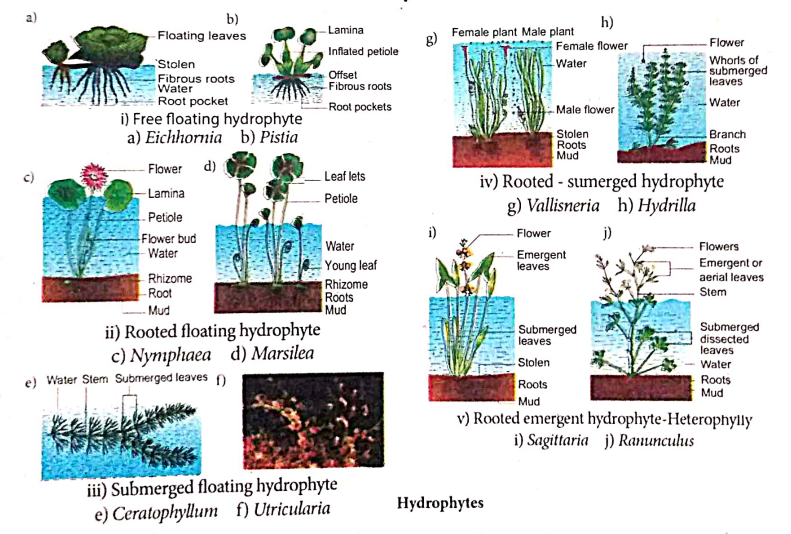
Explain different types of hydrophytes with examples.
10.
Describe how deforestation might contribute to global warming
11.
‘Stability of a community depends upon its species diversity’ Justify the statement.
12.
Mention any three similarities found common in Neanderthal man and Homo sapiens.
13.
Explain the formation of a nucleosome.
14.
Explain the inheritance of sex linked characters in human being.
15.
16.
17.
Give a concise account on steps involved in fertilization of an angiosperm plant.
18.
19.
Describe Population Age Distribution
20.
Explain why cloning of Dolly, the sheep was such a major scientific breakthrough?
21.
22.
The procedure of GIFT involves the transfer of female gametes into the fallopain tube, can gametes be transferred to the uterus to achieve the same result? Explain.
23.
24.
Explain the role of oxytocin and relaxin in parturition and lactation.
25.
List the common withdrawal symptoms of drugs and alcohol abuse.
1.
| S. No | Anemochory | Zoochory |
| a | Dispersal of seeds or fruits by wind. | Dispersal of seeds or fruits by animals |
| b | Seeds are minute or may have wings. | Seeds or fruit surface may have hooks or sicky glandular hairs are seen. |
2.
3.
4.
| syngamy | fertilization |
| It is the fusion of two haploid gametes to form a diploid zygote | It is the act (or) process of rendering fertile zygote as the result of Fertilization |
5.
Gymnosperms - Pollination is said to be direct as the pollen are deposited directly on the exposed ovules Angiosperms - Pollination is said to be indirect as the pollen are deposited on the stigma of the pistil.
6.
7.
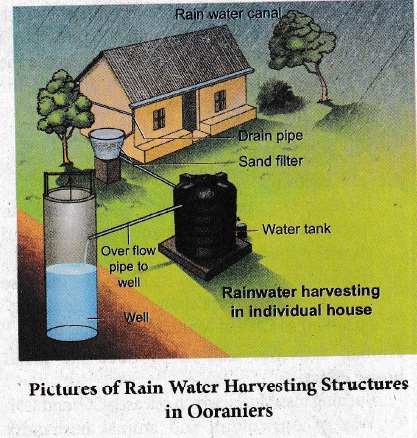
.jpg)
8.
Grassland ecosystem : There is a gradual decrease in the number of organisms in each trophic level from producers to primary consumers and then to secondary consumers, and finally to tertiary consumers. Therefore pyramids of number in grassland ecosystem are always upright.
9.
i. Free floating hydrophytes: These plants float freely on the surface of water. They remain in contact with water and air, but not with soil. Examples: Eichhornia, Pistia and Wolffia (smallest flowering plant).
ii. Rooted floating hydrophytes: In these plants, the roots are fixed in mud, but their leaves and flowers are floating on the surface of water. These plants are in contact with soil, water and air. Examples: Nelumbo, Nymphaea, Potomogeton and Marsilea. Lotus seeds showing highest longevity in plant kingdom.
iii. Submerged floating hydrophytes: These plants are completely submerged in water and not in contact with soil and air. Examples: Ceratophyllum and Utricularia.
iv. Rooted-submerged hydrophytes: These plants are completely submerged in water and rooted in soil and not in contact with air. Examples: Hydrilla, Vallisneria and Isoetes.
v. Amphibious hydrophytes (Rooted emergent hydrophytes): These plants are adapted to both aquatic and terrestrial modes of life. They grow in shallow water. Examples: Ranunculus, Typha and Sagittaria.
10.
(i) When trees are cut down and burnt or allowed to rot, their stored carbon is released into the air as carbon dioxide. This adds to the carbon dioxide content of the air. Carbon dioxide is a major greenhouse gas. The increase in concentration of carbon dioxide in the air increases the greenhouse effect and thereby causes global warming. It has been estimated that 25-30% of the greenhouse gases released into the atmosphere each year is because of deforestation.
(ii) Trees act as carbon sink since they utilize carbon dioxide for photosynthesis. When trees are cut down, the carbon footprint increases. This, in turn leads to global warming.
11.
(i) Species have been evolving and becoming extinct since the origin of life. But species are now becoming extinct at a faster rate. This is destabilizing the ecological stability and the distribution of biological diversity on earth.
(ii) The current rate of biodiversity loss is 100-1000 times higher than the naturally occurring extinction rate. This loss of biodiversity will lead to a loss in diversity of species. It has a huge impact on plant, animal and human life. The negative effect includes dramatic influence on food web. Even a reduction in one species can affect the entire Food chain. This will affect the food sources of many species and will affect the stability of a community.
(iii) Many species may die due to lack of food. Thus species diversity will stabilize a community and also help the community to rebuild in case of any changes/ challenges faced by the community.
12.
Similarities found in Neanderthal man and Homo sapiens.
(i) They knew to protect their bodies. Neanderthal man used animal hides to protect their bodies.
(ii) They knew the use of fire.
(iii) They buried their dead.
13.
(i) In eukaryotes, chromatin is formed by a series of repeating units called nucleosomes.
(ii) Korenberg proposed a model for the nucleosome, in which 2 molecules of the four histone proteins H2A, H2B, H3 AND H4 are organized to form a unit of eight molecules called histone octamere.
(iii) The negatively charged DNA is wrapped around the positively charged histone octamer to form a structure called nucleosome. A typical nucleosome contains 200 bp of DNA helix.
(iv) The histone octameres are in close contact and DNA is coiled on the outside of nucleosome.
(v) Neighbouring nucleosomes are connected by linker DNA (Hl) that is exposed to enzymes. The DNA makes two complete turns around the histone octameres and the two turns are sealed off by an HI molecule
(vi) Chromatin lacking HI has beads on a string appearance in which DNA enters and leaves the nucleosomes at random places.
(vii) HI of one nucleosome can interact with HI of the neighbouring nucleosomes resulting in the further folding of the fibre.
14.
(i) The inheritance of a trait that is determined by a gene located on one of the sex chromosomes is called sex linked inheritance.
(ii) Genes present on the differential region of X or Y chromosomes are called sex linked genes. The genes present in the differential region of "X" chromosome are called X linked genes. The X-linked genes have no corresponding alleles in the Y chromosome.
(iii) The genes present in the differential region of Y chromosome are called Y- linked or holandric genes. The Y linked genes have no corresponding allele in X chromosome.
(iv) The Y linked genes inherit along with Y chromosome and they phenotypically express only in the male sex.
(v) Sex linked inherited traits are more common in males than females because, males are hemizygous and therefore express the trait when they inherit one mutant allele.
(vi) The X - linked and Y - linked genes in the differential region (non-homologus region) do not undergo pairing or crossing over during meiosis. The inheritance of X or Y linked genes is called sex-linked inheritance.
X linked Inheritance - Eg. Colour blindness
Y linked Inheritance - Eg. hypertrichosis
15.
16.
17.
The fusion of male and female gamete is called fertilization. Fertilization in angiosperms is double fertilization type.
Pollen germinates on the stigma. Pollen tube produced grows through the style towards the micropyle of the ovule pollen tubes enter into one of the synergids of the embryo sac.
Discharge of male gametes occur syngamy - one gamete and an egg cell fuses to form diploid zygote Triple fusion - The other male gamete fuses with the two haploid female polar nuclei. A triploid primary endosperm nucleus results.
18.
19.
(i) The proportion of the age groups in a population is its age distribution attribute.
(ii) This determines the reproductive status of the population at the given time and is an indicator of the future population size.
(iii) Usually a rapidly growing population will have larger proportion of young individuals.
(iv) A stable population will have an even distribution of various age classes.
(v) A declining population tends to have a larger proportion of older individuals
20.
(i) Dolly was the first mammal (sheep) Clone developed by Ian Wilmot and Campbell in 1997.
(ii) Dolly the transgenic clone was developed by the nuclear transfer technique and the phenomenon of totipotency.
(iii) Totipotency, refers to the potential of a cell to develop different cells, tissues, organs and finally an organism.
(iv) Dolly was the first animal to be cloned from a differentiated somatic cell taken from an adult animal without the process of fertilization.
21.
22.
1. Directly gametes cannot be transferred into the uterus, because the uterine environment is not suited for the survival of the gametes.
2. If the gametes directly transferred into the uterus, gametes will undergo degeneration (or) could be phagocytosed and viable zygotes will not be formed.
3. In this method, the own collected from a donor female is transferred to the fallopian tube of another woman.
4. The ovum has to be fertilized by the sperm of the woman's husband; the fallopian tube is the site for fertilization in a human female.
5. The gamete (ovum) if introduced into the uterus cannot move to the fallopian tube, the site of fertilization.
23.
24.
Relaxin
(i) It is a hormone secreted by the placenta and also by the corpus luteum during pregnancy.
(ii) It promotes parturition by relaxing the pelvic joints and by dilation of cervical ligaments with continued powerful contractions.
Oxytocin:
(i) It causes the "Let-Down" reflex.
(ii) The actual ejection of milk from the alveoli of the mammary glands.
(iii) During lactation, oxytocin also stimulates the recently emptied uterus to contract, helping it to return to pre-pregnancy size..
25.
(i) Mild tremors to convulsions.
(ii) Severe agitation and fits.
(iii) Depressed mood.
(iv) Anxiety.
(v) Nervousness.
(vi) Restlessness.
(vii) Irritability.
(viii) Insomnia.
(ix) Dryness of throat.

12th Standard Syllabus & Materials
12th Standard
TN 12th Computer Applications களப்பெயர் முறைமை (DNS) Sample Question Papers Study Material - QB365 Set A
NEW12th Standard
TN 12th Computer Applications வலையமைப்பு எடுத்துக்காட்டுகள் மற்றும் நெறிமுறைகள் Sample Question Papers Study Material - QB365 Set A
NEW12th Standard
TN 12th Computer Applications கணினி வலையமைப்பு ஓர் அறிமுகம் Sample Question Papers Study Material - QB365 Set A
NEW12th Standard
TN 12th Computer Applications PHP-உடன் MySQL-ஐ இணைத்தல் Sample Question Papers Study Material - QB365 Set A



Tamilnadu Stateboard 12th Standard Subjects

Maths

Chemistry

Physics
Biology

Computer Science

Business Maths and Statistics

Economics

Commerce

Accountancy

History

Computer Applications
Biology
Computer Technology
Computer Applications
Computer Science
Business Maths and Statistics
Commerce
Economics
Maths
Chemistry
Physics
Computer Technology
History
Accountancy

Tamil

English

French
Tamilnadu Stateboard Standards

