
 100% FREE ACCESS
12th Standard Syllabus & Materials
12th Standard
TN 12th Maths Applications of Matrices and Determinants Sample Question Papers Study Material - QB365 Set A
NEW12th Standard
TN 12th Computer Applications மின்னணு தரவு பரிமாற்றம் Sample Question Papers Study Material - QB365 Set A
NEW12th Standard
TN 12th Computer Applications மின் - வணிக பாதுகாப்பு அமைப்புகள் Sample Question Papers Study Material - QB365 Set A
NEW12th Standard
TN 12th Computer Applications மின்னணு செலுத்தல் முறைகள் Sample Question Papers Study Material - QB365 Set A
NEW12th Standard
TN 12th Computer Applications மின் - வணிகம் Sample Question Papers Study Material - QB365 Set A
NEW12th Standard
TN 12th Computer Applications திறந்த மூல கருத்துருக்கள் Sample Question Papers Study Material - QB365 Set A

Published on: 27/02/2021
12th Standard English Medium Biology Reduced Syllabus Five mark Important Questions with Answer key - 2021(Public Exam )
Download Tamil Nadu 12th Standard Biology question papers, model tests, one-mark questions, important questions, and public exam papers in PDF format. Free study materials and answer keys for TN State Board students.
Questions + Answers key
Take MCQ Biology Test1.
What are psychoactive drugs? Add a note Marijuana and Opium
2.
3.
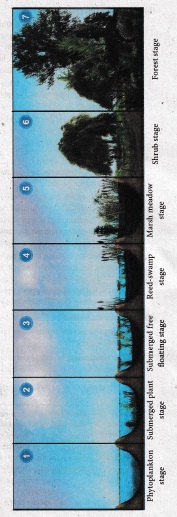
Various stages of succession are given bellow. From that rearrange them accordingly. Find out the type of succession and explain in detail.
Reed-swamp stage, phytoplankton stage, shrub stage, submerged plant stage, forest stage, submerged free floating stage, marsh meadow stage.
4.
Describe dispersal of fruit and seeds by animals.
5.
6.
Give an account of the properties of soil.
7.
What is the primary purpose of the Kyoto Protocol?
8.
9.
‘Stability of a community depends upon its species diversity’ Justify the statement.
10.
What is the key difference between primary and secondary sewage treatment?
11.
12.
Mention any three similarities found common in Neanderthal man and Homo sapiens.
13.
14.
The following is the illustration of the sequence of ovarian events (a-i) in a human female.
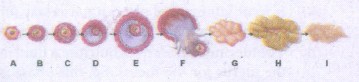
a) Identify the figure that illustrates ovulation and mention the stage of oogenesis it represents.
b) Name the ovarian hormone and the pituitary hormone that have caused the above-mentioned events.
c) Explain the changes that occurs in the uterus simultaneously in anticipation.
d) Write the difference between C and H.
15.
Comment on the methods of Eugenics.
16.
17.
Differentiate between the following:
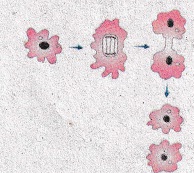
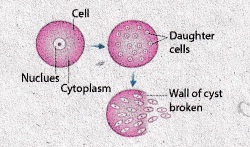
(a) Binary fission in amoeba and multiple fission in Plasmodium
(b) Budding in yeast and budding in Hydra
(c) Regeneration in lizard and Planaria
18.
19.
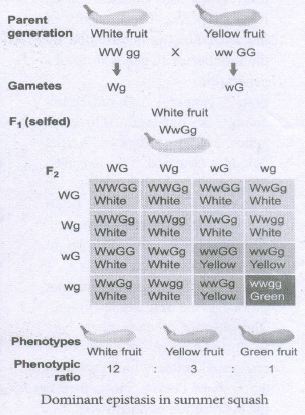
Differentiate the structure of Dicot and Monocot seed.
20.
Discuss the steps involved in Microsporogenesis.
21.
22.
Mention the major threats to biodiversity caused by human activities. Explain.
23.
Amniocentesis, the foetal sex determination test, is banned in our country, Is it necessary? Comment.
24.
It is established that RNA is the first genetic material. Justify giving reasons.
25.
Why do you think it is not possible to produce vaccine against 'common cold'?
1.
| psychoactive drugs | ||||
| 1 | Opium Poppy | Papaver somniferun (Family: Papaveraceae) |
Native: South East Europe, Western Asia. Cultivated in MP, Rajasthan, UP (With license) | Morphine strong analgesic during surgery - sleep, relieving Pain. |
| 2 | Cannabis/ Marijuana | Cannabis sativa (Family: Cannabiaceae) | Native: Marijuana to China Cultivated in Gujarat, HP, Uttarkand, UR, MP [with license) |
1. Trans - tetrahydrocannabinol (THC) - cures hypertension, Glucoma, nausea of cancer patients of radio and chemotherapy. 2. Cures bronchial disorder, asthma. |
2.
3.
Type of succession
Hydrosere
(i) The succession in a freshwater ecosystem is also referred to as hydrosere
(ii) Succession in a pond, begins with colonization of the pioneer's like phytoplankton and finally ends with the formation of climax community like forest stage. It includes the following stages
(a) Phytoplankton stage
It is the first stage of succession consisting of the pioneer Community like blue green algae, green algae, diatoms, bacteria, etc.,
The colonization of these organisms enrich the amount of organic matter and nutrients of pond due to their life activities and death.
This favors the development of the next several stages
(b) Submerged plant stage
As the result of death and decomposition of planktons, silt brought from land by rain water, lead to a loose mud formation at the bottom of the pond. Hence, the rooted submerged hydrophytes begin to appear on the new substratum.
Example: Chara, Utricularia, Vallisneria and Hydrilla etc.
The death and decay of these plants will build up the substratum of pond to become shallow. Therefore, this habitat now replaces another group of plants which are of floating type.
(c) Submerged free floating stage
During this stage, the depth of the pond will become almost 2-5 feet
Hence, the rooted hydrophytic plants and with floating large leaves start colonising the pond.
Example: Rooted floating plants like Nelumbo, Nymphaea and Trapa. Some free floating species like Azolla, Lemna, Wolffia and Pistia are also present in this stage.
By death and decomposition of these plants, further the pond becomes more shallow.
Due to this reason, floating plant species is gradually replaced by another species which makes new several stage.
(d) Reed-swamp stage
It is also called an amphibious stage.
During this stage, rooted floating plants are replaced by plants which can live successfully in aquatic as well as aerial environment.
Example: Typha, Phragmites, Sagittaria and Scirpus etc. At the end of this stage, water level is very much reduced, making it unsuitable for the continuous growth of amphibious Plants.
(e) Marsh meadow stage
When the pond becomes swallowed due to decreasing water level
Species of Cyperaceae and Poaceae such as Carex, Iuncus, Cyperus and Eleocharis colonise the area
They form a mat-like vegetation with the help of their much branched root system.
This leads to an absorption and loss of large quantity of water
At the end of this stage, the soil becomes dry and the marshy vegetation disappears gradually and leads to shurb stage
(d) Shrub stage
As the disappearance of marshy vegetation continues, soil becomes dry.
Hence, these areas are now invaded by terrestrial plants like shrubs (Salix and Cornus) and trees (Populus and Alnus).
These plants absorb large quantity of water and make the habitat dry.
Further, the accumulation of humus with a rich flora of microorganisms produce minerals in the soil, ultimately favouring the arrival of new tree species in the area
(e) Forest stage
It is the climax community of hydrosere.
A variety of trees invade the area and develop any one of the diverse type of vegetation.
Example: Temperate mixed forest (Ulmus, Acer and Quercus), Tropical rain forest (Artocarpus and Cinnamomum) and Tropical deciduous forest (Bamboo and Tectona).
In the 7 stages of hydrosere succession, stage 1 is occupied by pioneer community, while the stage 7 is occupied by the climax community. The stages 2 to 6 are occupied by several communities,
4.
Dispersal by Animals (Zoochory)
Birds and mammals, including human beings play an efficient and important role in the dispersal of fruit and seeds. They have the following devices.
i. Hooked fruit: The surface of the fruit or seeds have hooks (Xanthium), barbs (Andropogon), spines (Aristida) by means of which they adhere to the body of animals or clothes of human beings and get dispersed.
ii. Sticky fruits and seeds:
a. Some fruits have sticky glandular hairs by which they adhere to the fur of grazing animals. Example: Boerhaavia and Cleome.
b. Some fruits have viscid layer which adhere to the beak of the bird which eat them and when they rub them on to the branch of the tree, they disperse and germinate. Example: Cordia and Alangium.
iii. Fleshy fruits: Some fleshy fruits with conspicuous colours are dispersed by human beings to distant places after consumption.
Example: Mango and Diplocyclos
5.
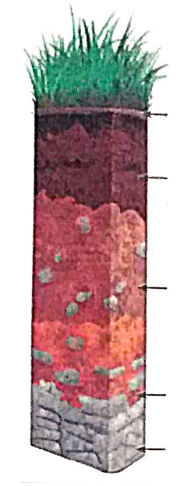 Horizon Description O-Horizon (Organic horizon) Humus It consists of fresh or partially decomposed organic matter.
6.
Properties of soil
(i) Texture of soil - The texture of soil is determined by the size of the soil particles. The types of soil include sand, silt and clay on the basis of their size differences.
(ii) Porosity - The space present between soil particles in a given volume of soil are called pore spaces. The percentage of soil volume occupied by pore space or by the interstitial spaces is called porosity of the soil.
(iii) Permeability of soil - The characteristic of soil that determines the movement of water through pore spaces is known as soil permeability. Soil permeability is directly dependent on the pore size. Water holding capacity of the soil is inversely dependent on soil porosity.
(iv) Soil Temperature - Soil gets its heat energy from solar radiation, decomposing organic matter, and heat from the interior of the earth. Soil temperature affects the germination of seeds, growth of roots and biological activity of soil-inhabiting micro-and macro-organisms.
(v) Soil water - In soil, water is not only important as a solvent and transporting agent, but also maintains soil texture, arrangement, and compactness of soil particles, making soil habitable for plants and animals.
7.
The main goal of the Kyoto protocol is to control emissions of the main Anthropogenic (human-emitted) greenhouse gases (GHGs) in ways that reflect underlying national difference in GHG emission, wealth and capacity to make the reductions.
8.
9.
(i) Species have been evolving and becoming extinct since the origin of life. But species are now becoming extinct at a faster rate. This is destabilizing the ecological stability and the distribution of biological diversity on earth.
(ii) The current rate of biodiversity loss is 100-1000 times higher than the naturally occurring extinction rate. This loss of biodiversity will lead to a loss in diversity of species. It has a huge impact on plant, animal and human life. The negative effect includes dramatic influence on food web. Even a reduction in one species can affect the entire Food chain. This will affect the food sources of many species and will affect the stability of a community.
(iii) Many species may die due to lack of food. Thus species diversity will stabilize a community and also help the community to rebuild in case of any changes/ challenges faced by the community.
10.
| S. No | Primary Treatment | Secondary Treatment |
|---|---|---|
| i. | It involves the physical removal of solid, and particulate organic and inorganic materials fro the sewage through filtration and sedimentation. The supernatant is the effluent which is taken for secondary treatment. | The process takes place in large aeration tanks with vigorous growth of microbes. The organisms break down the organic matter and reduces the Biological oxygen demand it is further passed into a setting tank where are bacterial 'flocs' sediment to form the activated sludge. |
| ii. | It is a total physical process. | It is a biological process. |
| iii. | The solid waste is mainly removed. | The dissolved organic waste is removed by this process by aerobic and anaerobic means. |
| iv | It is a similar process. | It is more time consuming and a major part of sewage treatment. |
| v. | No by products are produced | Biogas production occurs. |
11.
12.
Similarities found in Neanderthal man and Homo sapiens.
(i) They knew to protect their bodies. Neanderthal man used animal hides to protect their bodies.
(ii) They knew the use of fire.
(iii) They buried their dead.
13.
14.
(a) The figure 'F' represent ovulation.
Stage of oogenesis - Ovulatory or luteal stage of oogenesis
(b) (i) The ovarian hormone is progesterone which is released during ovulation.
(ii) The pituitary hormones are the follicle-stimulating hormone (FSH) and Luteinizing hormone (LSH) which are released during and ovulation from anterior pituitary gland.
(c) The endometrium of the uterus gets thickened and blood supply to the endometrium increase.
(d) Figure 'C' represents the secondary follicle and figure h represents the degenerating corpus luteum.
| Secondary follicle | Corpus luteurn |
| lt is surrounded by layers of granulosa cells | Absence of granulosa cells |
| Theca layer is present | Theca layer is absent. |
15.
Application of the laws of genetics for the improvement of human race is called eugenics.
Two methods of Eugenics are:
(i) Constructive method or Positive eugenics
(ii) Restrictive method or Negative eugenics
(i) Positive eugenics: Positive eugenics attempts to increase consistently better or desirable germplasm and to preserve the best germplasm of the society. The desirable traits can be increased by adopting the following measures:
(a) Early marriage of those having desirable traits
(b) Subsiding the fit and establishing sperm and egg banks of precious germ plasm.
(c) Educating the basic principles of genetics and eugenics.
(d) Improvement of environmental conditions.
(e) Promotion of genetic research.
(ii) Negative eugenics: Negative eugenics attempts to eliminate the defective germplasm of the society by adopting the following measures:
(a) Sexual separation of the defectives
(b) Sterilization of the defectives
(c Control of immigration and
(d) Regulation of marriages
16.
17.
(a)
| Binary Fission in Amoeba | Multiple fission in Plasmodium |
| lt results in the production of two individuals from a single parent. | It results in the production of several individuals |
| lt occurs under favourable conditions | It occurs both under favourable and unfavourable conditions |
| Nucleus of the parent cell divides only once to form two daughter nuclei | Nucleus of the parent cell undergoes repeated divisions to form a number of daughter nuclei |
| Cytoplasm divides after nuclear division | Cytoplasm does not divide after each nuclear division but divides during favourable condition |
| No part of parent body is left unused (e,g: Amoeba) | A part of the body (covering and residuai cytoplasm) is left unused. (e,g: Paramecium) |
 |
 |
(b) Budding in yeast and budding in hydra
| Budding in Yeast | Budding in Hydra |
| During budding the cell wall of the parent cell bulges out in the form of an out growth as bud | During budding the ectoderm cells increase and form a small elevation on the body surface as bud. |
| The parent nucleus divides into two daughter nuclei one of which migrates into bud. | Ectoderm and endoderm are pushed out to form the bud. The bud contains an interior lumen in continuation with parent's gastro vascular cavity (coelenteron) |
| As the bud enlarges and is fully formed, it is separated from the parentcell and grows into mature yeast. Sometimes a bud may produce another bud over it which is still attached to parent cell forming a false mycelium (or) pseudomycelium | The bud enlarges, develops a mouth and a circle of tentacles at its free end. When fully grown, the bud constricts at the base and finally separates from the parent body and leads an independent life |
(c) Regeneration is regrowth in the injured region
| Regeneration in Lizard | Regeneration in Planaria |
| This type of regeneration comes under epimorphosis type. | This type of regeneration comes under morphallaxis type |
| Several body parts can develop. | When the body is cut into several pieces, each piece can regenerate the lost parts and develops into a whole individual |
18.
19.
| Dicot Seed | Monocot Seed |
|---|---|
| Seed coat differentiated into outer hard testa, inner thin membranous tegmen. | Seed coat brownish membranous unilayer closely adhered to the grain |
| Two cotyledons, laterally attached to the embryonic axis | Embryo consists of one shield shaped cotyledon, the scutellum |
| The reserve food materials stored either in cotyledon or in endosperm | The reserve food materials stored in the endosperm. |
| Embryonic axis is differentiated into radicle and plumule but not protected by any sheath | Embryonic axis is differentiated into radicle and plumule Radicle is protected by Coleorhiza Plumule is protected by Coleoptile |
| Example - Cicer arientinum | Example - Oryza sativa |
20.
(i) The primary sporogeneous cells undergoes mitotic divisions to form sporogeneous tissue.
(ii) Each cell of the sporogenous tissue is a potential microspore mother cell.
(iii) The microspore mother cell divides meiotically to form four haploid microspores. Microspore soon separates from one another.
(iv) They remain free in the anther locule. Then they develop into pollen grains.
21.
22.
Even though India is one of the 17 identified megadiverse countries of the world, it faces lots of threats to its biodiversity.
(i) Apart from natural causes, human activities, both directly and indirectly are today's main reason for habitat loss and biodiversity loss.
(ii) Fragmentation and degradation due to agricultural practices, extraction (mining, fishing, logging, harvesting) and development (settlements, industrial and associated infrastructures) lead to habitat loss and fragmentation leads to the formation of isolated, small and scattered populations and as endangered species.
23.
1. Amniocentesis is the pre-natal diagnostic technique in which a sample of amniotic fluid from the womb of a pregnant woman is taken during early stages of embryonic development and the cells are cultured and analysed synthetically.
2. Any chromosomal disorder or a metabolic error can be detected and if necessary MTP can be advised.
3. But this technique is misused for knowing the sex of the foetus followed by female foeticide.
4. Female foeticide refers to aborting the female in the mother's womb.
5. In order to prevent female foeticide and infanticide, Government of India has taken various steps like PCPNDT Act .(preconception and prenatal diagnostic technique act-1994) enacted to ban the identification of sex and to prevent the use of prenatal diagnostic techniques for selective abortion.
24.
RNA is said to be as the first genetic material because
1. RNA can directly code for protein synthesis of protein and hence can easily expresses the character. It is the genetic material in many viruses.
2. RNA can also act as a catalyst; there are some important biothemical reactions in living systems that are catalyzed, by RNAs and not as proteins.
3. Many essential life processes like splicing translation, etc have evolved around RNA.
25.
The common cold has evaded medical sciences advances for two primary reasons:
(i) The first issue is that the colds are most often caused by a rhinoviruses-a large family of viruses with hundreds of variants. This makes vaccination an impossibility and gives our immune system a challenging task.
(ii) Secondly, these viruses evolve rapidly so even if we could produce vaccines to cover the full spectrum of rhinoviruses, they would quickly become resistant.

12th Standard Syllabus & Materials
12th Standard
TN 12th Computer Applications வலையமைப்பு வடமிடல் Sample Question Papers Study Material - QB365 Set A
NEW12th Standard
TN 12th Computer Applications களப்பெயர் முறைமை (DNS) Sample Question Papers Study Material - QB365 Set A
NEW12th Standard
TN 12th Computer Applications வலையமைப்பு எடுத்துக்காட்டுகள் மற்றும் நெறிமுறைகள் Sample Question Papers Study Material - QB365 Set A
NEW12th Standard
TN 12th Computer Applications கணினி வலையமைப்பு ஓர் அறிமுகம் Sample Question Papers Study Material - QB365 Set A



Tamilnadu Stateboard 12th Standard Subjects

Maths

Chemistry

Physics
Biology

Computer Science

Business Maths and Statistics

Economics

Commerce

Accountancy

History

Computer Applications
Biology
Computer Technology
Computer Applications
Computer Science
Business Maths and Statistics
Commerce
Economics
Maths
Chemistry
Physics
Computer Technology
History
Accountancy

Tamil

English

French
Tamilnadu Stateboard Standards

