
 100% FREE ACCESS
12th Standard Syllabus & Materials
12th Standard
TN 12th Maths Applications of Matrices and Determinants Sample Question Papers Study Material - QB365 Set A
NEW12th Standard
TN 12th Computer Applications மின்னணு தரவு பரிமாற்றம் Sample Question Papers Study Material - QB365 Set A
NEW12th Standard
TN 12th Computer Applications மின் - வணிக பாதுகாப்பு அமைப்புகள் Sample Question Papers Study Material - QB365 Set A
NEW12th Standard
TN 12th Computer Applications மின்னணு செலுத்தல் முறைகள் Sample Question Papers Study Material - QB365 Set A
NEW12th Standard
TN 12th Computer Applications மின் - வணிகம் Sample Question Papers Study Material - QB365 Set A
NEW12th Standard
TN 12th Computer Applications திறந்த மூல கருத்துருக்கள் Sample Question Papers Study Material - QB365 Set A

Published on: 27/02/2021
12th Standard English Medium Biology Reduced Syllabus Public Exam Model Question Paper with Answer key - 2021
Download Tamil Nadu 12th Standard Biology question papers, model tests, one-mark questions, important questions, and public exam papers in PDF format. Free study materials and answer keys for TN State Board students.
Questions + Answers key
Take MCQ Biology Test1.
What are the three types of synapsis? (or) Give the types of Synapsis.
2.
Differentiate habitat from niche.
3.
Given below are the examples of symbiotic association in which one partner was mentioned. Write the name of the mutual co-partners.
(a) Azolla fem + _________
(b) Root nodules of legume plants + ______
(c) phycomycetous fungi + ________
4.
What is a biosphere reserve?
5.
Which one gas is most abundant out of the four commonest greenhouse gases? Discuss the effect of this gas on the growth of plants?
6.
What is ecological density, crude density and population density?
7.
Explain the role of cry-genes in genetically modified crops.
8.
9.
Why does the zygote divides only after the division of Primary endosperm cell.
10.
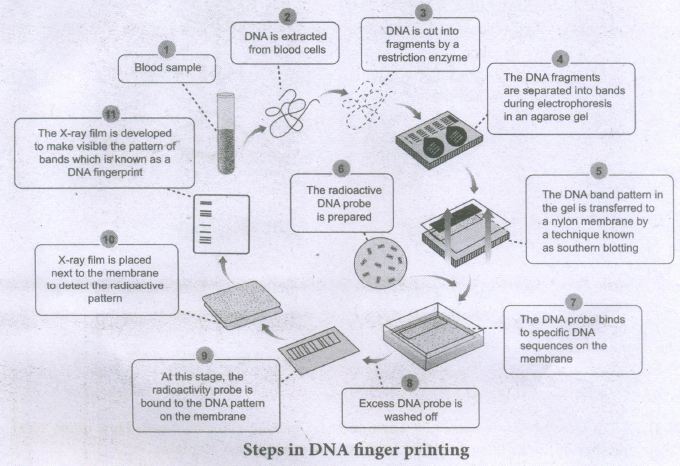
Draw a flow chart depicting the steps of DNA fingerprinting technique.
11.
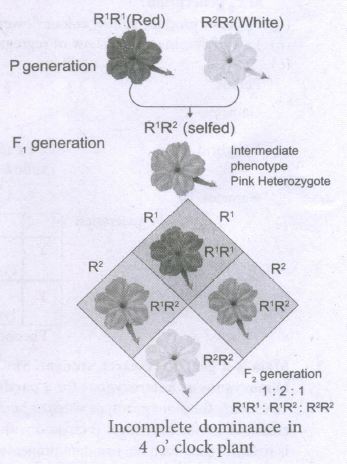
Describe incomplete dominance exhibited by Mirabilis jalapa.
12.
Point out any five morphological adaptations of epiphytes.
13.
Explain the stepwise preparation of Bio-pest repellent from the leaves of Azadirachta indica
14.
15.
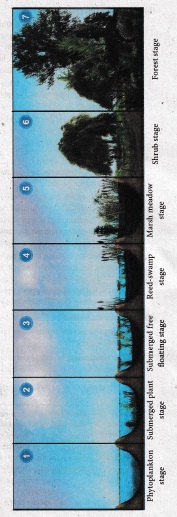
Various stages of succession are given bellow. From that rearrange them accordingly. Find out the type of succession and explain in detail.
Reed-swamp stage, phytoplankton stage, shrub stage, submerged plant stage, forest stage, submerged free floating stage, marsh meadow stage.
16.
17.
Taking the example of Peppered moth, explain the action of natural selection. What do you call the above phenomenon?
18.
The following is the illustration of the sequence of ovarian events (a-i) in a human female.
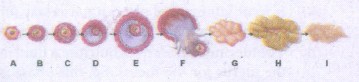
a) Identify the figure that illustrates ovulation and mention the stage of oogenesis it represents.
b) Name the ovarian hormone and the pituitary hormone that have caused the above-mentioned events.
c) Explain the changes that occurs in the uterus simultaneously in anticipation.
d) Write the difference between C and H.
19.
20.
Pick out the co-mutagen from the following:
Eosin
Mustard gas
Ascorbic acid
Nitrous acid
21.
Pick out the organism whose fertilization occurs internally
reptiles
sponges
pisces
amphibians
22.
Which of the following post fertilization change is incorrectly matched?
Secondary nucellus - Endosperms
Antipodals - Degenerates
Nucellus - Testa and tegmen
Funicle - Seed stalk
23.
Statement 1: Latitudes represent distance from the equator.
Statement 2: Height above the seal level from longitude.
Statement 1 is correct. Statement 2 is incorrect
Statement 1 is incorrect. Statement 2 is correct
Both the statements are correct.
Both the statements are incorrect
24.
Assertion (A): In forest ecosystem, the pyramid of number is spindle shaped.
Reason (R): Tropical level (Tl) of the pyramid occupies large trees which are maximum in number.
Both A and R are wrong
A is right R is wrong
R explains A
A is right R is not the correct explanation for A
25.
Invasive species _______________
alter the soil system
are more adapted
are fast growing
all the above
26.
Plants used for bio-diesel production________
Anabaena
Jatropha
Pongamia
b and c
27.
Which of the following is a behavioural adaptation?
Thick fur
camouflage
Sharp canines
Migration
28.
_______is unique for DNA.
Adenine
Uracil
Guanine
Thymine
29.
30.
31.
The prevention of large scale loss of biological integrity ____.
Biopatent
Bioethics
Biosafety
Biofuel
32.
The golden age of reptiles was
Mesozoic era
Cenozoic era
Paleozoic era
Proterozoic era
33.
Which of the following is correct regarding HIV, hepatitis B, gonorrhoea and trichomoniasis?
Gonorrhoea is a STD whereas others are not.
Trichomoniasis is a viral disease whereas others are bacterial.
HIV is a pathogen whereas others are diseases.
Hepatitis B is eradicated completely whereas others are not.
34.
The point mutation sequence for transition, transition, transversion and transversion in DNA are ______.
A to T, T to A, C to G and G to C
A to G, C to T, C to G and T to A
C to G, A to G, T to A and G to A
G to C, A to T, T to A and C to G
35.
Given below is mRNA sequence. Mention the amino acids sequence that is formed after its translation.
3' AUGAAAGAUGGGUAA5'
36.
Mention any two drugs to treat insomnia patient
37.
Expand (a) SRY (b) TDF
38.
What is maida? Mention its culinary purpose.
39.
What are exogenous buds?
40.
Name and explain the type of barriers which involve macrophages.
41.
What will happen if all producers are removed from ecosystem?
42.
Define ecology.
43.
1.
Pairing of homologous chromosomes during zygotene stage of prophase I of meiosis I is called synapsis. Synapsis of three types:
1. Procentric synapsis: Pairing starts from middle of the chromosome.
2. Proterminal synapsis: Pairing starts from the telomeres.
3. Random synapsis: Pairing may start from anywhere.
2.
| S. No. | Habitat | Niche |
| 1 | A specific physical space occupied by an organism (species). | A functional space occupied by an organism in the same eco-system. |
| 2 | Same habitat may be shared by many organisms (species). | A single niche is occupied by a single species. |
| 3 | Habitat specificity is exhibited by organism. | Organisms may change their niche with time and season |
3.
(a) Anabaena azolla (blue green alga)
(b) Rhizobium
(c) Angiosperm roots
4.
Biosphere Reserve (BR) is an international designation by UNESCO for representative parts of natural and cultural landscapes extending over large area of terrestrial or coastal! marine ecosystems or a combination thereof.
5.
Most abundant gas - CO2
Effect of CO2 on the growth of plants
(i) Change in flowering seasons and pollinators
(ii) Change in Species distributional ranges
(iii) Species extinction
(iv) Low agricultural productivity in tropics
(v) Frequent heat waves (Weeds, pests, fungi need warmer temperature)
(vi) Increase of vectors and epidemics
(vii) Strong storms and intense flood damage
(viii) Water crisis and decreased irrigation
6.
(i) Ecological density: It is the size of a population in relation to the numbers per unit of habitat space. (Available area or volume that can be colonized by a population). Eg. 1000 fish in the volume of water in the pond.
(ii) Crude density: It is the size of a population in relation to the numbers per unit of total space. Eg. 1000 fish in a pond.
(iii) Population density: It is usually expressed as the number of individuals per unit area or volume. Eg. 100 trees per acre.
7.
(i) Bacillus thuringiensis is a soil dwelling bacterium which is commonly used as a biopesticide and contains a toxin called cry toxin. Scientists have introduced this toxin producing genes into plants and have raised genetically engineered insect resistant plants. Eg. Bt-cotton.
(ii) When the insects ingest the toxin crystals their alkaline digestive tract denatures the insoluble crystals making them soluble. The cry toxin then gets inserted into the gut cell membrane and paralyzes the digestive tract. The insect then stops eating and starves to death.
8.
9.
The primary endosperm nucleus divides immediately after fertilization. It develops into an endosperm which is a nutritive tissue and a regulatory structure. The zygote divides only after that to form an embryo so that it can get nourishment from the endosperm that has formed earlier.
10.
11.
The German Botanist Carl Correns's (1905) Experiment - In 4 0' clock plant, Mirabilis jalapa when the pure breeding homozygous red (R1 R1) parent is crossed with homozygous white (R 2R2), the phenotype of the F1 hybrid is heterozygous pink (R1R2). The F1 heterozygous phenotype differs from both the parental homozygous phenotype. This cross did not exhibit the character of the dominant parent but an intermediate colour pink. When one allele is not completely dominant to another allele it shows incomplete dominance. Such allelic interaction is known as incomplete dominance. F1 generation produces intermediate phenotype pink coloured flower.
When pink coloured plants of F 1 generation were interbred in F2 both phenotypic and genotypic ratios were found to be identical as 1 : 2 : 1(1 red: 2 pink: 1 white). Genotypic ratio is 1 R1R1 : 2 R1R2 : 1 R2R2. From this we conclude that the alleles themselves remain discrete and unaltered proving the Mendel's Law of Segregation. The phenotypic and genotypic ratios are the same. There is no blending of genes. In the F2 generation R1 and R2 genes segregate and recombine to produce red, pink and white in the ratio of 1 : 2 : 1. R 1 allele codes for an enzyme responsible for the formation of red pigment. R2 allele codes for defective enzyme. R1 and R2 genotypes produce only enough red pigments to make the flower pink. Two R1R1 are needed for producing red flowers. Two R2R2 genes are needed for white flowers. If blending had taken place, the original pure traits would not have appeared and all F2 plants would have pink flowers. It is very clear that Mendel's particulate inheritance takes place in this cross which is confirmed by the reappearance of original phenotype in F2.
12.
Morphological adaptations:
Root system is extensively developed. These roots may be of two types. They are Clinging roots and Aerial roots.
Clinging roots fix the epiphytes firmly on the surface of the supporting objects.
Aerial roots are green coloured roots which may hang downwardly and absorb moisture from the atmosphere with the help of a spongy tissue called velamen.
1. Stem of some epiphytes are succulent and develop pseudo bulb or tuber.
2. Generally the leaves are lesser in number and may be fleshy and leathery.
3. Myrmecophily is a common occurrence in the epiphytic vegetation to prevent the predators
4. The fruits and seeds are very small and usually dispersed by wind, insects and birds.
13.
Botanical pest repellent and insecticide made with the dried leaves of Azadirachta indica Preparation of Bio-pest repellent
(i) Pluck leaves from the neem tree and chop the leaves finely.
(ii) The chopped up leaves were put in a 50-liter container and fill to half with water; put the lid on and leave it for 3 days to brew.
(iii) Using another container, strain the mixture which has brewed for 3 days to remove the leaves, through fine mesh sieve. The filtrate can be sprayed on the plants to repel pests.
(iv) To make sure that the pest repellent sticks to the plants, add 100 ml of cooking oil and the same amount of soap water. (The role of the soap water is to break down the oil, and the role of the oil is to make it stick to the leaves).
(v) The stewed leaves from the mixture can be used in the compost heap or around the base of the plants.
14.
15.
Type of succession
Hydrosere
(i) The succession in a freshwater ecosystem is also referred to as hydrosere
(ii) Succession in a pond, begins with colonization of the pioneer's like phytoplankton and finally ends with the formation of climax community like forest stage. It includes the following stages
(a) Phytoplankton stage
It is the first stage of succession consisting of the pioneer Community like blue green algae, green algae, diatoms, bacteria, etc.,
The colonization of these organisms enrich the amount of organic matter and nutrients of pond due to their life activities and death.
This favors the development of the next several stages
(b) Submerged plant stage
As the result of death and decomposition of planktons, silt brought from land by rain water, lead to a loose mud formation at the bottom of the pond. Hence, the rooted submerged hydrophytes begin to appear on the new substratum.
Example: Chara, Utricularia, Vallisneria and Hydrilla etc.
The death and decay of these plants will build up the substratum of pond to become shallow. Therefore, this habitat now replaces another group of plants which are of floating type.
(c) Submerged free floating stage
During this stage, the depth of the pond will become almost 2-5 feet
Hence, the rooted hydrophytic plants and with floating large leaves start colonising the pond.
Example: Rooted floating plants like Nelumbo, Nymphaea and Trapa. Some free floating species like Azolla, Lemna, Wolffia and Pistia are also present in this stage.
By death and decomposition of these plants, further the pond becomes more shallow.
Due to this reason, floating plant species is gradually replaced by another species which makes new several stage.
(d) Reed-swamp stage
It is also called an amphibious stage.
During this stage, rooted floating plants are replaced by plants which can live successfully in aquatic as well as aerial environment.
Example: Typha, Phragmites, Sagittaria and Scirpus etc. At the end of this stage, water level is very much reduced, making it unsuitable for the continuous growth of amphibious Plants.
(e) Marsh meadow stage
When the pond becomes swallowed due to decreasing water level
Species of Cyperaceae and Poaceae such as Carex, Iuncus, Cyperus and Eleocharis colonise the area
They form a mat-like vegetation with the help of their much branched root system.
This leads to an absorption and loss of large quantity of water
At the end of this stage, the soil becomes dry and the marshy vegetation disappears gradually and leads to shurb stage
(d) Shrub stage
As the disappearance of marshy vegetation continues, soil becomes dry.
Hence, these areas are now invaded by terrestrial plants like shrubs (Salix and Cornus) and trees (Populus and Alnus).
These plants absorb large quantity of water and make the habitat dry.
Further, the accumulation of humus with a rich flora of microorganisms produce minerals in the soil, ultimately favouring the arrival of new tree species in the area
(e) Forest stage
It is the climax community of hydrosere.
A variety of trees invade the area and develop any one of the diverse type of vegetation.
Example: Temperate mixed forest (Ulmus, Acer and Quercus), Tropical rain forest (Artocarpus and Cinnamomum) and Tropical deciduous forest (Bamboo and Tectona).
In the 7 stages of hydrosere succession, stage 1 is occupied by pioneer community, while the stage 7 is occupied by the climax community. The stages 2 to 6 are occupied by several communities,
16.
17.
1. Natural selection can be explained clearly through Industrial melanism.
2. Industrial melanism is classical case of natural selection exhibited by the peppered moth.
Biston Betularia
1. These were available in two colours, white and black. Before industrialization peppered moth both white and black coloured were common in England (Manchester).
2. Pre-industrialization witnessed white coloured background of the wall of buildings hence the white coloured moths escaped from their predators.
3. Post Industrialization the tree trunks become dark due to smoke and soot let out from the lndustries.
4. The black moths camouflaged on the dark bark of the trees and the white moths were easily identified by their predators (birds).
5. Hence the dark coloured moth population was selected and their number increased when compared to the white moths nature offered positive selection pressure to the black coloured moths.
6. The above proof shows that in a population organisms that can adapt will service and produce more progenies resulting in increase in population through natural selection.
18.
(a) The figure 'F' represent ovulation.
Stage of oogenesis - Ovulatory or luteal stage of oogenesis
(b) (i) The ovarian hormone is progesterone which is released during ovulation.
(ii) The pituitary hormones are the follicle-stimulating hormone (FSH) and Luteinizing hormone (LSH) which are released during and ovulation from anterior pituitary gland.
(c) The endometrium of the uterus gets thickened and blood supply to the endometrium increase.
(d) Figure 'C' represents the secondary follicle and figure h represents the degenerating corpus luteum.
| Secondary follicle | Corpus luteurn |
| lt is surrounded by layers of granulosa cells | Absence of granulosa cells |
| Theca layer is present | Theca layer is absent. |
19.
20.
(c)
Ascorbic acid
21.
(a)
reptiles
22.
(c)
Nucellus - Testa and tegmen
23.
(a)
Statement 1 is correct. Statement 2 is incorrect
24.
(b)
A is right R is wrong
25.
(d)
all the above
26.
(d)
b and c
27.
(d)
Migration
28.
(a)
Adenine
29.
(c)
30.
(b)
31.
(c)
Biosafety
32.
(a)
Mesozoic era
33.
(c)
HIV is a pathogen whereas others are diseases.
34.
(b)
A to G, C to T, C to G and T to A
35.
Methionine - Lysine - Aspartic acid - Glycine
36.
1. methamphetamine
2. Lysergic acid diethylamide (LSD)
37.
SRY - Sex Determining region Y
TDF - Testes Determining Factor
38.
Processed wheat flour, that has little fibre, is called Maida which is used extensively in making parota, naan and bakery products.
39.
When buds are formed on the outer surface of the parent body, it is known as exogenous budding. E.g. Hydra.
40.
The type of barrier that involves macrophages are the
(i) Phagocytic barriers which is a type of innate immunity.
(ii) In this mechanism, specialised cells such as monocytes, Neutrophils and tissue macro phages pha cytose and digest whole microorganisms.
41.
If all producers are removed from ecosystem We tend to face the following hurdles.
(i) The Ecosystem cannot be balanced
(ii) The interlocking pattern of food chain is broken
(iii) The movement of energy transfer among the food chain cannot be established
(iv) As the green plants occupying the first trophic level (T1) are producers - it affects majority of the food chain
42.
1. It deals with the study of environment in relation to organisms.
2. It can be studied by considering individual organisms, population, community, biome or biosphere and their environment.
43.

12th Standard Syllabus & Materials
12th Standard
TN 12th Computer Applications வலையமைப்பு வடமிடல் Sample Question Papers Study Material - QB365 Set A
NEW12th Standard
TN 12th Computer Applications களப்பெயர் முறைமை (DNS) Sample Question Papers Study Material - QB365 Set A
NEW12th Standard
TN 12th Computer Applications வலையமைப்பு எடுத்துக்காட்டுகள் மற்றும் நெறிமுறைகள் Sample Question Papers Study Material - QB365 Set A
NEW12th Standard
TN 12th Computer Applications கணினி வலையமைப்பு ஓர் அறிமுகம் Sample Question Papers Study Material - QB365 Set A



Tamilnadu Stateboard 12th Standard Subjects

Maths

Chemistry

Physics
Biology

Computer Science

Business Maths and Statistics

Economics

Commerce

Accountancy

History

Computer Applications
Biology
Computer Technology
Computer Applications
Computer Science
Business Maths and Statistics
Commerce
Economics
Maths
Chemistry
Physics
Computer Technology
History
Accountancy

Tamil

English

French
Tamilnadu Stateboard Standards

