
 100% FREE ACCESS
12th Standard Syllabus & Materials
12th Standard
TN 12th Computer Applications மின்னணு தரவு பரிமாற்றம் Sample Question Papers Study Material - QB365 Set A
NEW12th Standard
TN 12th Computer Applications மின் - வணிக பாதுகாப்பு அமைப்புகள் Sample Question Papers Study Material - QB365 Set A
NEW12th Standard
TN 12th Computer Applications மின்னணு செலுத்தல் முறைகள் Sample Question Papers Study Material - QB365 Set A
NEW12th Standard
TN 12th Computer Applications மின் - வணிகம் Sample Question Papers Study Material - QB365 Set A
NEW12th Standard
TN 12th Computer Applications திறந்த மூல கருத்துருக்கள் Sample Question Papers Study Material - QB365 Set A
NEW12th Standard
TN 12th Computer Applications வலையமைப்பு வடமிடல் Sample Question Papers Study Material - QB365 Set A

Published on: 27/02/2021
12th Standard English Medium Biology Reduced Syllabus Two mark Important Questions - 2021(Public Exam )
Download Tamil Nadu 12th Standard Biology question papers, model tests, one-mark questions, important questions, and public exam papers in PDF format. Free study materials and answer keys for TN State Board students.
Questions + Answers key
Take MCQ Biology Test1.
Mention the inhibitory role of tetracycline and streptomycin in bacterial translation
2.
What is a forest? Name the major forest biomes.
3.
List any four adverse effect of noise.
4.
Define pollution.
5.
Expand and define BOD
6.
Give any two examples for anthropogenic extinction.
7.
When a species is considered as locally extinct?
8.
Point out four types of recombinant vaccines
9.
What is Biopharming?
10.
Mention the hormones secreted by the placenta during pregnancy.
11.
Comment on the chromosomal condition; 2n - 2.
12.
What will be the result if there is a failure in the formation of synaptonemal complex Give one example of organism where such condition is noticed
13.
Why asexual reproduction known as somatogenic reproduction?
14.
State the law of independent assortment.
15.
Distinguish between anemophilous flowers and ornithophilous flowers
16.
Draw and label the structure of a typical pollen grain
17.
What is pyramid of biomass?
18.
Cite an example for partial stein parasite and partial root parasite.
19.
Name the study that deals with soil factors. Also mention the optimal soil pH for crop cultivation.
20.
Name the category of organisms that occupy the first tropic level (T1) and fourth tropic level (T4) in an ecosystem,
21.
What is meant by productivity of an ecosystem?
22.
Mention any two competent national authorities that implement Biosafety guidelines.
23.
Name any four culture media used in plant tissue culture.
24.
What does the term 'luxuriance' stands for in plant breeding? Explain.
25.
Distinguish between In-situ conservation and Ex-situ conservation.
26.
Name any four greenhouse gases.
27.
Which is our National fruit and State tree of Tamil Nadu?
28.
What is Pasteur effect?
29.
Define biotic potential.
30.
What is BRAI?
31.
Define fertilisation.
32.
Differentiate male and female Ascaris.
33.
What are nucleotides?
34.
Define hologamy.
35.
Differentiate between Eurytherms and Stenotherms.
36.
What would Earth be like without the greenhouse effect?
37.
38.
Mention any two ways in which single nucleotide polymorphism (SNPs) identified in human genome can bring revolutionary change in biological and medical science.
39.
Distinguish between heterogametic and homogametic sex determination systems
40.
41.
List out two sub-aerial stem modifications with example.
42.
43.
Distinguish habitat and niche
44.
How is the amplification of a gene sample of interest carried out using PCR?
45.
Correct the following statements
a) Transfer of an ovum collected from donor into the fallopian tube is called ZIFT.
b) Transfering of an embryo with more than 8 blastomeres into uterus is called GIFT.
c) Multiload 375 is a hormone releasing IUD.
46.
You are working in a biotechnology lab with a bacterium namely E.coli. How will you cut the nucleotide sequence? explain it.
47.
What is colostrum? Write its significance.
48.
49.
Explain how mutations, natural selection and genetic drift affect Hardy Weinberg equilibrium.
50.
Given below are some human organs. Identify one primary and one secondary lymphoid organ. Explain its role. Liver, thymus, stomach, thyroid, tonsils.
1.
Tetracycline inhibits binding between aminoacyl tRNA and mRNA.
Streptomycin inhibits initiation of translation and causes misreading.
2.
Forest is a broad term used to describe areas where there are a large number of trees. The major forest biomes are the Tropical forests and the Temperate forests.
3.
High blood pressure
Stress related ailments
Sleep disruption
Hearing impairment
4.
Pollution is any undesirable change in the physical, chemical and biological characteristics of the environment due to natural causes and human activities.
5.
BOD - Biological Oxygen Demand (or) Biochemical Oxygen Demand
BOD refers to the amount of the oxygen that would be consumed if all the organic matter in one litre of water were oxidized by bacteria.
6.
Dodo of Mauritius
Steller's cow of Russia
7.
A species is considered to be locally extinct when it is no longer found in an area it once inhabited but is still found elsewhere in the wild.
8.
(a) Subunit recombinant vaccines
(b) Attenuated recombinant vaccines
(c) Edible vaccines
(d) DNA vaccines
9.
Biopharming also known as molecular pharming is the production and use of transgenic plants genetically engineered to produce pharmaceutical substances for use of human beings. This is also called "molecular farming or pharming". These plants are different from medicinal plants which are naturally available.
10.
(i) human Chorionic Gonadotropin (hCG)
(ii) human Chorionic Somatomammotropin (hCS)
(iii) human Placental Lactogen (hPL)
(iv) Oestrogen and progesterone and relaxin.
11.
Loss of pair of homologous chromosome from the diploid set is called Nullisomy. Selfing of monosomic plants produces Nullisomics. They are generally lethal.
12.
Failure in the formation of synaptonemal complex leads to the. absence of crossing over to take place. It is noticed in certain male species of Drosophila.
13.
Asexual reproduction is usually by amitotic or mitotic division of the somatic (body) cells, hence is also known as somatogenic or blastogenic reproduction.
14.
When two pairs of traits are combined in a hybrid, segregation of one pair of characters is independent to the other pair of characters. Genes that are located in different chromosomes assort independently during meiosis.
15.
| Anemophilous Flowers | Ornithophilous Flowers |
|---|---|
| (a) Small sized flowers | Large sized flowers |
| (b) Colorless | Brightly colored |
| (c) Donor produce nectar | Produce large quantity of nectar |
| E.g: Grasses | Bombax |
16.
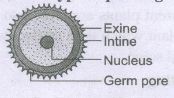
17.
A graphical representation of the amount of organic material (biomass) present at each successive trophic level in an ecosystem is called pyramid of biomass.
18.
(a) Partial stem parasite - E.g: Loranthus.
(b) Partial root parasite - E.g: Santalum.
19.
The study of soil is called pedology. The best pH of soil for crop cultivation is 5.5 to 6.8.
20.
Producers (autotrophs) occupy the first tropic level (T1) whereas the fourth tropic level (T4) is occupied by Tertiary Consumers (Secondary carnivore).
21.
The rate of biomass production per unit area in a unit time is called productivity. It can be expressed in terms of gm /m2 /year or KcaVm2/ year.
22.
(a) Review Committee on Genetic Manipulation (RCGM)
(b) Genetic Engineering Approval Committee (GEAC)
23.
(a) Murashige and Skoog medium
(b) Gamborg medium
(c) White medium
(d) Nitsch's medium
24.
Pseudo heterosis - Also termed as luxuriance. Progeny possess superiority over parents in vegetative growth but not in yield and adaptation, usually sterile or poorly fertile
25.
| In-situ conservation | Ex-situ conservation |
|---|---|
| Conservation of species In their natural habitat. E.g: Biosphere reserves | Conservation of species outside their natural habitat. E.g: Zoological parks |
26.
CO2, CH4, N2O and CFC
27.
National fruit of India is Mango.
State tree of Tamil Nadu is Palmyra.
28.
The "Pasteur effect" is the inhibiting effect of oxygen on the fermentation process.
29.
It is the maximum reproductive capacity of an organism under optimum environmental conditions.
30.
The Biotechnology Regulatory Authority of India (BRAI) is a proposed regulatory body in India for uses of biotechnology products including GMOs.
31.
Fusion of male and female gametes to form zygote, is called fertilisation.
32.
(i) Male Ascaris is shorter than female Ascaris
(ii)The posterior end of the male worm is carried whereas in female worm this is not found.
33.
In nucleic acids (DNA and RNA), the nitrogenous base is chemically linked to one molecule of sugar forming a nucleotide.
When a phosphate group is attached to the nucleoside, it becomes a nucleotide. The nucleotides are polymerised to form a polynucleotide chain (DNA and RNA).
34.
It is a type of fertilization. In lower organisms sometimes the entire mature organisms do not form gametes but they themselves behave as gametes and the fusion of such mature individuals is known as hologamy.
E.g. Trichonympha.
35.
| Stenohaline Animals | Euryhaline Animals |
|---|---|
| The animals which show tolerance only to a narrow range of salinities. | The animals which, can tolerate a wide range of salinities |
| Their distributional range is limited. |
Their distribution shows a wide range |
36.
The naturally occurring greenhouse gases in the air, mainly carbon dioxide, methane and water vapour trap radiation from the sun and act like a thermal blanket around our planet earth. Without the greenhouse gases, the earth would have an average temperature of -180 c and be covered in ice. The greenhouse effect keeps the earth warm enough to sustain life.
37.
38.
There are 1.4 million locations where single base DNA differences (Called SNPs - Single Nucleotide Polymorphism - pronounce as snips) occurs in human's genome.
(i) By tracing human history
(ii) By finding chromosomal locations for disease associated sequences
39.
| Heterogametic sex determination | Homogametic sex determination |
| Produces identical gametes (produces one type of gamete) | Produces two different gametes |
| Two sex chromosomes of the organism are same (XX) (Females) | Two sex chromosomes of the organism are different (XY) (Males) |
40.
41.
Sucker - chrysanthemum
Stolon - jasmine
42.
43.
The differences between habitat and niche are as follows.
| S. No | Habitat | Niche |
| 1 | A specific physical space occupied by an organism (species). | A functional space occupied by an organism in the same eco-system |
| 2 | Same habitat may be shared by many organisms (species). | A single niche is occupied by a single species. |
| 3 | Habitat specificity is exhibited by organism. | Organisms may change their niche with time and season |
44.
(i) Polymerase chain Reaction
(ii) In this process, multiple copies of the gene/ DNA of interest are synthesized in vitro using two sets of primers.
(iii) Primers are the chemically synthesized obligonucleotides that are complementory to the regions of DNA strands, where they will be annelated
(iv) The two strands of DNA have been separated by denaturation.
(v) The enzyme DNA polymerase extends the primers using the nucleotides provided in the medium on the genomic DNA as template.
(vi) To achieve repeated amplification, a thermostable DNA polymerase, called Taq polymerase obtained from Thermus aquaticus is used; it can withstand the high temperature used for the denaturation of DNA.
45.
(a) Transfer of an ovum collected from donor into the fallopian tube is called GIFT (Gamete Intra-fallopian transfer)
(b) Transferring of an embryo with more than 8 blastomeres into uterus is called IUT (Intra uterine transfer)
(c) Multi load 375 is a copper releasing IUD
46.
(i) ECORI is from Escherichia ( E ) coli (co), strain RY 13 (R) & first endonuclease (I) to be discovered.
(ii) It contains 2 different antibiotics resistance genes & recognition site for several restriction enzymes.
(iii) This sequence is referred to as a restriction site & is generally -palindromic which means that the sequence in both DNA strands at this site read same in 5' - 3' direction & in-the 3'-5' direction.
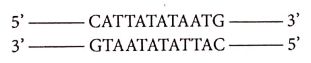
(iv) The exact kind of cleavage produced by a restriction enzyme is important in the design of a gene cloning experiment.
(v) Some cleave both strands of DNA through the centre resulting in blunt or flush end.
(vi) These are known as symmetric cuts.
(vii) Some enzymes cut in a way producing protruding & recessed ends known as sticky or cohesive end.
(viii) These are known as staggered or asymmetric cuts.
47.
Colostrum is the yellowish fluid produced from the mother's mammary glands during initial few days of location, after parturition.
Significance:
1. It has less lactose than milk and almost no fat, but it contains more proteins, vitamin A and minerals.
2. Colostrum is also rich in IgA antibodies.
3. This helps to protect the infant's digestive tract against bacterial infection.
4. Breast milk is the ideal food for infants as it contains all the constituents in suitable concentration and is easily digestable.
5. It is fully sufficient till about 6 months of age and all infants must be breast fed by the mother to ensure the growth of a healthy baby.
48.
49.
1. There are five basic processes that affect the Hardy-Weinberg equilibrium and cause variations at genetic level.
2. These include (i) Mutation (ii) recombination (iii) Gene migration (iv) Genetic drift and (v) natural selection.
3. Among the above five processes, lets discuss how mutation, natural selection and genetic drift affect Hardy Weinberg equilibrium.
(a) Mutation:
1. Mutation are sudden heritable changes in the characteristics of the organisms.
2. These mutations are random (indiscriminate) with respect to the adoptive needs of organisms.
3. Most mutations are harmful or with no effects (neutral) on their bearers.
4. However under changed environmental conditions, the alleles, which were previously harmful or neutral may become advantageous.
5. The rate of mutation is very slow usually one mutation occurs in a million still these mutation rates are sufficient to create considerable genetic variation.
6. Mutations help in maintaining variations within population.
7. Mutation also introduce new genes and alleles into the gene pool (sum total of all genotypes or alleles found in a population).
8. It is the gene pool in which new genes are added or removed. This variability of genes (or) alleles in a gene pool, then serve as a raw material for evolutionary changes.
9. The accumulation of many mutations over hundreds of generation cause large scale changes.
(b) Natural selection
1. Natural selection is the most important evolutionary process that brings about changes in allele frequencies.
Definition
1. The process of differential reproduction that lead to differential contribution of genotypes to the gene pool of the next generation.
2. Natural selection results a change in allele frequencies of a population.
(c) Genetic drift
1. It refers to the elimination of certain genes in a small isolated population either due to intensive inbreeding causing permanent fixation of some genes or death of a small section of population by natural calamity.
Definition
1. The random changes in the allele frequency occurring by chance alone are called genetic drift.
2. This means that the alleles that form the gene pool of the next generation are a sample of the allele from current generation.
3. Sampling errors (chances) often lead to the elimination of certain alleles and fixation by others thus reducing the genetic variability of the population.
4. The effect of genetic drift is very small in large but can be large in a small population.
5. Thus these forces that change the allele and genotypic frequencies in a population and so called evolutionary agents.
6. As long as Hardy-Weinberg Equilibrium remains constant the evolution cannot occur since the genetic equilibrium is a sort of inertia whose tendency is rather conservative. Evolution become possible only if the inertia is overcome or the equilibrium is broken.
50.
(i) The primary lymphoid organ is thymus.
(ii) The secondary lymphoid organ is tonsils.
Role of Primary lymphoid organ: Thymus
(i) Thymus is most active during the neonatal and pre-adolescent periods.
(ii) The thymus is a flat and bilobed organ located behind the sternum, above the heart.
(iii) Each lobe of the thymus contains numerous lobules, separated from each other by connective tissue called septa (cross walls).
(iv) Each lobule is differentiate into an outer cortex and an inner medulla. Within each lobule, the developing T cells called thymocytes are arranged into an outer cortex and an inner medulla
(v) An inner medulla contains immature thymocytes and outer cortex has matured thymocyte
(vi) One of its main secretions is the hormone thymosin. It stimulates the T cells to become mature and immunocompetent. By the early teens, (upto 12-13 years) the thymus begins to atrophy and is replaced by adipose tissue (binding tissue).
Secondary lymphoid organ :
(i) The tonsils (palatine tonsils) are a pair of soft tissue masses located at the back of the throat (pharynx ).
(ii) The tonsils are part of the lymphatic system which help to fight against the infections. They stop invading germs including bacterin and viruses.

12th Standard Syllabus & Materials
12th Standard
TN 12th Computer Applications களப்பெயர் முறைமை (DNS) Sample Question Papers Study Material - QB365 Set A
NEW12th Standard
TN 12th Computer Applications வலையமைப்பு எடுத்துக்காட்டுகள் மற்றும் நெறிமுறைகள் Sample Question Papers Study Material - QB365 Set A
NEW12th Standard
TN 12th Computer Applications கணினி வலையமைப்பு ஓர் அறிமுகம் Sample Question Papers Study Material - QB365 Set A
NEW12th Standard
TN 12th Computer Applications PHP-உடன் MySQL-ஐ இணைத்தல் Sample Question Papers Study Material - QB365 Set A



Tamilnadu Stateboard 12th Standard Subjects

Maths

Chemistry

Physics
Biology

Computer Science

Business Maths and Statistics

Economics

Commerce

Accountancy

History

Computer Applications
Biology
Computer Technology
Computer Applications
Computer Science
Business Maths and Statistics
Commerce
Economics
Maths
Chemistry
Physics
Computer Technology
History
Accountancy

Tamil

English

French
Tamilnadu Stateboard Standards

