
 100% FREE ACCESS
12th Standard Syllabus & Materials
12th Standard
TN 12th Computer Applications மின்னணு தரவு பரிமாற்றம் Sample Question Papers Study Material - QB365 Set A
NEW12th Standard
TN 12th Computer Applications மின் - வணிக பாதுகாப்பு அமைப்புகள் Sample Question Papers Study Material - QB365 Set A
NEW12th Standard
TN 12th Computer Applications மின்னணு செலுத்தல் முறைகள் Sample Question Papers Study Material - QB365 Set A
NEW12th Standard
TN 12th Computer Applications மின் - வணிகம் Sample Question Papers Study Material - QB365 Set A
NEW12th Standard
TN 12th Computer Applications திறந்த மூல கருத்துருக்கள் Sample Question Papers Study Material - QB365 Set A
NEW12th Standard
TN 12th Computer Applications வலையமைப்பு வடமிடல் Sample Question Papers Study Material - QB365 Set A

Published on: 13/05/2022
QB365 provides detailed and simple solution for every book back questions in class 12 Biology subject.It will helps to get more idea about question pattern in every book back questions with solution.
latest Book back QuestionsDownload Tamil Nadu 12th Standard Biology question papers, model tests, one-mark questions, important questions, and public exam papers in PDF format. Free study materials and answer keys for TN State Board students.
Questions + Answers key
Take MCQ Biology Test1.
What is biological oxygen demand?
2.
3.
4.
Differentiate - Template strand and coding strand.
5.
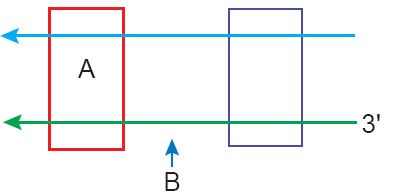
Name the parts marked ‘A’ and ‘B’ in the given transcription unit:
6.
Placenta is an endocrine tissue. Justify
7.
At what stage of development are the gametes formed in new born male and female?
8.
9.
What is Lyonisation?
10.
What is haplodiploidy?
11.
List out chemical alarm signals produced during inflammation.
12.
Name the phenomenon where the female gamete directly develops into a new organism with an avian example.
13.
ELISA is a technique based on the principles of antigen-antibody reactions. Can this technique be used in the molecular diagnosis of a genetic disorder such as Phenylketonuria?
14.
How is the amplification of a gene sample of interest carried out using PCR?
15.
How is milk converted into curd? Explain the process of curd formation
16.
Differentiate between divergent evolution and convergent evolution with one example for each.
17.
Correct the following statements
a) Transfer of an ovum collected from donor into the fallopian tube is called ZIFT.
b) Transfering of an embryo with more than 8 blastomeres into uterus is called GIFT.
c) Multiload 375 is a hormone releasing IUD.
18.
What is amniocentesis? Why a statutory ban is imposed on this technique?
19.
State any three goals of the human genome project.
20.
21.
Why are sex linked recessive characters more common in the male human beings?
22.
Name and explain the type of barriers which involve macrophages.
23.
Which type of reproduction is effective -Asexual or sexual and why?
24.
Explain how “Rosie” is different from a normal cow
25.
Explain how mutations, natural selection and genetic drift affect Hardy Weinberg equilibrium.
1.
BOD stands for Biological Oxygen Demand. BOD refers to the amount of oxygen that would be consumed if all the organic matter in one liter of water were oxidized by bacteria. The greater the BOD of the waste water, the more is its polluting potential.
2.
3.
4.
| Template Strand | Coding Strand |
|---|---|
| It is that strand of transcription unit upon which RNA ls transcribed in \(\text { 5' } \rightarrow 3^{\prime}\) direction. |
It is that strand of transcription unit having the same base sequence as that of the transcription mRNA (transcript) from the template strain. |
| It has \(3^{\prime} \rightarrow 5^{\prime}\) polarity | It has \(\text { 5' } \rightarrow 3^{\prime}\) polarity |
5.
A - \(5^{\prime} \rightarrow 3^{\prime}\) is called a coding strand.
B - \(3^{\prime} \rightarrow 5^{\prime}\) is called a template strand.
6.
Placenta during pregnancy secretes hormones such as human chorionic gonadotrophic (hcG) estrogen, progesterone and human placenta lactogen. So, placenta is regarded as an endocrine tissue.
7.
Development of female gamete is called oogenesis. Oogenesis starts at the beginning of puberty.
Development of male gamete is called spermatogenesis. Spermatogenesis starts at puberty
8.
9.
The inactivation of an X chromosome one of the two X chromosomes in every cell in some female mammal is randomly inactivated early in embryonic development and named after geneticist Mary Lyon.
The inactive X chromosome is silenced by it being packaged in such a way that it has a transcriptionally inactive structure called heterochromatin found in nucleoplasm of nucleus.
10.
Haplodiploidy is a sex determination system in which males develop from unfertilized eggs are haploid, and female develops from fertilized egg and is diploid.
It is sometimes called arrhenotoky.
e.g., Honeybees, ants, and wasps.
11.
(i) An infection or tissue injury usually causes redness (rubber), swelling (tumor), pain (dolor). and production of heat (color) that may result in fever
(ii) Such localised expression is called inflammatory response, which occur due to release of certain chemical alarm signals such as histamine and prostaglandins.
12.
Parthenogenesis is the phenomenon in which female gamete directly develops into a new organism. (e,g:) Honeybee (male or drone).
13.
1. ELISA is based on the principle of antigen antibody interaction. Any infection caused by a pathogen can be detected by the presence of antigen (proteins, glycoproteins etc) or by detecting the antibodies synthesized against pathogen in the body fluid (blood) of the host/ person.
2. Yes one can use antibody against the enzyme that is responsible for the metabolism of phenylalanine to develop ELISA based on the diagnostic technique.
3. The patient in which the Enzyme, Protein complex is absent would give a negative result in ELISA when compared to the normal individual.
14.
(i) Polymerase chain Reaction
(ii) In this process, multiple copies of the gene/ DNA of interest are synthesized in vitro using two sets of primers.
(iii) Primers are the chemically synthesized obligonucleotides that are complementory to the regions of DNA strands, where they will be annelated
(iv) The two strands of DNA have been separated by denaturation.
(v) The enzyme DNA polymerase extends the primers using the nucleotides provided in the medium on the genomic DNA as template.
(vi) To achieve repeated amplification, a thermostable DNA polymerase, called Taq polymerase obtained from Thermus aquaticus is used; it can withstand the high temperature used for the denaturation of DNA.
15.
1. Milk is converted into curd with the help of bacteria like Lactobacillus acidophilus Lactobacillus lactis and Streptococcus lactis are commonly called Lactic Acid Bacteria (LAB).
2. The LAB bacteria grow in milk and convert it into curd, thereby digesting the milk protein casein.
3. A small amount of curd added to fresh milk as a starter or inoculum contains millions of Lactobacilli, which under suitable temperature \(\left(\leq 40^{\circ} \mathrm{C}\right)\) multiply and convert milk into curd by fermentation.
4. Curd is more nutritious than milk as it contains a number of organic acids and vitamins.
16.
| S.No | Divergent evolution | Convergent evoloution |
|---|---|---|
| 1. | Divergent evolution is the evolutionary process in which the same structure develops in different directions in different groups of organisms as adaption to their different needs | Convergent evolution is the process in which anatomically different structures in different groups of organisms evolve towards same junctions and hence they have similarities |
| 2. | Homologous organs are the result of divergent evolution | Analogous organs are the result of convergent evolution |
| 3. | E.g: (i) Tendrils of Cucubits and thorns of bougainvillea |
E,g (i) Sweet potato tubers (root modification) and potato tubers underground (stem modification) |
| 4. | (ii) Fore limbs of man and the wings of birds | (ii) Flippers of penguins and those of dolphins |
| (iii) Eyes of octopus and those of mammals |
17.
(a) Transfer of an ovum collected from donor into the fallopian tube is called GIFT (Gamete Intra-fallopian transfer)
(b) Transferring of an embryo with more than 8 blastomeres into uterus is called IUT (Intra uterine transfer)
(c) Multi load 375 is a copper releasing IUD
18.
Amniocentesis: It is a prenatal technique used to detect any chromosomal abnormalities in the foetus and it is being often misused to determine the sex of the foetus.
Once the sex of the foetus is known, there may be a chance of female foeticide. Hence a statutory ban on amniocentesis is imposed.
19.
(i) Identify all the genes (approximately 30000) in human DNA.
(ii) To store this information in databases.
(iii) Improve tools for data analysis.
20.
21.
1. The X chromosome which is common to male and female carries a number of genes. Such genes are called sex linked genes and the characters controlled by them are termed as sex-linked characters. The inheritance of sex linked genes or traits is known as sex linked inheritance.
2. Sex linked inherited traits are more common in males than females, because males are hemizygous (XY) and therefore express that traits when they inherit one mutant allele.
3. Any male receiving X linked recessive allele from his mother will express the trait as his y chromosome has no corresponding allele.
4. If a recessive X linked gene causes disorder then more males than females have the disorder because the disorder is caused by a single allele in males. Their y chromosome does not carry any corresponding allele. So that sex linked recessive characters are mole in moles.
22.
(i) The types of barriers which involve macrophages are phagocytic barriers
(ii) It is also known as cellular barriers.
(iii) Certain types of leucocytes (WBCs), such as polymerase nuclear leukocytes (PMNL) : neutrophils, monocytes and natural killer cells (a type of lymphocytes) in the blood as well as macrophages in tissues can phagocytose and destroy microbes.
23.
1. Sexual reproduction is considered to be a better mode of reproduction because it creates a hybrid that has more vigor than the parents.
2. It also creates the variation in off springs making its survival better.
3. The fact that most of the eukaryotes reproduce sexually in evidence of its evolutionary success.
4. In many animals, it is actually the only mode of reproduction.
24.
1. In 1997, Rosie, the first transgenic cow produced human protein enriched milk, which contained the human alpha lactalbumin.
2. Alpha lactalbumin is a protein composed of 123 amino acidic and 4 disulphide bridges, with a molecular weight of 14178 Da.
3. In human milk, & lactalbumin is the most abundant protein comprising 25% of total protein found in human milk.
4. It is synthesized by the mammary glands & lactalbumin binds calcium and zinc ions and possesses bactericidal antitumor activities.
25.
1. There are five basic processes that affect the Hardy-Weinberg equilibrium and cause variations at genetic level.
2. These include (i) Mutation (ii) recombination (iii) Gene migration (iv) Genetic drift and (v) natural selection.
3. Among the above five processes, lets discuss how mutation, natural selection and genetic drift affect Hardy Weinberg equilibrium.
(a) Mutation:
1. Mutation are sudden heritable changes in the characteristics of the organisms.
2. These mutations are random (indiscriminate) with respect to the adoptive needs of organisms.
3. Most mutations are harmful or with no effects (neutral) on their bearers.
4. However under changed environmental conditions, the alleles, which were previously harmful or neutral may become advantageous.
5. The rate of mutation is very slow usually one mutation occurs in a million still these mutation rates are sufficient to create considerable genetic variation.
6. Mutations help in maintaining variations within population.
7. Mutation also introduce new genes and alleles into the gene pool (sum total of all genotypes or alleles found in a population).
8. It is the gene pool in which new genes are added or removed. This variability of genes (or) alleles in a gene pool, then serve as a raw material for evolutionary changes.
9. The accumulation of many mutations over hundreds of generation cause large scale changes.
(b) Natural selection
1. Natural selection is the most important evolutionary process that brings about changes in allele frequencies.
Definition
1. The process of differential reproduction that lead to differential contribution of genotypes to the gene pool of the next generation.
2. Natural selection results a change in allele frequencies of a population.
(c) Genetic drift
1. It refers to the elimination of certain genes in a small isolated population either due to intensive inbreeding causing permanent fixation of some genes or death of a small section of population by natural calamity.
Definition
1. The random changes in the allele frequency occurring by chance alone are called genetic drift.
2. This means that the alleles that form the gene pool of the next generation are a sample of the allele from current generation.
3. Sampling errors (chances) often lead to the elimination of certain alleles and fixation by others thus reducing the genetic variability of the population.
4. The effect of genetic drift is very small in large but can be large in a small population.
5. Thus these forces that change the allele and genotypic frequencies in a population and so called evolutionary agents.
6. As long as Hardy-Weinberg Equilibrium remains constant the evolution cannot occur since the genetic equilibrium is a sort of inertia whose tendency is rather conservative. Evolution become possible only if the inertia is overcome or the equilibrium is broken.

12th Standard Syllabus & Materials
12th Standard
TN 12th Computer Applications களப்பெயர் முறைமை (DNS) Sample Question Papers Study Material - QB365 Set A
NEW12th Standard
TN 12th Computer Applications வலையமைப்பு எடுத்துக்காட்டுகள் மற்றும் நெறிமுறைகள் Sample Question Papers Study Material - QB365 Set A
NEW12th Standard
TN 12th Computer Applications கணினி வலையமைப்பு ஓர் அறிமுகம் Sample Question Papers Study Material - QB365 Set A
NEW12th Standard
TN 12th Computer Applications PHP-உடன் MySQL-ஐ இணைத்தல் Sample Question Papers Study Material - QB365 Set A



Tamilnadu Stateboard 12th Standard Subjects

Maths

Chemistry

Physics
Biology

Computer Science

Business Maths and Statistics

Economics

Commerce

Accountancy

History

Computer Applications
Biology
Computer Technology
Computer Applications
Computer Science
Business Maths and Statistics
Commerce
Economics
Maths
Chemistry
Physics
Computer Technology
History
Accountancy

Tamil

English

French
Tamilnadu Stateboard Standards



