
 100% FREE ACCESS
12th Standard Syllabus & Materials
12th Standard
TN 12th Computer Applications மின்னணு தரவு பரிமாற்றம் Sample Question Papers Study Material - QB365 Set A
NEW12th Standard
TN 12th Computer Applications மின் - வணிக பாதுகாப்பு அமைப்புகள் Sample Question Papers Study Material - QB365 Set A
NEW12th Standard
TN 12th Computer Applications மின்னணு செலுத்தல் முறைகள் Sample Question Papers Study Material - QB365 Set A
NEW12th Standard
TN 12th Computer Applications மின் - வணிகம் Sample Question Papers Study Material - QB365 Set A
NEW12th Standard
TN 12th Computer Applications திறந்த மூல கருத்துருக்கள் Sample Question Papers Study Material - QB365 Set A
NEW12th Standard
TN 12th Computer Applications வலையமைப்பு வடமிடல் Sample Question Papers Study Material - QB365 Set A

Published on: 02/06/2021
QB365 provides detailed and simple solution for every book back questions in class 12 Biology subject.It will helps to get more idea about question pattern in every book back questions with solution.
Download Tamil Nadu 12th Standard Biology question papers, model tests, one-mark questions, important questions, and public exam papers in PDF format. Free study materials and answer keys for TN State Board students.
Questions + Answers key
Take MCQ Biology Test1.
PCR is a useful tool for early diagnosis of an Infectious disease. Elaborate
2.
3.
How is juvenile phase different from reproductive phase?
4.
Explain why cloning of Dolly, the sheep was such a major scientific breakthrough?
5.
Mention the major threats to biodiversity caused by human activities. Explain.
6.
When does antibiotic resistance develop?
7.
The procedure of GIFT involves the transfer of female gametes into the fallopain tube, can gametes be transferred to the uterus to achieve the same result? Explain.
8.
It is established that RNA is the first genetic material. Justify giving reasons.
9.
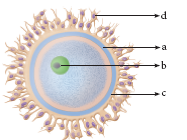
Identify the given image and label its parts marked as a, b, c and d
10.
List the common withdrawal symptoms of drugs and alcohol abuse.
11.
A patient was hospitalized with fever and chills. Merozoites were observed in her blood. What is your diagnosis?
12.
Describe Growth Models/Curves.
13.
14.
Give an account of the properties of soil.
15.
Discuss briefly the following :
a. Catalytic converter
b. Ecosan toilets
16.
17.
Write short notes on the following.
a) Brewer's yeast
b) Ideonella sakaiensis
c) Microbial fuel cells
18.
Mention any three similarities found common in Neanderthal man and Homo sapiens.
19.
Open Book Assessment
‘Healthy reproduction, legally checked birth control measures and proper family planning programmes are essential for the survival of mankind’ Justify
20.
How are STDs transmitted?
21.
Why did Hershey and Chase use radioactively labelled phosphorous and sulphur only? Would they have got the same result if they use radiolabelled carbon and nitrogen?
22.
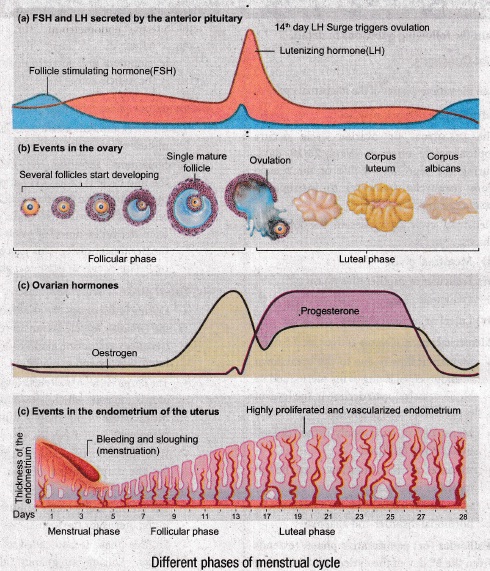
Explain the various phases of the menstrual cycle.
23.
Comment on the methods of Eugenics.
24.
Explain the inheritance of sex linked characters in human being.
25.
Discuss the genic balance mechanism of sex determination with reference to Drosophila.
1.
(i) PCR is a very sensitive technique which enables the amplification of desired DNA from a limited amount of DNA template.
(ii) A technique can be also used for amplifications of RNA in which case it is referred to as reverse transcription PCR (RT-PCR). In this process the RNA molecules (mRNA) must be converted to complementary DNA by the enzyme reverse transcriptase (reverse transcription).
(iii) The cDNA then serves as the template for PCR.
(iv) The specificity and sensitivity of PCR is useful for the diagnosis of inherited disorders (genetic, viral; bacterial, diseases).
(v) Hence, it can detect the presence of an infectious organism in the infected patient at an early stage of infection (even before the infectious organism has multiplied into large number).
2.
3.
| juvenile phase | reproductive phase |
| lt is also known as young and Vegetative Phase | It is also known as Maturity adult Phase |
| lt is the period of growth between the birth of the individual upto reproductive maturitiy. | The organisms reproduce and their offsprings reach maturity period |
4.
(i) Dolly was the first mammal (sheep) Clone developed by Ian Wilmot and Campbell in 1997.
(ii) Dolly the transgenic clone was developed by the nuclear transfer technique and the phenomenon of totipotency.
(iii) Totipotency, refers to the potential of a cell to develop different cells, tissues, organs and finally an organism.
(iv) Dolly was the first animal to be cloned from a differentiated somatic cell taken from an adult animal without the process of fertilization.
5.
Even though India is one of the 17 identified megadiverse countries of the world, it faces lots of threats to its biodiversity.
(i) Apart from natural causes, human activities, both directly and indirectly are today's main reason for habitat loss and biodiversity loss.
(ii) Fragmentation and degradation due to agricultural practices, extraction (mining, fishing, logging, harvesting) and development (settlements, industrial and associated infrastructures) lead to habitat loss and fragmentation leads to the formation of isolated, small and scattered populations and as endangered species.
6.
(i) Antibiotic resistance occurs when bacteria develop the ability to defeat the drug designed to kill or inhibit their growth.
(ii) It is one of the most acute threats to public health.
(iii) Antibiotic resistance is accelerated by the misuse and overuse of antibiotics, as well as poor infection prevention control.
(iv) Antibiotics should be used only when prescribed by a certified health professional. When the bacteria become resistant, antibiotics cannot fight against them and the bacteria multiply.
(v) Narrow spectrum antibiotics are preferred over broad spectrum antibiotics. They effectively and accurately target specific pathogenic organisms and are less likely to cause resistance.
(vi) "Superbug" is a term used to describe strains of bacteria that are resistant to the majority of antibiotics commonly used today.
7.
1. Directly gametes cannot be transferred into the uterus, because the uterine environment is not suited for the survival of the gametes.
2. If the gametes directly transferred into the uterus, gametes will undergo degeneration (or) could be phagocytosed and viable zygotes will not be formed.
3. In this method, the own collected from a donor female is transferred to the fallopian tube of another woman.
4. The ovum has to be fertilized by the sperm of the woman's husband; the fallopian tube is the site for fertilization in a human female.
5. The gamete (ovum) if introduced into the uterus cannot move to the fallopian tube, the site of fertilization.
8.
RNA is said to be as the first genetic material because
1. RNA can directly code for protein synthesis of protein and hence can easily expresses the character. It is the genetic material in many viruses.
2. RNA can also act as a catalyst; there are some important biothemical reactions in living systems that are catalyzed, by RNAs and not as proteins.
3. Many essential life processes like splicing translation, etc have evolved around RNA.
9.
Human Ovum
a - Vitelline membrane
b - Nucleus
c - Zona Pellucida
d - Corona radiata
10.
(i) Mild tremors to convulsions.
(ii) Severe agitation and fits.
(iii) Depressed mood.
(iv) Anxiety.
(v) Nervousness.
(vi) Restlessness.
(vii) Irritability.
(viii) Insomnia.
(ix) Dryness of throat.
11.
Blood cells (RBC) get infected :
(i) Atoxin hemozoin and eiythrocytic debris into the blood stream resulting in malarial paroxysms-shivering chills, high fever followed by sweating.
(ii) Fever and chills are caused partly by malarial toxins that induce macrophages to release tumour necrosis factor (TNF\(\alpha\)) and interleukin.
12.
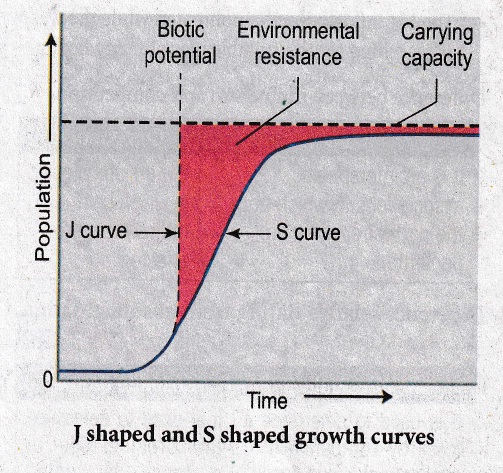
Biotic potential:
It is the maximum reproductive capacity of an organism under optimum environmental conditions.
Carrying capacity:
The maximum number of organisms live in a region can support without environmental degradation is called carrying capacity.
Environmental resistance:
Is the sum total of the environmental limiting factors, both biotic and abiotic which together act to prevent the biotic potential of an organism from being realized.
13.
14.
Properties of soil
(i) Texture of soil - The texture of soil is determined by the size of the soil particles. The types of soil include sand, silt and clay on the basis of their size differences.
(ii) Porosity - The space present between soil particles in a given volume of soil are called pore spaces. The percentage of soil volume occupied by pore space or by the interstitial spaces is called porosity of the soil.
(iii) Permeability of soil - The characteristic of soil that determines the movement of water through pore spaces is known as soil permeability. Soil permeability is directly dependent on the pore size. Water holding capacity of the soil is inversely dependent on soil porosity.
(iv) Soil Temperature - Soil gets its heat energy from solar radiation, decomposing organic matter, and heat from the interior of the earth. Soil temperature affects the germination of seeds, growth of roots and biological activity of soil-inhabiting micro-and macro-organisms.
(v) Soil water - In soil, water is not only important as a solvent and transporting agent, but also maintains soil texture, arrangement, and compactness of soil particles, making soil habitable for plants and animals.
15.
(i) Catalytic converter:
1. Used in automobiles for reducing emission of harmful gases.
2. They have expensive metals like platinum, palladium and rhodium as catalysts.
3. As the exhaust passes through the catalytic converter, unburnt hydrocarbons are converted to CO2 and water, carbon monoxide & nitric oxide are changed into CO2 & nitrogen gas respectively.
4. Vehicles fitted with catalytic convertor must use unleaded petrol as lead will inactivate the catalyst.
(ii) Ecosan toilets
1. Ecological sanitation, commonly abbreviated as ecosan, is an approach to sanitation provision which aims to safely reuse excreta in agriculture.
2. It desires to close the loop' mainly for the nutrients and organic matter between sanitation and agriculture
16.
17.
(a) Brewer's yeast:
(i) Saccharomyces cerevisiae commonly called brewer's yeast.
(ii) It is used for fermenting malted cereals and fruit juices to produce various alcoholic beverages.
(iii) Wine is made from the fermentation of grape juice.
(iv) Grape juice is fermented by various strains of Saccharomyces cerevisiae into alcohol.
(v) Beer is produced from germinated barley malt grain by Saccharowces carlsbergensis or Saccharomyces cerevisiae.
(vi) Rum is made from fermented sugarcane or molasses or directly from sugarcane juice by Saccharomyces cerevisiae.
(vii) Whisky is a type of distilled alcoholic beverage made from fermented grain mash.
(viii) It is the major producer- of ethanol (C2H5OH)
(ix) It is used as industrial alcohol and also used for laboratory and fuel purposes.
(x) It is used for commercial production of enzymes.
(b) Ideonella sakaiensis:
(i) Ideonella sakaiensis is currently tried for recycling of PET plastics.
(ii) These bacteria use PETase and MHETase enzymes to breakdown PET plastic into terephthalic acid and ethylene glycol.
(c) Microbial fuel cells (MFC)
1. Microbial fuel cells work by allowing bacteria to oxidize and reduce organic molecules.
2. Bactedal respiration is basically one big redox reaction in which electrons are being moved around.
3. A MFC consists of an anode and a cathode separated by a proton exchange membrane.
4. Microbes at the anode oxidize the organic fuel generating protons which pass through the membrane to the cathode and the electrons pass through the anode to the external circuit to generate current.
18.
Similarities found in Neanderthal man and Homo sapiens.
(i) They knew to protect their bodies. Neanderthal man used animal hides to protect their bodies.
(ii) They knew the use of fire.
(iii) They buried their dead.
19.
1. Reproductive health refers not only to healthy reproductive functions, but to the total well being of physical mental emotional, behavioural and social aspects of reproduction.
2. People having physically and functionally normal reproductive organs and exhibit normal behavioural and emotional interactions among themselves in all reproduction-related aspects are considered reproductively healthy.
3. 214 million women of reproductive age in developing countries who wants to avoid pregnancy are not using a modern contraceptive method.
4. Some family planning methods, such as condoms help prevent the transmission of HIV and other sexual transmitted infections.
5. Family planning contraception reduces the need for abortion, especially unsafe abortion.
6. Family planning reinforces people's rights to determine the number and spacing of their children.
7. By preventing unintended pregnancy, family planning/contraception prevents deaths of mothers and children.
8. Family planning is the key to slowing unsustainable population growth and the resulting negative impacts on the economy, environment and National and Regional development efforts.
20.
Sexually transmitted diseases (STD) or veneral diseases(VD) or Reproductive tract infections (RTI) are called as Sexually transmitted infections (STI).
Transmissions:
1. Normally STI are transmitted from person to person during intimate sexual contact with an infected partner.
2. Infections like Hepatitis-B and HIV are transmitted sexually as well as by sharing of infusion needles, surgical instruments, etc with infected people, blood transfusion (or) from infected mother to baby.
3. People in the age of 15 to 24years are prone to these infections.
4. The bacterial STI are gonorrhoea syphilis, chancroid, chlamydiasis and lymphogranuloma venereum.
5. The viral STI are genital herpes, genital warts Hepatitis-B and AIDS.
6. Trichomoniasis is a protozoan STI, and candidiasis is a fungal STI.
21.
1. They wanted to know whether the proteins coat or the DNA core of the virus entered , into the infected cells. This would help them to determine whether genes were made up protein or of DNA.
2. They used radioactive isotopes of phosphorous - 32 and sulfur - 35 as markers. So they could trace the proteins and DNA to see what they were doing to the cell.
3. They were perfect because proteins contain almost no phosphorous and DNA contains no sulfur, so the radioactive isotopes would show up in the cells if the P-32 or S-35 appeared. If S-35 shown up in the bacteria. It meant the viruses protein had been injected into the bacteria, if the P-32 was found in the bacteria the DNA had been injected into the bacteria.
4. By that they concluded the genetic material of the bacteriophage was DNA, not protein.
5. If in Hershey and Chase's experiments, the phages were labeled with radioactive carbon, the label would be found in all components of the phages and of the phase ghosts (empty capsids) and possible in all components of the bacteria because carbon is found in all organic material.
6. If Hershey and Chase used radiolabeled nitrogen they would see that the cells would be labelled in the nucleus, in the membrane and possibly throughout the cell. Additionally, numerous components of the phage ghosts and the progeny phage would be labelled.
7. Nitrogen is found in proteins and in DNA so they were not able to get actual result that the genetic material of the phage was DNA, if they use radio isotopes labelled with carbon and nitrogen.
22.
Menstrual cycle / Ovarian cycle
(i) The menstrual or ovarian cycle occurs approximately once in every 28/29 days, during the reproductive life of the female from menarche (puberty) to menopause except during pregnancy.
(ii) Menstrual cycle comprises of the following phases:
1. Menstrual phase
2. Follicular or proliferative phase
3. Ovulatory phase
4. Luteal or, secretory phase
(i) Menstrual phase: (Occurs and last for 3-5 days)
1. Menstrual flow is due to the breakdown of endometrial lining of the uterus, and its blood vessels due to decline in the level of progesterone and oestrogen.
2. Menstruation occurs only if the released ovum is not fertilized.
3. Absence of menstruation may be an indicator of pregnancy
4. However, it could also be due to stress, hormonal disorder and anaemia.
(ii) Follicular (or) proliferative phase: (extends from the 5th day of the cycle until the time of ovulation)
1. During this phase, the primary follicle in the ovary grows to become a fully mature Graafian follicle and simultaneously, the endometrium regenerates through proliferation. These changes in the ovary and the uterus are induced by the secretion of gonadotropins like FSH and LH, which increase gradually during the follicular phase. lt stimulates follicular development and secretion of oestrogen by the follicle cells.
(iii) Ovulatory phase (about 14th day):
1. Both LH and FSH attain peak level in the middle of the cycle.
2. Maximttm secretion of LH during the mid-cycle is called LH surge induces the rupture of the Graafian follicle and the release of the ovum (secondary oocyte) from the break down of ovary wall into the peritoneal cavity. This process called ovulation occurs at late luteal phase.
(iv) Luteal phase or secretory phase;
1. During luteal phase, the remaining part of the Graalian follicle is transformed into a transitory endocrine gland called corpus luteum at the end of ovulation.
2. The corpus luteum secretes a large amount of progesterone which is essential for the maintenance of the endometrium during pregnancy.
3. If fertilization takes place, it paves way for the implantation of the fertilized ovum.
4. The uterine wall secretes a nutritious fluid in the uterus for the foetus.
5. So, this phase is also called as secretory phase. During pregnancy all events of menstrual cycle stop and there is no menstruation.
6. In the absence of fertilization, the corpus luteum degenerates completely and leaves a scar tissue called corpus Albicans.
7. It also initiates the disintegration of the endometrium leading to menstruation, marking repetition of the next cycle.
23.
Application of the laws of genetics for the improvement of human race is called eugenics.
Two methods of Eugenics are:
(i) Constructive method or Positive eugenics
(ii) Restrictive method or Negative eugenics
(i) Positive eugenics: Positive eugenics attempts to increase consistently better or desirable germplasm and to preserve the best germplasm of the society. The desirable traits can be increased by adopting the following measures:
(a) Early marriage of those having desirable traits
(b) Subsiding the fit and establishing sperm and egg banks of precious germ plasm.
(c) Educating the basic principles of genetics and eugenics.
(d) Improvement of environmental conditions.
(e) Promotion of genetic research.
(ii) Negative eugenics: Negative eugenics attempts to eliminate the defective germplasm of the society by adopting the following measures:
(a) Sexual separation of the defectives
(b) Sterilization of the defectives
(c Control of immigration and
(d) Regulation of marriages
24.
(i) The inheritance of a trait that is determined by a gene located on one of the sex chromosomes is called sex linked inheritance.
(ii) Genes present on the differential region of X or Y chromosomes are called sex linked genes. The genes present in the differential region of "X" chromosome are called X linked genes. The X-linked genes have no corresponding alleles in the Y chromosome.
(iii) The genes present in the differential region of Y chromosome are called Y- linked or holandric genes. The Y linked genes have no corresponding allele in X chromosome.
(iv) The Y linked genes inherit along with Y chromosome and they phenotypically express only in the male sex.
(v) Sex linked inherited traits are more common in males than females because, males are hemizygous and therefore express the trait when they inherit one mutant allele.
(vi) The X - linked and Y - linked genes in the differential region (non-homologus region) do not undergo pairing or crossing over during meiosis. The inheritance of X or Y linked genes is called sex-linked inheritance.
X linked Inheritance - Eg. Colour blindness
Y linked Inheritance - Eg. hypertrichosis
25.
(i) Genic balance mechanisms of sex determination in Drosophila was first studied by C. B. Bridges.
(ii) In Drosophila, the presence of Y chromosome is essential for the fertility of male sex, but does not determine the male sex.
(iii) The gene for femaleness is located on the X chromosome and those for maleness are located on the autosomes.
(iv) When geneticist C. B. Bridges, working with Drosophila, crossed a triploid (3n) female with a normal male, he observed many combinations of autosomes and sex chromosomes in the offspring.
(v) He suggested that sex In Drosophila is determined by the balance between the genes for femaleness located on the 'X' chromosomes and those for maleness located on the 'autosomes". Hence the sex of an individual is determined by the ratio of its X chromosome to that of its autosome sets. This ratio is termed sex index and is expressed as:
\(Sex \ index=\frac { Number \ of \ X \ Chromosomes }{ Number \ of \ Y \ Chromosomes } \left( \cfrac { X }{ A } \right) \)
(vi) Change in this ratio leads to a changed sex phenotype. The results obtained from a cross between triploid female Drosophila (3A:3X) with a diploid male (2A: XY) is shown in below.
(vii) Bridges classical cross of a triploid (3A+XXX) female fly and a diploid (2A+XY) male fly ♀ ♂
Triploid ♀ Diploid ♂
Parent 3A + XXX 2A + XY
Gametes (2A + XX) (A + X) (A + X) (A + Y)
(2A +X) (A+XX)
| A + X | A + Y | |
|---|---|---|
| 2A + XX | 3A + XXX Triploid Female |
3A + XXY Triploid Intersex |
| 2A + X | 3A + XX Triploid Intersex |
3A + XY Super Male |
| A + XX | 2A + XXX Super female |
2A+ XXY Diploid Female |
| A + X | 2A + XX Diploid Female |
2A + XY Diploid Male |
Different doses of X chromosomes and autosome sets and their effect in sex determination in Drosphild
| Phenotype | Number of 'X' Chromosomes (X) |
Number of Autosome sets (A) |
\(Sex \ Index=\frac { Number \ of \ X \ Chromosomes }{ Number \ of \ autosome \ sets } \) | |
|---|---|---|---|---|
| Metafemale/ Super female | 3 | 2 | 3/2 = 1.5 | |
| Normal Female | Teraploid | 4 | 4 | 4/4 = 1.0 |
| Triploid | 3 | 3 | 3/3 = 1.0 | |
| Diploid | 2 | 2 | 2/2 = 1.0 | |
| Haploid | 1 | 1 | 1/1 = 1.0 | |
| Inter sex | 2 | 3 | 2/3 = 0.67 | |
| Normal male | 1 | 2 | 1/2 = 0.50 | |
| Meta male / super male | 1 | 3 | 1/3 = 0.53 | |
A sex-switch gene in Drosophila directs female development. This gene, Sex-lethal (SxL) located on the X chromosome, has two states of activity. When it is 'on' it directs female development and when it is 'off' maleness ensures. Other genes located on the X chromosome and autosomes regulate this sex-switch gene. However, the Y- chromosome of Drosophila is required for male fertility.

12th Standard Syllabus & Materials
12th Standard
TN 12th Computer Applications களப்பெயர் முறைமை (DNS) Sample Question Papers Study Material - QB365 Set A
NEW12th Standard
TN 12th Computer Applications வலையமைப்பு எடுத்துக்காட்டுகள் மற்றும் நெறிமுறைகள் Sample Question Papers Study Material - QB365 Set A
NEW12th Standard
TN 12th Computer Applications கணினி வலையமைப்பு ஓர் அறிமுகம் Sample Question Papers Study Material - QB365 Set A
NEW12th Standard
TN 12th Computer Applications PHP-உடன் MySQL-ஐ இணைத்தல் Sample Question Papers Study Material - QB365 Set A



Tamilnadu Stateboard 12th Standard Subjects

Maths

Chemistry

Physics
Biology

Computer Science

Business Maths and Statistics

Economics

Commerce

Accountancy

History

Computer Applications
Biology
Computer Technology
Computer Applications
Computer Science
Business Maths and Statistics
Commerce
Economics
Maths
Chemistry
Physics
Computer Technology
History
Accountancy

Tamil

English

French
Tamilnadu Stateboard Standards



