
 100% FREE ACCESS
12th Standard Syllabus & Materials
12th Standard
TN 12th Maths Applications of Matrices and Determinants Sample Question Papers Study Material - QB365 Set A
NEW12th Standard
TN 12th Computer Applications மின்னணு தரவு பரிமாற்றம் Sample Question Papers Study Material - QB365 Set A
NEW12th Standard
TN 12th Computer Applications மின் - வணிக பாதுகாப்பு அமைப்புகள் Sample Question Papers Study Material - QB365 Set A
NEW12th Standard
TN 12th Computer Applications மின்னணு செலுத்தல் முறைகள் Sample Question Papers Study Material - QB365 Set A
NEW12th Standard
TN 12th Computer Applications மின் - வணிகம் Sample Question Papers Study Material - QB365 Set A
NEW12th Standard
TN 12th Computer Applications திறந்த மூல கருத்துருக்கள் Sample Question Papers Study Material - QB365 Set A

Published on: 27/02/2021
12th Standard English Medium Chemistry Reduced Syllabus Creative Two mark Question with Answer key - 2021(Public Exam )
Download Tamil Nadu 12th Standard Chemistry question papers, model tests, one-mark questions, important questions, and public exam papers in PDF format. Free study materials and answer keys for TN State Board students.
Questions + Answers key
Take MCQ Chemistry Test
1.
Give the IUPAC name of the following compounds
i) \({ H }_{ 3 }C-\underset { \overset { | }{ CN } }{ CH } -{ CH }_{ 2 }-COOH\)
ii) \({ CH }_{ 3 }-\underset { \overset { | }{ { CH }_{ 3 } } }{ CH } -CN\)
iii) C6H5-NC
2.
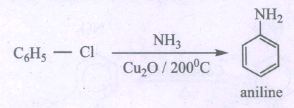
Bring about the conversion of Chlorobenzene to aniline
3.
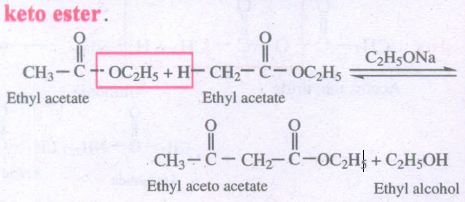
Write a note on Claisen Condensation.
4.
What is glacial acetic acid? How is it obtained.
5.
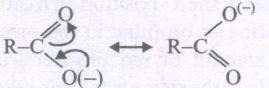
Give the resonance structure of carboxylate anion.
6.
Benzaldehyde reduces Tollen's reagent but not Fehling's solution explain.
7.
Ethanal is more reactive towards nucleophilic addition reaction than propanone. Why?
8.
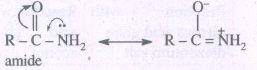
Explain why amines are more basic than amides.
9.
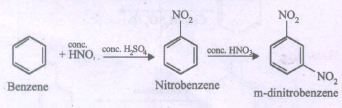
How will you convert benzene to m-dinitro benzene?
10.
A water sample contains (CaHCO3)2 What will you choose soap or detergents for cleaning clothes.
11.
Define polymerisation.
12.
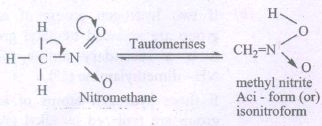
Define tautomerism.
13.
What are allosteric inhibitors?
14.
What is the action of cone. HI on glucose?
15.
Why is glucose known as dextrose?
16.
What are epimers?
17.
What are lyophobic colloids? Give examples.
18.
Define colloidal solution.
19.
What is ultrasonic dispersion?
20.
What is passivation?
21.
Defame electro chemical equivalent.
22.
On dilution of 0.1 M of Na2SO4, what will happen to its
(a) Conductance (C)
(b) Conductivity K
(c) Molar conductance \({ \Lambda }_{ m }\)
(d) Equivalent conductance \({ \Lambda }\)
23.
Give a mathematical expression that relates I cell constant, specific conductance and specific resistance.
24.
Write two uses of ethylene glycol.
25.
Write the tests to differentrate phenol and alcohol.
26.
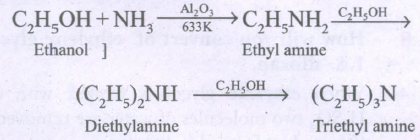
Complete the reaction and write the names of products. C2H5OH + NH3 \(\overset { { Al }_{ 2 }{ O }_{ 3 } }{ \underset { { 360 }^{ 0 }C }{ \longrightarrow } } \)?
27.
The KW of a neutral solution is 10-12 at a particular temperature. What are its pH and pOH values?
28.
What are the conditions for alloy formation?
29.
Silver atom has completely filled d-orbitals (4d10) in its ground state. How can you say that it is a transition element?
30.
Write the units of zeroth, first, second and third order rate constants.
31.
What is the study of chemical kinetics used for?
32.
Why hydrides of oxygen is a liquid whereas hydride of sulphur is a gas?
33.
Why does ozone act as a powerful oxidising agent?
34.
Elements of group 16 show lower value of first ionization enthalpy compared to group 15, why?
35.
NaCI has a sharp melting point but glass does not - Justify.
36.
What type of defect can arise when a solid is heated? Which physical property is affected by it and in what way?
37.
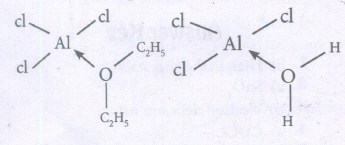
Which one is more soluble in diethyl ether, anhydrous Alcl3 or hydrated Alcl3? Explain in terms of bonding.
38.
What are silicones?
39.
What is phosgene? How is it prepared?
40.
Mention the physical properties of boranes.
41.
Why lanthanoids are called f block elements?
42.
Write the electronic configuration of the element with atomic number 102.
43.
What are the different methods of concentration of ores?
44.
What is facial isomer?
45.
What are Co-ordination isomers? Give examples
46.
Name some depressing agents.
47.
Discuss the process of roasting with suitable example.
48.
Name some common methods of ore concentration.
49.
Name the type of isomerism that occurs in complexes in which both cation and anion are complex ions.
50.
Write the IUPAC name of [Ni(H2O)6] (CI)2
1.
(i) 3 - cyanobutanoic acid
(ii) 2 - methyl propanenitrile
(iii) phenyl carbylamine
2.
When chlorobenzene is heated with alcoholic ammonia, aniline is obtained
3.
Esters containing at least one ∝- hydrogen atom undergo self condensation in the presence of a strong base such as sodium ethoxide to form β-keto ester.
4.
Pure acetic acid is called glacial acetic acid. Because it forms ice like crystal when cooled. When aqueous acetic acid is cooled at 289.5 K, acetic acid solidifies and forms ice like crystals, where as water remains in liquid state and removed by filtration. This process is repeated to obtain glacial acetic acid.
5.
6.
Benzaldehyde reduces Tollen's reagent, but does not reduce Fehling's solution. Because Ag+ is more easily reduced to Ag than Cu2+ to Cu+
7.
(i) Ethanal (CH3CHO) is more reactive towards nucleophilic addition reaction than propanone (\({ CH }_{ 3 }-\underset { \overset { || }{ O } }{ C } -{ CH }_{ 3 }\)) because of steric and electronic reasons.
(ii) Greater the number of alkyl groups attached, less will be the reactivity of carbonyl compound towards nucleophilic addition.
(iii) Soethanal is more reactive than propanone.
8.
In simple amines the lone pair of electrons is on nitrogen and hence available for protonation. In amides, on the other hand, the electron pair on nitrogen is delocalized to the carbonyl oxygen through resonance.
9.
Benzene on reaction with a mixture of cone. HNO3 and cone. H2SO4 produces nitro benzene as product which on further nitration will result in the formation of m-dinitrobenzene.
10.
Detergents are more preferred since calcium ion forms scum with hard water.
11.
The process of forming a very large, high molecular mass polymer from small structural units i.e., monomer is called polymerisation.
12.
Primary and secondary nitroalkanes, having α-H , also show an equilibrium mixture of two tautomers namely nitro - and aci - form.
13.
(i) In certain enzymes, the inhibitor molecule binds to a different binding site, which is commonly referred to as allosteric site, and causes a change in its active site geometry (shape).
(ii) As a result, the substrate cannot bind to the enzyme. This type of inhibitors are called allosteric inhibitors
14.
When glucose reacts with concentrated hydroiodic acid in the presence of red phosphorous, complete reduction takes place and n-hexane is formed as a product.
\({ C }_{ 6 }{ H }_{ 12 }{ O }_{ 6 }\overset { HI/P }{ \underset { reduction }{ \longrightarrow } } \underset { n-hexane }{ { CH }_{ 3 }-{ CH }_{ 2 }-{ CH }_{ 2 } } -{ CH }_{ 2 }-{ CH }_{ 2 }-{ CH }_{ 3 }\)
15.
Glucose is known as dextrose because it occurs in nature as the optically active dextrorotatory isomer.
16.
Sugar differing in configuration at an asymmetric centre is known as epimers.
17.
(i) Colloidal solutions in which the dispersed phase has very little affinity for the dtspersion medium are termed as lyophobic (solvent hating) colloids.
(ii) Colloidal solutions of metals which have negligible affinity for solvents and sulphur in water are examples of this type.
18.
(i) The colloidal solutions are intermediate between true solutions and suspensions.
(ii) When the diameter of the particles ranges from about 10 Å 2000 Å he system is termed a colloidal solution.
19.
Sound waves of frequency more than 20kHz (audible limit) could cause transformation of course suspension to colloidal dimensions.
20.
The metal is treated with strong oxidising agents such as concentrated HNO3. As a result, protective oxide layer is formed on the surface of metal
21.
Electrochemical equivalent is defined as the amount of substance deposited or liberated at the electrode by a charge of 1coulomb.
22.
Conductivity, molar conductance and equivalent conductance increases with dilution whereas Conductance (C) decreases.
23.
k = \(\frac{1}{R}.\frac{1}{a}=\frac{1}{ρ}\)
Where K is specific conductance
R is resistance and \(\frac1a\) is cell constant.
ρ is specific resistance.
24.
(i) Ethylene glycol is used as an antifreeze in automobile radiator.
(ii) Its dinitrate is used as an explosive with DNG.
25.
Test to differentiate alcohol and phenols:
(i) Phenol react with benzene diazonium chloride to form a red orange dye, but ethanol has no reaction with it.
(ii) Phenol gives purple colouration with neutral ferric chloride solution, alcohols do not give such coloration with FeCI3.
(iii) Phenol reacts with NaOH to give sodium phenoxide. Ethyl alcohol does not react with NaOH.
26.
Ethanol react with ammonia in presence of heated alumina or thoria catalyst at 633 K to form mixture of amines.
27.
pKw = pH + pOH = 10-12
For a neutral solution, pH = pOH
So pH = pOH = 6.
28.
(i) According to Hume-Rothery rule to, form a substitute alloy the difference between the atomic radii of solvent and solute is less than 15%.
(ii) Both the solvent and solute must have the same crystal structure and valence and their electro negativity difference must be close to zero.
29.
(i) Silver in its +1 oxidation state, exhibits 4d105s0configuration.
(ii) But in some compounds, it also shows +2 oxidation state, so the configuration becomes 4d95s0
(iii) Here, d-orbital is not completely filled. Therefore silver is a transition element.
30.
| No. | Order | Unit of k |
|---|---|---|
| 1. | 0 | mol lit-1 s-1 |
| 2. | 1 | s-1 |
| 3. | 2 | mol-1 lit s-1 |
| 4. | 3 | mol-2 lit2 s-1 |
31.
The study of chemical kinetics helps us
(i) To determine the rate of a chemical reaction.
(ii) In optimizing the process conditions of industrial manufacturing processes.
32.
(i) H2O undergoes extensive H-bonding due to high electronegativity of O-atom and hence exist as an associated molecule.
(ii) Therefore H2O is a liquid. On the other hand H2O does not undergo H-bonding and hence exists as a discrete molecules and as a gas.
33.
(i) Ozone acts as a powerful oxidizing agent because ozone liberates nascent oxygen very easily on decomposition.
\({ O }_{ 3 }\longrightarrow { O }_{ 2 }+\left[ O \right] \)
(ii) This nascent or atomic oxygen brings about the oxidations it is very reactive.
34.
Element of group 15 have stable half-filled p-orbitals hence large amount of energy is required to remove electrons as compared to group 16, which has an incomplete p subshell.
35.
NaCl is a crystalline solid so possess sharp melting points where as glass is amorphous in nature so does not have sharp melting point.
36.
(i) When a solid is heated, vacancy defect can arise.
(ii) A solid crystal is said to have vacancy defect when some of the lattice sites are vacant
(iii) Vacancy defect leads to a decrease in the density of the solid
37.
(i) Anhydrous AlCl3 is an electro-deficient compound while hydrated AICl3 is not.
(ii) Therefore, anhydrous AICl3 is more soluble in diethyl either because the oxygen atom of ether donates a pair of electrons to the vacant p-orbital on the Al atom in AlCl3 forming a co-ordinate bond.
(iii) In case of hydrated AlCl3, Al is not electron deficient, since, H2O has already donated a pair of e- to it.
38.
(i) Silicones or poly siloxanes are organo silicon polymers with general empirical formula (R2SiO).
(ii) These silicones may be linear or cross linked. Because of their very high thermal stability they are called high - temperature polymers.
39.
When carbon monoxide is treated with chlorine in presence of light or charcoal, it forms a poisonous gas carbonyl chloride, which is also known as phosgene.
CO + Cl2 ⟶ COCl2
40.
(i) Boranes are colourless diamagnetic compounds with low thermal stability.
(ii) Diborane is a gas at room temperature with sweet smell and it is extremely toxic.
(iii) It is also highly reactive At high temperatures it forms higher boranes liberating hydrogen.
41.
This is because the last electron enters into the (n-2) f-subshell.
42.
[Rn]88 5+14 6d07S2
43.
(i) Hydraulic washing or gravity separation
(ii) Froth flotation
(iii) Electromagnetic separation
(iv ) Chemical method.
44.
Octahedral complex of the type [MA3B3]n± also shows geometrical isomerism. If the three similar ligands (A) are present in the corners of one triangular face of the octahedron and the other three ligands (B) are present in the opposing triangular face, then the isomer is referred as a facial isomer (fac isomer).
45.
Isomers that arises in the coordination compounds having both the cation and anion as complex ions. The interchange of one or more ligands between the cationic and the anionic coordination entities result in different isomers.
(i) [Cr(NH3)5CN] [Co(NH3) (CN)5] and [Co(NH3)5CN] [Cr(NH3)( CN)5]
(ii) [Pt(NH3)4] [Pd(CI)4] and [Pd(NH3)4] [Pt(Cl)4]
46.
Sodium cyanide and sodium carbonate.
47.
Sulphide ores are generally roasted in reverberatory furnace in free supply of air below its melting point. Ore changes to oxide with larger surface area and volatile impurities are removed.
\(2ZnS+{ 3O }_{ 2 }\overset { \Delta }{ \longrightarrow } 2ZnO+{ 2SO }_{ 2 }\)
\(2PbS+{ 3O }_{ 2 }\overset { \Delta }{ \longrightarrow } pbO+{ 2SO }_{ 2 }\)
48.
Gravity separation, froth flotation, leaching, magnetic separation
49.
Coordination isomerism.
50.
Hexaqua Nickel Chloride

12th Standard Syllabus & Materials
12th Standard
TN 12th Computer Applications வலையமைப்பு வடமிடல் Sample Question Papers Study Material - QB365 Set A
NEW12th Standard
TN 12th Computer Applications களப்பெயர் முறைமை (DNS) Sample Question Papers Study Material - QB365 Set A
NEW12th Standard
TN 12th Computer Applications வலையமைப்பு எடுத்துக்காட்டுகள் மற்றும் நெறிமுறைகள் Sample Question Papers Study Material - QB365 Set A
NEW12th Standard
TN 12th Computer Applications கணினி வலையமைப்பு ஓர் அறிமுகம் Sample Question Papers Study Material - QB365 Set A



Tamilnadu Stateboard 12th Standard Subjects

Maths
Chemistry

Physics

Biology

Computer Science

Business Maths and Statistics

Economics

Commerce

Accountancy

History

Computer Applications
Biology
Computer Technology
Computer Applications
Computer Science
Business Maths and Statistics
Commerce
Economics
Maths
Chemistry
Physics
Computer Technology
History
Accountancy

Tamil

English

French
Tamilnadu Stateboard Standards
