
 100% FREE ACCESS
12th Standard Syllabus & Materials
12th Standard
TN 12th Maths Applications of Matrices and Determinants Sample Question Papers Study Material - QB365 Set A
NEW12th Standard
TN 12th Computer Applications மின்னணு தரவு பரிமாற்றம் Sample Question Papers Study Material - QB365 Set A
NEW12th Standard
TN 12th Computer Applications மின் - வணிக பாதுகாப்பு அமைப்புகள் Sample Question Papers Study Material - QB365 Set A
NEW12th Standard
TN 12th Computer Applications மின்னணு செலுத்தல் முறைகள் Sample Question Papers Study Material - QB365 Set A
NEW12th Standard
TN 12th Computer Applications மின் - வணிகம் Sample Question Papers Study Material - QB365 Set A
NEW12th Standard
TN 12th Computer Applications திறந்த மூல கருத்துருக்கள் Sample Question Papers Study Material - QB365 Set A

Published on: 01/03/2021
12th Standard English Medium Computer Technology Reduced Syllabus Two mark Important Questions - 2021(Public Exam)
Download Tamil Nadu 12th Standard Computer Technology question papers, model tests, one-mark questions, important questions, and public exam papers in PDF format. Free study materials and answer keys for TN State Board students.
Questions + Answers key
Take MCQ Computer Technology Test
1.
Name the icons in quick access toolbar?
2.
What is meant by application button?
3.
How to display a frame's content on the Stage, you should move the play head to that frame in the Timeline?
4.
What is meant by pasteboard?
5.
What is meant by stage?
6.
What Is A Ambient occlusion?
7.
What Is Animation?
8.
What Are Multimedia Software's?
9.
How will you create an ellipse?
10.
What is meant by flyout?
11.
Mention the any three terms in corel draw?
12.
What is meant by content collector tool?
13.
What is meant by control panel?
14.
How will you rejoin the split block?
15.
Name the menus in the pagemaker?
16.
How do you exit AutoCAD?
17.
When a file has not yet been saved for the first time, what appears when you pick either Save or Save As... from the Application Menu bar?
18.
In which Ribbon control panel are the Arc and Circle buttons found?
19.
How do you terminate a command in progress in AutoCAD?
20.
What is a fast method of closing a polygon when you are using the LINE command?
21.
Which Function key turns the OSNAP feature on and off?
22.
What appears when you rest the pointer on a button on the Ribbon?
23.
How do you start AutoCAD?
24.
What is the purpose of Timeline?
25.
What is Flash?
26.
List out Multimedia Production team members.
27.
Define Multimedia Production.
28.
List out audio file formats.
29.
List out image file formats.
30.
Classify the IMAGE component in multimedia.
31.
Define Multimedia and their features.
32.
Write the steps to ungroup a grouped object.
33.
Write the steps to group objects.
34.
What is a property bar in CorelDRAW?
35.
Write the steps to start CorelDRAW.
36.
What is CorelDRAW used for?
37.
Write the steps to add bullets or numbering to a paragraph.
38.
What is Zooming?
Graphic
Vector
Scalar
Everything must be text
39.
What is a pasteboard in InDesign?
Tools panel
Control panel
Container
None
40.
What is a workspace in Abode InDesign?
pasteboard
white-space
empty area
vacuum
41.
What type of software is Adobe InDesign?
Story
Paragraph
Object
Palette
42.
How do you insert a page in PageMaker?
43.
What is threading text?
44.
What is threading text blocks?
45.
What is text block?
46.
What is text editing?
47.
Write about the Menu bar of PageMaker
48.
How do you create a New document in PageMaker?
49.
Give some examples of DTP software
50.
What is desktop publishing?
1.
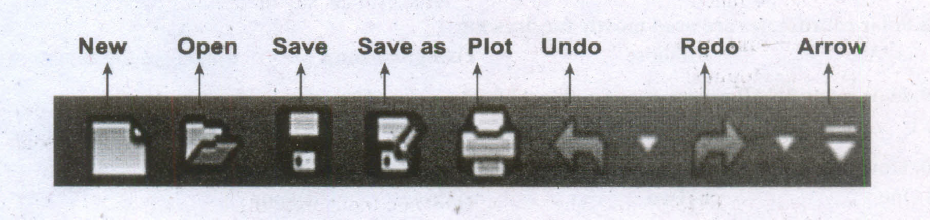
2.
The Application menu appears when you click the red "A" called the Application Button.
3.
(i) Layers help you organize the artwork in your movie.
(ii) Each layer can contain a different image that appears on the Flash Stage.
(iii) To draw and edit objects on one layer without affecting objects on another layer of Timeline.
(iv) We can hide, lock, or show the contents of layers by clicking the dots in the layer under the layer option icons.
4.
i) The gray area surrounding the Stage in Flash is the Pasteboard.
ii) To create and edit objects in the pasteboard also but they will not be visible in the final movie.
iii) Only the graphical objects kept inside the stage are visible in the final movie.
5.
i) The white rectangle area in the middle of your workspace is called the Stage.
ii) All the animations, objects and scenes for a Flash movie are created, edited, placed and played back in the stage.
6.
(i) Ambient occlusion is a shading method used in 3D computer graphics which helps add realism to local reflection models by taking into account.
(ii) Ambient occlusion is a method for simulating global illumination, while keeping a respectable ratio between results.
7.
Animation is the rapid display of a sequence of images of 2-D or 3-D artwork or model positions in order to create an illusion of movement.
8.
The software used to create multimedia experiences can be placed into 3 distinct categories:
(i) Audio Software
(ii) Graphics Software
(iii) Video Software
9.
Creating ellipses
(i) To draw an ellipse (also known as an oval), select the Ellipse tool in the toolbox. The mouse pointer changes to a crosshair with a small ellipse beneath it.
(ii) Click on anywhere in the drawing area and drag the mouse pointer.
(iii) Release the mouse button where you like the end of the ellipse.
10.
The toolbox contains a range of tools that can be used for specific drawing and editing tasks.
(i) Some tools are used to draw shapes, and other tools are used to apply colors, patterns, or
(ii) fills to objects, Some tools belong to flyouts.
(iii) They are groups of related tools.
(iv) A small arrow which is in the lower right comer of a toolbox button indicates that the tool belongs to a flyout.
(v) The last-used tool in the flyout appears on the button.
11.
Object: An object is an element in a drawing such as an image, shape, line, text, curve, symbol, or layer.
Drawing: Drawing is the work you create in CorelDRAW, for example, custom artwork, logos, posters, and newsletters.
Vector graphic: Vector graphic is an image generated from mathematical descriptions that determine the position, length, and direction in which lines are drawn.
12.
(i) When you select the Content Collector tool, click objects or stories to add them to the Content Conveyor at the bottom of the screen.
(ii) You can then use the Content Placer Tool to copy and link these objects from the Content Conveyer into another layout or document.
(iii) Press B to switch between the Content Collector and Content Placer tools.
13.
(i) The Control panel is located directly beneath the Application bar and above the horizontal ruler.
(ii) Options in the Control panel change depending on what is selected in the document.
14.
To rejoin the two text blocks
(i) Place the cursor on the bottom handle of the second text block, click and drag the bottom handle up to the top.
(ii) Then place the cursor on the bottom handle of the first text block, and click and drag the bottom handle down if necessary.
15.
File, Edit, Layout, Type, Element, Utilities, View, Window, Help.
16.
You can close the current drawing file without actually quitting AutoCAD by choosing Close > Current Drawing from the Application Menu or by entering CLOSE at the Command prompt. To close the current opened file or all opened files,
(i) Click on the Application button. Now Application menu appears.
(ii) Move the mouse to the Close button, then select either Current Drawing to dose the current file, or All Drawings to close all the opened files in single command.
17.
To save your work and remain in AutoCAD:
1. Click the Save button in the Quick Access toolbar.
2. If the drawing has not yet been named, the Save Drawing As dialog box appears.
3. Name the drawing in the File name text box, and then choose Save.
18.
Ribbon control panel are the Arc and Circle buttons found in ARC toul.
19.
By pressing ESC while an operation is in progress, it terminates the command.
20.
(i) The Close option is used to join the current point to the start point of the first line when two or more continuous lines are drawn.
(ii) If you specify the end point by using the mouse, then click at the start point of the first line or enter C at the Command prompt, as given in the Command prompt below.
Command: LINE
Specify first point: Pick the first point.
Specify next point or [Undo]: Pick the second point.
Specify next point or [Undo]: Pick the third point.
Specify next point or [Close/Undo]: C (The fourth point joins with the first point).
21.
(i) If the SNAP MODE button is chosen, the, snap mode will turn ON.
(ii) When snap is on, the cursor under mouse control can only be moved in jumps from one snap point to another.
(iii) The F9 key acts as a toggle key to turn the snap off or on.
22.
(i) Ribbon Minimized to Panels
(ii) Ribbon Minimized to Panel Titles
(iii) Ribbon Minimized to Panel Tabs
23.
To start AutoCAD 2016,
(i) double-click the AutoCAD 2016- English icon on your Desktop (or)
(ii) Click Start > All Programs > Autodesk > AutoCAD 2016 > AutoCAD 2016 - English.
24.
(i) Timeline is the record of every frame, layer and scene that makes up a movie.
(ii) It controls and organizes the movie's content over time using layers and frames.
25.
Adobe Flash Professional CS6 is a software used to create animations.
i) It contains tools that can be used to draw basic objects and to create scenes.
ii) It is developed by Adobe systems.
26.
(i) The production team for a high end multimedia project requires a team efforts.
(ii) The team comprises of members playing various roles and responsibilities like Script writer, Production manager, Editor, Graphics Architect, Multimedia Architect and Web Master.
27.
Adequate time and efficient planning is required for multimedia production, which assures that the project will be proceed smoothly and certainly ensures that the information reaches the target audience.
28.
(i) AIFF (Audio Interchange File Format),
(ii) WMA (Windows Media Audio),
(iii) RA (Real Audio Format),
(iv) WAY (Waveform Audio File Format),
(v) MP3 (MPEG Layer-S Format)
29.
Compression formats used for this purpose are GIF, TIFF and JPEG.
30.
(i) Images acts as an vital component in multimedia.
(ii) These images are generated by the computer in two ways, as bitmap or raster images and as vector images.
31.
(i) Multimedia allows the users to combine and change data from various sources like image, text, graphics, video, audio and video to a single platform.
(ii) The fast growing of multimedia technology over the last decade has brought a lot of changes to computing, entertainment and education.
32.
To ungroup a group object
(i) Select the grouped object using the Pick tool.
(ii) Choose Object > Group > Ungroup
(iii) Objects on the menu Bar. (or)
(iv) Press Ctrl + U in the keyboard (or)
(v) Click on the Ungroup Objects button on the Property Bar.
(vi) The grouped object will break into its component objects
33.
To create a group object
(i) Select the objects with the Pick tool.
(ii) (To select multiple objects hold down Shift key while selecting them.)
(iii) Choose Object > Group > Group.
(iv) Objects (or) Press Ctrl + G. The selected objects will be grouped as a single object.
34.
The property bar is next to Standard toolbar.
(i) It displays the most commonly used functions that are relevant to the active tool.
(ii) Even though it looks like a toolbar, the property bar content changes depending on the tool or task.
35.
Using the Start Menu
(i) Choose Start > All Programs > CoreIDRAW Graphics Suite 2018 > CoreIDRAW 2018.
(ii) The CorelDRAW 2018 - Welcome Screen window will appear.
36.
CorelDraw is a versatile graphics application for creating high quality vector illustrations, logo designs, and page layouts.
37.
Add Bullets or Numbering to a Paragraph
1. Select the paragraphs to which you want to add bullets or numbers.
2. Choose Type > Bulleted & Numbered Lists, and then click Apply Bullets or Apply Numbers.
The last used settings in the Bullets and Numbering dialog box are applied to the text.
38.
The Page tool is used for creating different page sizes within a document.
39.
(i) The pasteboard is the gray area surrounding the document window.
(ii) You can place items on the pasteboard before actually inserting them on the page.
40.
A workspace is where your work is created. Workspaces typically include an area designated for creating a finished product, much like a painter would use a canvas to create a painting.
41.
(i) Adobe InDesign is a page layout software program.
(ii) Page layout software includes tools that allow you to easily position textand graphics on document pages.
42.
Inserting a page
1. Click on Layout in the menu bar. The Layout menu will appear.
2. Click on Insert page. The Insert Page dialog box will appear.
3. Type the number of pages you want to add to the Insert Page dialog box.
4. Click on Before or After to specify where you want to add the page relative to the active page.
5. In multi-page documents, type a new page number in the Existing Page Box to change the relative page.
6. Click on OK button. The page will be inserted in your document.
43.
The process of connecting text among Text blocks is called threading text. Text that flows through one or more threaded blocks is called a story.
44.
(i) All text in PageMaker resides inside containers called text blocks.
(ii) A Text block can be connected to other text block so that the text in one text block can flow into another text block.
45.
In PageMaker the text of the document can be typed inside a text block.
46.
i) Editing means making changes to the text.
ii) When you edit a document, you revise its text.
iii) Editing encompasses many tasks, such as inserting and deleting words and phrases, correcting errors, and moving and copying text to different places in the document.
47.

i) It contains the following menus File, Edit, Layout, Type, Element, Utilities, View, Window, Help.
ii) When you click on a menu item, a pulldown menu appears.
iii) There may be sub-menus under certain options in the pull-down menus.
48.
To create a new document,
1. Choose File> New in the menu bar. (or) Press Ctrl + N in the keyboard. Now Document Setup dialog box appears.
2. Enter the appropriate settings for your new document in the Document Setup dialog box.
3. Click on OK button.
49.
(i) Adobe PageMaker,
(ii) Adobe InDesign,
(iii) QuarkXPress,
50.
Desktop publishing (abbreviated DTP) is the creation of page layouts for documents using DTP software.

12th Standard Syllabus & Materials
12th Standard
TN 12th Computer Applications வலையமைப்பு வடமிடல் Sample Question Papers Study Material - QB365 Set A
NEW12th Standard
TN 12th Computer Applications களப்பெயர் முறைமை (DNS) Sample Question Papers Study Material - QB365 Set A
NEW12th Standard
TN 12th Computer Applications வலையமைப்பு எடுத்துக்காட்டுகள் மற்றும் நெறிமுறைகள் Sample Question Papers Study Material - QB365 Set A
NEW12th Standard
TN 12th Computer Applications கணினி வலையமைப்பு ஓர் அறிமுகம் Sample Question Papers Study Material - QB365 Set A



Tamilnadu Stateboard 12th Standard Subjects

Maths

Chemistry

Physics

Biology

Computer Science

Business Maths and Statistics

Economics

Commerce

Accountancy

History
Computer Applications
Biology
Computer Technology
Computer Applications
Computer Science
Business Maths and Statistics
Commerce
Economics
Maths
Chemistry
Physics
Computer Technology
History
Accountancy

Tamil

English

French
Tamilnadu Stateboard Standards
