
 100% FREE ACCESS
12th Standard Syllabus & Materials
12th Standard
TN 12th Maths Applications of Matrices and Determinants Sample Question Papers Study Material - QB365 Set A
NEW12th Standard
TN 12th Computer Applications மின்னணு தரவு பரிமாற்றம் Sample Question Papers Study Material - QB365 Set A
NEW12th Standard
TN 12th Computer Applications மின் - வணிக பாதுகாப்பு அமைப்புகள் Sample Question Papers Study Material - QB365 Set A
NEW12th Standard
TN 12th Computer Applications மின்னணு செலுத்தல் முறைகள் Sample Question Papers Study Material - QB365 Set A
NEW12th Standard
TN 12th Computer Applications மின் - வணிகம் Sample Question Papers Study Material - QB365 Set A
NEW12th Standard
TN 12th Computer Applications திறந்த மூல கருத்துருக்கள் Sample Question Papers Study Material - QB365 Set A

Published on: 13/05/2022
QB365 provides detailed and simple solution for every Creative Questions in class 12 Economics Subject. It will helps to get more idea about question pattern in every Creative questions with solution.
latest Creative QuestionsDownload Tamil Nadu 12th Standard Economics question papers, model tests, one-mark questions, important questions, and public exam papers in PDF format. Free study materials and answer keys for TN State Board students.
Questions + Answers key
Take MCQ Economics Test1.
Write briefly about “Structural Adjustment Facility”
2.
List the important objectives of IMF
3.
What is money? Explain the three functions that money performs. Which one is the primary function of money?
4.
Draw the diagram of Fisher’s Quantity theory of money.
5.
Explain the three secondary function of money.
6.
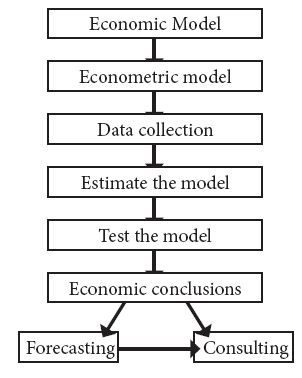
How an econometric model is done?
7.
Distinguish between linear and non linear correlation.
8.
General Utility Functions of RBI – Discuss.
9.
What are the items should not be included while estimating national income through income method?
10.
What are the five types of final goods and services that GNP includes?
11.
What are the limitations of accelerator.
12.
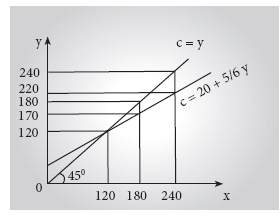
Given the diagram, write the proposition for consumptions function.
13.
Draw the diagram depicting the psychological law of consumption.
14.
What are the Merits of Socialism?
15.
Write the basis how Economies can be classified into different types.
16.
What are the objectives of Fiscal Policy?
17.
Write the measures to correct BOP Disequilibrium.
18.
List out the limitations of Modern Theory of International Trade?
19.
Write a note on Multiplier.
20.
Explain the uses of multiplier
21.
Mention the assumptions of multiplier.
22.
Explain NITI Aayog.
23.
Describe the three models of circular flow of income.
24.
Explain any three features of Capitalistic Economy.
25.
What are the major sectors benefitted from FDI in India?
1.
i. Till 1970, India stood fifth in the Fund and it had the power to appoint a permanent Executive Director. India has been one of the major beneficiaries of the Fund assistance.
ii. It has been getting aid from the various Fund Agencies from time to time and has been regularly repaying its debt.
iii. India’s current quota in the IMF is SDRs (Special Drawing Rights) 5,821.5 million, making it the 13th largest quota holding country at IMF with shareholdings of 2.44%.
iv. Besides receiving loans to meet deficit in its balance of payments, India has benefited in certain other respects from the membership of the Fund
2.
i) To promote international monetary cooperation among the member nations.
ii) To facilitate faster and balanced growth of international trade.
iii) To ensure exchange rate stability by curbing competitive exchange depreciations.
iv) To eliminate or reduce exchange controls imposed by member nations.
3.
(i) Money is anything that is generally accepted as a medium of exchange.
(ii) Money must be able to act as a medium of exchange, a store of value, and a unit of account. For money to act as a medium of exchange, sellers must generally accept and buyers must generally use it to pay for goods and services.
(iii) For money to serve as a store of value, it can be used to transport purchasing power from one period of time to another.
(iv) For money to serve as a unit of account, it must function as a consistent way of quoting prices.
(v) The primary function of money is to serve as a medium of exchange.
4.
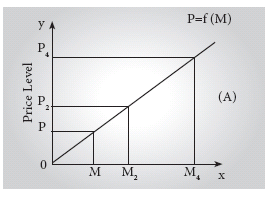
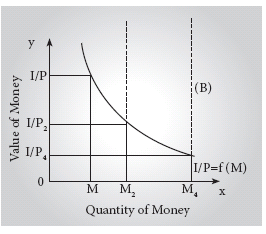
5.
(i) Money as a Store of value: Savings done in terms of commodities were not permanent. But, with the invention of money, this difficulty has now disappeared and savings are now done in terms of money.
(ii) Money as a Standard of Deferred Payments: Borrowing and lending were difficult problems under the barter system. In the absence of money, the borrowed amount could be returned only in terms of goods and services.
(iii) Money as a Means of Transferring Purchasing Power: The field of exchange also went on extending with growing economic development. The exchange of goods is now extended to distant lands.
6.
The following chart depicts how an economic model is done.
7.
Linear Correlation: Correlation is said to be linear when the amount of change in one variable tends to bear a constant ratio to the amount of change in the other.
Ex. Y= a + bx
Non Linear: The correlation would be non-linear if the amount of change in one variable
does not bear a constant ratio to the amount of change in the other variables.
Ex. Y= a + bx2
8.
| BASIS FOR COMPARISON | CURRENT ACCOUNT | CAPITAL ACCOUNT |
| Meaning | An account which records the export and import of merchandise and unilateral transfers done during the year by a nation are known as Current Account. | An account which records the trading of foreign assets and liabilities during the year by a country is known as Capital Account. |
| Reflects | Net Income of the country. | Net change in ownership in national assets. |
| Deals with | Receipt and disbursements of cash and noncapital items. | Sources and application of capital. |
| Components | Trade in goods and services, investment income, unrequited transfers. | Foreign Direct Investment, Portfolio Investment, Government loans etc. |
9.
1. Transfer payments are not to be included in estimation of national income as these payments are not received for any services provided in the current year such as pension, social insurance etc.
2. The receipts from the sale of second hand goods should not be treated as part of national income as they do not create new flow of goods or services in the current year.
3. Windfall gains such as lotteries are also not to be included as they do not represent receipts from any current productive activity.
4. Corporate profit tax should not be separately included as it has been already included as a part of company profit.
10.
(1) Value of final consumer goods and services produced in a year to satisfy the immediate wants of the people which is referred to as consumption (C);
(2) Gross private domestic investment in capital goods consisting of fixed capital formation, residential construction and inventories of finished and unfinished goods which is called as gross investment (I);
(3) Goods and services produced or purchased by the government which is denoted by (G) ; and
(4) Net exports of goods and services, i.e., the difference between value of exports and imports of goods and services, known as (X - M)
(5) GNP at market prices means the gross value of final goods and services produced annually in a country plus net factor income from abroad (C + I + G + (X - M) + (R - P)).
11.
1. The assumption of constant capitaloutput ratio is unrealistic.
2. Resources are available only before full employment.
3. Excess capacity in capital goods industries is assumed.
4. Accelerator will work only if the increased demand is permanent.
5. Accelerator will work only when credit is available easily.
6. If there is unused or excess capacity in the consumer goods industry, the accelerator principle would not work.
12.
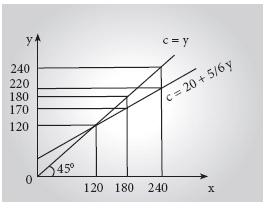
Proposition (1):
When income increases from 120 to 180 consumption also increases from 120 to 170 but the increase in consumption is less than the increase in income, 10 is saved.
Proposition (2):
When income increases to 180 and 240, it is divided in some proportion between consumption by 170 and 220 and saving by 10 and 20 respectively.
Proposition (3):
Increases in income to 180 and 240 lead to increased consumption 170 and 220 and increased saving 20 and 10 than before. It is clear from the widening area below the С curve and the saving gap between 45° line and С curve.
13.
14.
1. Reduction in Inequalities: No one is allowed to own and use private property to exploit others.
2. Rational Allocation of Resources: The central planning authority allocates the resources in a planned manner. Wastages are minimised and investments are made in a pre planned manner.
3. Absence of Class Conflicts: As inequalities are minimum, there is no conflict between rich and poor class. Society functions in a harmonious manner.
4. End of Trade Cycles: Planning authority takes control over production and distribution of goods and services. Therefore, economic fluctuations can be avoided.
5. Promotes Social Welfare: Absence of exploitation, reduction in economic inequalities, avoidance of trade cycles and increase in productive efficiency help to promote social welfare.
15.
1. Status of Development: Developed, underdeveloped, undeveloped and developing economies.
2. System of Activities: Socialistic and Mixed Economies.
3. Scale of Activities: Small and Large Economies.
4. Nature of Functioning: Static and Dynamic Economies.
5. Nature of Operation: Closed and Open Economies.
6. Nature of Advancement: Traditional and Modern Economies.
7. Level of National Income: Low Income, Middle Income and High Income Economiesapitalistic
16.
(i) Full employment
(ii) Price stability
(iii) Economic growth
(iv) Equitable distribution
(v) External stability
(vi) Capital formation
(vii) Regional balance
17.
(i) Depreciation
(ii) Devaluation
(iii) Import Control
(iv) Export Promotion
(v) Exchange Controls
(vi) Production of Import Substitutes
(vii) Monetary Policy
(viii) Capital Import
18.
(i) Factor endowment of a country may change over time.
(ii) The efficiency of the same factor may differ in the two countries. For example: America may be labour scarce in terms of no. of workers
19.
(i) Multiplier expresses the relationship between an initial investment and the final increment in the GNP.
(ii) The magnified or amplified effect of initial investment on income is called as the multiplier effect.
(iii) Multiplier (K) = \(\frac{Change \ in \ equilibrium \ income}{Change \ in \ expenditure}\)
(or) K = \(\frac{ΔY}{ΔI}\) (or) K = \(\frac{1}{1-MPC}\) (or) \(\frac{1}{MPS}\)
20.
(i) Multiplier highlights the importance of investment in income and employment theory.
(ii) The process throws light on the different stages of trade cycle.
(iii) It also helps in bringing the equality between S and I.
(iv) It helps to reduce unemployment and achieve full employment.
21.
Keynes's theory of the multiplier works under certain assumptions.
(i) There is change in autonomous investment.
(ii) There is no induced investment.
(iii) The Marginal Propensity to Consume (MPC) is constant.
(iv) Consumption is a function of current income.
(v) No time lags in the multiplier-process.
(vi) Consumer goods are available in response to effective demand for them
(vii) There is a closed economy unaffected by foreign influences.
(viii) No changes in prices.
(ix) Less than full employment level in the economy.
22.
NIT! Aayog (National Institution for transforming India) was formed on 1st January, 2015 through a Union Cabinet resolution. NITI Aayog is a policy think-tank of the Government of India. It replaced the Planning Commission from 13th August, 2014. The Prime Minister. is the Chairperson of NITIAayog and Union Ministers will be Ex-officio members. The Vice-Chairman of the NITI Aayog is the functional head.
Functions of NITI Aayog
1. Cooperative and Competitive Federalism
2. Shared National Agenda
3. Decentralized Planning
4. Vision and Scenario Planning
5. Network of Expertise
6. Harmonization:
7. Conflict Resolution
8. Coordinating Interface with the World
9. Internal Consultancy
10. Capacity Building
11. Monitoring and Evaluation
23.
Two Sector Model:
It is for simple economy with households and firms
Three Sector Model:
It is for mixed and closed economy with households, firms and government.
Four Secto Model:
It is for an open economy with households, firms, government and rest of the world.
24.
(i) Private Ownership of Property and Law of Inheritance:
The basic feature of capitalism is that all resources namely, land, capital, machines, mines etc. are owned by private individuals. The owner has the right to own, keep, sell or use these resources according to his will. The property can be transferred to heirs after death.
(ii) Freedom of Choice and Enterprise:
Each individual is free to carry out any occupation or trade at any place and produce any commodity. Similarly, consumers are free to buy any commodity as per their choice.
(iii) Free Competition:
There is free competition in both product and factor market. The government or any authority cannot prevent firms from buying or selling in the market. There is competition between buyers and sellers.
25.
(i) Financial Sector (Banking and Non Banking)
(ii) Insurance
(iii) Telecommunication
(iv) Hospitality and Tourism
(v) Pharmaceuticals
(vi) Software and Information Technology

12th Standard Syllabus & Materials
12th Standard
TN 12th Computer Applications வலையமைப்பு வடமிடல் Sample Question Papers Study Material - QB365 Set A
NEW12th Standard
TN 12th Computer Applications களப்பெயர் முறைமை (DNS) Sample Question Papers Study Material - QB365 Set A
NEW12th Standard
TN 12th Computer Applications வலையமைப்பு எடுத்துக்காட்டுகள் மற்றும் நெறிமுறைகள் Sample Question Papers Study Material - QB365 Set A
NEW12th Standard
TN 12th Computer Applications கணினி வலையமைப்பு ஓர் அறிமுகம் Sample Question Papers Study Material - QB365 Set A



Tamilnadu Stateboard 12th Standard Subjects

Maths

Chemistry

Physics

Biology

Computer Science

Business Maths and Statistics
Economics

Commerce

Accountancy

History

Computer Applications
Biology
Computer Technology
Computer Applications
Computer Science
Business Maths and Statistics
Commerce
Economics
Maths
Chemistry
Physics
Computer Technology
History
Accountancy

Tamil

English

French
Tamilnadu Stateboard Standards



