
 100% FREE ACCESS
12th Standard Syllabus & Materials
12th Standard
TN 12th Computer Applications மின்னணு தரவு பரிமாற்றம் Sample Question Papers Study Material - QB365 Set A
NEW12th Standard
TN 12th Computer Applications மின் - வணிக பாதுகாப்பு அமைப்புகள் Sample Question Papers Study Material - QB365 Set A
NEW12th Standard
TN 12th Computer Applications மின்னணு செலுத்தல் முறைகள் Sample Question Papers Study Material - QB365 Set A
NEW12th Standard
TN 12th Computer Applications மின் - வணிகம் Sample Question Papers Study Material - QB365 Set A
NEW12th Standard
TN 12th Computer Applications திறந்த மூல கருத்துருக்கள் Sample Question Papers Study Material - QB365 Set A
NEW12th Standard
TN 12th Computer Applications வலையமைப்பு வடமிடல் Sample Question Papers Study Material - QB365 Set A

Published on: 18/06/2021
QB365 provides detailed and simple solution for every Creative Questions in class 12 Physics Subject. It will helps to get more idea about question pattern in
every Creative questions with solution.
Download Tamil Nadu 12th Standard Physics question papers, model tests, one-mark questions, important questions, and public exam papers in PDF format. Free study materials and answer keys for TN State Board students.
Questions + Answers key
Take MCQ Physics Test1.
What is meant by satellite communication? Give its applications.
2.
What is RADAR? Explain its function. State its applications
3.
For a BJT, the common - base current gain α = 0.98 and the collector base junction reverse bias saturation ICU = 0.6μA. This BJT is connected in the common emitter mode and operated in the active region with a base drive current ID= 20 μA. The collector current IC for this mode of operating is
4.
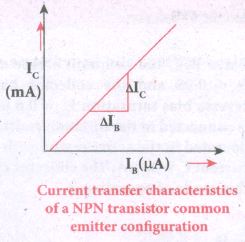
Explain current transfer characteristics.
5.
How does the change in temperature and application of electric field affect the behavior of materials and write the range of resistivity for each materials.
1.
(i) The satellite communication is a mode of transmission of signal between transmitter and receiver via satellite.
(ii) The message signal from the Earth station is transmitted to the satellite on board via an uplink (frequency band 6 GHz), amplified by a transponder and then retransmitted to another earth station via a downlink (frequency band 4 GHz).
Applications:
Satellites are classified into different types based on their applications.
(i) Weather Satellites:
They are used to monitor the weather and climate of Earth. By measuring cloud mass, these satellites enable us to predict rain and dangerous storms like hurricanes, cyclones etc.
(ii) Communication satellites:
They are used to transmit television, radio, internet signals etc. Multiple satellites are used for long distance communication
(iii) Navigation satellites:
These are employed to determine the geographic location of ships, aircraft or any other object.
2.
(i) Radar basically stands for Radio Detection and Ranging System.
(ii) It is one of the important applications of communication systems' and is mainly used to sense, detect, and locate distant objects like aircraft, ships, spacecraft, etc.
(iii) The angle, range, or velocity of the objects that are invisible to the human eye can be determined.
(iii) Radar uses electromagnetic waves for communication. The electromagnetic signal is initially radiated into space by an antenna in all directions.
(iv) When this signal strikes the targeted object, it gets reflected or reradiated in many directions.
(v) This reflected (echo) signal is received by the radar antenna which in turn is delivered to the receiver.
(vi) Then, it is processed and amplified to determine the geographical statistics of the object. The range is determined by calculating the time taken by the signal to travel from RADAR to the target and back.
Applications :
Radars find extensive applications in almost all fields.
(i) In military, it is used for locating and detecting the targets.
(ii) It is used in navigation systems such as ship borne surface search, air search and weapons guidance systems.
(iii) To measure precipitation .rate and wind speed in meteorological observations, Radars are used.
(iv) It is employed to locate and rescue people in emergency situations.
3.
α = 0.98
ICu = 0.6 μA
\(\alpha =\frac { \beta }{ 1+\beta } \)
(or)
\(0.98=\frac { 1 }{ \frac { 1 }{ \beta } +1 } \)
β = 49
ICEO = (1 + β)ICBO
= (1 + 49) x 0.6μA
ICEO = 30 μA
= (1 + 49) x 0.6 μA
ICEO = 30 μA
IC = βIB+ ICEO
= 49 x 20 μA + 30 μA
IC = 1.01 mA
4.
(i) This gives the variation of collector current (IC) with changes in base current (IB) at constant collector-emitter voltage (VCE).
(ii) It is seen that a small Ie flows even when IB is zero. This current is called the common emitter leakage current (ICEQ) which is due to the flow of minority charge carriers.
Forward current gain:
(i) The ratio of the change in collector current (ΔIC) to the change in base current (ΔIB) at constant collector-emitter voltage (VCE) is called forward current gain(β)
\(\beta ={ \left( \frac { \triangle { I }_{ C } }{ \triangle { I }_{ B } } \right) }_{ { V }_{ CE } }\)
(ii) It is value is very high and it generally ranges from 50 to 200. It depends on the construction of the transistors and will be provided by the manufacturer.
5.
Insulators
(i) The gap is very large that electrons from valence band cannot move into conduction band even on the application of strong external electric field or the increase in temperature.
(ii) The electrical conduction is not possible as the free electrons are almost nil.
(iii) Its resistivity is in the range of 1011 - 1019 Ωm
Metals
(i) Conduction becomes possible even at low temperatures.
(ii) The application of electric field provides sufficient energy to the electrons to drift in a particular' direction to constitute a current.
(iii) The resistivity value lies between 10-2 and 10-8Ωm
Semiconductors
(i) At a finite temperature, thermal agitations in the solid can break the covalent bond between the atoms.
(ii) This releases some electrons from valence band to conduction band
(iii) The resistivity value of semiconductors is from 10-5 to 10-6 Ωm
(iv) When the temperature is increased further, more number of electrons is promoted to the conduction band and increases the conduction.
(v) Thus, electrical conduction increases with the increase in temperature.

12th Standard Syllabus & Materials
12th Standard
TN 12th Computer Applications களப்பெயர் முறைமை (DNS) Sample Question Papers Study Material - QB365 Set A
NEW12th Standard
TN 12th Computer Applications வலையமைப்பு எடுத்துக்காட்டுகள் மற்றும் நெறிமுறைகள் Sample Question Papers Study Material - QB365 Set A
NEW12th Standard
TN 12th Computer Applications கணினி வலையமைப்பு ஓர் அறிமுகம் Sample Question Papers Study Material - QB365 Set A
NEW12th Standard
TN 12th Computer Applications PHP-உடன் MySQL-ஐ இணைத்தல் Sample Question Papers Study Material - QB365 Set A



Tamilnadu Stateboard 12th Standard Subjects

Maths

Chemistry
Physics

Biology

Computer Science

Business Maths and Statistics

Economics

Commerce

Accountancy

History

Computer Applications
Biology
Computer Technology
Computer Applications
Computer Science
Business Maths and Statistics
Commerce
Economics
Maths
Chemistry
Physics
Computer Technology
History
Accountancy

Tamil

English

French
Tamilnadu Stateboard Standards



