
 100% FREE ACCESS
12th Standard Syllabus & Materials
12th Standard
TN 12th Maths Applications of Matrices and Determinants Sample Question Papers Study Material - QB365 Set A
NEW12th Standard
TN 12th Computer Applications மின்னணு தரவு பரிமாற்றம் Sample Question Papers Study Material - QB365 Set A
NEW12th Standard
TN 12th Computer Applications மின் - வணிக பாதுகாப்பு அமைப்புகள் Sample Question Papers Study Material - QB365 Set A
NEW12th Standard
TN 12th Computer Applications மின்னணு செலுத்தல் முறைகள் Sample Question Papers Study Material - QB365 Set A
NEW12th Standard
TN 12th Computer Applications மின் - வணிகம் Sample Question Papers Study Material - QB365 Set A
NEW12th Standard
TN 12th Computer Applications திறந்த மூல கருத்துருக்கள் Sample Question Papers Study Material - QB365 Set A

Published on: 30/08/2020
12th Standard Physics English Medium Important 2 Mark Book Back Questions (New Syllabus) 2020
Download Tamil Nadu 12th Standard Physics question papers, model tests, one-mark questions, important questions, and public exam papers in PDF format. Free study materials and answer keys for TN State Board students.
Questions + Answers key
Take MCQ Physics Test1.
What is a photo cell? Mention the different types of photocells.
2.
Why steel is preferred in making Robots?
3.
Define electron motion in a semiconductor.
4.
What does RADAR stand for?
5.
What is the use of an erecting lens in a terrestrial telescope?
6.
What is isotope? Give an example.
7.
Mention the differences between interference and diffraction.
8.
What are the important points of wave theory of light?
9.
What is principle of reversibility?
10.
State Coulomb’s inverse law.
11.
What do you mean by resonant frequency?
12.
How is Eddy current produced? How do they flow in a conductor?
13.
Write down the integral form of modified Ampere’s circuital law.
14.
Define ‘electrostatic potential energy’.
15.
Write a short note on superposition principle.
16.
What is Peltier effect?
17.
What is electric power and electric energy?
18.
Distinguish between drift velocity and mobility.
19.
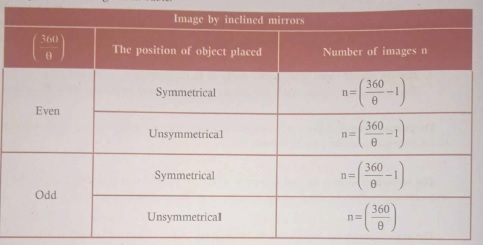
What are the chracteristics of the image formed by the plane mirror
1.
Photo cell is a device which converts light energy into electrical energy. It works on the principle of photo electric effect. When light is incident on photosensitive materials, their electric properties will get affected, based on which Photo cells are classified into three types. They are
(i) Photo emissive cell
(ii) Photo voltaic cell
(iii) Photo conductive cell
2.
Robots are automated machines which have many mechanical parts like wheels, arms, fingers, legs etc. Therefore a strong material is needed. For a given size, steel has several times stronger.
3.
(i) To move the hole in a given direction, the valence electrons move in the opposite direction.
(ii) Electrons flow in a N-type semiconductor is similar to electrons moving in a metallic wire.
(iii) The N- type dopant atoms will yield electrons available for conduction.
4.
RADAR stands for RAdio Detection And Ranging.
5.
A terrestrial telescope has an additional erecting lens to make the final image erect.
6.
Isotopes are atoms of the same element having same atomic number Z, but different mass number A.
(Ex: Hydrogen, \(_{ 1 }^{ 1 }{ H }\) ((hydrogen), \(_{ 1 }^{ 2 }{ H }\) (deuterium),and \(_{ 1 }^{ 3 }{ H }\) (tritium))
7.
| S.No |
Interference |
Diffraction |
|---|---|---|
| (i) | Superposition of two waves | Bending of waves around edges |
| (ii) | Superposition of waves from two coherent sources | Superposition wavefronts emitted from various points of the same wavefront. |
| (iii) | Equally spaced bright and dark fringes. | Central bright is double other the size of fringes. |
| (iv) | Equal intensity for all the bright fringes. | Intensity falls rapidly for higher order fringes. |
| (v) | Large number of fringes are obtained. | Less number of fringes are obtained. |
8.
Wave theory of light:
(i) According to Huygen's wave theory, light is propagated in the form of longitudinal waves through an invisible elastic medium called ether, which pervades all space.
(ii) Later Fresnel and Young suggested that light waves are transverse. Wave theory could satisfactorily explain reflection, refraction, interference diffraction and polarisation.
(iii) According to this theory, the velocity of light in a denser medium is lesser than that in a rarer medium.
9.
The principle of reversibility states that light will follow exactly the same path if its direction of travel is reversed.
10.
Coulomb's inverse square law states that the force of attraction or repulsion between two magnetic poles is directly proportional to the product of their pole strengths and inversely proportional to the square of the distance between them.
\(\vec { F } =k \frac { { q }_{ m_{A} }{ q }_{ m_{B} } }{ { r }^{ 2 } } \hat { r } \)
11.
Resonant frequency is the frequency of the applied alternating source at which the current in the circuit reaches its maximum value.
12.
Even for a conductor in the form of a sheet or plate, an emf is induced when magnetic flux linked with it changes. But the difference is that there is no definite loop or path for induced current to flow away. As a result, the induced currents flow in concentric circular paths. As these electric currents resemble eddies of water, these are known as Eddy currents. They are also called Foucault currents.
13.
\(\oint _l\vec{B} \cdot \overrightarrow{d l}=\mu_{o} i_{\text {c }}+\mu_{o} \varepsilon_{o} \frac{d}{d t} \oint _s \vec{E} \cdot \overrightarrow{d A}\)
14.
Electrostatic potential energy is the work done to assemble the charges at the given locations brought from infinity. If q1 and q2 are the charges to be assembled with a separation of distance r, the electric potential energy is, \(U=\frac{1}{4\piε_o}\frac{q_1q_2}{r}\)
15.
It there are more than two charges, the total force acting on a given charge is equal to the vector sum of forces exerted on it by all the other charges.
Consider a system of n charges namely q1, q2, q3 ...qn. The force on q1 exerted by the charge q2 is \(\overrightarrow{F_{12}}=k \frac{q_{1} q_{2}}{r_{21}^{2}} \hat{r}_{21}\) .
The force on q1 exerted by the charge q3 is \(\overrightarrow{F_{13}}=k \frac{q_{1} q_{3}}{r_{31}^{2}} \hat{r}_{31}\)
By continuing this, the total force acting on the charge q1 due to all other charges is given by
\( \vec{F}_{1}^{\text { tot }}=\overrightarrow{F_{12}}+\overrightarrow{F_{13}}+\overrightarrow{F_{14}}+\ldots+\vec{F}_{1 n} \)
\(\vec{F}_{1} ^{\text { tot }}=k\left\{\frac{q_{1} q_{2}}{r_{21}^{2}} \hat{r}_{21}+\frac{q_{1} q_{3}}{r_{31}^{2}} \hat{r}_{31}+\frac{q_{1} q_{4}}{r_{41}^{2}} \hat{r}_{41}+\ldots+\frac{q_{1} q_{n}}{r_{n 1}^{2}} \hat{r}_{n 1}\right\}\)
16.
Peltier discovered that, when an electric current is passed through a circuit of a thermocouple heat is evolved at one junction and absorbed at the other junction. This is known as Peltier effect.
17.
Electric power:
(i) The electric power P is the rate at which the electrical potential energy is delivered.
(ii) The electric power P is the rate at which the work is done.
\( P= \frac{d U}{d t} (or)= \frac{d W}{d t} (or)=VI(or)\frac{V^2}{R}\)
Unit: watt (W)
Electric energy:
(i) The electric energy is the product of power (P) and duration of the time (t) when electric energy is delivered.
(ii) E = Pt
Unit: watt-hour (Wh)
18.
| S.No | Drift velocity | Mobility |
| (i) | Drift velocity is the average velocity acquired by the electrons inside the conductor when it is subjected to an electric field. | Mobility is defined as the magnitude of the drift velocity per unit electric field. |
| (ii) | Vd = a\(\tau\) (or) Vd = μE. | μ =e\(\tau\)/m (or) u = vd/E. |
| (iii) | Its unit is m / s. | Its unit is m2/ Vs. |
19.
(i) The image formed by a plane mirror is virtual, erect, and laterally inverted.
(ii) The size of the image is equal to the size of the object.
(iii) The image distance behind the mirror is equal to the object distance in front of the mirror.
(iv) If an object is placed between two plane mirrors inclined at an angle 0, then the number or
images n formed is given in Table.

12th Standard Syllabus & Materials
12th Standard
TN 12th Computer Applications வலையமைப்பு வடமிடல் Sample Question Papers Study Material - QB365 Set A
NEW12th Standard
TN 12th Computer Applications களப்பெயர் முறைமை (DNS) Sample Question Papers Study Material - QB365 Set A
NEW12th Standard
TN 12th Computer Applications வலையமைப்பு எடுத்துக்காட்டுகள் மற்றும் நெறிமுறைகள் Sample Question Papers Study Material - QB365 Set A
NEW12th Standard
TN 12th Computer Applications கணினி வலையமைப்பு ஓர் அறிமுகம் Sample Question Papers Study Material - QB365 Set A



Tamilnadu Stateboard 12th Standard Subjects

Maths

Chemistry
Physics

Biology

Computer Science

Business Maths and Statistics

Economics

Commerce

Accountancy

History

Computer Applications
Biology
Computer Technology
Computer Applications
Computer Science
Business Maths and Statistics
Commerce
Economics
Maths
Chemistry
Physics
Computer Technology
History
Accountancy

Tamil

English

French
Tamilnadu Stateboard Standards

