
 100% FREE ACCESS
6th Standard CBSE Syllabus & Materials
6th Standard CBSE
CBSE 6th Social Science The Value of Work - New Sample Question Papers Study Material - QB365 Set A
NEW6th Standard CBSE
CBSE 6th Social Science Family and Community - New Sample Question Papers Study Material - QB365 Set A
NEW6th Standard CBSE
CBSE 6th Social Science India's Cultural Roots - New Sample Question Papers Study Material - QB365 Set A
NEW6th Standard CBSE
CBSE 6th Social Science India,That is Bharat - New Sample Question Papers Study Material - QB365 Set A
NEW6th Standard CBSE
CBSE 6th Social Science Timeline and sources of history - New Sample Question Papers Study Material - QB365 Set A
NEW6th Standard CBSE
CBSE 6th Social Science Oceans and Continents - New Sample Question Papers Study Material - QB365 Set A

Published on: 21/10/2019
GEO - India: Climate, Vegetation and Wildlife
Download CBSE Class 6th Standard CBSE Social Science question papers, sample papers, important questions, and previous year solved papers in PDF format. Get free study materials, NCERT solutions, and exam preparation resources for Class 6th Standard CBSE Social Science
Questions + Answers key
Take MCQ Social Science Test
1.
What are the steps taken by the government to protect wildlife?
2.
Distinguish between Advancing Monsoon and Retreating Monsoon
3.
Explain the different types of vegetation found in India
4.
Describe the major seasons of India.
5.
Write a few lines on the wildlife of India
6.
See the picture and answer the following questions.
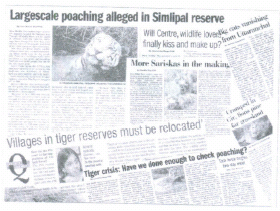
(i) Why do poachers kill tigers? What will happen if tigers vanish from our forests? Have you ever visited any tiger reserve or a zoo where tigers are kept?
7.
See the below picture and answer the following questions.
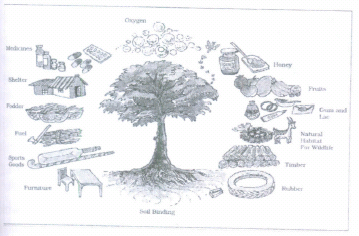
(i) Why are forests called life saver?
(ii) What do we get from forests?
8.
Discuss wildlife of India.
9.
Discuss the different types of vegetation found in India.
10.
Discuss the different types of seasons found in India.
1.
The government has taken many steps to preserve wildlife like:
(i) Many national parks, wild sanctuaries, zoological gardens have been set up
(ii) Hunting of animals has been banned.
(iii) The government has started many projects, such as Project Tiger, Project Elephant, etc
(iv) It is also observes Wildlife Week to create awareness among the People.
2.
| S.No | Advancing Monsoon | Retreating Monsoon |
|---|---|---|
| i. | They mark the onset of monsoon | They mark the going back of monsoon |
| ii. | The winds move from the sea towards the land. | The winds move from the land towards the sea. |
| iii. | They carry moisture with them. | They are dry in nature |
| iv. | They bring rainfall for the whole country | They bring rainfall for TamilNadu. |
3.
(i) Tropical Rain Forest: Tropical Rain Forests thrive in the areas which receive heavy rainfall. They are so dense that sunlight doesn't reach the ground. Many species of trees are found in these forests, which shed their leaves at different times of the year. As a result, they always appear green and are called evergreen forests. Important trees found in these forests are mahogany, ebony and rosewood. Andaman and Nicobar Islands, parts of the North-Eastern states and a narrow strip of the Western slope of the Western Ghats are homes of these forests.
(ii) Tropical Deciduous Forest: In a large part of our country, we have this type of forest. These forests are also called monsoon forests. They are less dense. They shed their leaves at a particular time of the year. Important trees of these forests are sal, teak, peepal, neem and shisham. They are found in Madhya Pradesh, Uttar Pradesh, Bihar, Jharkhand, Chhattisgarh, Odisha and in parts of Maharashtra.
(iii) Thorny Bushes: This type of vegetation is found in the dry areas of the country. The leaves are in the form of spines to reduce the loss of water. Cactus, khair, babool, keekar are important trees which are found in the states of Rajasthan, Punjab, Haryana, eastern slopes of the Western Ghats and Gujarat.
(iv) Mountain Vegetation: A wide range of species is found in the mountains according, to the variation in height. With increase in height, the temperature falls. At a height between 1500 meters and 2500 meters, most of the trees are conical in shape. These trees are called coniferous trees. Chir, pine and deodar are the important trees of these forests.
(v) Mangrove Forests: These forests can survive in saline water. They are found mainly in Sunderbans in West Bengal and in the Andaman and Nicobar Islands. Sundari is a well-known species of trees found in mangrove forests after which Sunderbans has been named.
4.
(i) Cold Weather Season or Winter: During the winter season, cool, dry winds blow from North to South. The sun rays do not fall directly in the region and as a result, temperature is quite low in Northern India.
(ii) Hot Weather Season or Summer: In the hot weather season, sun rays more or less directly fall in this region. Temperature becomes very high. Hot and dry winds called 100, blow during the day.
(iii) South-West Monsoon Season or Rainy Season: This season is marked by the onset and advance of monsoon. The monsoon winds blow from the Arabian Sea and Bay of Bengal towards the land. They carry moisture with them. When these winds strike the mountain barriers, rainfall occurs.
(iv) Season of Retreating Monsoons or Autumn: Winds move back from the mainland to the Bay of Bengal. This is the season of the retreating monsoons. The southern parts of India, particularly Tamil Nadu and Andhra Pradesh receive rainfall in this season.
5.
There are thousands of species of animals and a large variety of reptiles, amphibians, mammals, birds, insects and worms which dwell in the forest of India.
(i) The tiger is our national animal. It is found in various parts of the country. Gir forest in Gujarat is the home of Asiatic lions.
(ii) Elephants and one-horned rhinoceroses roam in the forests of Assam. Elephants are also found in Kerala and Karnataka.
(iii) Camels and wild asses are found in the Great Indian desert and the Rann of Kuchchh.
(iv) Wild goats, snow leopards, bears, etc. are found in the Himalayan region.
(v) Besides these, many other animals are found in our country such as monkey, wolf, jackal, nilgai, cheetah, etc.
(vi) There are several hundreds of species of snakes found in India. Cobras and kraits are important among them. India is equally rich in bird life.
(vii) The peacock is our national bird. Other common birds are parrots, pigeons, mynah, geese, bulbul and ducks.
(viii) There are several bird sanctuaries which have been formed to give birds their natural habitat. These provide the birds with protection from hunters.
6.
Poachers kill tigers for their fur, bones, whiskers and other body parts. All species big or small have to play their role in maintaining the ecosystem. If tigers will vanish from our forests, this will disturb the whole ecosystem. Yes, I have visited Gir forest in Gujarat.
7.
(i) Forest gives us oxygen to breathe, and absorbs carbon dioxide.
(ii) We get medicine, wood, fuel etc from forests.
8.
Forests are home to a variety of wildlife. There are thousands of species of animals and a large variety of reptiles, amphibians, mammals, birds, insects and worms which dwell in the forest. The tiger is our national animal. It is found in various parts of the country. Gir forest in Gujarat is the home of Asiatic lions.
Elephants and one-horned rhinoceroses roam in the forests of Assam. Elephants are also found in Kerala and Karnataka. Camels and wild asses are found in the the Great Indian desert and the Rann of Kuchchh. India is equally rich in bird life. The peacock is our national bird. There are several bird sanctuaries which have been created to give birds their natural habitat.
9.
Vegetation of India can be divided into five types:
Tropical rain forest It occurs in the areas which receive heavy rainfall and are so dense that sunlight doesn't reach the ground. Andaman and Nicobar Islands, parts of North-Eastern states and a narrow strip of the Western
slope of the Westen Ghats are home of these forests.
Tropical deciduous forests These are also called monsoon forests and cover a large part of the country. They shed their leaves at a particular time of the year. Sal, teak, peepal, neem and shisham are important trees
of these forests.
Thorny bushes This type of vegetation is found in dry areas of the country, i.e. Rajasthan, Punjab, Haryana, Eastern slopes of Western Ghats and Gujarat.
Mountain vegetation A wide range of species is found in the mountains according to the variation in height.
Mangrove forests These forests are found mainly in Sunderbans in West Bengal and in the Andaman and Nicobar Islands.
10.
Broadly. the major seasons recognised in India are:
Cold Weather Season (Winter) December to February: During the winter season. cool. dry winds blow from North to South.
Hot Weather Season (Summer) March to May: In the hot weather season, sun rays more or less directly fall in this region.
South-West Monsoon Season (Rainy) June to September: This season is marked by the onset and advance of monsoon. The winds blow from Arabian Sea and Bay of Bengal towards the land.
Season of Retreating Monsoon (Autumn) October and November: Winds move back from the mainland to the Bay of Bengal. This is the season of the retreating monsoons.

6th Standard CBSE Syllabus & Materials
6th Standard CBSE
CBSE 6th Social Science Locating Places on the Earth - New Sample Question Papers Study Material - QB365 Set A
NEW6th Standard CBSE
CBSE 6th Science A Journey Through States of Water - New Sample Question Papers Study Material - QB365 Set A
NEW6th Standard CBSE
CBSE 6th Science Temperature and its Measurement - New Sample Question Papers Study Material - QB365 Set A
NEW6th Standard CBSE
CBSE 6th Science Materials Around Us - New Sample Question Papers Study Material - QB365 Set A



CBSE 6th Standard CBSE Subjects
CBSE Standards




