
 100% FREE ACCESS
6th Standard Syllabus & Materials
6th Standard
TN 6th Tamil பருவம் 1 - இயல் 1 - மொழி -தமிழ்த்தேன் - இன்பத்தமிழ் Sample Question Papers Study Material - QB365 Set A
NEW6th Standard
TN 6th English T1 - Supplementary - The Apple Tree and The Farmer Sample Question Papers Study Material - QB365 Set A
NEW6th Standard
TN 6th English T1 - Prose - When The Trees Walked Sample Question Papers Study Material - QB365 Set A
NEW6th Standard
TN 6th Social Science T3 - CIV - Road Safety Sample Question Papers Study Material - QB365 Set A
NEW6th Standard
TN 6th Social Science T3 - CIV - Local Bodies - Rural and Urban Sample Question Papers Study Material - QB365 Set A
NEW6th Standard
TN 6th Social Science T3 - CIV - Democracy Sample Question Papers Study Material - QB365 Set A

Published on: 22/09/2018
Important Five Mark Question Paper
Download Tamil Nadu 6th Standard Social Science question papers, model tests, one-mark questions, important questions, and public exam papers in PDF format. Free study materials and answer keys for TN State Board students.
Questions + Answers key
Take MCQ Social Science Test
1.
Why are the Red Sea, Dead Sea and Black Sea named so?
2.
You know the importance of conservation of forests. Do you think conservation of mountains is also equally important?
3.
December 11 International Mountain Day.
4.
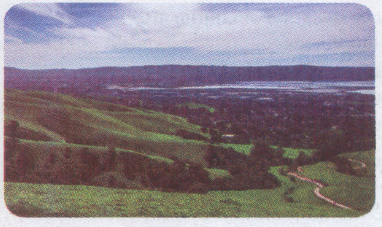
1. Name the landform.
2. What order of a landform is this?
3. Which activity of river is this landform formed by?
5.
Look at the picture and answer the questions given below.
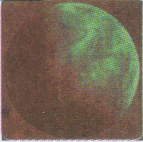
a) Identify the planet
b) What is the colour of the planet?
c) Why is it of this colour?
6.
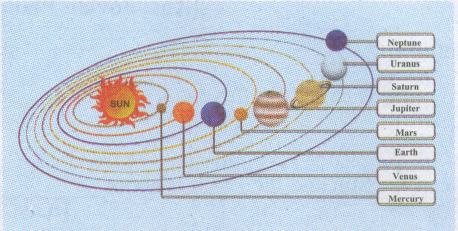
Study the picture and answer the given questions.
a. Which is the closest planet to the Sun?
b. Which is the largest planet?
c. Which is the fart~est planet from the Sun?
d. Which is the second smallest planet?
7.
Can you guess what happened to the Harappan?
8.
Many pottery and its pieces have been discovered from Indus sites. What do you know from that?
9.
Agriculture was one of their occupations. How can you prove this? (with findings)
10.
What are the causes of Prejudice?
11.
Explain Linguistic diversity and cultural diversity.
12.
Mention the classification of land forms.
13.
Distinguish between inner and outer planets.
1.
(i) Red Sea - It is named Red sea because it contains a Cyanobacteria which turns the normally blue-green water a reddish one. It gets connected to the ocean without even one river meeting the sea.
(ii) Black Sea - The Black Sea was first named by the ancient greeks as in hospitable sea. The sea got this reputation because it was different to navigate and hostile tribes inhabited its shores. After the successful development of the coast by the Greek colonists, the sea was named hospitable sea.
(iii) Dead Sea - The Dead Sea is roughly 8.6 times saltier than the ocean. This salinity makes for a harsh environment in which animals cannot flourish.
2.
(i) Mountains make up more than a quarter of the planet's land mass. These surfaces provide resources for nearly 700 million people through out the world.
(ii) Mountains provide energy resources, food and water to people all around the world.
(iii) But climate change could cause mountains to shrink.
(iv) Deforestation has also been a threat while natural disasters often damage many mountains.
(v) Mountains are among the most beautiful land masses in the world. So like conservation of forests, conservation of mountains also equally important.
3.
Prepare slogans, posters and placards to celebrate International Mountain Day.
(i) "Mountains are among the most beautiful land masses in the world."
(ii) "Mountains are beautiful as they rise up above the clouds and show just how grand the world can be."
(iii) "Great things are done when men and mountains meet."
(iv) "How glorious a greeting the Sun gives the mountains."
(v) "Mountains are earth's undecaying monuments."
(vi) "The mountains, forests and seas render men savage, they develop fierce, but yet do not destroy the human. "
(vii) "Men stumble over pebbles, never over mountains."
(viii) "Each fresh peak ascended teaches something."
(ix) "Mountains are the beginning and end of all natural scenery."
(x) "He who climbs upon the highest mountains laughs at all tragedies, real or imaginary.
4.
1. Valley
2. Third Order
3. Erosion
5.
a) Uranus
b) Green
c) Due to the presence of methane
6.
a. Mercury
b. Jupiter
c. Uranus
d. Mars
7.
(i) By 1800 BCE, the Harappan culture had started declining.
(ii) It is assumed that the civilization met with
(a) repeated floods
(b) ecological changes
(c) invasions
(d) natural calamity
(e) climatic changes
(f) deforestation
(g) an epidemic might have disturbed the civilization.
8.
(i) The main occupation one of the Indus Civilisation people is pottery.
(ii) People of those times know how to use the potter's wheel
(iii) Pottery was practiced using the potter's wheel.
(iv) It was well fired.
(v) Potteries were red in colour with beautiful designs in black.
(vi) They know the uses of colour painting.
9.
Agriculture was one of their occupation:
(i) Granaries were used to store food grains.
(ii) The remains of wheat, barley, millets, sesame and pulses have been found there.
(iii) A granary with walls made of mud bricks, which are still in a good condition, has been discovered in Rakhigarhi, a village in Haryana, belonging to mature Harappan phase.
10.
Some common social factors. that contributes to the rise of prejudice are
(i) Socialisation
(ii) Conforming behaviours
(iii) Economic benefits
(iv) Authorita, rian personality
(v) Ethno-cntrism
(vi) Group losure
(vii) Conflicts
11.
(i) According to census of India 2001, India has 122 major languages and 1599 other languages.
(ii) Four major Indian language families are Indo-Aryan, Dravidian, Austroasiatic, and Sino Tibetian. Tamil is the oldest Dravidian language.
(iii) Historically, the Portuguese, the Dutch, the British, the Danish and the French came to India for trade and their occupation of India or some parts of it has left behind a certain impact upon the culture and language of the people.
(iv) Because the British ruled over the entire country for over three hundred years before independence in 1947, the English language gained prominence in India. In due course, English has emerged as an important language and a medium of instruction in schools and colleges.
(v) It is widely used in official communication and daily life.
Cultural Diversity :
(i) The term 'culture' refers to customs and practices of people, their language, their dress code, cuisine, religion, social habits, music, art, and architecture.
(ii) The culture of a group of people is reflected in their social behavior and interactions.
(iii) The group identity fostered by social patterns is unique to a group.
(iv) Art and architecture are an integral part of every community.
(v) It develops as a part of culture and tradition of a community.
(vi) Each of the 29 states and 7 Union territories of India has rich traditions and unique ways of artistic expression.
12.
CLASSIFICATION OF LAND FORMS:
First Order:
Continents: The vast land masses on earth are called continents.
Oceans: Oceans are vast expanse of water.
Second Order:
Mountains: A landform that rises 600 metre above its surroundings and has steep slopes is called a mountain.
Plateaus: Plateaus are the elevated portions of the earth that have flat surfaces bounded by steep slopes.
Plains: Plains are a flat and relatively low lying lands.
Third Order:
(i) Third order landforms are formed on Mountains, plateaus, and plains mainly by erosional and depositional activities of rivers, glaciers, winds and waves.
(ii) Valleys, beaches and sand dunes are some examples of the third order landforms.
13.
| S.No | Inner planets | Outer planets |
| 1 | The four planets nearer to the sun are called Inner or Terrestrial planets. |
The last four plangts are called as Outer planets of Jovian planets. |
| 2 | Mercury, venus, earth and mars. | Jupiter, Saturn, Uranus and Neptune. |
| 3 | The inner planets are comparatively smaller in size and are compased of rocks |
They are also called Gaseous Giants. |
| 4 | The surface of inner planets has mountains, volcanoes and craters |
An asteriod belt is found between mars and jupiter. |

6th Standard Syllabus & Materials
6th Standard
TN 6th Social Science T3 - GEO - Understanding Disaster Sample Question Papers Study Material - QB365 Set A
NEW6th Standard
TN 6th Social Science T3 - GEO - Globe Sample Question Papers Study Material - QB365 Set A
NEW6th Standard
TN 6th Social Science T3 - GEO - Asia and Europe Sample Question Papers Study Material - QB365 Set A
NEW6th Standard
TN 6th Social Science T3 - HIS - South Indian Kingdoms Sample Question Papers Study Material - QB365 Set A



Tamilnadu Stateboard 6th Standard Subjects
Tamilnadu Stateboard Standards



