
 100% FREE ACCESS
6th Standard CBSE Syllabus & Materials
6th Standard CBSE
CBSE 6th Social Science The Value of Work - New Sample Question Papers Study Material - QB365 Set A
NEW6th Standard CBSE
CBSE 6th Social Science Family and Community - New Sample Question Papers Study Material - QB365 Set A
NEW6th Standard CBSE
CBSE 6th Social Science India's Cultural Roots - New Sample Question Papers Study Material - QB365 Set A
NEW6th Standard CBSE
CBSE 6th Social Science India,That is Bharat - New Sample Question Papers Study Material - QB365 Set A
NEW6th Standard CBSE
CBSE 6th Social Science Timeline and sources of history - New Sample Question Papers Study Material - QB365 Set A
NEW6th Standard CBSE
CBSE 6th Social Science Oceans and Continents - New Sample Question Papers Study Material - QB365 Set A

Published on: 24/10/2025
Download CBSE Class 6th Standard CBSE Mathematics question papers, sample papers, important questions, and previous year solved papers in PDF format. Get free study materials, NCERT solutions, and exam preparation resources for Class 6th Standard CBSE Mathematics
Questions + Answers key
Take MCQ Mathematics Test
1.
Draw a figure on the ground in the form of a horizontal number line as shown below. Frame questions as given in the above example and ask your friends.

Few questions framed are as follows:
1. Go 4 steps to the right of o.
2. Go 5 steps to the left of o.
3. Go 6 steps to the right of 0 and then go 4 steps further from there to the left.
4. Go 5 steps to the left of 0 and then go 1 step further from there to the left.
5. Go 8 steps to the right of 0 and then go 6 steps further from there to the left.
6. Go 4 steps to the left of 0 and then go 3 steps further from there to the right.
2.
Find the sum of the smallest even positive integer and the greatest negative integer.
3.
Is it possible to find integers, which are less than - 3 and greater than -1? Write down the integers, if any.
4.
Find the value of -7 -(- 7) -2 +|-2|
5.
Temperature of a place at 12: 00 noon was +5°C. Temperature increased by 3°C in first hour and decreased by 1°C in the second hour. What was the temperature at 2 : 00 pm?
6.
Write six distinct integers, whose sum is 7.
7.
Write the opposite of each of the following.
(a) Decrease in size
(b) Failure
(c) Profit of Rs10
(d) 1000 AD
(e) Rise in water level
(f) 60 km South
(g) 10m above the danger mark of river Ganga.
(h) 20 m below the danger mark of the river Brahmaputra.
(i) Winning by a margin of 2000 votes.
(j) Depositing Rs 100 in the Bank account.
(k) 20°C rise in temperature.
8.
If we denote the height of a place above sea level by a positive integer and depth below the sea level by a negative integer, write the following using integers with the appropriate signs:
(a) 200 m above sea level
(b) 100 m below sea level
(c) 10 m above sea level
(d) sea level
9.
Adjacent figure is a vertical number line, representing integers. Observe it and locate the following points.
(a) If point D is + 8, then which point is -8?
(b) Is point G, a negative integer or a positive integer?
(c) Write integers for points B and E.
(d) Which point marked on this number line has the least value?
(e) Arrange all the points in decreasing order of value?

10.
Mark -3, 7, -4, -8, -1 and 3 on the number line.
1.
1. +4
2. -5
3. (+ 6) + (- 4) = + 2
4. (-5)+(-1)=-6
5. (+8)+(-6)=+2
6. (-4)+(+3)=-1
2.
1
3.
No, there are no such integers, which are less than - 3 and greater than -1.
4.
0
5.
Given, initial temperature at 12:00 noon was +5°C. Since, the temperature increased by 3°C in first hour.
∴ Temperature at 1: 00 pm = 5°C + 3° C 8°C
Also, the temperature decreased by 1°C in the second hour.
∴ Temperature at 2: 00 pm = 8°C - 1°C= 7°C
Hence, the temperature at 2 : 00 pm is 7°C
6.
Let the six integers be 1, 2, -2, 3, -3 and 6.
Now, sum of the above integers
= 1+ 2 + (-2) + 3 + (-3) + 6
We can arrange the numbers, so that the positive integers and the negative integers are grouped together.
We have, 1+ 2 + 3 + 6 + (-2) + (-3) = 12 - 2 - 3 = 12 - 5 = 7
Hence, required integers are 1, 2, -2, 3, -3 and 6.
Note There are infinite combinations exist.
7.
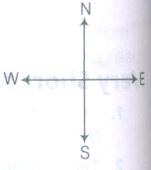
(a) Increase in size
(b) Success
(c) loss of Rs 10
(d) 1000 BC
(e) Fall in water level
(f) 60 km North
(g) 10 m below the danger mark of the river Ganga.
(h) 20 m above the danger mark of the river Brahmaputra.
(i) Losing by a margin of 2000 votes.
(j) Withdrawing Rs 100 from the Bank account.
(k) 20° C fall in temperature.
8.
(a) 200 m above sea level = + 200 m
(b) 100 m below sea level = -100 m
(c) 10 m above sea level = +10 m
(d) Sea level = 0
9.
(a) Now, from the figure, it is clear that +8 is on point D, then forgetting - 8, we should move below to O. After moving 8 steps below 0, we reach at point F So, point F represents - 8.
(b) We know that, points lie above zero are positive integers and lie below zero are negative integers. Here, we see that point G lies below zero. So, G is a negative integer.
(c) On the given number line, point B lies above zero and point E lies below zero. So, it is clear that point B is a positive integer and point E is a negative integer. Now, counting from 0, the distance of B = +4 units, because it is on right of zero and counting from 0, the distance of E = -10 units because it is on left of zero.
∴ Integer B = + 4 and integer E = -10
(d) Here, we see that the distance of point E is far from 0 and below from 0 and we know that on vertical number line below from 0 the value of integers are negative. Hence, point E has the least value.
(e) We know that, on a number line the number decreases as we move to left. Here, vertical number line is given to us, so the number decreases as we move to down. So, decreasing order of values of all points is given here. D, C, B, A, O, H, G, F, E
10.
Draw a line and mark some points at equal distance on it as shown in the figure given below. Mark a point on it as zero. Points to the right of zero are positive integers and marked by +1, + 2, +3 erc., or simply 1, 2, 3 etc and points to the left of zero are negative integers and marked by -1, - 2, - 3 etc. Now, - 3 is a negative integer (since, - 3 has negative sign). So, move 3 points to the left of zero and represent it by point C. 7 is a positive integer (since + 7 has positive sign). So, move 7 points to the right of zero and represent it by point F. To mark - 4 on this line, move 4 points to the left of zero and represent it by point B. To mark - 8, on this line, move 8 points to the left of zero and represent it by point A. To mark - 1 on this line, move 1 point to the left of zero and represent it by point D. To mark 3 on this line, move 3 points to the right of zero and represent it by point E. Thus, we get the following representation of these integers on the number line:


6th Standard CBSE Syllabus & Materials
6th Standard CBSE
CBSE 6th Social Science Locating Places on the Earth - New Sample Question Papers Study Material - QB365 Set A
NEW6th Standard CBSE
CBSE 6th Science A Journey Through States of Water - New Sample Question Papers Study Material - QB365 Set A
NEW6th Standard CBSE
CBSE 6th Science Temperature and its Measurement - New Sample Question Papers Study Material - QB365 Set A
NEW6th Standard CBSE
CBSE 6th Science Materials Around Us - New Sample Question Papers Study Material - QB365 Set A



NCERT Books

Syllabus

Exam Pattern

Sample Question Papers

Previous year Question Papers

Important Notes

MCQ Practice test

NCERT Exemplers

Case study Questions

Image Based Questions

Passage based Questions

HOT Questions

Value Based Questions

Model Questions Papers
NCERT ( Book Back ) Questions

Assertion and Reason
Important Questions And Answers

CBSE 6th Standard CBSE Subjects
CBSE Standards


