
 100% FREE ACCESS
6th Standard CBSE Syllabus & Materials
6th Standard CBSE
CBSE 6th Social Science The Value of Work - New Sample Question Papers Study Material - QB365 Set A
NEW6th Standard CBSE
CBSE 6th Social Science Family and Community - New Sample Question Papers Study Material - QB365 Set A
NEW6th Standard CBSE
CBSE 6th Social Science India's Cultural Roots - New Sample Question Papers Study Material - QB365 Set A
NEW6th Standard CBSE
CBSE 6th Social Science India,That is Bharat - New Sample Question Papers Study Material - QB365 Set A
NEW6th Standard CBSE
CBSE 6th Social Science Timeline and sources of history - New Sample Question Papers Study Material - QB365 Set A
NEW6th Standard CBSE
CBSE 6th Social Science Oceans and Continents - New Sample Question Papers Study Material - QB365 Set A

Published on: 24/10/2025
Download CBSE Class 6th Standard CBSE Science question papers, sample papers, important questions, and previous year solved papers in PDF format. Get free study materials, NCERT solutions, and exam preparation resources for Class 6th Standard CBSE Science
Questions + Answers key
Take MCQ Science Test
1.
Differentiate between a shadow and an image.
2.
Bones are hard structures and cannot be bent. But we can still bend our elbow, knee, etc. How is this possible?
3.
What is the functions of a stem in a plant?
4.
Explain the adaptations of birds for flying in the air.
5.
Shadow of flying aeroplane cannot be seen on the earth. Explain why.
6.
Identify the kind of stem in the following plants.
(a) Money plant (b) Bean stalk (c) Gourd plants (d) Grapevines
7.
All plants are of same size. Do you agree?
8.
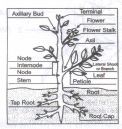
Draw a labelled diagram of a plant.
9.
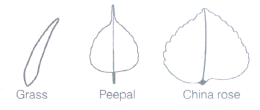
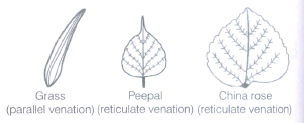
Draw the veins of leaves given in figure below and write the type of venation.
10.
Observe figure and attempt the questions that follow it.
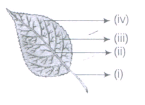
(a) Label the parts (i), (ii), (iii) and (iv) in the figure.
(b) What type of venation does the leaf has?
(c) What type of venation is seen in grass leaves?
11.
Bouncing back of ray of light from shining surface on which it was incident is known as
refraction
bending
reflection
dispersion
12.
Which of the following is not always necessary to observe a shadow?
Sun
Screen
Source of light
Opaque object
13.
Four students A, B, C, and D looked through pipes of different shapes to see a candle flame as shown in the figure.
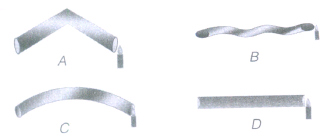
Who will be able to see the candle flame clearly?
A
B
C
D
14.
Underwater divers wear fin-like flippers on their feet to
swim easily in water
look like a fish
walk on water surface
walk over the bottom of the sea (sea bed)
15.
The organ that protects the main nerve cord is
skull
backbone
breast bone
chest bone
16.
The plant which cannot be classified as a shrub is
jasmine
Bougainvillea
carrot
Croton
17.
Which of the following is not a correct match?
Petiole: attaches leaf to stem
Lamina: green flat part of leaf
Margin: gives shape to the leaf
Veins: transpiration
18.
Which of the following plants does not have a tap root?
Marigold
Mango
Maize
Turnip
1.
The dark patch of light is known as a shadow which is formed when there is an opaque object in the path of light.
When an image is the reflection of light. By seeing image, we can identify the object but shadow can mislead you from actual object.
2.
Elbow and knee are not made up of a single bone rather they are made up of two or more bones which are joined to each other by a joint, i.e. hinge joint. This joint along with the muscles helps us to bend the elbow and knee.
3.
The functions of a stem in a plant areas follows:
(i) It conducts water from roots to the leaves and other parts.
(ii) It conducts food from leaves to other parts of the plants.
(iii) It bears leaves, flowers and fruits.
(iv) It provides support to the plant.
4.
The following adaptations are seen in the body of birds.
(i) Bones are hollow.
(ii) Forelimbs are modified into wings.
(iii) Body is streamlined.
5.
Shadow of flying aeroplane cannot be seen on the earth because umbra region cannot able to reach the earth.
6.
Bean stalk, gourd plants money and grapevines plants all have weak stem but readily climbs up a neighbouring support or a tree. These plants are called climbers.
7.
No, all plants are of different sizes. According to their size, they are classified as herb, shrub and trees.
8.
9.
The veins of leaves and their type of venation are
10.
(a) In the given figure:
(i) Petiole (ii) Midrib (iii) Lamina (iv) Vein
(b) The leaf has reticulate venation, the veins in leaf occur in an irregular way forming a net-like structure.
(c) Grass leaves have parallel type of venation. The vein run parallel to each other on both sides of midrib.
11.
(c)
reflection
12.
(a)
Sun
13.
(d)
D
14.
(a)
swim easily in water
15.
(b)
backbone
16.
(c)
carrot
17.
(d)
Veins: transpiration
18.
(c)
Maize

6th Standard CBSE Syllabus & Materials
6th Standard CBSE
CBSE 6th Social Science Locating Places on the Earth - New Sample Question Papers Study Material - QB365 Set A
NEW6th Standard CBSE
CBSE 6th Science A Journey Through States of Water - New Sample Question Papers Study Material - QB365 Set A
NEW6th Standard CBSE
CBSE 6th Science Temperature and its Measurement - New Sample Question Papers Study Material - QB365 Set A
NEW6th Standard CBSE
CBSE 6th Science Materials Around Us - New Sample Question Papers Study Material - QB365 Set A



NCERT Books

Syllabus

Exam Pattern

Sample Question Papers

Previous year Question Papers

Important Notes

MCQ Practice test

NCERT Exemplers

Case study Questions

Image Based Questions

Passage based Questions

HOT Questions

Value Based Questions

Model Questions Papers
NCERT ( Book Back ) Questions

Assertion and Reason
Important Questions And Answers

CBSE 6th Standard CBSE Subjects
CBSE Standards


