
 100% FREE ACCESS
6th Standard CBSE Syllabus & Materials
6th Standard CBSE
CBSE 6th Social Science The Value of Work - New Sample Question Papers Study Material - QB365 Set A
NEW6th Standard CBSE
CBSE 6th Social Science Family and Community - New Sample Question Papers Study Material - QB365 Set A
NEW6th Standard CBSE
CBSE 6th Social Science India's Cultural Roots - New Sample Question Papers Study Material - QB365 Set A
NEW6th Standard CBSE
CBSE 6th Social Science India,That is Bharat - New Sample Question Papers Study Material - QB365 Set A
NEW6th Standard CBSE
CBSE 6th Social Science Timeline and sources of history - New Sample Question Papers Study Material - QB365 Set A
NEW6th Standard CBSE
CBSE 6th Social Science Oceans and Continents - New Sample Question Papers Study Material - QB365 Set A

Published on: 24/10/2025
Download CBSE Class 6th Standard CBSE Science question papers, sample papers, important questions, and previous year solved papers in PDF format. Get free study materials, NCERT solutions, and exam preparation resources for Class 6th Standard CBSE Science
Questions + Answers key
Take MCQ Science Test
1.
Name the part of the plant which produces its food. Name this process.
2.
Write the names of the parts of a flower.
3.
If a plant has fibrous root, what type of venation do its leaves likely to have?
4.
What are weeds?
5.
Briefly describe weeds.
6.
Name the male reproductive part of flower.
7.
Name two herbaceous plants.
8.
State the function of a leaf.
9.
What are the characteristics of plants?
10.
Observe figure and attempt the questions that follow it.
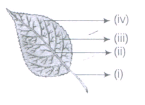
(a) Label the parts (i), (ii), (iii) and (iv) in the figure.
(b) What type of venation does the leaf has?
(c) What type of venation is seen in grass leaves?
11.
The plant which cannot be classified as a shrub is
jasmine
Bougainvillea
carrot
Croton
12.
Which of the following is not the primary function of stem?
Conduction of water
Photosynthesis
Formation of branches
Bears flowers and fruits
13.
Plants spread out their branches and leaves in order to
get more sunlight
to make it more beautiful
get more rain
provide us with shade
14.
Which part of the plant grows in the soil?
Stem
Leaf
Root
Seed
15.
The buds at the tip of the stem or its branches are called
axillary buds
nodal buds
apical buds
growing buds
16.
The young unopened flower is termed as____________
17.
Stamen has two parts called_________and______________
18.
The fine hair-like structures on roots are called
19.
Water comes out of the leaf by a process called__________
20.
The thick vein in the centre of the leaf is called__________
21.
Carrot is a modified stem.
22.
Photosynthesis takes place in stem.
23.
Onion plant has long thin leaves and adventitious roots.
24.
Stem beans branches, flowers and fruits.
25.
Arrangement of leaf on plant is called venation.
26.
Fibrous root
27.
Leaf
28.
Stamen
29.
Tap root
30.
Climber
31.
'Kitchen of the plant' reminds you of which part of the plant?
32.
What is lamina?
33.
Name two plants that have parallel venation.
34.
Name two plants that have tap root system.
35.
What is a pistil?
1.
The part of plant which produces its food is the leaf. This process is known as photosynthesis.
2.
The parts of a flower are as follows:
(i) Petals
(ii) Sepals
(iii) Stamens
(iv) Pistil
3.
If a plant has fibrous root, its leaves have parallel venation.
4.
The unwanted plants growing in the fields are called weeds.
5.
Weeds are the unwanted plants, which grow in the fields, lawns or in pots. These plants are not grown by the farmers.
6.
Anther and filaments are male reproductive parts of a flower.
7.
Tomato and potato are herbs.
8.
The leaf generally performs the function of photosynthesis.
9.
Characteristics of plants are :
(i) They cannot move from one place to another.
(ii) They can prepare their own food.
(iii) These are the living organisms on the earth which are responsible for the formation of food for all the living forms directly or indirectly.
(iv) All other organisms on the earth depend on the plants and their products for their survival.
(v) Plants grow in the soil from where they take nutrients for their growth and propagation.
10.
(a) In the given figure:
(i) Petiole (ii) Midrib (iii) Lamina (iv) Vein
(b) The leaf has reticulate venation, the veins in leaf occur in an irregular way forming a net-like structure.
(c) Grass leaves have parallel type of venation. The vein run parallel to each other on both sides of midrib.
11.
(c)
carrot
12.
(b)
Photosynthesis
13.
(a)
get more sunlight
14.
(c)
Root
15.
(c)
apical buds
16.
()
bud
17.
()
anther, stamens
18.
()
root hairs
19.
()
transpiration
20.
()
midrib
21.
(b)
22.
(b)
23.
(a)
24.
(a)
25.
(a)
26.
()
Wheat and maize plants
27.
()
Photosynthesis
28.
()
Male part
29.
()
Reticulate venation
30.
()
Grapes
31.
()
Leaf.
32.
()
Broad part of leaf is called lamina.
33.
()
Wheat and maize.
34.
()
Carrot, radish,
35.
()
Pistil is female part of a flower.

6th Standard CBSE Syllabus & Materials
6th Standard CBSE
CBSE 6th Social Science Locating Places on the Earth - New Sample Question Papers Study Material - QB365 Set A
NEW6th Standard CBSE
CBSE 6th Science A Journey Through States of Water - New Sample Question Papers Study Material - QB365 Set A
NEW6th Standard CBSE
CBSE 6th Science Temperature and its Measurement - New Sample Question Papers Study Material - QB365 Set A
NEW6th Standard CBSE
CBSE 6th Science Materials Around Us - New Sample Question Papers Study Material - QB365 Set A



NCERT Books

Syllabus

Exam Pattern

Sample Question Papers

Previous year Question Papers

Important Notes

MCQ Practice test

NCERT Exemplers

Case study Questions

Image Based Questions

Passage based Questions

HOT Questions

Value Based Questions

Model Questions Papers
NCERT ( Book Back ) Questions

Assertion and Reason
Important Questions And Answers

CBSE 6th Standard CBSE Subjects
CBSE Standards


