
 100% FREE ACCESS
6th Standard CBSE Syllabus & Materials
6th Standard CBSE
CBSE 6th Social Science The Value of Work - New Sample Question Papers Study Material - QB365 Set A
NEW6th Standard CBSE
CBSE 6th Social Science Family and Community - New Sample Question Papers Study Material - QB365 Set A
NEW6th Standard CBSE
CBSE 6th Social Science India's Cultural Roots - New Sample Question Papers Study Material - QB365 Set A
NEW6th Standard CBSE
CBSE 6th Social Science India,That is Bharat - New Sample Question Papers Study Material - QB365 Set A
NEW6th Standard CBSE
CBSE 6th Social Science Timeline and sources of history - New Sample Question Papers Study Material - QB365 Set A
NEW6th Standard CBSE
CBSE 6th Social Science Oceans and Continents - New Sample Question Papers Study Material - QB365 Set A

Published on: 24/10/2025
Download CBSE Class 6th Standard CBSE Science question papers, sample papers, important questions, and previous year solved papers in PDF format. Get free study materials, NCERT solutions, and exam preparation resources for Class 6th Standard CBSE Science
Questions + Answers key
Take MCQ Science Test
1.
Differentiate between sepals and petals.
2.
Herb is different from a shrub. Explain.
3.
Leaves when treated with iodine gives blue-black colour. Give the reason.
4.
Briefly describe weeds.
5.
Roots are helpful in the conservation of soil. Explain.
6.
Is it right to call the leaf as food factory of the plant? Justify your answer.
7.
The type of leaf venation and root in plants are related in an interesting way. Explain the statement.
8.
Can the stem of a plant be compared with a street with two ways traffic? Give reason.
9.
Write down two examples of trees, shrubs, herbs and creepers growing near your area.
10.
Draw a labelled diagram of pistil.
11.
Observe the figure of an activity given as figure, carried out with leaves of plants and polythene bag. Now answer the following.
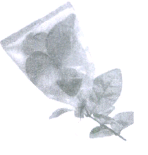
(a) Which process is demonstrated in the activity?
(b) When will this activity show better results on a bright sunny day or a cloudy day?
(c) What will you observe in the polythene bag after a few hours of setting up the activity?
(d) Mention anyone precaution you must take, while performing this activity.
12.
Which of the following is not a correct match?
Petiole: attaches leaf to stem
Lamina: green flat part of leaf
Margin: gives shape to the leaf
Veins: transpiration
13.
Which part of the plant grows in the soil?
Stem
Leaf
Root
Seed
14.
The male parts of the flower are called
pistils
carpels
stamens
styles
15.
The swollen part at the base of a flower from which the whorls of the flower radiate is called the
thalamus
pedicel
pistil
carpel
16.
The buds at the tip of the stem or its branches are called
axillary buds
nodal buds
apical buds
growing buds
17.
Money plant with long and weak stem is called __________
18.
The young unopened flower is termed as____________
19.
Rose plant is a _________whereas tomato plant is a__________
20.
Small fine particles present in the anther are called _________
21.
The swollen basal part of the pistil is the __________ which bears the_______
22.
Leaves perform the function of transpiration only.
23.
Lateral roots are present in a tap root.
24.
Onion plant has long thin leaves and adventitious roots.
25.
Ovary always produces seeds.
26.
Transpiration occurs generally by the surface of leaves.
27.
Leaf
28.
Flower
29.
Stamen
30.
Tap root
31.
Climber
1.
The small green coloured leaf-like structures seen in flowers are called sepals. While, petals are the big, coloured leaf-like structures seen in flowers.
2.
The herb has weak green stem and it is a small plant. Shrub has thicker strong stem and the plant is bigger than the herb.
3.
The leaf turns into blue-black colour due to the presence of starch in it.
4.
Weeds are the unwanted plants, which grow in the fields, lawns or in pots. These plants are not grown by the farmers.
5.
Roots help in holding the soil together. In this way, roots prevent the soil from being blown away by wind or washed away by water and help in the conservation of soil.
6.
Yes, the leaf is called as food factory of the plant. It is because the main function of a leaf is to synthesise food through the process of photosynthesis.
7.
The relation between type of leaf venation and type of roots is
(i) The plant having leaves with reticulate venation has tap roots, e.g. sunflower plant.
(ii) The plant having leaves with parallel venation has fibrous roots, e.g. wheat.
8.
Yes, the stem of a plant can be compared with a street with two ways traffic because
(i) It carries water and minerals from the roots to the leaves and other parts of plant in upward direction.
(ii) It takes the prepared food by the leaves to other parts of the plant.
9.
i) Two examples of trees - Oak and banyan (bargad).
ii) Two example of shrubs - China rose and jasmine.
iii) Two examples of herbs - Tomato and wheat.
iv) Two examples of creepers - Pumpkin and watermelon.
10.
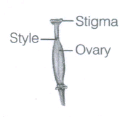
11.
(a) The process demonstrated in the activity is transpiration.
(b) The activity will show best results on a bright sunny day because transpiration is maximum in sunlight.
(c) After a few hours of setting up the activity, one can observe small droplets of water inside the polythene bag.
(d) A major precaution one must take while performing the activity is that the polythene bag should be cleaned and its mouth should be sealed properly. Also, the twig should be fresh with 10-12 leaves.
12.
(d)
Veins: transpiration
13.
(c)
Root
14.
(c)
stamens
15.
(a)
thalamus
16.
(c)
apical buds
17.
()
climber
18.
()
bud
19.
()
shrub, herb
20.
()
pollen grains
21.
()
ovary, ovules
22.
(b)
23.
(a)
24.
(a)
25.
(a)
26.
(a)
27.
()
Photosynthesis
28.
()
Reproduction
29.
()
Male part
30.
()
Reticulate venation
31.
()
Grapes

6th Standard CBSE Syllabus & Materials
6th Standard CBSE
CBSE 6th Social Science Locating Places on the Earth - New Sample Question Papers Study Material - QB365 Set A
NEW6th Standard CBSE
CBSE 6th Science A Journey Through States of Water - New Sample Question Papers Study Material - QB365 Set A
NEW6th Standard CBSE
CBSE 6th Science Temperature and its Measurement - New Sample Question Papers Study Material - QB365 Set A
NEW6th Standard CBSE
CBSE 6th Science Materials Around Us - New Sample Question Papers Study Material - QB365 Set A



NCERT Books

Syllabus

Exam Pattern

Sample Question Papers

Previous year Question Papers

Important Notes

MCQ Practice test

NCERT Exemplers

Case study Questions

Image Based Questions

Passage based Questions

HOT Questions

Value Based Questions

Model Questions Papers
NCERT ( Book Back ) Questions

Assertion and Reason
Important Questions And Answers

CBSE 6th Standard CBSE Subjects
CBSE Standards


