
 100% FREE ACCESS
6th Standard CBSE Syllabus & Materials
6th Standard CBSE
CBSE 6th Social Science The Value of Work - New Sample Question Papers Study Material - QB365 Set A
NEW6th Standard CBSE
CBSE 6th Social Science Family and Community - New Sample Question Papers Study Material - QB365 Set A
NEW6th Standard CBSE
CBSE 6th Social Science India's Cultural Roots - New Sample Question Papers Study Material - QB365 Set A
NEW6th Standard CBSE
CBSE 6th Social Science India,That is Bharat - New Sample Question Papers Study Material - QB365 Set A
NEW6th Standard CBSE
CBSE 6th Social Science Timeline and sources of history - New Sample Question Papers Study Material - QB365 Set A
NEW6th Standard CBSE
CBSE 6th Social Science Oceans and Continents - New Sample Question Papers Study Material - QB365 Set A

Published on: 24/10/2025
Download CBSE Class 6th Standard CBSE Science question papers, sample papers, important questions, and previous year solved papers in PDF format. Get free study materials, NCERT solutions, and exam preparation resources for Class 6th Standard CBSE Science
Questions + Answers key
Take MCQ Science Test
1.
Rahul was studying at home in the evening. But due to improper power supply, he could not study properly.
(i) Why was Rahul able to study the print of book?
(ii) What is the role of light?
2.
Why is the shadow of an aeroplane flying high in the sky not seen on the ground?
3.
What are the properties that are exhibited by light?
4.
Give two effects of light on plants.
5.
What do you understand by incandescent body?
6.
What property of light is responsible for the formation of shadows and pinhole images?
7.
What are shadows?
8.
How do we see the objects around us?
9.
As we know that moon appears to be bright at night. Does it mean that it is an luminous object?
10.
In a complete dark room, we are not able to see our face. Why?
11.
Mention the type of image is formed in pinhole camera.
12.
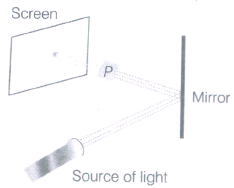
Observe the picture given in figure. A sheet of some material is placed at position P, still the patch of light is obtained on the screen. What is the type of material of this sheet?
13.
Shadow of flying aeroplane cannot be seen on the earth. Explain why.
14.
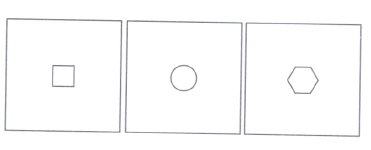
You have 3 opaque strips with very small holes of different shapes as shown in figure. If you obtain an image of the sun on a wall through these holes, will the image formed by these holes be the same or different?
15.
Mention the name of an object which does not allow the light to pass through it.
16.
Show an experiment which proves that light always travels in a straight line.
17.
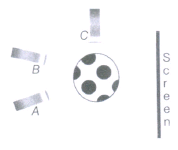
Three torches A, Band C shown in figure are switched ON one by one. The light from which of the torches will not form a shadow of the ball on the screen?
18.
One day, Richa saw a shadow of bird on the wall of her room. After some time, it dissappears, she surprised where the bird has gone. Her brother explains that it was nothing as it was the shadow of his hand.
(a) Mention the values that Richa's brother reflect here.
(b) Shadow can mislead you. Justify the statement.
19.
Using a pinhole camera, a student observes the image of two of his friends standing in sunlight wearing yellow and red shirt respectively. What will be the colours of the shirts in the image?
20.
Suggest a situation where we obtain more than one shadow of an object at a time.
1.
(i) Rahul was able to study the print of book due to light falling on the book which came to his eyes from a luminous object (i.e., tube light).
(ii) The light allows us to see objects.
2.
The shadow of an aeroplane flying high in the sky is not seen on the ground because the ground will not act as screen for the aeroplane due to its high distance from the ground.
3.
Some important properties of light are as follows:
(i) Light always travels in a straight line, which is called rectilinear propagation of light.
(ii) When light is obstructed by an opaque object, then a shadow of the object is formed behind it.
(iii) Light exhibits the property of reflection.
4.
The two effects of light on plants are:
i) Plants use light for the preparation of their own food through the process of photosynthesis.
ii) Some plants (like sunflower) turn in the direction of light.
5.
If we make a metal red hot, it emits light. This is called incandescent body
6.
The light travels in a straight line path.
7.
The dark patches formed on the ground, when light falls on the opaque objects, are called shadows.
8.
We can see the objects around us with the help of light.
9.
Moon doesn't produce its own light, the brightness of moon is due to the light of sun. So, it is not a luminous object.
10.
To see a thing, there must be light which comes after reflection from the object to our eyes. In dark room there is no light, so we are not able to see our face.
11.
Inverted and real image is formed in pinhole camera.
12.
The material is transparent glass because only then it can pass the light through it undisturbed and the image will be formed at the same place.
13.
Shadow of flying aeroplane cannot be seen on the earth because umbra region cannot able to reach the earth.
14.
The image of the sun will remain same, still if we use different types of holes because the holes will act as pinhole camera and light moves in a straight path.
15.
The name of an object which does not allow the light to pass through it is an opaque object, e.g. wood.
16.
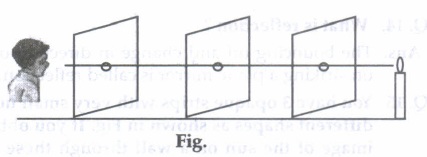
The light always travels in a straight line. This can be shown by performing a simple activity. For this, first of all let us take three cardboards of equal size. Now, a hole is made'at the centre of each cardboard at the same level. The three cardboard are placed on a flat table and aligned linearly as shown in the figure.
A candle is lighted at one end of the table with its flame at the level of the holes and is seen at the other end. It is observed that the light of the candle is seen effortlessly. Now, the middle one of the three cardboards is displaced from its position. Now, we are unable to see the light. The reason behind this is that the light travelling in the straight line is obstructed due the misalignment of the cardboards. This proves that light always travels in a straight line
17.
The light from the torch C will not form a shadow on the screen because light travels in a straight path and will form the shadow on the same path from which it is coming.
18.
(a) Richa's brother is intelligent and creative.
(b) It is true to say that shadow can mislead us. It is because the actual object cannot be verified by viewing its shadow.
19.
Colours of the shirts will remain same. We see them on the screen because pinhole camera forms the images of the object having same colour but upside down. So, yellow shirt will form yellow image and red shirt will form red image.
20.
Place the object in front of a mirror and put the light source behind the object as shown in figure.
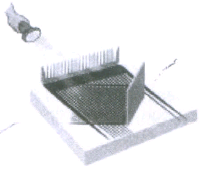
The image/shadow will be formed by the object as well as the image of the object by mirror.

6th Standard CBSE Syllabus & Materials
6th Standard CBSE
CBSE 6th Social Science Locating Places on the Earth - New Sample Question Papers Study Material - QB365 Set A
NEW6th Standard CBSE
CBSE 6th Science A Journey Through States of Water - New Sample Question Papers Study Material - QB365 Set A
NEW6th Standard CBSE
CBSE 6th Science Temperature and its Measurement - New Sample Question Papers Study Material - QB365 Set A
NEW6th Standard CBSE
CBSE 6th Science Materials Around Us - New Sample Question Papers Study Material - QB365 Set A



NCERT Books

Syllabus

Exam Pattern

Sample Question Papers

Previous year Question Papers

Important Notes

MCQ Practice test

NCERT Exemplers

Case study Questions

Image Based Questions

Passage based Questions

HOT Questions

Value Based Questions

Model Questions Papers
NCERT ( Book Back ) Questions

Assertion and Reason
Important Questions And Answers

CBSE 6th Standard CBSE Subjects
CBSE Standards


