
 100% FREE ACCESS
6th Standard CBSE Syllabus & Materials
6th Standard CBSE
CBSE 6th Social Science The Value of Work - New Sample Question Papers Study Material - QB365 Set A
NEW6th Standard CBSE
CBSE 6th Social Science Family and Community - New Sample Question Papers Study Material - QB365 Set A
NEW6th Standard CBSE
CBSE 6th Social Science India's Cultural Roots - New Sample Question Papers Study Material - QB365 Set A
NEW6th Standard CBSE
CBSE 6th Social Science India,That is Bharat - New Sample Question Papers Study Material - QB365 Set A
NEW6th Standard CBSE
CBSE 6th Social Science Timeline and sources of history - New Sample Question Papers Study Material - QB365 Set A
NEW6th Standard CBSE
CBSE 6th Social Science Oceans and Continents - New Sample Question Papers Study Material - QB365 Set A

Published on: 24/10/2025
Download CBSE Class 6th Standard CBSE Science question papers, sample papers, important questions, and previous year solved papers in PDF format. Get free study materials, NCERT solutions, and exam preparation resources for Class 6th Standard CBSE Science
Questions + Answers key
Take MCQ Science Test
1.
Distinguish between transparent and translucent object
2.
Give two effects of light on plants.
3.
In a complete dark room, we are not able to see our face. Why?
4.
If an object is of two different colours, then what will be the colour of shadow?
5.
Briefly state that what a dark part of shadow is called as.
6.
Mention the name of an object which partially allows the light to pass through it.
7.
Differentiate between a luminous and non-luminous objects.
8.
Differentiate between a shadow and an image.
9.
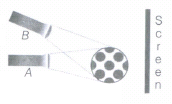
A torch is placed at two different positions A and B one by one as shown in figure.The shape of the shadow obtained in two positions is shown in the given figure.
Match the position of the torch and shape of the shadow of the ball.
10.
Suggest a situation where we obtain more than one shadow of an object at a time.
11.
On a sunny day, does a bird or an aeroplane flying high in the sky cast its shadow on the ground? Under what circumstances, can we see their shadow on the ground?
12.
Shadow of the Earth
13.
Umbra
14.
Jugnu
15.
Periscope
16.
Shadow
17.
Images are similar to shadows.
18.
Lateral inversion is a phenomenon of changing left to right and vice-versa.
19.
Non-luminous objects emit the light of their own.
20.
Light travels in the form of rectilinear propagation.
21.
Light is not a form of energy.
22.
Light helps us to__________________objects.
23.
Sun is a___________ object.
24.
Rubber is _______________but glass is__________
25.
Shadows are formed by _________________object.
26.
Pinhole camera forms_____________ image.
27.
Shadow of a red object will be:
Red
White
Yellow
Black
28.
In lateral inversion:
Image is upside down
Image bends laterally
Left of an object appears right of the image
Image gets inverted
29.
Which one of the following is the natural source of light?
Sun
Tubelight
Electric bulb
None of these
30.
Paheli observed the shadow of a tree at 8:00 AM, 12:00 noon and 3:00 PM. Which of the following statements is closest to her observation about the shape and size of the shadow?
The shape of the shadow of the tree changes but the size remains the same.
The size of the shadow of the tree changes but the shape remains the same.
Both the size and shape of the shadow of the tree change.
Neither the shape nor the size of the shadow changes.
31.
Observe the picture given in the figure carefully.
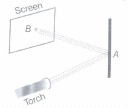
A patch of light is obtained at B when the torch is lighted as shown. Which of the following is kept at position A to get this patch of light?
A wooden board
A glass sheet
A mirror
A sheet of white paper
32.
What is a shadow? Explain a simple process for shadow formation.
33.
Explain with the help of a diagram that how can we see an image behind wall using a periscope.
34.
Can you see a reflected light directly? If, no Why?
35.
Why can not we see upside down image of the sun?
36.
What are transparent materials?
37.
Can you form image in a transparent material?
38.
When does lunar eclipse occur ?
1.
| S.No | Translucent object | Transparent object |
|---|---|---|
| (a) | They allow the light to pass partially through them. | Allow light to pass through them completely. |
| (b) | Objects can be seen, but not dearly | Objects can be seen clearly. |
| (c) | Butter paper and wax paper are examples of objects. | Glass and Air are examples of objects. |
2.
The two effects of light on plants are:
i) Plants use light for the preparation of their own food through the process of photosynthesis.
ii) Some plants (like sunflower) turn in the direction of light.
3.
To see a thing, there must be light which comes after reflection from the object to our eyes. In dark room there is no light, so we are not able to see our face.
4.
If an object is of two different colours, then the colour of shadow will be black.
5.
Limbra is called the dark part of shadow.
6.
The object which partially allows the light to pass through it is a translucent Object, e.g. wax paper.
7.
Luminous objects are those objects which emit the light of their own e.g. the stars, the sun, burning candle, etc. While non-luminous objects are those objects which do not emit light of their own, e.g. Blackboard, moon, earth, etc.
8.
The dark patch of light is known as a shadow which is formed when there is an opaque object in the path of light.
When an image is the reflection of light. By seeing image, we can identify the object but shadow can mislead you from actual object.
9.
Position A of the torch will form the image (a) and position B of the torch will form the image (b) of the football.
10.
Place the object in front of a mirror and put the light source behind the object as shown in figure.
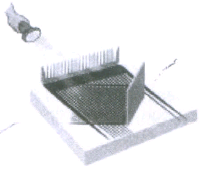
The image/shadow will be formed by the object as well as the image of the object by mirror.
11.
No, they do not cast any shadow on the ground because they are so high.
They can cast shadow only if they are at some lower height, i.e. if they are near to the ground, we can see their shadows.
12.
()
Lunar eclipse on Moon
13.
()
Region of total darkness
14.
()
A luminous source
15.
()
Can see image behind wall
16.
()
Opaque object
17.
(b)
18.
(a)
19.
(b)
20.
(a)
21.
(b)
22.
()
see
23.
()
luminous
24.
()
opaque, transparent
25.
()
opaque
26.
()
inverted
27.
(d)
Black
28.
(c)
Left of an object appears right of the image
29.
(a)
Sun
30.
(c)
Both the size and shape of the shadow of the tree change.
31.
(c)
A mirror
32.
Opaque objects do not allow light to pass through them. When an opaque object is placed in the path of light, then the light is obstructed by the object leading to the formation of a dark patch known as the shadow of that object, which can be taken on a screen placed behind it.
Shadow formation: To form a shadow, there must be (i) a light source (ii) a screen (iii) an opaque object placed between the light source and the screen. For shadow formation, we can follow the given steps
Step 1: Take an opaque object.
Step 2: Throw light on it from a light source.
Step 3: Put a screen behind the object. In this way, a shadow of an object can be obtained on the screen.
In this way, a shadow of an object can be obtained on the screen.
33.
The image can be observed behind wall using a periscope with the help of plane mirror by reflection of light.
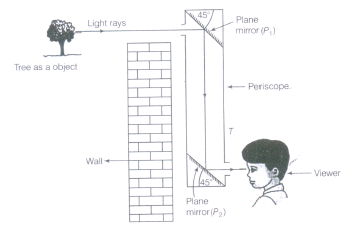
So, when rays of light coming from tree behind the wall fall on plane mirror (P1), then after reflection, it goes to the plane mirror (P2), which again reflects the light rays towards viewer. Therefore, we can see the tree which is behind wall.
34.
()
35.
()
36.
()
Materials that allow light to pass through them are called transparent materials. We can see clearly through them. For example. Glass.
37.
()
No, clear image cannot be formed
38.
()
When earth comes between sun and moon

6th Standard CBSE Syllabus & Materials
6th Standard CBSE
CBSE 6th Social Science Locating Places on the Earth - New Sample Question Papers Study Material - QB365 Set A
NEW6th Standard CBSE
CBSE 6th Science A Journey Through States of Water - New Sample Question Papers Study Material - QB365 Set A
NEW6th Standard CBSE
CBSE 6th Science Temperature and its Measurement - New Sample Question Papers Study Material - QB365 Set A
NEW6th Standard CBSE
CBSE 6th Science Materials Around Us - New Sample Question Papers Study Material - QB365 Set A



NCERT Books

Syllabus

Exam Pattern

Sample Question Papers

Previous year Question Papers

Important Notes

MCQ Practice test

NCERT Exemplers

Case study Questions

Image Based Questions

Passage based Questions

HOT Questions

Value Based Questions

Model Questions Papers
NCERT ( Book Back ) Questions

Assertion and Reason
Important Questions And Answers

CBSE 6th Standard CBSE Subjects
CBSE Standards


