
 100% FREE ACCESS
6th Standard CBSE Syllabus & Materials
6th Standard CBSE
CBSE 6th Social Science The Value of Work - New Sample Question Papers Study Material - QB365 Set A
NEW6th Standard CBSE
CBSE 6th Social Science Family and Community - New Sample Question Papers Study Material - QB365 Set A
NEW6th Standard CBSE
CBSE 6th Social Science India's Cultural Roots - New Sample Question Papers Study Material - QB365 Set A
NEW6th Standard CBSE
CBSE 6th Social Science India,That is Bharat - New Sample Question Papers Study Material - QB365 Set A
NEW6th Standard CBSE
CBSE 6th Social Science Timeline and sources of history - New Sample Question Papers Study Material - QB365 Set A
NEW6th Standard CBSE
CBSE 6th Social Science Oceans and Continents - New Sample Question Papers Study Material - QB365 Set A

Published on: 03/12/2018
In this question paper, the questions are covered from the chapter Air Around Us. Questions that covered in this questions paper from the creative as well as previous year questions.
The Central Board of Secondary Education (CBSE) is a prestigious educational board which comes under the Union Government of India. Here, you will get the clue that from where and how the questions are being framed from the chapter Air Around Us for CBSE Class 6 Science. These questions can provide students with a chapter wise preparation strategy so that they can prepare for their exam more efficiently.
The National Council of Education and Training sets the curriculum for all schools that follow the Central Board of Secondary Education (CBSE) across the nation. The important questions provided below will also make students familiar with the marking scheme and the difficulty level of the exam. The important questions for CBSE class 6 Science are prepared by subject experts according to the latest syllabus of CBSE. Students are advised to solve these important questions which can make them more focused on their exam and also bring a sense of discipline and seriousness in their exam preparation.
Creative questions were added in this question paper in order to enhance the student's knowledge and get the idea that how to answer strategic questions asked in the board exams. This question paper is designed based on the academic syllabus. Sample papers should be practised in examination condition at home or school and also show it to your teachers for checking or compare with the answers provided.
Download CBSE Class 6th Standard CBSE Science question papers, sample papers, important questions, and previous year solved papers in PDF format. Get free study materials, NCERT solutions, and exam preparation resources for Class 6th Standard CBSE Science
Questions + Answers key
Take MCQ Science Test
1.
List four activities that are possible due to the presence of air.
2.
Explain why air is considered a mixture.
3.
Mention some uses of air.
4.
List five activities that are possible due to the presence of air
5.
What is the composition of air?
6.
Mountaineers carry oxygen ___________ with them, while climbing high mountains.
7.
Air occupies_______ and has________
8.
Plant produces food and______ during photosynthesis
9.
_________is used for aeration of drinks like Cocacola
10.
Soil organisms take air present in______________
11.
Moving air is known as_______
12.
Aquatic animals use dissolved ________ in water for respiration
13.
The protective envelope of air around the earth is known as _______
14.
Air is a _______of some gases.
15.
The layer of air around the earth is known as ___________
16.
How is air important for life on Earth ?
17.
Why does the transparent glass of windows if not wiped regularly appear hazy?
18.
Due to the presence of which gas, when air is passed through lime water turns it milky?
19.
Oxygen and nitrogen form 99% of the air. Other 1% is constitute by which components?
20.
Name the major part of air that does not support burning.
21.
Name the sources of carbon dioxide in air.
22.
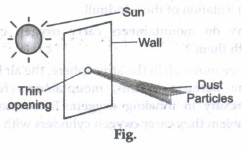
How can you say that air contains dust particles?
23.
Akshay went on an adventurous trip with his friends. He went climbing sky diving and underground water diving. He observed that while all the activities were pleasant during water diving, he and his friends felt nauseous and had breathing difficulties. He was aware of same thing happening to his friends a few year back as he was mountain climbing.
(a) Can you suggest a reason behind all the symptoms faced by Akshay and his friends?
(b) How can one recover from this situation?
(c) Give two more special situations where - same symptoms can develop?
(d) If we suffer from breathing problems in deep water. How do plants and animals living in water cope?
(e) Have you observed any good values in Akshay?
24.
Carbon dioxide is the major component of air
25.
Respiration can occur only in the presence of nitrogen
26.
Green plants need carbon dioxide gas to make food
27.
The composition of air is always exactly the same
28.
Plants consume oxygen for respiration.
29.
Which gas in the atmosphere is essential for respiration
Carbon dioxide
Oxygen
Argon
Nitrogen
30.
CNG means:
Common Natural Gas
Compressed Natural Gas
Common Natural Gasoline
Compressed Natural Gasoline
31.
The amount of water vapour in the air at any place and time is:
Atmosphere
Humidity
Fog
Smoke
32.
Wind does not help in the movement of which of the following?
Firki
Weather cock
ceiling fan
Sailing yacht
33.
Nitrogen is needed by the plants to make
fats
carbohydrates
proteins
minerals
34.
Which is the most abundant gas in our atmosphere?
35.
What is wind ?
36.
What is meant by inert gases?
37.
In which process does a plant take in oxygen?
1.
The activities that are possible due to the presence of air are as follows :
(i) Respiration and water cycle.
(ii) Flying of birds and aeroplanes.
(iii) Dispersal of seeds.
2.
The air is considered a mixture because of the following reasons:
(a) Air consists of many gases like oxygen, nitrogen, carbon dioxide, etc.
(b) The composition of air varies from place to place.
3.
Some uses of air are
(i) For respiration, all living organisms need air.
(ii) For burning of any substance, air is need.
4.
The following activities are possible due to the presence of air
(i) Respiration by animals.
(ii) Photosynthesis by plants.
(iii) Power generation by windmills.
(iv) Burning of fuels and substances.
(v) Scattering of seeds and pollens of plants (pollination).
(vi) Movements of sailing yachts, gliders, parachutes and aeroplanes.
5.
Air is a mixture of gases, water vapour and dust particles. Largely, it consists of
(i) Nitrogen (78%)
(ii) Oxygen (21%)
(iii) Carbon dioxide (0.03%)
(iv) Other gases like helium, hydrogen, etc (0.17%)
(v) Water vapour and dust particles.
6.
()
cylinders
7.
()
space, mass
8.
()
oxygen
9.
()
Carbon dioxide
10.
()
pores of soil
11.
()
wind
12.
()
oxygen
13.
()
atmosphere
14.
()
mixture
15.
()
atmosphere.
16.
Air is important for life on Earth due to following reasons:
(i) It plays an important role in water cycle.
(ii) It helps in the movement of sailing yachts, gliders, parachutes and aeroplanes.
(iii) It helps birds, bats and insects to fly.
(iv) It helps in dispersal of seeds and pollen of flowers of several plants
17.
The dust particles present in air stick to transparent glass of windows. These particles also attract other elements like pollen to collect on glass. That's why, transparent glass of windows if not wiped appears hazy.
18.
Carbon dioxide turns lime water milky. It is a constituent of air.
19.
1% of air includes carbon dioxide (C02), water vapours , helium, hydrogen, dust particles and smoke.
20.
Nitrogen does not support burning.
21.
Respiration by animals and plants and burning of fuel.
22.
On a sunny day, go to a room which is a little bit dark. In this room, choose a thin opening through which light can enter the room. If, there is no opening in the room, then make one. From this opening we will see that a sharp beam of sunlight enters the room. In this beam, we will observe that there are some tiny solid-like particles moving freely. These particles are the dust particles, and this shows the presence of dust particles in air.
23.
(a) Akshay and his friends went deep sea diving where the level of oxygen is reduced. Due to lack of sufficient oxygen supply, problems in breathing occur.
(b) By carrying oxygen cylinders, this situation can be overcome.
(c) Two more situations include (i) Mountain climbing. (ii) Patients with breathing problems.
(d) Plants and animals living in the water use dissolved oxygen, i.e. oxygen gas dissolved in water for respiration through special organs or pores.
(e) Akshay is responsible and adventurous. He is cautious and observant of his surroundings.
24.
(b)
25.
(b)
26.
(a)
27.
(b)
28.
(a)
29.
(b)
Oxygen
30.
(b)
Compressed Natural Gas
31.
(b)
Humidity
32.
(c)
ceiling fan
33.
(c)
proteins
34.
()
The most abundant gas in our atmosphere is nitrogen.
35.
()
Air in motion is called wind
36.
()
Inert gases do not react with other elements.
37.
()
Respiration.

6th Standard CBSE Syllabus & Materials
6th Standard CBSE
CBSE 6th Social Science Locating Places on the Earth - New Sample Question Papers Study Material - QB365 Set A
NEW6th Standard CBSE
CBSE 6th Science A Journey Through States of Water - New Sample Question Papers Study Material - QB365 Set A
NEW6th Standard CBSE
CBSE 6th Science Temperature and its Measurement - New Sample Question Papers Study Material - QB365 Set A
NEW6th Standard CBSE
CBSE 6th Science Materials Around Us - New Sample Question Papers Study Material - QB365 Set A



CBSE 6th Standard CBSE Subjects
CBSE Standards




