
 100% FREE ACCESS
6th Standard Syllabus & Materials
6th Standard
TN 6th Tamil பருவம் 1 - இயல் 1 - மொழி -தமிழ்த்தேன் - இன்பத்தமிழ் Sample Question Papers Study Material - QB365 Set A
NEW6th Standard
TN 6th English T1 - Supplementary - The Apple Tree and The Farmer Sample Question Papers Study Material - QB365 Set A
NEW6th Standard
TN 6th English T1 - Prose - When The Trees Walked Sample Question Papers Study Material - QB365 Set A
NEW6th Standard
TN 6th Social Science T3 - CIV - Road Safety Sample Question Papers Study Material - QB365 Set A
NEW6th Standard
TN 6th Social Science T3 - CIV - Local Bodies - Rural and Urban Sample Question Papers Study Material - QB365 Set A
NEW6th Standard
TN 6th Social Science T3 - CIV - Democracy Sample Question Papers Study Material - QB365 Set A

Published on: 11/10/2019
Magnetism
Download Tamil Nadu 6th Standard Science question papers, model tests, one-mark questions, important questions, and public exam papers in PDF format. Free study materials and answer keys for TN State Board students.
Questions + Answers key
Take MCQ Science Test1.
Magnets ore is called ________.
bauxite
magnetite
copper
magnesium
2.
Mariner’s compass is used to find the
speed
displacement
direction
motion
3.
Magnets lose their properties when they are
used
stored
hit with a hammer
cleaned
4.
A freely suspended magnet always comes to rest in the ________direction
North - east
South - west
East - west
North - south
5.
An object that is attracted by magnet.
wooden piece
plain pins
eraser
a piece of paper
6.
_________________ are used in Electromagnetic train.
7.
Electromagnetic train is called as ___________
8.
A magnet always has __________ poles.
9.
Paper is not a ______ material.
10.
The Materials which are attracted towards the magnet are called________.
11.
Rubber is a magnetic material.
12.
Maximum iron filings stick in the middle of a bar magnet when it is brought near them.
13.
A cylindrical magnet has only one pole.
14.
Write about like and unlike poles.
15.
When does the magnet lose their power?
16.
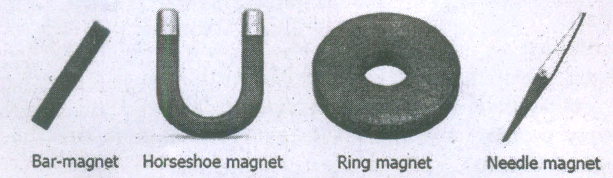
Draw the various types of artificial magnets
17.
What is called as natural magnet?
18.
A student who checked some magnets in the school laboratory found out that their magnetic force is worn out. Give three reasons for that?
19.
Explain the attraction and repulsion between magnetic poles.
20.
Distinguish between magnetic and non-magnetic substances.
21.
How does the electromagnetic train work?
22.
You are provided with an iron needle. How will you magnetize it ?
23.
Take a glass of water with a few pins inside. How will you take out the pins without dipping your hands into water?
24.
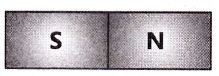
Two bar magnets are given in the figure A and B. By the property of attraction,identify the North pole and the South pole in the bar magnet (B)
25.
Magnetic object with the force of attraction or repulsion properties of magnets
26.
In India the possibilities of introducing electromagnet trains are under consideration
1.
(b)
magnetite
2.
(c)
direction
3.
(c)
hit with a hammer
4.
(d)
North - south
5.
(b)
plain pins
6.
()
Electromagnets
7.
()
suspension train
8.
()
two
9.
()
magnetic
10.
()
magnetic Materials
11.
False : Rubber is a non-magnetic material.
12.
False : Maximum iron filings stick in the poles of a bar magnet when it is brought near them.
13.
False : A cylindrical magnet has two pole.
14.
i) Unlike poles (S-N, N-S) attract each other.
ii) Like Poles (N-N, S-S) repel each other.
15.
i) Magnets lose their properties when they are placed near Cellphone, Computer, DVDs.
ii) These objects will also get affected by magnetic field.
16.
17.
i) Magnetite was the ore with attracting property found in that region.
ii) Magnetite are natural magnets. They are called magnetic stones.
18.
Magnets lose their properties if they are heated or dropped from a height or hit with a hammer.
19.
(i) Like poles (N-N, S-S) repel each other.
(ii) Unlike poles (N-S, S-N) attract each other.
20.
| Magnetic | Non - Magnetic |
| Substances which are attracted by magnet are called magnetic substances. Iron, cobalt, nickel are magnetic substances. | Substances which are not attracted by magnet are called non-magnetic substances. Paper, plastic are called non- magnetic substances. |
21.
i) Electromagnets are used in electromagnetic trains.
ii) Electromagnets are magnetised when current flows through them. When the direction of current is changed, poles will be changed.
iii) Magnets are attached at the bottom of the train and rail tracks.
iv) The train is lifted from track upto 10 cm height by the property of some poles that repel each other.
v) By using attraction and repulsion at the same time between the magnets in tracks and bottom of the train it moves forward.
vi) The magnets are controlled by electricity.
vii) There is no friction. So the train can easily attain a speed of 300 km/h.
22.
i) Place the iron needle on a table. Now take a bar magnet and place one of its poles near one edge of iron needle and rub from one end to another end without changing the direction of the pole of the magnet. Repeat the process for 30 to 40 times.
ii) Bring a pin or some iron filings near the iron needle to check whether it has become a magnet. Does the iron needle attract the pin / Iron filing? If not continue the same process for some more time.
23.
If we keep a strong bar magnet above the glass of water, all pins inside the water will come up due to its attraction towards the magnet.
24.
Opposite poles, attract each other. Second pole of magnet A is N (North Pole). So magnet B has S-N poles. Then only they will attract.

25.
(a)
26.
(a)

6th Standard Syllabus & Materials
6th Standard
TN 6th Social Science T3 - GEO - Understanding Disaster Sample Question Papers Study Material - QB365 Set A
NEW6th Standard
TN 6th Social Science T3 - GEO - Globe Sample Question Papers Study Material - QB365 Set A
NEW6th Standard
TN 6th Social Science T3 - GEO - Asia and Europe Sample Question Papers Study Material - QB365 Set A
NEW6th Standard
TN 6th Social Science T3 - HIS - South Indian Kingdoms Sample Question Papers Study Material - QB365 Set A



Tamilnadu Stateboard 6th Standard Subjects
Tamilnadu Stateboard Standards




